Pure Color by Sheila Heti

I followed up Sheila Heti with some more Sheila Heti. Heti’s Pure Color is basically a work of contemporary theory. I appreciate the work that Heti and others like Maggie Nelson are doing in this area (and I secretly would love to join these authors in this form/genre).

For me, Pure Color read somewhat like How Should a Person Be?, which also was a book that was more *unique* than it was *pleasant* to read, imho. I had a hard time with the main character in the latter, but I found the main character to be…purer in Pure Color, and so I found that was all more palatable to me (which says more about me than about the quality of the book).

To me, Motherhood was by far my favorite and most resonant Heti book. Even still, that’s three Heti books in the past six months, so I think I’ll take a break! I might eventually check out Women in Clothes, but oof, it’s long!

Motherhood by Sheila Heti

In many ways, Motherhood by Sheila Heti felt like a continuation of my recent readings on motherhood and middle age from Miranda July and Claire Dederer. This book fit perfectliy within those conversations. These are people who grapple with the big question of whether or not to pursue motherhood when one is an artist, intellectual, and/or otherwise passionate about their career.

Needless to say, these philosophical wonderings, coupled with a gentle narrative thread, speak to me loudly. I recently read Heti for the first time last year. I appreciated when she was doing then, but I think this is the book I was meant to read.

Women’s Voices from the Oregon Trail by Susan Butruille

Women’s Voices from the Oregon Trail by Susan Butruille is one of the more niche books I’ve ever read, but what can I say? I was pretty engrossed all the way through. The writer drives the Oregon Trail from Missouri and shares diary excerpts and insights of what the trail was like, especially for the women. Butruille stops at historical sites and shares photographs and more insights inspired by those visits.

As a daughter of pioneers, I imagined my own relatives making a similar trek, imagined their lives and relationships and hardships. I think this book is even more relevant to those of us with that personal connection. A broader audience might be interested in the history. I think the rigid role of wife as domestic servant will be especially striking to some readers as well.

Normal People by Sally Rooney

Normal People was my first foray into Sally Rooney’s writing. I spent the first half wondering what the big deal was, then realized I was in for some sort of deep human insight and transformation, and ended the book appreciating that Rooney did deliver on those hunches.

I’m a little scared to read any more of her work, at least in this moment, because a few close friends have referred to it as tough, intense, and gutting (but great)! This is an author I’m sure I’ll return too, though, when I come across her work.

The Gentle Art of Swedish Death Cleaning by Margareta Magnusson

This pleasant little book, The Gentle Art of Swedish Death Cleaning by Margareta Magnusson, reminds readers to declutter as they go, throw away things as they become obsolete, and give away treasured items as gifts early and often.

This is a book that people in, say, their 60s and on, will probably enjoy. For all readers, it offers a quiet, pleasant reflection on life’s accumulations. The author also firmly believes in downsizing (moving to smaller housing), and I think this one difficult, but incredibly practical.

The book might be slightly mis-titled. I found myself just wanting this thing to be more personal memoir (with a death cleaning focus), and it was that, but I was interested to know even more about the author!

Before and After the Book Deal by Courtney Maum

For the same reasons popular fiction frequently portrays book lovers as main characters, Before and After the Book Deal by Courtney Maum appeals to the would be writer, who one day dreams of writing books and making a career out of it. Readers often dream of writing! Writers dream of reading! It all goes hand in hand.

This is a practical guide, but it is also fun and dreamy and voice-y, so that readers stay engaged for the ride. Here’s the thing though–while as a real guide it is informative, the odds of publishing a book through a major publishing house is so rare. To get paid for your book in any kind of substantive way is even rarer! To go on a paid book tour is nearly unheard of! To be meeting and lunching with editors throughout means you’re one of these rare gems who just happens to live in NYC.

Therefore, the book is the fantasy thrill-ride (and one worth taking)! However, the unwritten parts of this book is that this book deal experience is all too rare for most writers. Published writers are usually otherwise financially independent, either from personal wealth or from a spouse who supports them. Published writers can grab lunch with an editor and that means they live in New York. And, we all miss out when this narrow subset is all we ever hear from.

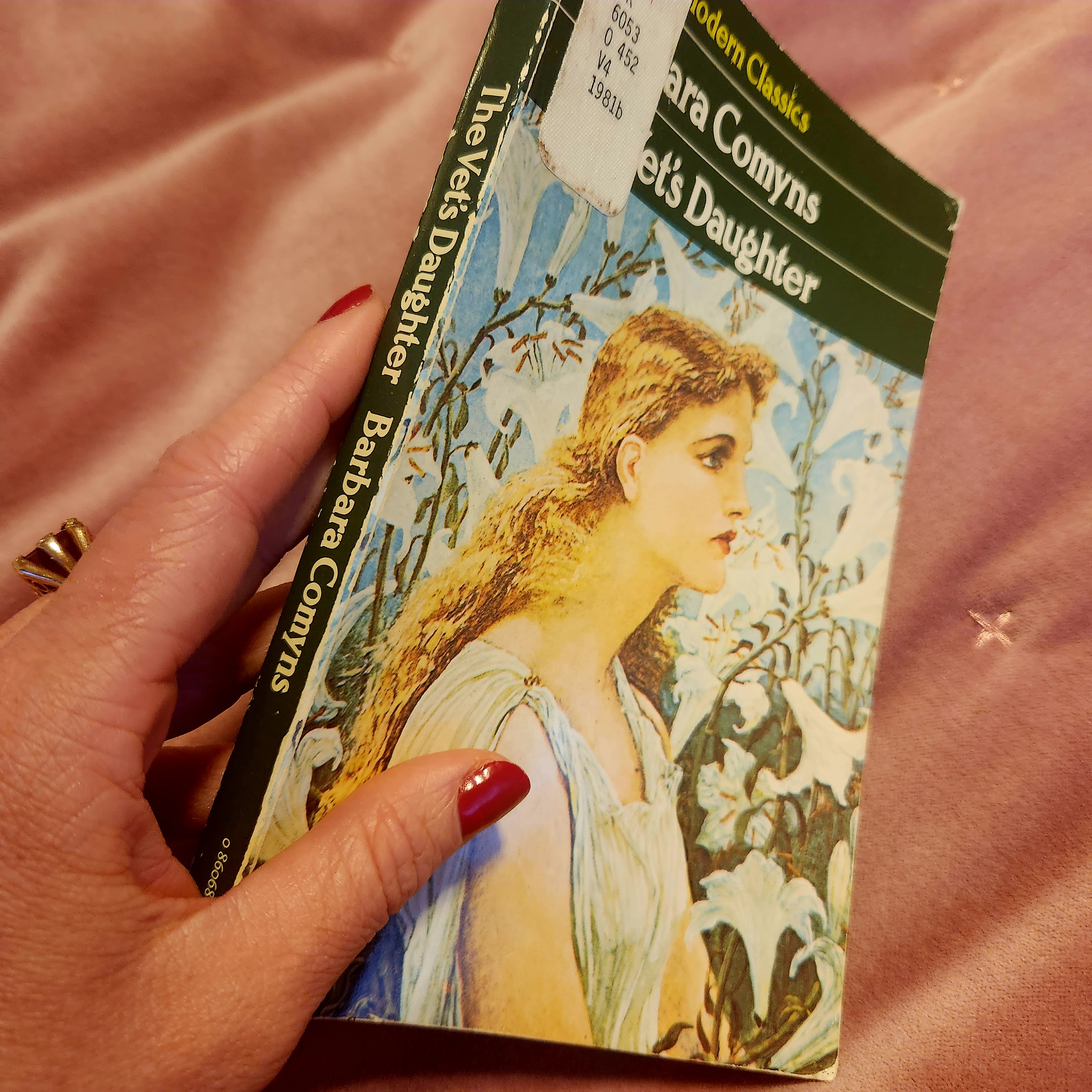
Our Spoons Came from Woolworths by Barbara Comyns

I first read Barbara Comyns in 2024, starting with Who Was Changed and Who Was Dead, and it was such a strange and excellent book that it has really stayed with me. When someone recommended her other book, Our Spoons Came from Woolworths, I knew I wanted to read it–even if just for that title!

The book follows the life of a young, impoverished woman, who is an artist, but is held back by sexism and classism and the burdens that come with it. She seems somewhat unaware of her unfair circumstances, or at least perceives them in a unique way, and so the reader gets a new view, one that avoids commonplace thinking around victimhood.

For the doulas and birth workers who follow me, there is also quite a lot of content about hospital childbirth during the middle of the last century. It was…rough. (And there’s still so much more work we can do to improve hospital childbirth, but that’s an aside.)

In the last few years, I’ve gone from Elena Ferrante to Barbara Comyns to Moa Martinson and back to Comyns again. I’m so grateful to have discovered these authors, and my interest in finding more is renewed.

The Japanese Lover by Isabel Allende

I’ve tried to read The House of the Spirits by Isabel Allende a few times over the years, but I guess the timing has never been right. However, I recently read a positive review of her more recent book, The Japanese Lover, and so decided to read it for starters.

I once knew, and felt quite close to, a woman who was of Allende’s generation and, seemingly, of her social class too, and wow could I see the similarities in thinking in this book. The Japanese Lover seems to leave no stone or topic unturned and does a lot more telling than showing as it persistently weaves characters and backstories to a poinant conclusion. It’s all effectively done and stands apart as literature in a sea of popular fiction.

There’s a progressive attitude in most of the characters that will be palatable to most readers. There may be an exoticization of the Japanese lover that some readers could find problematic. There’s an upper class persnicketiness that is…accurate. There are longer suffering men who seem to go to any length for the women in their lives, no matter how difficult or secretive, out of touch or confused they may seem. That’s the piece that seemed unrealistic to me: this world where strong women nevertheless are happily managed by their families, and especially the fathers, grandfathers, brothers, cousins, and uncles. As I said, the perspective is of a generation and a social class that is interesting, but is also definitely of an era and of a time. Maybe others will recognize it too.

The Serviceberry by Robin Wall Kimmerer

Once again, Robin Wall Kimmerer’s book does not disappoint. The Serviceberry: Abundance and Reciprocity in the Natural World is a beautiful little book that is so worth reading. Kimmerer invites readers to imagine alternative economic models and theories, all while helping us understand and appreciate natural systems and especially plants like the serviceberry.

Serviceberries are common wild plants and they flourish in the countryside where I grew up. They can be tart and coarse and crunchy. They are not the pure treat of huckleberries or raspberries, but they do seem naturally healthy and normal and good when you eat them. More than ever, it seems important for people to know and consume natural foods. Kimmerer helps us get there.

The Bear by Andrew Krivak

My local literary community (I’m honestly so glad I say I have a “local literary community”) is reading The Bear by Andrew Krivak, so I jumped on board, and I’m so glad I did. This is a beautifully written, beautifully paced, and completely consistently written book.

The subject matter is complex, but so gentle and pure that I think I might be able to read it to kids too. I don’t think it’s an exaggeration to that that this book is a balm for the soul. Needed now more than ever.