Monthly Archives: July 2024

Blue Nights by Joan Didion

I just finished Joan Didion’s Blue Nights with actual tears running down my face. That’s probably not the best way to describe this book because while it is known to be about loss and aging, it is also not a tear jerker in my opinion. It is a beautifully written book that I read with great care, even taking the time to look up some of images and stories from the designers and famous characters she mentions. Even still, this slow burn packs a powerful punch as readers round the bend toward the ending.

Didion is one of the most famous writers of our time and is critically untouchable in my opinion. Some reviewers said this book was not as tight as her earlier work, but if that is true, and I do not think that it is, it is still a great book that offers a good deal of artistry around some of the most challenging of human experiences.

I read female writers of this generation with a good deal of interest (and I seem to read a lot of them lately). The tone in their writing has this formal, northeastern accent type of thing going on, and they have this deep femininity that I don’t think even exists anymore due to cultural constraints. I just…marvel at these people.

Didion is completely modern and completely relevant, and she made her daughter’s school lunches, and she wore red leather sandals with four-inch heals every day. What an icon.
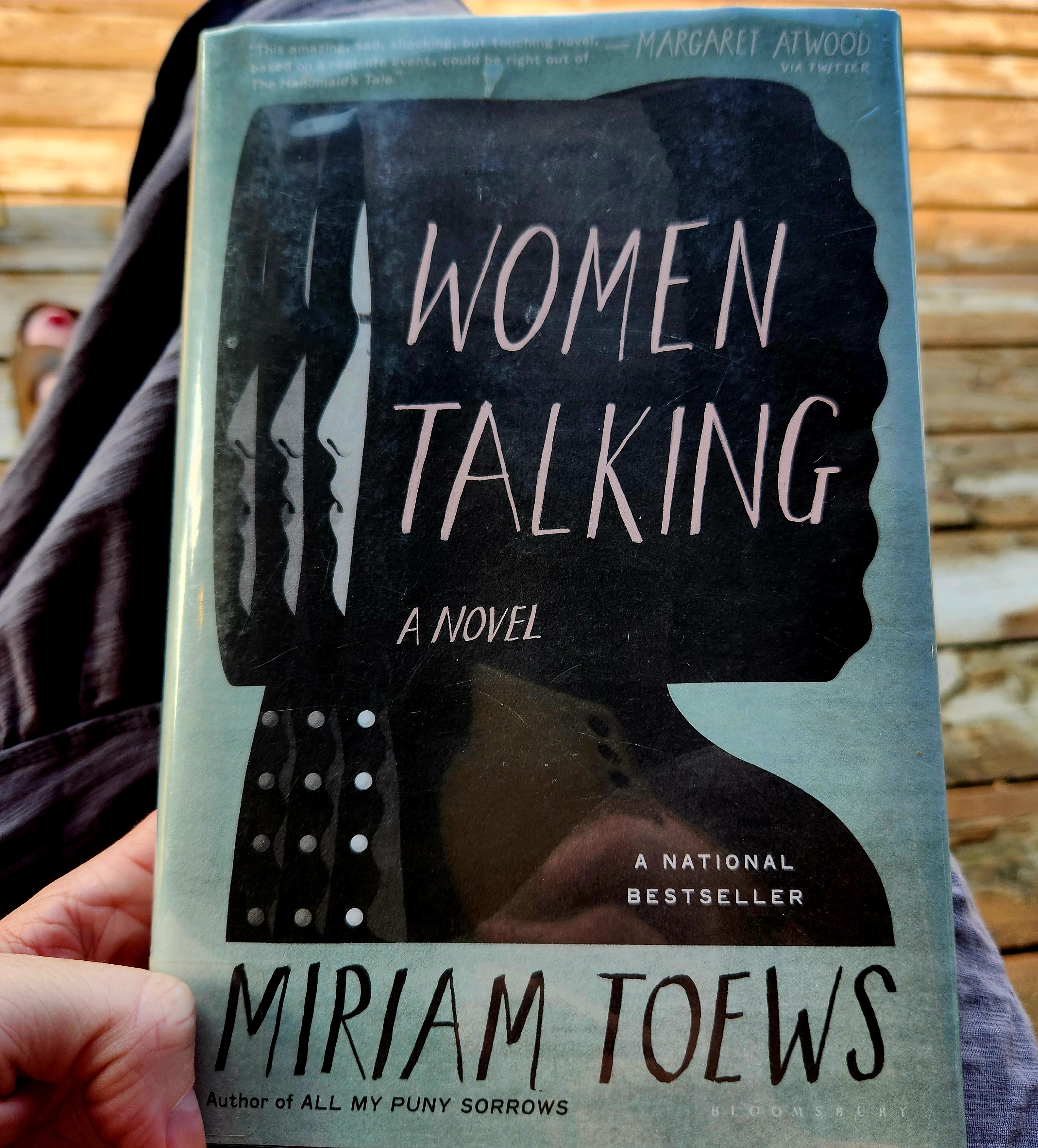
Women Talking by Miriam Toews

My latest read was Women Talking by Miriam Toews. I did not see the film, but heard about the horrifying real-life premise, and it really stuck with me. This book was excellent yes, but I do have more to say about it.

This is a dialogue-heavy book. And those are tough, imho. It actually is mostly “women talking.” Most of the book struck me as a kind of feminist 12 Angry Men, and that was exciting to me. Toews pulls off the heavy dialogue, though it must have been no easy task. Toews was also able to draw out the unique qualities of the characters in a fairly limited space. Furthermore, Toews is particularly well-positioned to write this book, based on her own Mennonite background. She is able to draw on the kinds of religious philosophy in a way that felt very real to me as a reader.

[Spoiler] (though I still think the book would be worth reading): The book is narrated by a male character, August, who is a troubled young man and village teacher of the local young men. He is also a victim of the same oppressive culture of men that has also preyed upon these women. He takes notes during the women’s meetings. (The women are not allowed to learn to read and write, so they cannot take notes themselves.) At first, it seems powerful that the women cannot take their own notes, and August’s presence serves as a reminder of that. He also helps add some drama and intrigue.

However, by the end of the book, the emotional landscape really shifts to August entirely. On one hand, this is the reality for so many women’s lives: their story is not told, except maybe through the perspective of men. I was cheering this book on, as one that was still able to center women’s voices and dialogue throughout. In the end, though, I felt that the story became August’s story, and I am willing to entertain the notion that this is just the framing, and this is just how it is, and this can still be a feminist account, but as a reader, I wanted it to end differently. I wanted it to end through the lenses and perspectives of the women.

If you read it, tell me if you loved the ending, or if you wanted something different.

Kairos by Jenny Erpenbeck

The reviews and the title made me read Jenny Erpenbeck’s book, Kairos. Indeed, this is a complicated and well-written book. It is about a relationship between a very young woman and a much older man. The romance between the two is intense and heady. Most people with a beating heart in their chest will recognize these feelings, and both of these main characters are able to fully express the intensity of their love. The book is also set against the backdrop of Germany in the 1980s.

Slowly, over the course of the book, the relationship ages and the characters’ feelings change in their complexity, and that is, I think, meant to parallel the political changes occurring in Germany as well.

The book also has deep political, cultural, and artistic references throughout. Unfortunately, I read the book at a time when I could not give it my full attention, and this is definitely a book that requires a close read in order to pick up what felt to me like dense literary references and subtle commentary. Honestly, I also had a hard time with the heavy themes. I think in another era, I might not be so fazed by them because it is all very well-done.

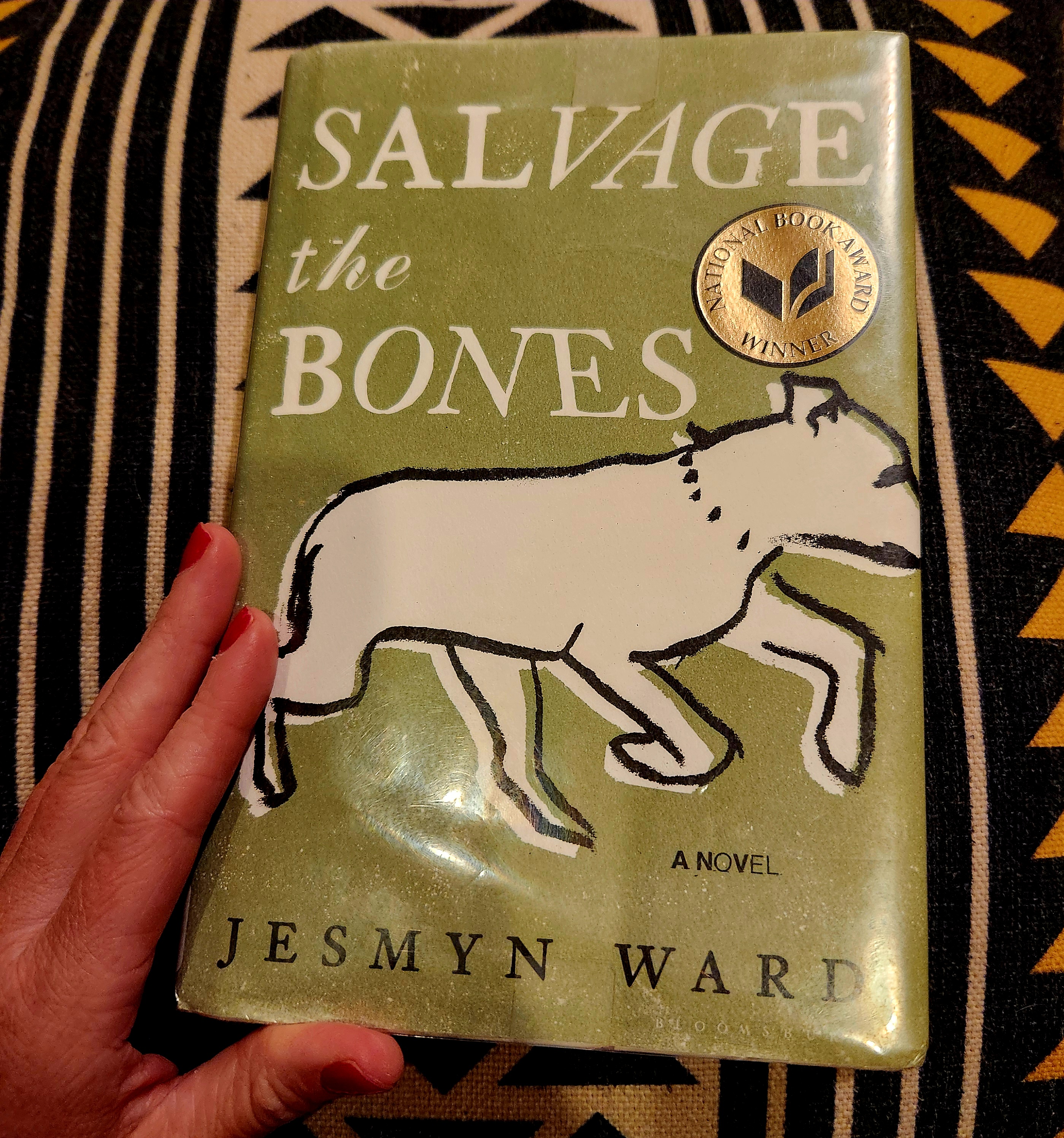
Salvage the Bones by Jesmyn Ward

This summer I read Salvage the Bones by Jesmyn Ward. Ward is on all kinds of must read lists, but this is the first chance I’ve had to read her work. I was impressed. I don’t necessarily care about basketball or dog fighting per se, but Ward made me care about it all, deeply. The human drama and the nuance were absolutely on point. I look forward to reading more of her work.

Interestingly, last summer, I read Their Eyes Were Watching God, which also features a hurricane, the 1928 Okeechobee Hurricane, I believe, which killed thousands. Similarly, Salvage the Bones features Hurricane Katrina. Surely Ward was influenced by Zora Neale Hurston as she wrote this book, and if she was, her work represents a kind of imitation of the best possible sort.

Both books function simultaneously as fiction, historical fiction, and literary fiction. This is an approach I love (when it can be found) because the history is there (you are learning something), but also the prose is right (it is literary prose), and it’s fiction–there is an engaging sense of plot. Once again, I am delighted that these writers exist in the world, that publishers recognize them, and that they are accessible to us all. It’s a public service, really.