Monthly Archives: November 2025

If You Don’t Like This, I Will Die by Lee Tilghman

When Lee Tilghman’s followers said she was problematic, out of touch, too privileged– that she should be cancelled–she responded with her book, If You Don’t Like This, I Will Die, where she basically says, “Yes, I am, and you don’t even know the half of it.”
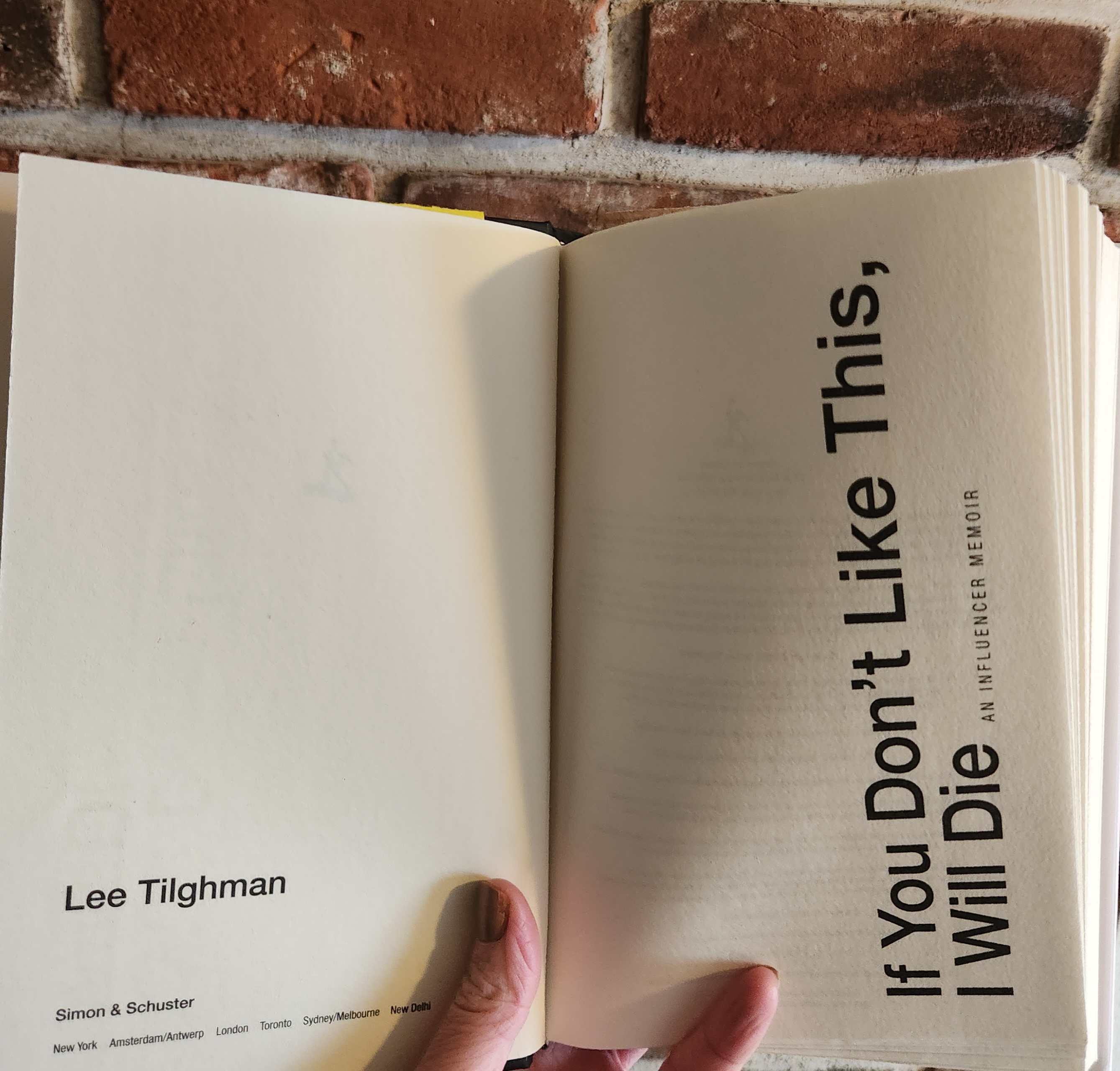
What follows is a behind the scenes look at the life of an “influencer.” Most people follow influencers, and Tilghman offers a behind the scenes look at the work, the lifestyle, and the mental sacrifice that can go into that world. Things are definitely not what they seem. Tilghman’s book highlights just how all consuming social media is–from excessive time, to resources, and to our attention too, of course. Posting became her entire life. She saw everything from the perspective of a post, and she worked very hard at it constantly. But she was so focused that she could not enjoy regular life.

Many people say that social media makes people sad because it makes them feel fomo. I do not experience that. However, I do experience the time suck that is synonymous with social media usage.

I paired this reading with Chris Hayes’s The Sirens’ Call, a book about the attention economy, and they work really well together! I recommend!
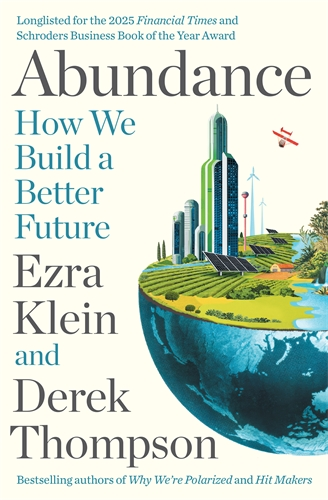
Abundance by Ezra Klein and Derek Thompson

I have this thought that the key difference between Democrats and Republicans is that Democrats are too deeply skeptical of their leaders, and Republicans are too deeply trusting of their leaders. Democrats think it is their patriotic duty to hold leaders at arms length and with skepticism. Republications think it is their patriotic duty to support and embrace. Logically, I know this is not true. In fact, I know Democrats that are pretty rah rah enthusiastic about their leaders and Republications that are pretty skeptical. However, in popular discourse, it does seem like there might be some truth to my initial observation.

Abundance by Ezra Klein and Derek Thompson illustrates that Democratic skepticism. Heck, they’re skeptical of all of government. And, but, also supportive of government too and still believing that government can solve many human problems.

However, all of this is besides the point. The main point–amid many interesting (and long) tangents–is that we live in a world of abundance. There are enough resources to easily feed everyone, for example. Within that abundance, hunger really does not ever need to be a thing.

This makes sense to me. It seems to me that we have the resources so that all basic needs can be met for everyone: food, shelter, and medicine. What about the capitalistic drive that “makes America great” you ask? Well, I think that after those basic needs are met, people will still want different and better food, housing, and medical care, and will also still want and innovate well beyond those basic needs. (Hopefully within the laws and regulations that keep us all relatively safe.) So, don’t fear?

I felt that some of the stats and interpretations in the book were unfairly interpreted, some inaccurate. There was a subtle assumption of upper class values as superior than those of the poor and working class. All standard fair for this type of book, fairly subtle, but also not winning over any new voters, ya know?

As a species we haven’t yet figured this out yet, but world peace seems so achievable. The book promotes the very real possibility of a peaceful and healthy future. What more could we want?