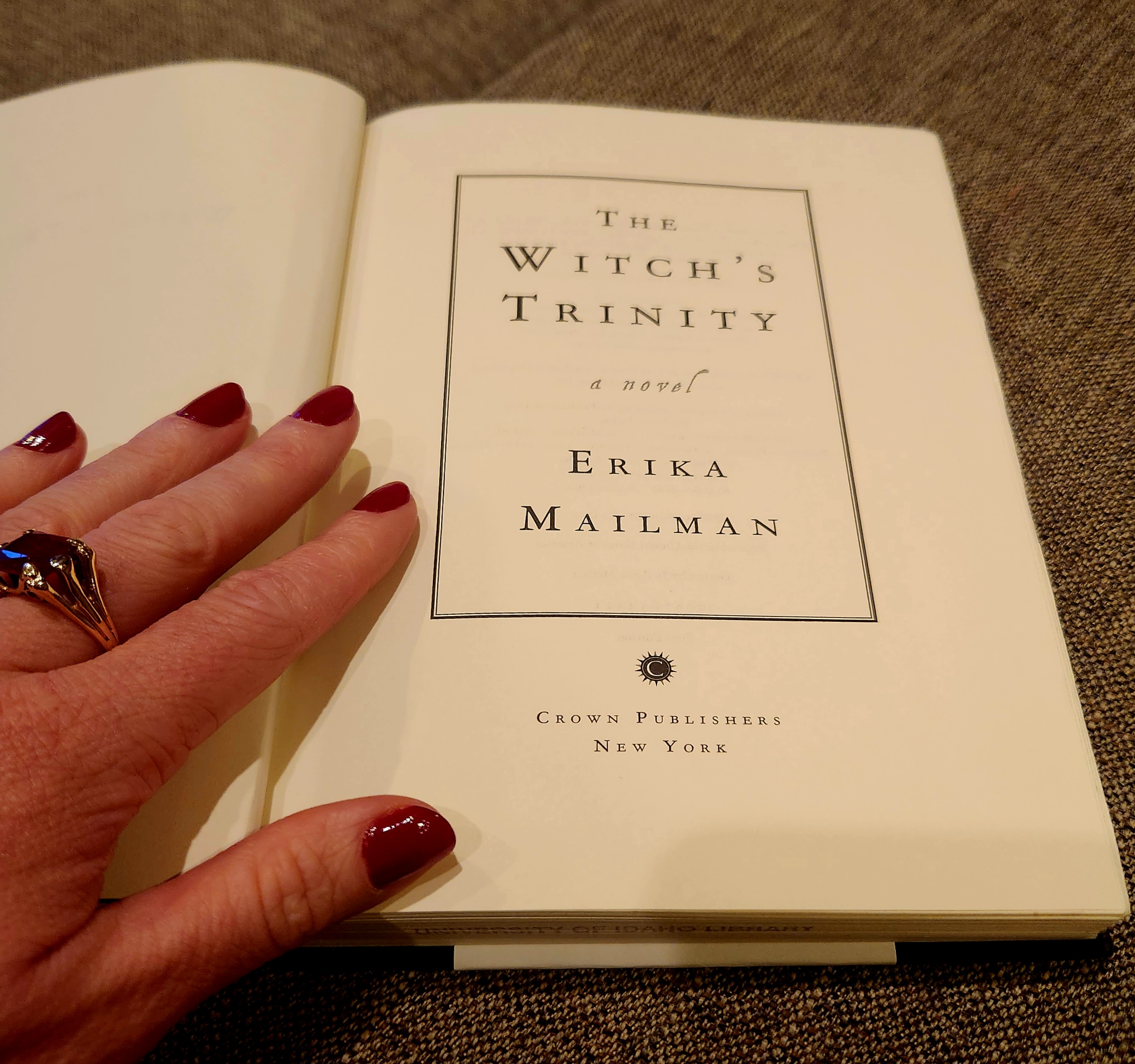
My research has recently lead me to the learn more about the horrendous witch hunts that took place, especially in Europe, circa 1400-1700s and about the book that was used for those persecutions, the Malleus Maleficarum. That research process lead me to read Erika Mailman’s book, The Witch’s Trinity. The book is not my typical genre, but it was an engaging read that helped inform my understanding of that time in history. Here are a few things that stood out:
Mailman’s scene setting in the book was phenomenal. The consistent tone and language throughout was effective. The details of village life and the beliefs of the time were captivating and really helped set the scene for the terrifying witch hunts of that time.
The book takes place in a village that is experiencing famine, and the reader can easily see how the intensity of starvation completely skews people’s ability to think straight, to be reasonable, or to act with justice. I also recently learned that people with anorexia begin to loose their reasoning abilities due to lack of calories, and that lack of reasoning only exacerbates the problem. So too could I see the role of starvation and suffering in the witch hunt accusations.
Next, in reading this book, and having recently reading through the Malleus Maleficarum, I was struck by just how dangerous these books can be, how dangerous it can be to so completely trust a perspective or an interpretation that disadvantages and even outwardly harms certain individuals. As I read, I thought of all of the good people I know who might be accused just because of their differences. In the end, nobody is except from the dangerous mob mentality that can plague human thinking.
The Witch’s Trinity is an engaging, plot driven book that is expertly told by the author. It’s an interesting read for those interested in this place, time, and circumstances.
 SHEREWIN