Author Archives: sherewin

Heaven by Mieko Kawakami

I decided to go ahead and read Heaven by Mieko Kawakami this summer while I was at it, and, wow, this is a heavy, but, of course, excellent book. It is such a departure from the much more distanced and gentler narrative in Breasts and Eggs, which I also read and wrote about a few weeks ago.
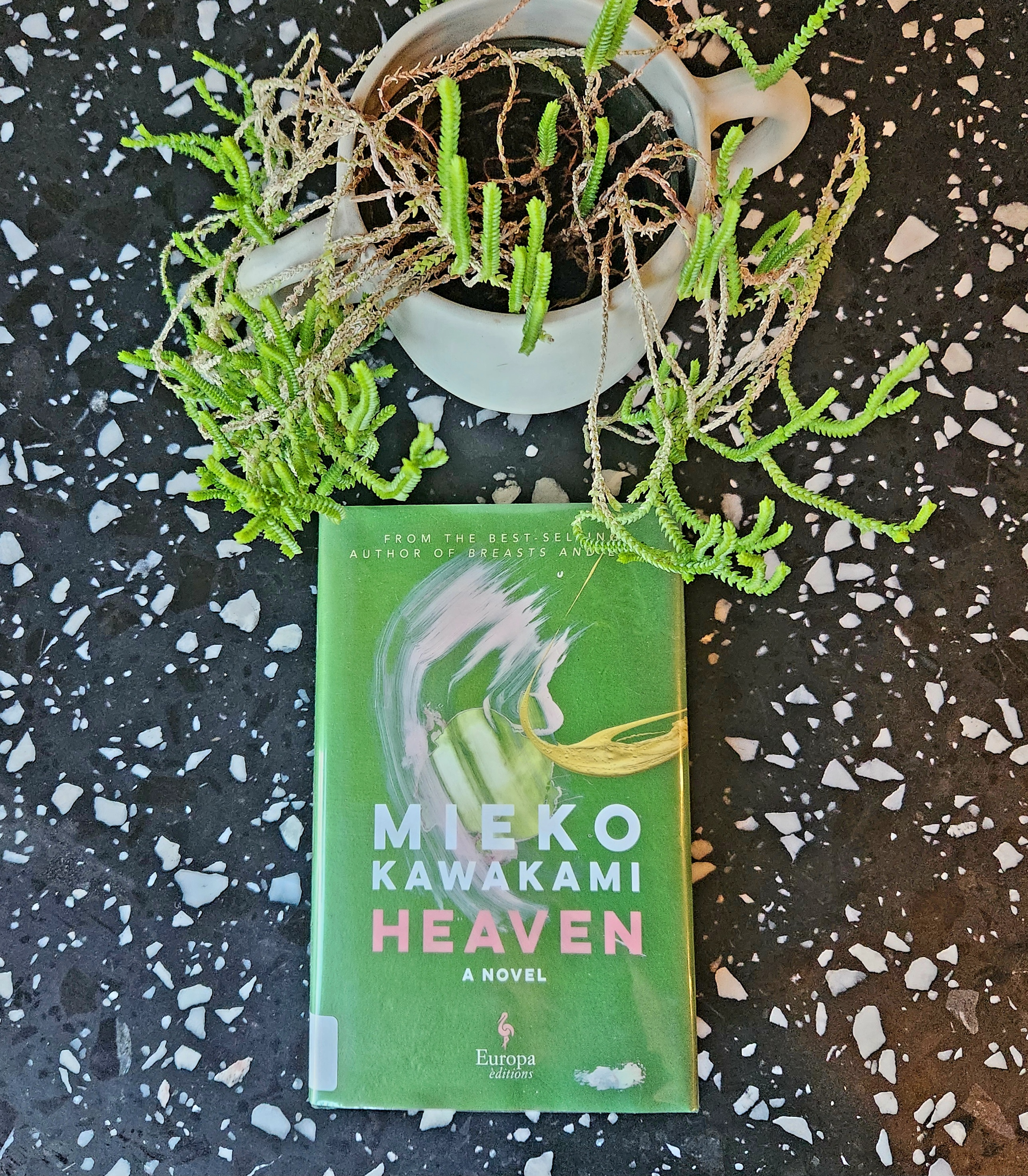
I’m not sure how I missed this, but there is a heavy portrayal of bullying in Heaven, and I don’t think that’s a spoiler, but I do think it actually does need kind of a big “trigger warning” splashed across the front of this book because it.is.intense.

However difficult this book may be, it is excellent, as Kawakami is proving herself (to me) to be an excellent writer–excellent pacing, character development, and a deep emotional landscape.

As an aside, this book is also much shorter than Breasts and Eggs, but my copy also included an excerpt of Breasts and Eggs at the end, and I’m not quite sure why this choice is being made because the current version available of Breasts and Eggs is also an elongated version of the original, but I just wanted to add here that this length of book–just Heaven–is a great length, and I think Kawakami works really well within this frame.

Deep Creek: Finding Hope in the High Country by Pam Houston

I could have sworn it’s been 20 years since I read Cowboys Are My Weakness by Pam Houston in a beautiful little old home near Durango, Colorado (can you imagine a better location?!), but a quick search reveals that it was actually published in 2005!

What I remember is that Cowboys Are My Weakness was a transformational book for me. It was so real and so unlike anything I’d ever read before. Remembering this book is saying something because I started this blog to keep track of my reading!

When I realized Houston had written her most recent book, Deep Creek: Finding Hope in the High Country, I was anxious to read it. The book is a collection of short stories, and the most pervasive thread is probably her own growth in adulthood and her increasing appreciation for, and rootedness to her animals and to the land–in this case, a 120-acre farmstead in the Colorado mountains.

As a woman who has also spent a good deal of time solo and who has also acquired her own little “slice of heaven” and sheep (even some Icelandic!) and other animal friends, while also working as a writer, teacher, and scholar, I was drawn to her story and her insights, like maybe she could lend a little guiding light. And she did. Somehow reading her writing feels to me like taking a refresher grad class in creative writing. What a gift!

Charlotte’s Web by E.B. White

E.B. White is obviously untouchable as a writer, and that was my sense this time through Charlotte’s Web too. I read this as a child (or had it read to me). I also have vague memories of struggling to get through it while reading it on my own as a child. I probably tried too young.

Here’s the well-worn copy that we read.

This book works on a fairly pleasant surface level, but of course it’s dealing with more challenging questions of life and death too. Death is mentioned, but for my very young children, these details seemed to be glossed over.

Between this and Stuart Little, I have to say that I prefer Stuart Little, which goes a bit deeper into the subtleties of human nature. Still, Charlotte’s Web is a must read in childhood, and older readers might like returning to this as well, as it offers one of the most poignant and well-paced denouements of all time.

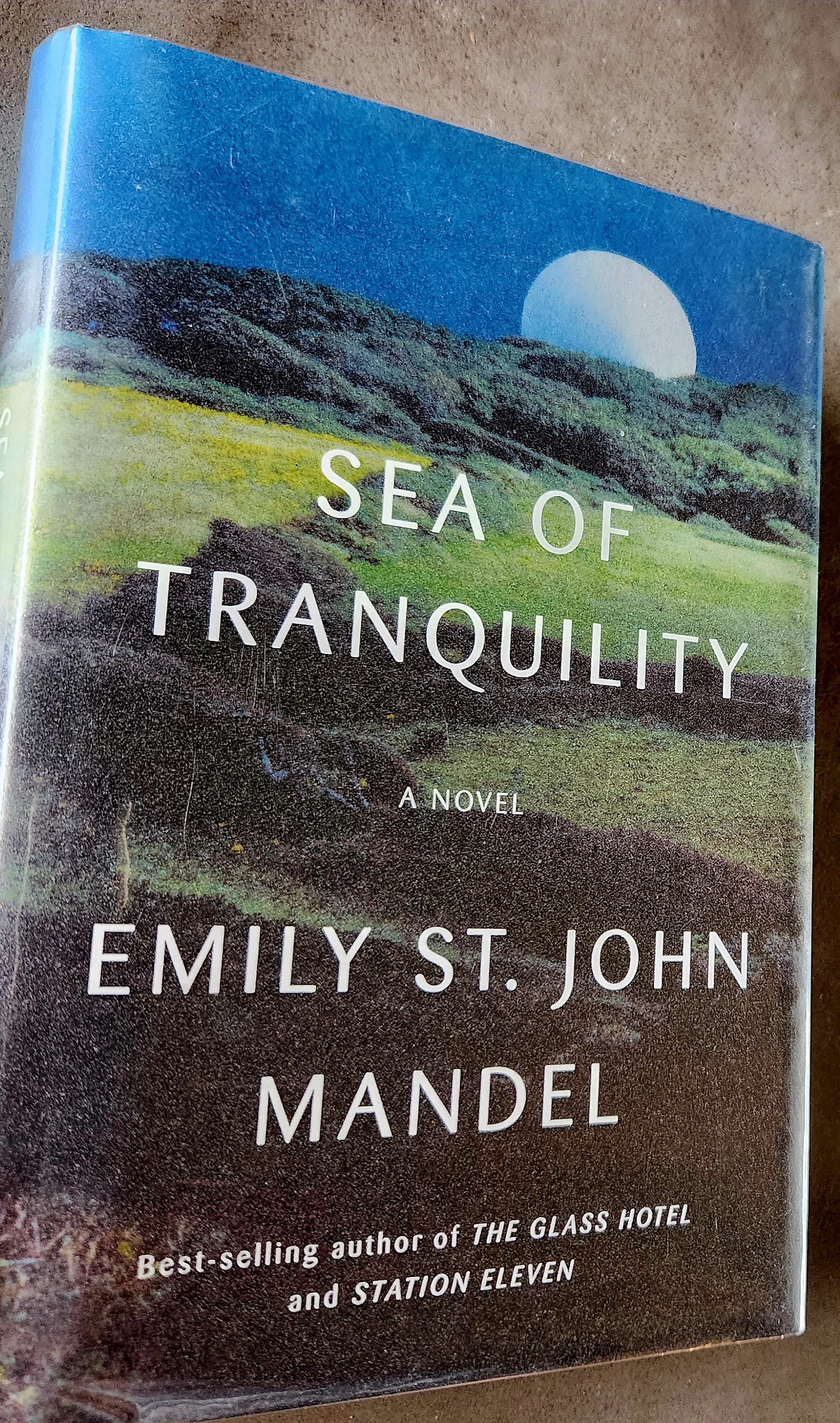
Sea of Tranquility by Emily St. John Mandel

What a great book! As you know, I normally do not read in this genre, but Sea of Tranquility by Emily St. John Mandel was exceptional. I even found myself slowing down at the end to savor the final events.

Too often I find that “sci-fi,” if you can call this “sci-fi,” lacks emotional depth, is too self aware, too clever, too focused on an overt plot. (I know sci-fi lovers will argue about this with me all day long.) But, I’ll always be impressed when an author can bring it all together in the writing–emotional depth, development, and beauty.

This is a book that examines the “simulation theory,” and the meaning in life, by jumping through eras of time. Each era is described with sparse, but powerful language. I recommend it!

Breasts and Eggs by Mieko Kawakami

Breasts and Eggs by Mieko Kawakami delves into a modern, urban female experience. The main character navigates the big questions women must face and the relationships they must navigate. Kawakami leads the reader through these issues without defaulting to any oversimplifications. The opposite, actually. Each question and relationship is as complex as real life. This book feels almost memoiristic, as I imagined Kawakami as the main character. (I’m prone to doing this though.)

The main character, Natsu, comes from poverty and brings herself out of that slowly as a novelist (the most unlikely of stories!). This character’s life leads her away from her family roots (in a sense) and complicates her relationships with her now very small extended family, not that these relationships are ever uncomplicated.

Her past (experiences with poverty and loss) also complicate her relationships and her abilities to be in a romantic relationship and to create a family of her own.

The book is strange. Natsu is confused. There is tragedy and there is triumph. It is nuanced, and that is true of the human experience, and in this case, it’s focused especially on the female experience.

I read that Breasts and Eggs was once published as a novella and then was expanded into a longer novel, which is the version I read. Through most of the book, I found myself wishing that this was two separate books, but then again, I love a good, short, digestible read. However, now that I’ve reached the conclusion, I do think extending it into one long book is defensible.

Lucy by the Sea by Elizabeth Strout

For the first half of this book, I felt myself impatient with the main character, Lucy. I am so hungry for a female lead who is not so passive, who knows her own mind. However, the writing was good enough that I suspected this all too common characterization of female leads was going somewhere meaningful, and I was right. I also grew to appreciate the spare writing style and the diary-entry style that she uses to develop a consistent sense of voice and theme throughout.

Elizabeth Strout’s Lucy by the Sea is a great book worth reading. Although this history seems so very recent, Strout’s book helps me recall just what the early days of the pandemic were like and the politics surrounding that time.

Even more interesting to me were her characters and the subtle insights she develops through the book to help the reader see just how they came to think and act like they do. None of this life gets wrapped up in a pretty bow, and Strout’s work reflects that not uncomplicated reality.

Their Eyes Were Watching God by Zora Neale Hurston

A literary classic, Their Eyes Were Watching God by Zora Neale Hurston is, indeed, an epic work of staggering genius. I thought I had read this book in college, but realized I hadn’t once I got started. Perhaps I only read an excerpt. While I have read several books with plenty of AAVE (African American Vernacular English), especially Alice Walker, I think this book had more dialogue and more AAVE than anything I’d ever read before. Much like reading Shakespeare, the text was challenging to get in to, but once I found my pace, the language became rich and beautiful–full of great humor and the depths of human emotional experience.

There’s not much more that I can say about this book that hasn’t already been said. It fell out of preference for several decades, but was revived in the 1970s by Alice Walker and has been a canonical text in Literature classes ever since. Much has been written about it, and rightly so.

The Sun in a Compass by Caroline Van Hemert

What a gorgeous book. Caroline is a friend from grad school, and so this book has been on my radar since it came out. However, it’s publication coincided with the birth of my son, and so I’ve been delayed in reading it. I’m so glad the time has finally arrived!

This story is undeniably epic. Reading it will reacquaint you with your adventuresome spirit, no matter how modest. At the very least, you will want to get outside and go for a hike. Information about birds and migration is artfully interspersed throughout. The uniqueness of the land and animals is overlaid with insights about climate change, and it’s impact.

Caroline’s book is the antidote to the seemingly cool, unemotional adventure teams that appear to work solely from complex datasets. And mostly male. She is fully human, full of life’s most pressing questions, full of fears and doubts, and also gumption and bravery. She brings readers intimately into the complex experience of a 4,000 mile human powered trek. We learn that just like the choices we make in life, sometimes there isn’t a well established path forward, and the answer is found in weighing options, wrestling with the odds, and searching one’s own preferences.

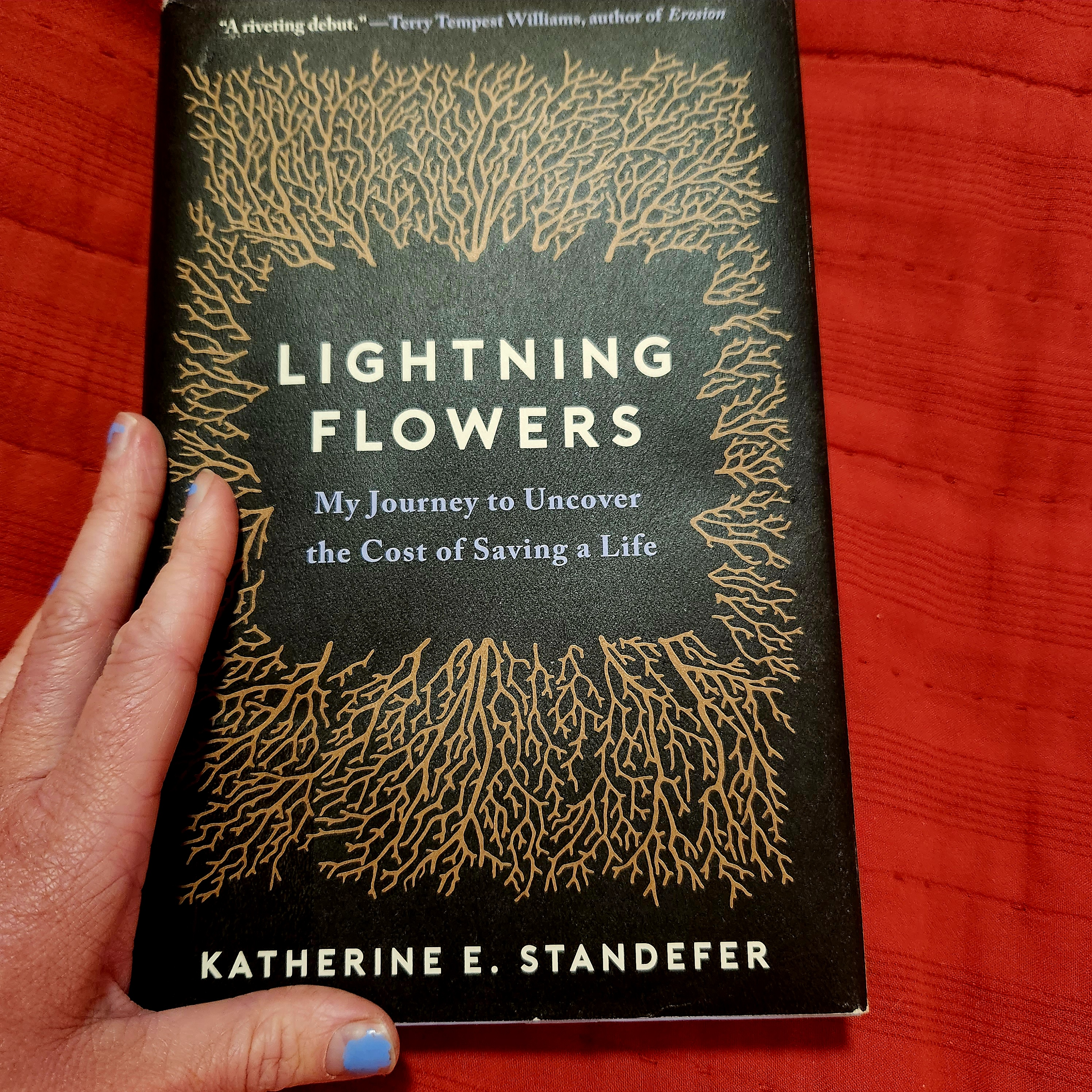
Lightening Flowers by Katherine E. Standefer

On one hand, this is an engaging memoir/work of nonfiction. Threaded throughout the book is an underlying love affair with in Jackson, WY. Since I’ve spent so much time in that area over the past eight years, I reveled in the familiar landscapes and people.

However, this book does something more important, in that it offers a deep and scathing and entirely human critique of the healthcare crisis in the US. Standefer’s life-altering medical condition is traumatic enough. However, the lack of access to the healthcare she so desperately needs adds a new layer of trauma, perhaps even worse than the medical condition itself, which required months of phone calls, arguments, moving to new states, establishing residencies, and various other loopholes that were only moderately effective, but disorienting and life altering.

Even with “good insurance,” I spent nearly a year arguing over about $20k in medical bills, after my first birth. I ended up paying cash for about half of that bill. However, what should be memories of a beautiful first year as a mother are somewhat marred by the horrible healthcare system we have in this country and the hours I wasted on the phone fighting for payment.

Now, several years later, I get shaky and cold every time I have to deal with a health insurance company. Before a procedure, doctors will tell you to check with your insurance. Insurance will (usually) give you correct information, but always with the caveat that it not a guarantee of payment. So, what good is it anyway?

Standefer tells an engaging story, but there is also an important social message conveyed through the story. This is the kind of writing that can create social change, and we need more of it.

This Is the Story of a Happy Marriage by Ann Patchett

What can I say? I thought this was a novel going in, so immediately it defied expectations. This Is the Story of a Happy Marriage is a book of *essays* by Ann Patchett. Before reading this book, my knowledge of Patchett was only vaguely that she’s a well-known female author. (I’m putting “female” in there for political reasons.)

These essays are good and follow the style of, some of the women I’ve read lately: Anne Lamott, Jane Smiley, Nora Ephron, etc. There’s an easiness and confidence in their voice and tone and especially in Patchett’s. Lamott perhaps is more questioning. Smiley a bit more interested in story, and so forth, but these women all seem very much a part of second wave feminism, confidently taking up spaces and stories.

I don’t fully relate to this confident and in control tone, but sometimes I do. These stories are worth reading. The writing is solid. Patchett marks an important time for female writers and perfectly captures a moment (okay, many decades) of women gaining and stage and gathering their voices.

It’s a great title too, am I right?