Category Archives: art

I Who Have Never Known Men by Jacqueline Harpman

I can admit when a book is perfect, and I Who Have Never Known Men by Jacqueline Harpman is a perfect book. While maybe I do not love this book, and while maybe this book will never be one that I recall with fondness, and while this is not typically my genre, it is one that is wholly unique and one that will stick with me forever. 

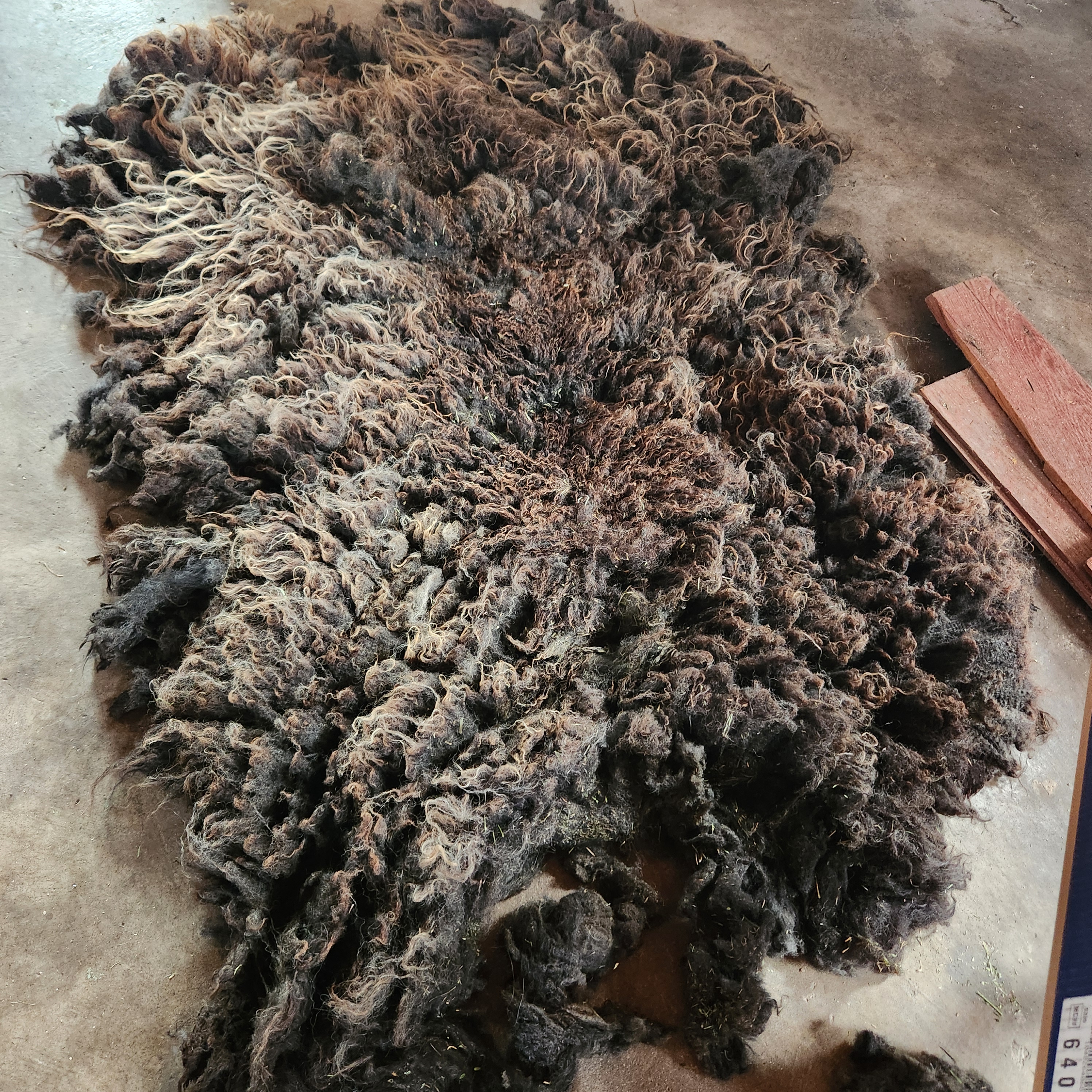
2025 fleeces are ready!

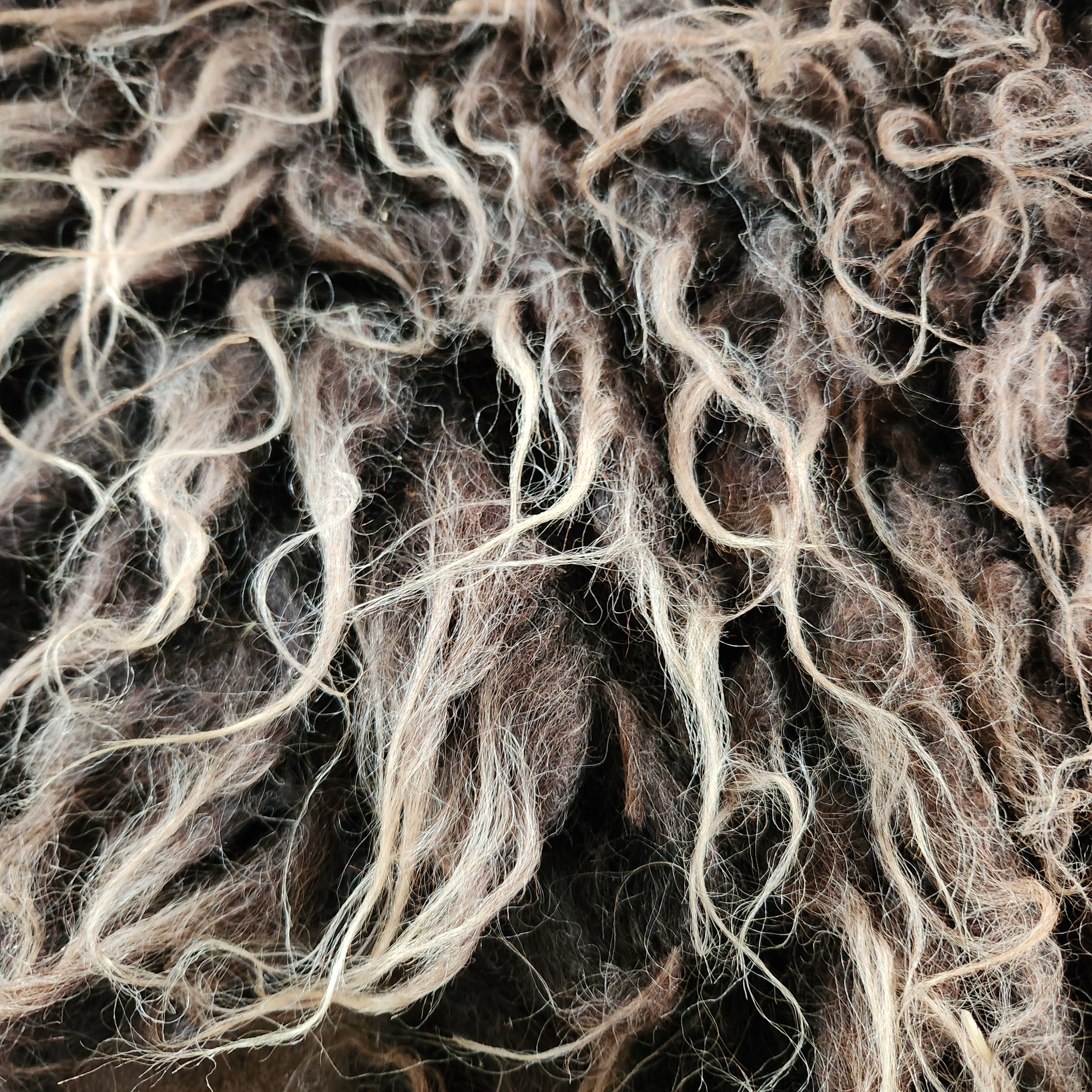
I raise fine fleeced Shetland sheep, which is a breed of primitive short-tailed sheep from the Shetland Isles. My ewes are colorful and (mostly) friendly. I shear them each spring, and occasionally I shear lambs in early fall.

Each spring this breed of sheep starts to “rise,” which is a natural release of their fleece. However, the fleeces do not actually release, and the process leaves a layer of wool close to the skin that is tough to shear through. So, I’ve been experimenting with shearing earlier in the year. I see that farmers in Montana routinely shear in mid-late February, and their climate is much colder than mine.

This year I sheared earlier than ever, and I could tell that some of the fleeces were just starting to rise, but mostly they were easy to shear, and I think I caught it in time. The other option is to wait until late spring and after the rise, which I like, and tried last year, but it can cause some confusion between lambs and ewes, and that’s a risk that I’d rather not take. So, I prefer to shear earlier if possible, before the ewes have lambed.

I was happy with this year’s fleeces. I loved the dark coming from Blackberry’s lambs, but also found it to be a little tough to shear. The light fleeces were mostly really light soft and easy to shear, and I might move more in that direction in years to come.

Someday I’d love to learn to weave, but until then, I love seeing what others create with these lovely fleeces!

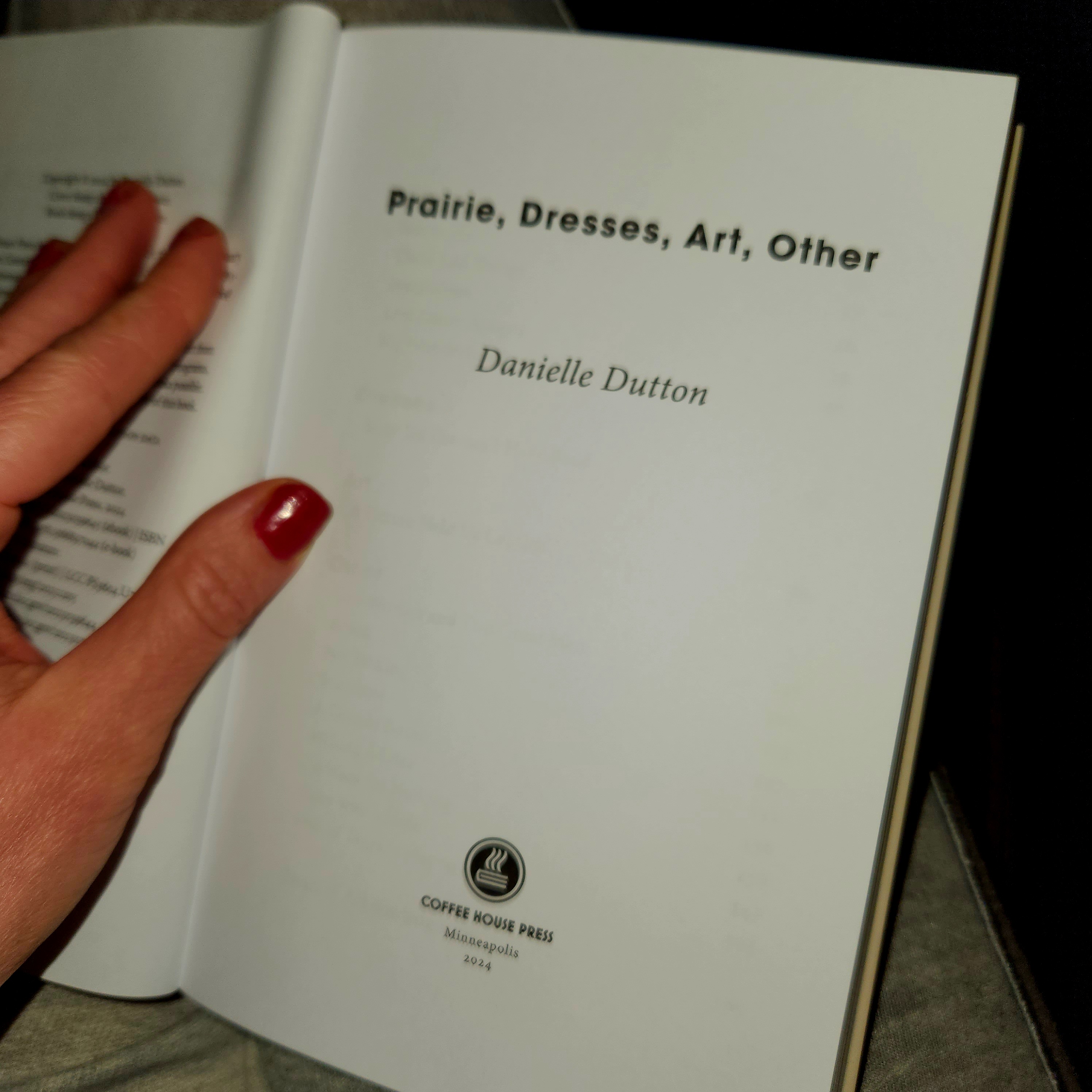
Prairie, Dresses, Art, Other by Danielle Dutton

The beginning of this book was not what I expected. The middle part, however, was. I expected Prairie, Dresses, Art, Other by Danielle Dutton to be much more theoretical (and it was!), but the first few chapters threw me. In a good way. The first few chapters were even scary!

This book reminds me of some of Maggie Nelson’s recent stuff, but this book of Dutton’s has more imagery, perhaps even more narrative, throughout than Nelson’s most recent, On Freedom, for example. Both are from Coffee House Press, which continues to publish all of the best stuff that the mainstream publishers are afraid of.

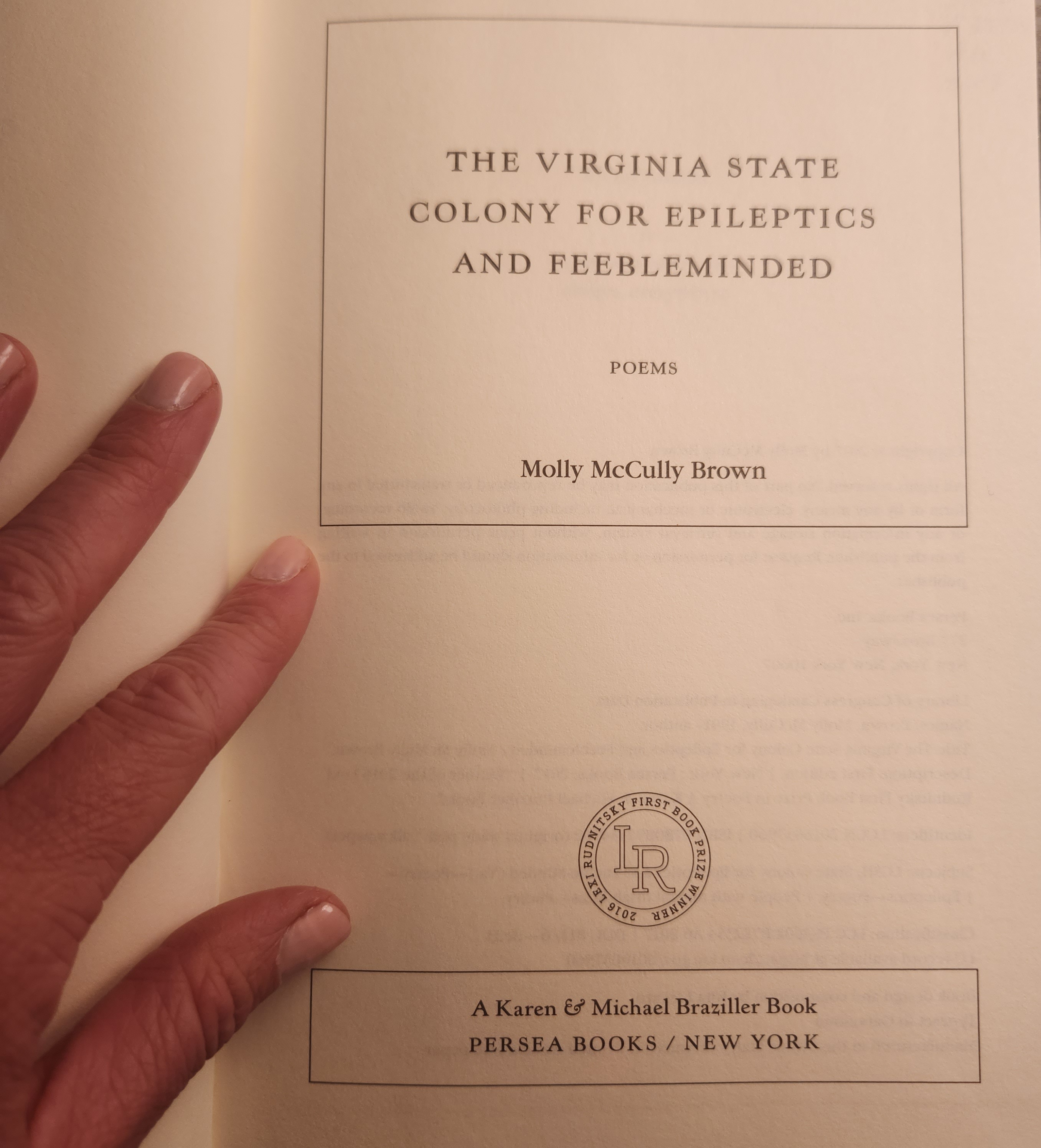
The Virginia State Colony for Epileptics and Feebleminded by Molly McCully Brown

I don’t read a lot of poetry, but recently picked up The Virginia State Colony for Epileptics and Feebleminded by Molly McCully Brown, and I’m so glad I did. I first read Molly McCully Brown when someone shared a link to an article she had written. I was blown away by the quality of the writing then. I follow her socials, and see that we know some people in common. So, I follow her work. In fact, I thought for sure that I had already read The Virginia State Colony for Epileptics and Feebleminded, but once I picked it up, I realized I had not. I would have remembered!

This is an excellent book of poetry. The whole project really needs to be poetry, and I like that about it, and I think nonpoetry readers (beyond popular poetry, anyway) will find this book to be a bit more accessible, and still completely artful. It reads up quickly. It does not need to be belabored. It just exists, and it is good. Go read it.

Molly McCully Brown won the Lexi Rudnitsky First Book Prize The Virginia State Colony for Epileptics and Feebleminded

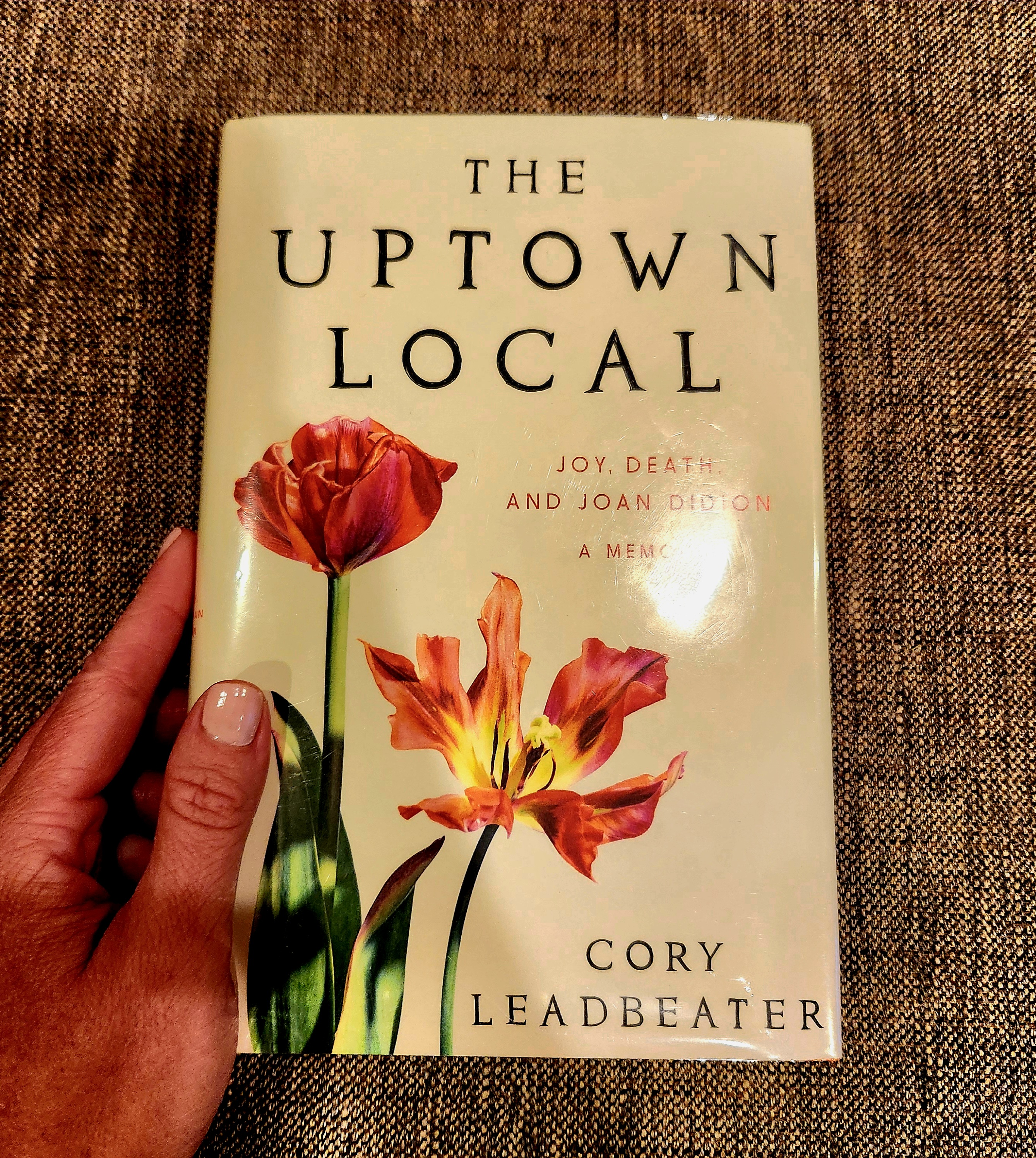
The Uptown Local by Cory Leadbeater

After reading Joan Didion’s Blue Nights, I picked up Cory Leadbeater’s The Uptown Local at the library because it is about his life working as Didion’s assistant, and my interest in Didion had been renewed. This is a memoir, and Leadbeater has quite a lot to share about his own life and creative process, as well as what it meant to him to work so closely with Didion.

This book is honest and insightful, and very self aware. Readers will get some Didion fixes, but more than that, it offers insight into what it might’ve been like to be her assistant in her final years. And, I’m sure many readers and writers probably have fantasized about just such a job. I have.

Leadbeater portrays their dynamic as a kind of mother son relationship. In fact, Didion refers to herself a “mommy” in her book inscription to him. Leadbeater seems to wear his troubles on his sleeve, and Didion seems to not shy away from them. She seems to fully embrace and welcome him, even despite (or because?) of his challenges. Even when her more aristocratic friends disregard him, Didion is stalwart. I wonder if she saw her own daughter in Leadbeater. Some of their troubles seemed the same, from what I can gather, which is very little.

In the end, both Didion and Leadbeater both offer insights on relationships, art appreciation, poetry, and how to live a meaningful life–something we could all probably use.

Fleishman is in Trouble (miniseries)

Each year I budget time for about one show, and this year that show was the tv miniseries Fleishman is in Trouble. After reading the book, and hearing all the hype about the show, I wanted to see what it was all about. And, let me tell you, the show was what they said it would be. I think the show is better than the book, and I don’t need to feel bad about saying that since the author, Taffy Brodesser-Akner, also wrote the tv adaption.

[Continue reading only after you’ve seen the show.]

Basically, I just want to write out some of the things that I thought were really interesting about this piece. I thought the role reversal of the Toby character was interesting. I appreciated how he was in the traditional “woman’s” role in the show as emotional laborer and primary caretaker of the children in the family. His work is meaningful, but it (and he) is chronically undervalued.

I also appreciated how complicated Rachel’s role was. Like all of the characters in the book (really), she behaves terribly, and is good, but her backstory and raison d’être is fully and humanely formed. As a career-driven woman, she cannot win with her husband, and yet she is sexualized by a friend’s husband exactly because she is career driven, opposed to his own stay-at-home wife.

Lastly, and I think this is where the tv series really shines in the last few episodes, I really appreciated Libby’s complexity too. As the narrator, I wanted to trust her to make sense of these people, but it becomes clear that she is also emotionally stuck and is actually behaving in really sexist ways, even though she identifies and pontificates as an outspoken feminist. Her husband also takes on a typically female role in the relationship, managing the family and holding it all together as Libby gallivants around.

A take away for me lately is that relationships are hard and divorce is hard. We are too caught up in our own stories to see anything clearly. And yet, there is hope. And also cynicism. Everything. The entire show just pulls it together beautifully.

Blue Nights by Joan Didion

I just finished Joan Didion’s Blue Nights with actual tears running down my face. That’s probably not the best way to describe this book because while it is known to be about loss and aging, it is also not a tear jerker in my opinion. It is a beautifully written book that I read with great care, even taking the time to look up some of images and stories from the designers and famous characters she mentions. Even still, this slow burn packs a powerful punch as readers round the bend toward the ending.

Didion is one of the most famous writers of our time and is critically untouchable in my opinion. Some reviewers said this book was not as tight as her earlier work, but if that is true, and I do not think that it is, it is still a great book that offers a good deal of artistry around some of the most challenging of human experiences.

I read female writers of this generation with a good deal of interest (and I seem to read a lot of them lately). The tone in their writing has this formal, northeastern accent type of thing going on, and they have this deep femininity that I don’t think even exists anymore due to cultural constraints. I just…marvel at these people.

Didion is completely modern and completely relevant, and she made her daughter’s school lunches, and she wore red leather sandals with four-inch heals every day. What an icon.

Kairos by Jenny Erpenbeck

The reviews and the title made me read Jenny Erpenbeck’s book, Kairos. Indeed, this is a complicated and well-written book. It is about a relationship between a very young woman and a much older man. The romance between the two is intense and heady. Most people with a beating heart in their chest will recognize these feelings, and both of these main characters are able to fully express the intensity of their love. The book is also set against the backdrop of Germany in the 1980s.

Slowly, over the course of the book, the relationship ages and the characters’ feelings change in their complexity, and that is, I think, meant to parallel the political changes occurring in Germany as well.

The book also has deep political, cultural, and artistic references throughout. Unfortunately, I read the book at a time when I could not give it my full attention, and this is definitely a book that requires a close read in order to pick up what felt to me like dense literary references and subtle commentary. Honestly, I also had a hard time with the heavy themes. I think in another era, I might not be so fazed by them because it is all very well-done.

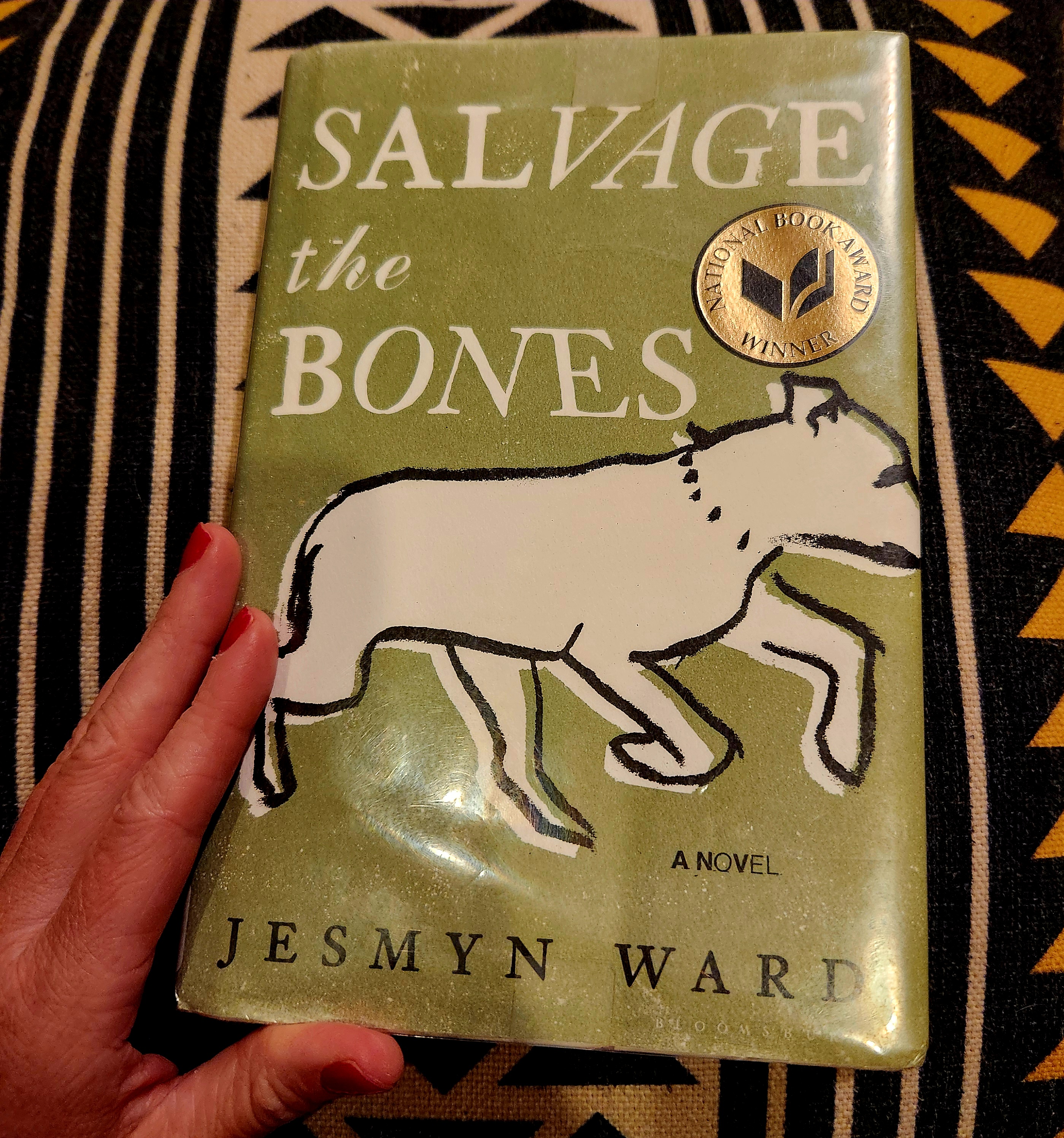
Salvage the Bones by Jesmyn Ward

This summer I read Salvage the Bones by Jesmyn Ward. Ward is on all kinds of must read lists, but this is the first chance I’ve had to read her work. I was impressed. I don’t necessarily care about basketball or dog fighting per se, but Ward made me care about it all, deeply. The human drama and the nuance were absolutely on point. I look forward to reading more of her work.

Interestingly, last summer, I read Their Eyes Were Watching God, which also features a hurricane, the 1928 Okeechobee Hurricane, I believe, which killed thousands. Similarly, Salvage the Bones features Hurricane Katrina. Surely Ward was influenced by Zora Neale Hurston as she wrote this book, and if she was, her work represents a kind of imitation of the best possible sort.

Both books function simultaneously as fiction, historical fiction, and literary fiction. This is an approach I love (when it can be found) because the history is there (you are learning something), but also the prose is right (it is literary prose), and it’s fiction–there is an engaging sense of plot. Once again, I am delighted that these writers exist in the world, that publishers recognize them, and that they are accessible to us all. It’s a public service, really.

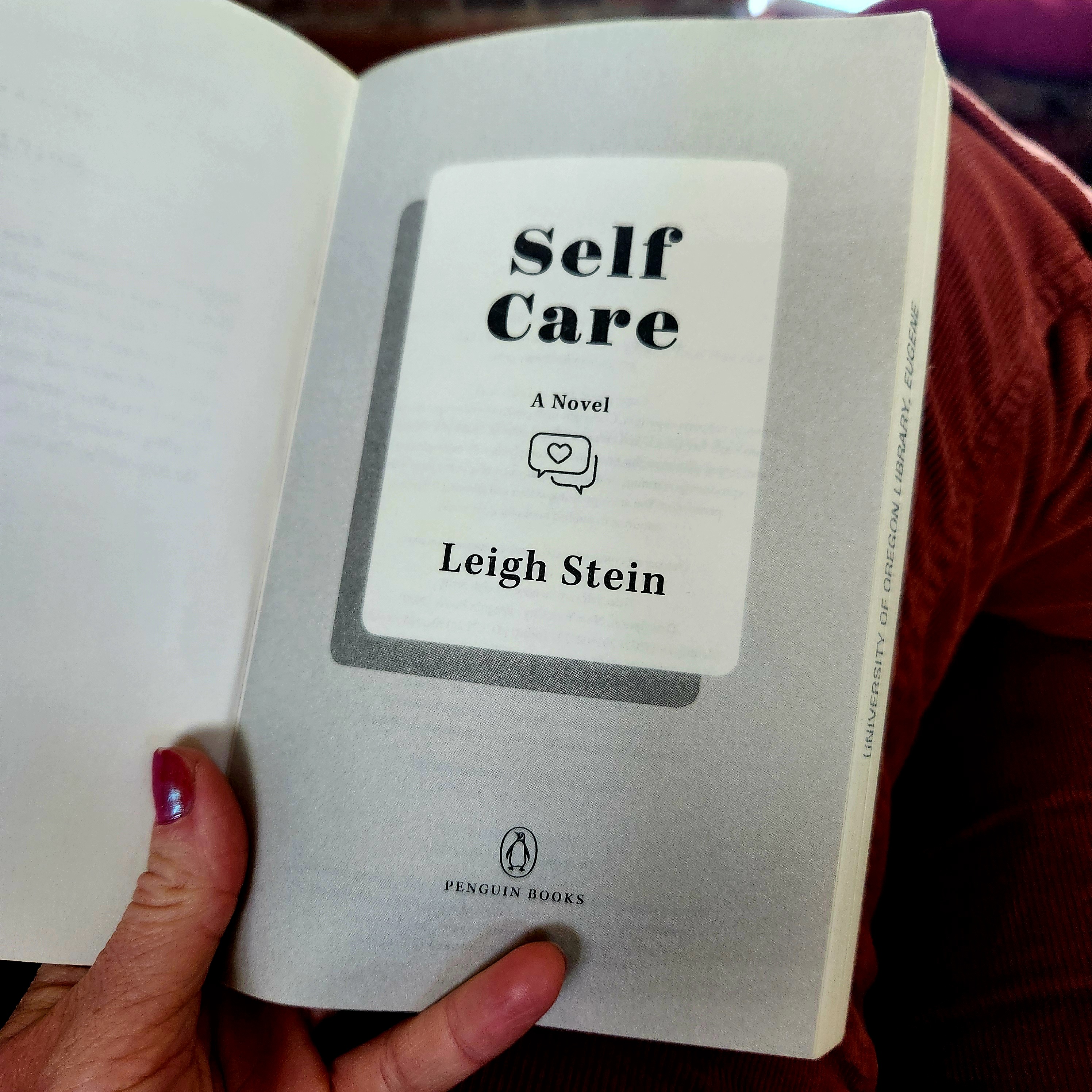
Self Care by Leigh Stein

Self Care by Leigh Stein is a scathing, scathing cultural critique. I really enjoyed it, and I think you will too. On one hand, this novel functions as a plot driven story, with some interpersonal insights, relationships, and drama throughout, and a plot that moves along nicely. However, on the other hand, it also working on the level of cultural critique in a way that is deeply insightful. I have not read such a wise critique of women and social media ever.

The characters are, on every level and in every action, hashtag influenced. These women are smart, insightful, and good at their jobs, but, much like Stein’s own social media account (which I thoroughly enjoy), it is sometimes unclear if we’re working in a real life drama or a comedic cultural critique. As for the social media account, it is clearer (to me) that Stein is working in satire, but in the book, Self Care, it is not so obvious. The actions and beliefs of many of the characters will be funny/ridiculous to most readers (and also sad and tragic), but the main characters seem to be fully and unironically immersed in the work and the drama.

I do not say this often, but I think this novel would work well in a college class. It is light, and entertaining, and very readable, but the themes are so very relevant to the feminist and the contemporary human experience. Go read it, and let me know what you think!