Category Archives: books

The Lais of Marie de France

The Lais of Marie de France are real bodice rippers, so to speak. You can see how these stories of ancient romance have influenced everything from Shakespeare to Rom Coms since. There is a strong sense of love and loyalty in each story. The same intensity of life and death love stories, like Romeo and Juliet, are played out repeatedly throughout the lais.

the library’s copy

I read through these relatively quickly, after learning about them from a dear one’s scholarship. First, I was looking for significance in fabrics and cloth. I also frequently thought about the fabrics having just read A Short History of the World According to Sheep and learning more about the wool and processes (and abuses) that went in to making these fabrics.

Eventually, I just got caught up in each story–the excitement and intensity of the love, the suffering, and the joy. (Though, as with most romance, the “ever after” is short changed, and I think most of us are left wondering how that part’s supposed to work.)

The lais capture an intensity that is unique to human love and courtship, and honestly, I think it’s a really intense thing worthy of our focus. The main characters aren’t being cool or dealing with their baggage. They’re just strong and perfect knights, who win all of their tournaments, and fair and beautiful women, who are kind and loving and good, so much so that a knight would sacrifice his life to her, a life that many other knights had tried taking many times before. That they are already married to someone else or in some way betraying someone else is a liner note.

These lais are over the top, sometimes to the point of being ridiculous, but they are entertaining. And, they have literary merit too, not only because of their rich history and staying power, but because, as I read them, I was also inspired, for the first time in a long time, to write a few poems myself!

A Short History of the World According to Sheep by Sally Coulthard

My first book of 2022 is A Short History of the World According to Sheep by Sally Coulthard. This isn’t necessarily my genre, but it’s about sheep, and it was recommended somewhere online, and so I read it.

my copy of A Short History of the World According to Sheep

It’s an interesting book, and it did increase my appreciation for sheep and my understanding of the history of sheep and just how closely they lived and evolved with humans. The closer I am to livestock, I continue to be at peace with the omnivore diet. The relationship feels symbiotic, like we evolved together for this sacred purpose. Domestic animals changed significantly living alongside humans and vice versa.

The human relationship to wool was particularly fascinating. Understanding just how much wool has been produced over the years, and how that wool very much helped the evolution of the human species, and the rise of empires, was shocking. It was also difficult to read about the child labor that was used to produce so much of the woolen fabric that was used very nearly every purpose, especially 150 years ago.

Thinking about the domestication process of sheep, and other livestock, was also interesting to me. I had never thought that centuries ago, humans caught newborn wild animals, women may have breastfed them to imprint on them, and that is likely how the domestication process began. It’s shocking to think about.

I found Coulthard’s writing to be somewhat challenging. I would have appreciated a more linear organization. The chapter and subject titles are creative, but don’t add much to the understanding of the content. It’s a work of nonfiction, and those titles didn’t quite seem to fit. Additionally there were many missing transitions throughout, and so I sometimes had a hard time following. By the end, either because I was trained to it, or because the linearity improved, I started to enjoy the organization of the book.

It’s a book worth reading, but this is only especially true for us who really appreciate sheep in the first place.

2021 reading list

I read twice as many books this year as the year before, and although this year still felt very hectic, wrapped up entirely with child care, farm prep, and work work, I feel like somehow I hit my stride and was able to read a few books during key breaks throughout the year. Here’s hoping I can continue this pattern into the year ahead.

Idiot by Laura Clery

The Secret Teachings of Plants by Stephen Harrod Buhner

Meditations with Cows by Shreve Stockton

The Beadworkers by Beth Piatote

Iep Jāltok: Poems from a Marshallese Daughter by Kathy Jetñil-Kijiner

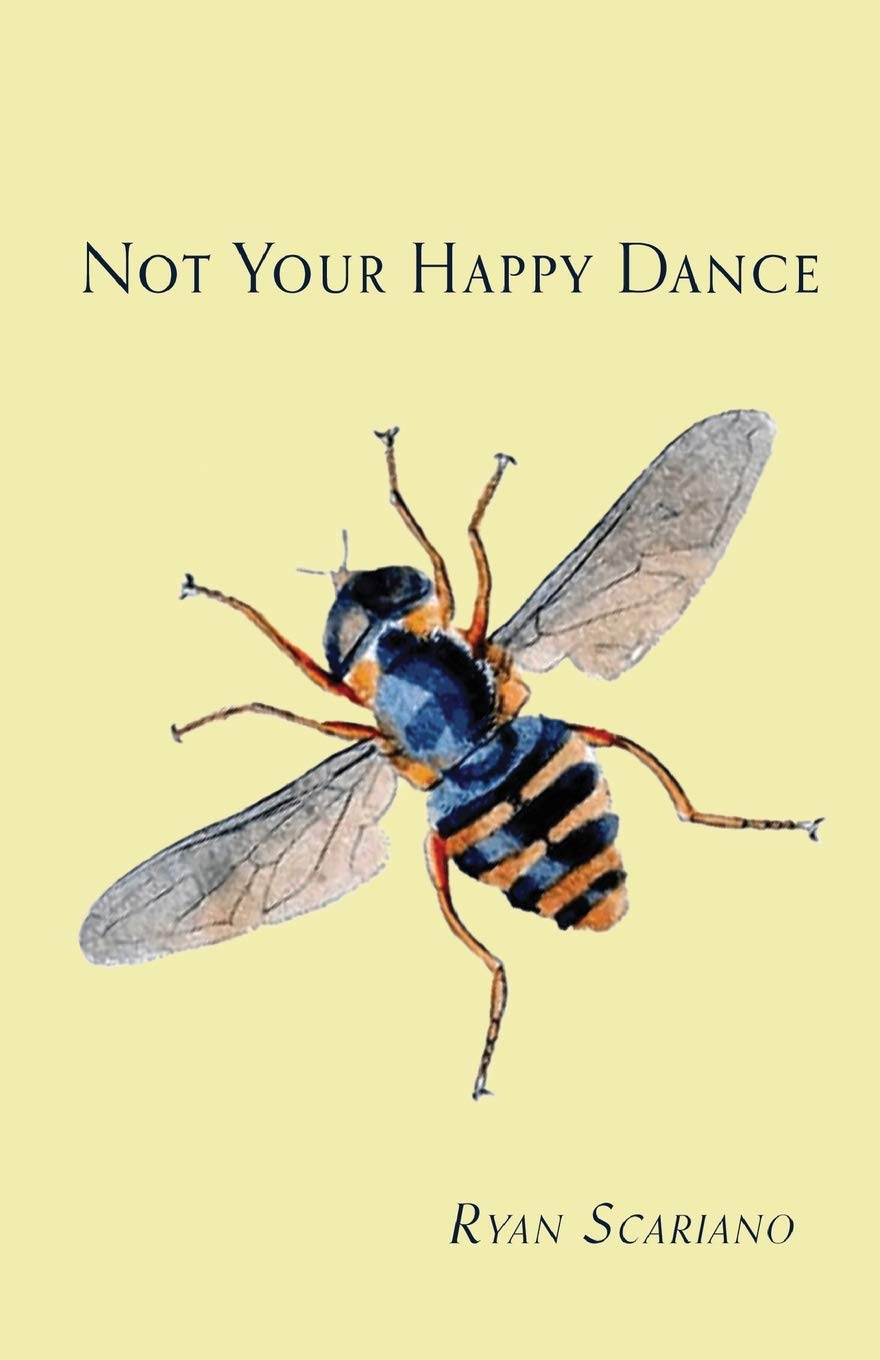
Not Your Happy Dance by Ryan Scariano

Raising Sheep the Modern Way by Paula Simmons

Raising Sheep the Modern Way by Paula Simmons

When I was a little girl, I was given a bummer lamb (a lamb that needs to be bottle fed) and the 1976 copy of Raising Sheep the Modern Way by Paula Simmons. I named the lamb “Sweet Pea” and loved taking care of my little pet. Growing up on a cattle ranch, I found the size of the cattle to be a little intimidating. I’ve never been a huge horse or dog person (although I’ve met many lovely individuals). Sheep, on the other hand, were just the right size!

I used my birthday money savings and bought two purebred Montadale ewes and started my little sheep herd. I did 4-H and FFA and quickly transitioned to Suffolk and Suffolk cross sheep, since that was primarily the breed used for market lambs in my area. Over the years, I read Raising Sheep the Modern Way many times as a reference book.

I enjoyed every minute of my time raising sheep and always hoped that I would be able to raise them again some day, although, with the price of land and so many other factors, I had a hard time imagining how that would ever happen. My mom kept a little herd after I graduated, but sold them nearly a decade ago. As for me, it’s been over 20 years since I personally owned sheep. Now, so many years later, I am finally at a place where I can raise sheep again. I have a little farm of my own, and this year I began the process of building sheep-tight fences, researching the breed of sheep that would best suit my situation, finding breeders, and, yes, purchasing sheep!

I decided on two polled Icelandic ewes, Frida and Freya, an Icelandic ram, Duncan, two Shetland ewes, Lavender and Melody, and a Shetland ram, Hugh. I wanted a multipurpose breed of sheep, and I wanted to keep the numbers small. The two breeds of sheep, Shetland and Icelandic, are quite similar, both have great wool for spinning in a variety of colors. I will also be doing all of my own shearing, so I also need a smaller breed that is manageable.

Since I have sheep again, I dusted off my old copy of Raising Sheep the Modern Way and read it front to back. This time, I was much more interested in reading about fleeces, recipes, and other sheep-related products that I was less involved with the first time around. It’s a great reference book with an author who is clearly knowledgeable about sheep and loves the species. Over the years, I have read several other sheep reference books, and they are not as good. Frequently, the author has much less experience with sheep, raising them for only a few years before attempting a book, or raising hair sheep, which are far less common, with much different management needs, or they aren’t specializing in sheep, but raising a small flock, alongside many other species of livestock. Meanwhile, the author of this book, is deeply specialized in sheep, with decades of experience.

This book obviously isn’t for everyone, but if you’re raising sheep, or interested in raising sheep, this is the book I recommend.

Image preview
my own well-worn copy

Not Your Happy Dance by Ryan Scariano

Not Your Happy Dance: Scariano, Ryan: 9781646624362: Amazon.com: Books

The author is a friend and colleague, and I’ve enjoyed reading his individual poems here and there and so was pleased to finally sit down and read his latest book, Not Your Happy Dance. And what a delight it was. Each poem was full of beautiful imagery and the kinds of thoughts and feelings that are difficult to name, but true and recognizable in the poems.

Once again, this is a short reading year for me, and so I was grateful for the reprieve that this book delivered. Now, having been read, it sits happily on my campus bookshelf. That’s where I’m keeping most of my books these days, the bulk of my collection having spent the two previous winters in my garage, neglected and still boxed up from my last move.

Iep Jāltok: Poems from a Marshallese Daughter by Kathy Jetñil-Kijiner

Iep Jāltok: Poems from a Marshallese Daughter is a beautiful book of poetry by Kathy Jetñil-Kijiner. I don’t usually read a lot of poetry, but this one drew me in and held me there.

The place where I work has a relatively large population of Micronesian students. In fact, a summer program for work put this book on my radar, and I’m so glad it did. I find myself wanting to learn more about this population. From the book I read about the indigenous connection to place, language, racism, climate change, climate refugees, refugees from US nuclear testing, food, love, religion, womanhood, family, and more.

I found myself searching for plane tickets. Just how far away are the Marshall Islands?

Meditations with Cows by Shreve Stockton

I’ve long been a fan of her blogs, especially Honey Rock Dawn, and read her second book about raising a coyote, but have really been looking forward to Meditations with Cows, which is about, well, cows and Shreve Stockton’s relationships with them.

The book is beautifully written. New York Times-style think pieces about the environment, the importance of grass, our relationship to food, and especially meat, and the nature of cows are interspersed with personal essays about milking cows, calving cows, and dying cows.

The book helped me think more about the importance of having personal connections to specific pieces of the land, to watch over the same path as the seasons change. There are dreary statistics: “[T]he amount of land owned by the one hundred families with the largest holdings totals forty-two million acres. And this is a 50 percent increase from 2007.” The arguments are absolutely true about our unhealthy and unsustainable relationship to the planet, but I found myself overwhelmed by the hopelessness of it all. Still, the book encouraged a “meditative” approach. One moment, one breath, one choice, and one relationship at a time.  

While reading this book, I am currently bottle feeding a little group of calves that for one reason or another could not be raised by their mothers, and so bovines have been heavily on my mind. I grew up on a cattle ranch and ate a lot of red meat growing up. As I grew up, and moved away from the ranch, a choice I made primarily because it is impossible to make a living raising cattle if you’re starting from the ground up, I naturally ate less red meat. I had less access to the good stuff, and store bought meat is just not as good. Finally, after years of work, I have a little place of my own that allows me to have livestock (though not nearly enough to making a living). I wondered if working closely with the cattle again would make me want to stop eating meat for good. Instead, the opposite has happened. I have been surprised to realize that the closer I am to the food source, the more at peace I feel about consuming beef (and chicken and eggs).

Not everyone can raise their own food, and not everyone wants to, but many of us now can have relationships with our farmers, can follow blogs and Instagram to see the life of a farm, the early lettuce sprouting, lambing season, the richness of July, and the cool autumn harvest. Connecting to the place and the food makes it all so much better in every way: spiritually, but also nutritionally, as we know now that foods produced outside of monocultures are more highly nutritious. Our taste buds can also confirm the difference.

The Secret Teachings of Plants by Stephen Harrod Buhner

I’m including The Secret Teachings of Plants by Stephen Harrod Buhner on my booklist this year, even though it got a hard skim after the first few chapters, which only occur after a lengthly “Note to Reader,” Introduction, and then Prologue. Finally, the reader gets to “Section One: Nature.”

The book promises to be split into two parts: the first half “Systole” and the second half “Diastole.” Systole promises to be the more linear, factual, mathematical half and diastole the more creative and emotional half of the book. However, the tone and approach is nearly identical in each “half.”

The approach is a rambling mix of pot smoker, metaphysical, mystical philosophy popular in the ’60s. It’s a meaningful and worthwhile philosophy, but it’s definitely a type. The writing is fragmented, made worse by constant quotes by the likes of Thoreau, which constantly disrupts the flow of the text.

My deepest disappointment is that the book promises to explore the emotional and creative teachings of plants, and that concept is completely intriguing and compelling to me. I would love to read that book! Unfortunately, this book does not deliver on it’s promise.

Idiot by Laura Clery

Ok, I have very mixed feelings about this book. On one hand, some of this author’s work is genuinely funny, and she has some genuinely crazy and frightening stories resulting from her addiction. On the other hand, there aren’t many laughs in the book, and the entire experience is somewhat cliche.

The story is one we have all heard. Attractive broken person heads off to Hollywood to make it big (in no small part because there is absolutely nothing else they could possibly succeed at). Person spirals into a chaotic and frightening world of addiction, “success” slipping in and out of grasp, until finally, after a decade or two in the business, some modicum of success is achieved and a tell-all book is written.

Clery’s comedy is more slapstick than is my taste. A lot of it is also pretty contrived. A central part of her work involves fat shaming to a degree. Her accent is imprecise. I find myself searching for her authentic voice, but it constantly oscillates between suburban Chicago housewife, valley girl, vapid model, and British.

In this book, the narrator is unreliable. She writes that her husband was divorcing when they met. But, fails to mention the wife when recapping her husband’s bio. She reveals herself making stupid choices, then she demonstrates awareness of stupid choices, but she also seem unaware of some of her toxic habits as well: borrowing money, codependency, and requiring caretakers, even in current presumably healthy state. She unselfconsciously mentions how lame it is that she can’t make a new friend group within a two month time period. Staying home alone for a few days is a rock bottom lameness that sends her spiraling. I think it would be funnier if she acknowledged her own neediness and superficiality. I want to believe that there’s a lot more complexity to this person, and maybe it was just an issue of editing.

And yet! For a book that was most definitely dictated into one of those little handheld tiny recorders, and then pieced together by a beleaguered ghostwriter, the stories are gripping, and the attitude works. Positive affirmations, eating lots of raw fruits and veggies, meditating, being tall and thin and beautiful, marrying a successful man, living in a temperate climate, attending AA, trying, and persisting actually is a recipe for inspiration and success! I’m glad I read it.

Idiot: Life Stories from the Creator of Help Helen Smash

Queenie by Candice Carty-Williams

If you’ll recall, in December 2019, I was part of a book gift exchange with a group of women who also had babies that year. I was gifted two books by one woman. The first I read and wrote about here: https://sherewin.com/2020/03/09/severance-by-ling-ma/. The second was Queenie by Candice Carty-Williams. Both were shockingly timely to 2020. Severance was about a global pandemic and Queenie is about, in part, race and racial injustice.

20200830_154359

So, here’s my take on the book. The story immediately drew me in. It starts with some relationship drama, and I am always happy to be a fly on the wall to any and all relationship drama.

But, as the book progressed, I grew weary of Queenie’s antics, and I didn’t always have enough emotional connection to the story to be patient with her as she navigated her failed relationship, her abusive/borderline abusive sexual escapades, and sabotaged her career. Certainly there were reasons, and certainly we would grow to understand them, but I sometimes grew weary in the waiting. (This happens more and more with me when reading works of fiction.)

While her relationships with friends didn’t always resonate with me (which probably says more about my relationship to “friends” than about her depiction), her relationship with her family became the most interesting aspect of the book to me. Fortunately, that narrative builds and builds throughout the story to a nice conclusion. (Not nice as in happy or resolved per se, but nice as in well done.)

Overall, this piece has literary merit, is well done, if a bit too long. I hate to make the comparison, but it really does allude to the Bridget Jones’s Diary story. It’s a workplace romance starring woman who is a mess. It’s a hallmark of British Literature, and Carty-Williams carries it on and makes it her own in Queenie. The author artfully integrates trauma and politics, specifically the #BLM movement. I am glad I read it, and I think you will be too.