Category Archives: existence

Breasts and Eggs by Mieko Kawakami

Breasts and Eggs by Mieko Kawakami delves into a modern, urban female experience. The main character navigates the big questions women must face and the relationships they must navigate. Kawakami leads the reader through these issues without defaulting to any oversimplifications. The opposite, actually. Each question and relationship is as complex as real life. This book feels almost memoiristic, as I imagined Kawakami as the main character. (I’m prone to doing this though.)

The main character, Natsu, comes from poverty and brings herself out of that slowly as a novelist (the most unlikely of stories!). This character’s life leads her away from her family roots (in a sense) and complicates her relationships with her now very small extended family, not that these relationships are ever uncomplicated.

Her past (experiences with poverty and loss) also complicate her relationships and her abilities to be in a romantic relationship and to create a family of her own.

The book is strange. Natsu is confused. There is tragedy and there is triumph. It is nuanced, and that is true of the human experience, and in this case, it’s focused especially on the female experience.

I read that Breasts and Eggs was once published as a novella and then was expanded into a longer novel, which is the version I read. Through most of the book, I found myself wishing that this was two separate books, but then again, I love a good, short, digestible read. However, now that I’ve reached the conclusion, I do think extending it into one long book is defensible.

Lucy by the Sea by Elizabeth Strout

For the first half of this book, I felt myself impatient with the main character, Lucy. I am so hungry for a female lead who is not so passive, who knows her own mind. However, the writing was good enough that I suspected this all too common characterization of female leads was going somewhere meaningful, and I was right. I also grew to appreciate the spare writing style and the diary-entry style that she uses to develop a consistent sense of voice and theme throughout.

Elizabeth Strout’s Lucy by the Sea is a great book worth reading. Although this history seems so very recent, Strout’s book helps me recall just what the early days of the pandemic were like and the politics surrounding that time.

Even more interesting to me were her characters and the subtle insights she develops through the book to help the reader see just how they came to think and act like they do. None of this life gets wrapped up in a pretty bow, and Strout’s work reflects that not uncomplicated reality.

The Sun in a Compass by Caroline Van Hemert

What a gorgeous book. Caroline is a friend from grad school, and so this book has been on my radar since it came out. However, it’s publication coincided with the birth of my son, and so I’ve been delayed in reading it. I’m so glad the time has finally arrived!

This story is undeniably epic. Reading it will reacquaint you with your adventuresome spirit, no matter how modest. At the very least, you will want to get outside and go for a hike. Information about birds and migration is artfully interspersed throughout. The uniqueness of the land and animals is overlaid with insights about climate change, and it’s impact.

Caroline’s book is the antidote to the seemingly cool, unemotional adventure teams that appear to work solely from complex datasets. And mostly male. She is fully human, full of life’s most pressing questions, full of fears and doubts, and also gumption and bravery. She brings readers intimately into the complex experience of a 4,000 mile human powered trek. We learn that just like the choices we make in life, sometimes there isn’t a well established path forward, and the answer is found in weighing options, wrestling with the odds, and searching one’s own preferences.

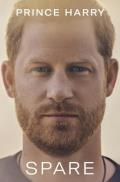
Spare by Prince Harry

After watching some of the recent interviews with Harry and Meghan, my curiosity was piqued to read Spare by Prince Harry. For those who have been following along, this is a great book. Fans of Princess Diana will appreciate it too. The book effectively captures his tone. It offers the kind of inside look that audiences never get access to. Prince Harry bravely takes up vulnerable and taboo topics in the book. He openly admits to his bad behavior. He openly admits to his anxiety and depression.

Where this book is a triumph is in its ability to show the royals as real, fallible, human people. Of course logically we know this, but due to tabloids, celebrities often get distilled down to products for consumption rather than treated as real people. I appreciated that about the book.

Strangely, I sort of identified with some aspects of Prince Harry’s experience. He writes about visiting the site of his mother’s death years later and mentions that its the first time he’d been to Paris, but I assumed he would have traveled to all of the world’s major cities frequently. His visit was in close proximity to my own first visit to Paris. But for me, it was more understandable. I was raised in a rural location without a lot of firsthand experience with the outside world. I could read about it, but I’d never actually, for example, walked the streets of Paris. It’s great, but it’s also a somewhat isolated experience. Prince Harry’s experience seems somewhat similar. While school and studies take up a big part of his life, another big part of his life seems to have been safely sitting alone in castles.

It’s clear that Prince Harry is traumatized by the loss of his mother at the hands of paparazzi. It’s clear that the trauma informs his own reaction to the paparazzi today, and that’s made even more evident in his drive to protect his new family. While others may say that he should ignore it, or that by recounting these baseless stories in his book, he’s just giving them more air time. There’s no accounting for a broken heart and how it will make you feel and what it will make you do.

I am sympathetic to Prince Harry, but I don’t see eye to eye with him on everything. I don’t need to. In fact, challenging the audience in these areas is probably part of what makes him so compelling. I am more sympathetic to the circumstances of the other members of the royal family. I think they’re in both a really privileged situation and a really limiting one as well. As is made clear in Spare, the royals are, again, real people with all of their own strengths and challenges, living within a limited, but also very privileged world.

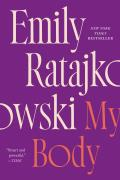
My Body by Emily Ratajkowski

My Body by Emily Ratajkowski is a unique book–part expose on the seedy world of modeling, fashion, Hollywood, and fame, and part memoir, with deep personal introspection. In the book, Ratajkowski, whom I was vaguely aware of as a model, but now a fan and follower on Instagram, shares the story of her rise to fame, known for her perfect body. But, she’s also critic of the abuse she suffers at the hands of both the industry and the larger culture. She’s a critic of herself too, acknowledging stories when she was too naive, too confused, too scared, or too complacent to do better. It’s a complicated book that sends readers on a trajectory of introspection about women’s bodies, while also offering a look into an elite (and also surprisingly not glamorous in so many ways) world that few get to experience. I hope she’ll write more, especially about motherhood. This book is worth the read!

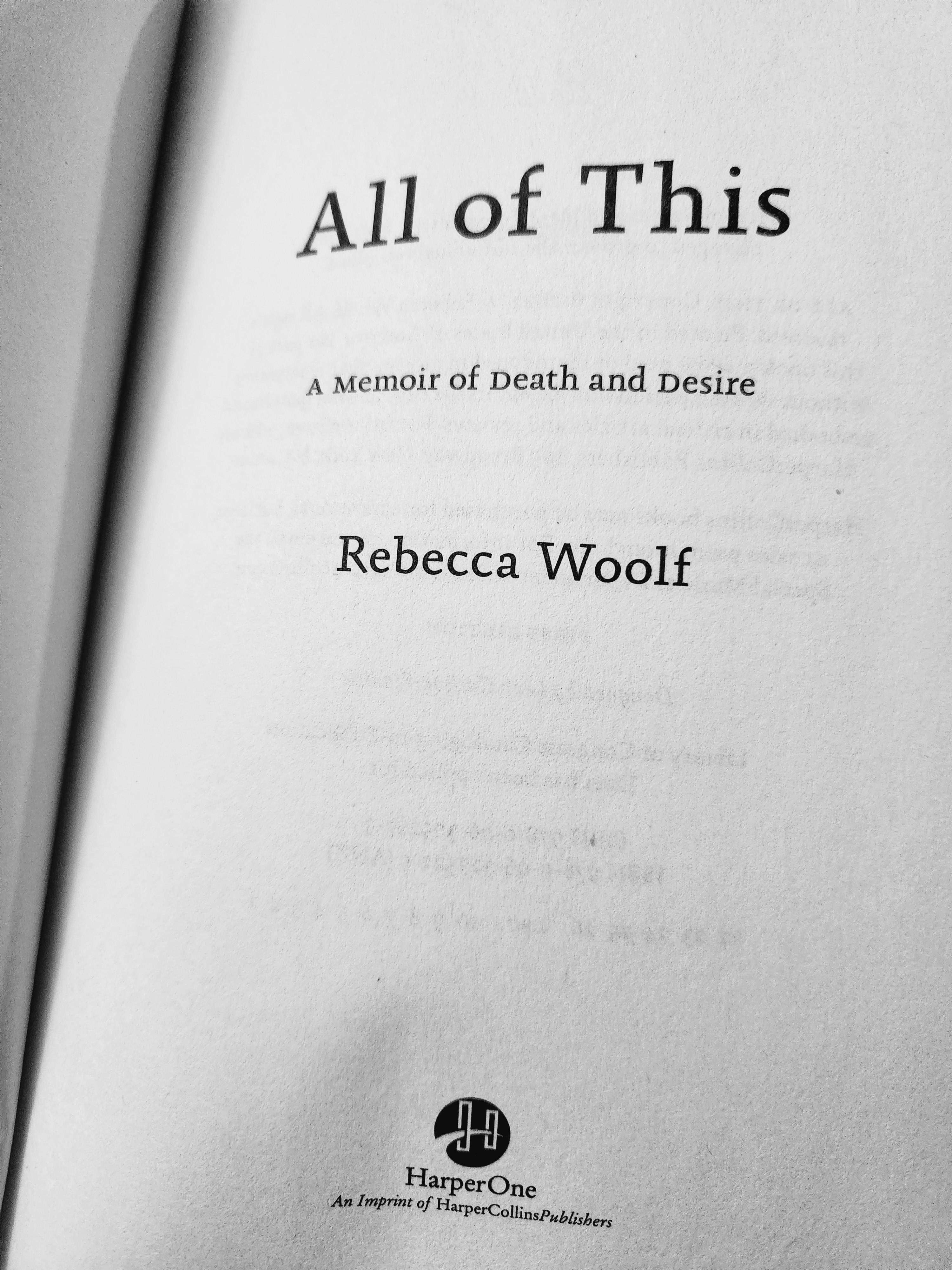
All of This: A Memoir of Death and Desire by Rebecca Woolf

First, here are my unsolicited blurbs for this book:
“Please option this for a film asap.”
“Woolf is a modern day Nora Ephron.” (Possibly influenced by the fact that I just finished Heartburn, but still!)
“This book is the true LA Story.”

After following her work online for years (as one of the thousands of people whose fingers hold her up in this cosmic game of light as a feather, stiff as a board), I have been eagerly awaiting my chance to read All of This: A Memoir of Death and Desire by Rebecca Woolf.

The first half+ of this book is a gripping narrative. Later, the book becomes less plot driven and slows, and I think that’s because the “after” is not/could not be a linear trajectory.

Woolf wrestles with what it means to be a feminist, or to become a feminist, and puts a magnifying glass to some of the common dynamics of life, relationships, particularly heterosexual relationships that are, to say the least, problematic. I was with her for these points because I also wrestle with many of the same questions. I differ though. Unlike Woolf, I was less tied down in my early adult life, and more so now, even though still not very “tied down” by comparison, and that is by design. I had my children later, but a decade ago, I was also reading about her life online. To be reading this book now, as I have little ones of my own feels very full circle, which she would enjoy.

Here are some lines I loved or identified with and/or that gave me pause:

First, as a fan of her writing, I loved seeing her include her numbered lists with numbers that get longer and insaner each time.

“I will not shrink myself nor prioritize people’s pleasure over my own.” Simple, true. It can be hard to recognize when it’s happening.

“Then the 2016 election happened.” This changed me forever too, and I am still not over it.

“WHAT IF IT DID NOT TURN OUT TO BE CHILL?” Just, lol, yes, this is what it is like to be a parent, mother, woman in life.

“I soon realize that it’s a lot faster for me to pack four lunches on my own.” This is just simply true and a lot of people don’t know it.

“My daughters. They are only mine now.”

“The bravest women I know are not widows. They are divorced.”

“And there is nothing I can do but let it go and drive him home. This is the moment I became a single mother.”

My Brilliant Friend by Elena Ferrante

I discovered Elena Ferrante from Mothers by Jacqueline Rose, which I read recently. I started with Ferrante’s My Brilliant Friend, the first in a long series, and I loved it! The writing is excellent. The content is thought-provoking, and it also has the long sense of story found in easier, longer reads–not a common combination. Although it is long, I flew through it.

While I highly recommend the book, I will warn that I found the conclusion to be somewhat disappointing. I wanted a strong wrap up for this particular book, but instead found myself needing to read more of the series in order to get that. It will probably require reading all four books.

I ended the book somewhat exhausted and unwilling to continue with the series. Maybe I’ll return to them someday. They’re certainly worth it, but, and I can’t believe I’m writing this, I really don’t have the energy to give them at this point in my life.

I’m glad these books are out there. Sometimes I just need a good book, a good story, and I now know I can turn to Ferrante to get that.

I am also inexplicably obsessed with the cover art:

Orwell’s Roses by Rebecca Solnit

True to form, my “breezy summer beach read” was neither breezy nor read on a beach. Instead, I read Rebecca Solnit’s 2021 book, Orwell’s Roses. Solnit is an incredibly prolific author, and I like her work, but it is heavy and deep, and I rarely feel up to the task. However, at the beginning of the summer, this copy caught my eye at the local library, so I checked it out and read it whenever grading was complete and babies were asleep.

Here’s the copy that I read.

This book is about Orwell. Politics. The roses that he grew at his cottage. His interest in gardening and the natural world, and the hope that can be found there. Writ large, the book is about labor and freedom and politics and all of the themes of Orwell’s own writing, reflecting on labor and illness in Orwell’s time and also today. Solnit draws links between political strife that Orwell wrote about and the political strife of today.

As you know from my Instagram, I am interested in plants and gardening, especially flowers. I love the idea of growing food in whatever piece of earth one might inhabit. I like my own sheep, chickens, and flowers. I love to take a close look at a plant and watch it as it changes throughout the seasons and over the years. Evidently, Orwell and I have that in common. Unlike Orwell (and Solnit), however, I am less insightful and imaginative when it comes to politics, so I appreciated Solnit’s ability to meld the two together in ways that helped me learn and see these subjects all in a new light.

When I start reading Solnit, I think “This is mostly boring and only a little interesting,” and those thoughts are interspersed with with absolutely lovely prose and engaging content, and I love that about her writing. Reading Solnit is like the good feeling I have after I eat my vegetables and get my exercise. When it comes to nonfiction, Solnit is the realest deal. She also gives me permission to go on long tangents, and take up words and space, because it is meaningful to me, and trust that it will be meaningful to others as well.

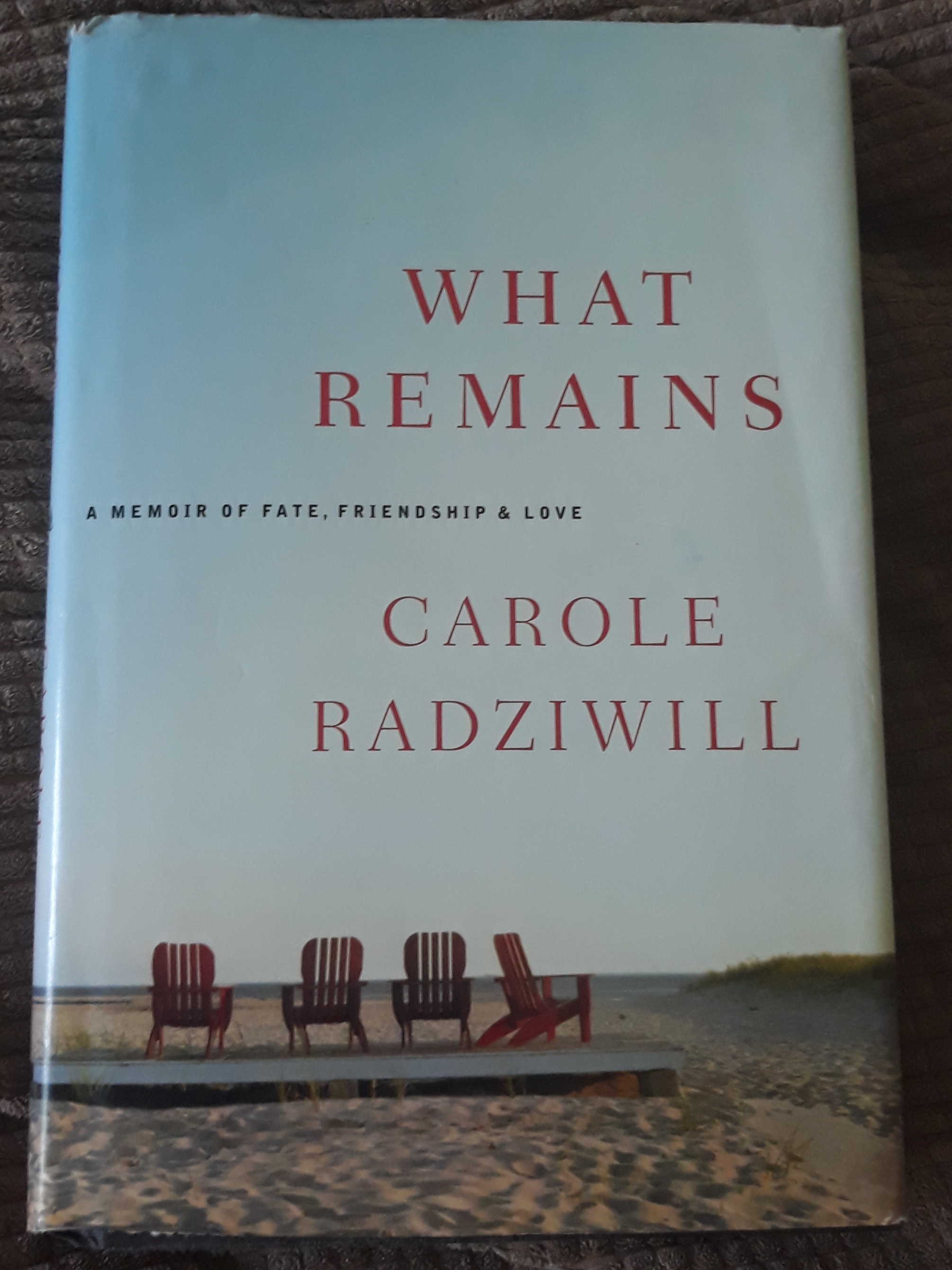
What Remains by Carole Radziwill

What a beautiful book! What Remains by Carole Radziwill is a completely unique book, taking the reader locations you’ve never been—could never go—but also to fully human and universally recognizable places.

It’s no secret that the Real Housewives series are a guilty pleasure, and I always found Carole to be a fun, tell-it-like-it-is, type of “character,” so I thought this book might be decent, but it’s better than that!

A Memoir of Fate, Friendship, and Love

The book takes the reader to the poor gravel roads and streams of New York state, to the haphazard suburbs, to a chaotic, but close family life, to the rush of a bold new career in a city, to war zones, to falling in love (without cliché), and forging deep friendships with “America’s royalty.” Readers see that we all ache, love, suffer, and feel the joy of the sun on our skin and the wind in our hair universally. The life she lives once she’s seriously dating and married to her husband Anthony is (emotionally) much like other everyday relationships, except with better food, clothing, apartments, travel, and lovely places to stay. The reader might be surprised to find that this group of “elites” are thoughtful, frugal, playful, stressed, sometimes uncertain. Aren’t we all?

Radziwill has lived an extraordinary life, and so while this is a memoir, and a genre with which readers might be familiar, it’s is so completely unique in the extraordinary events and circumstances she’s survived. She loses her three closest people in the span of three weeks. Maybe she has survivor’s guilt, but I hope she doesn’t. I hope she is exploring what to do with this big, bold, beautiful life she gets to live. While there is a tight and lovely metaphor about fortune threaded throughout, which works on several levels, the reader leaves the book thinking, “Anything is possible. Anything can happen. Now, what am I going to do with this big bold, beautiful life?”

I read every word and, almost to prove a point, she thanks her bff and sister-in-law, Teresa, who–get this–is from my very own La Grande, Oregon! I am reminded that it truly is a very teeny tiny microscopic world, and anything is possible.

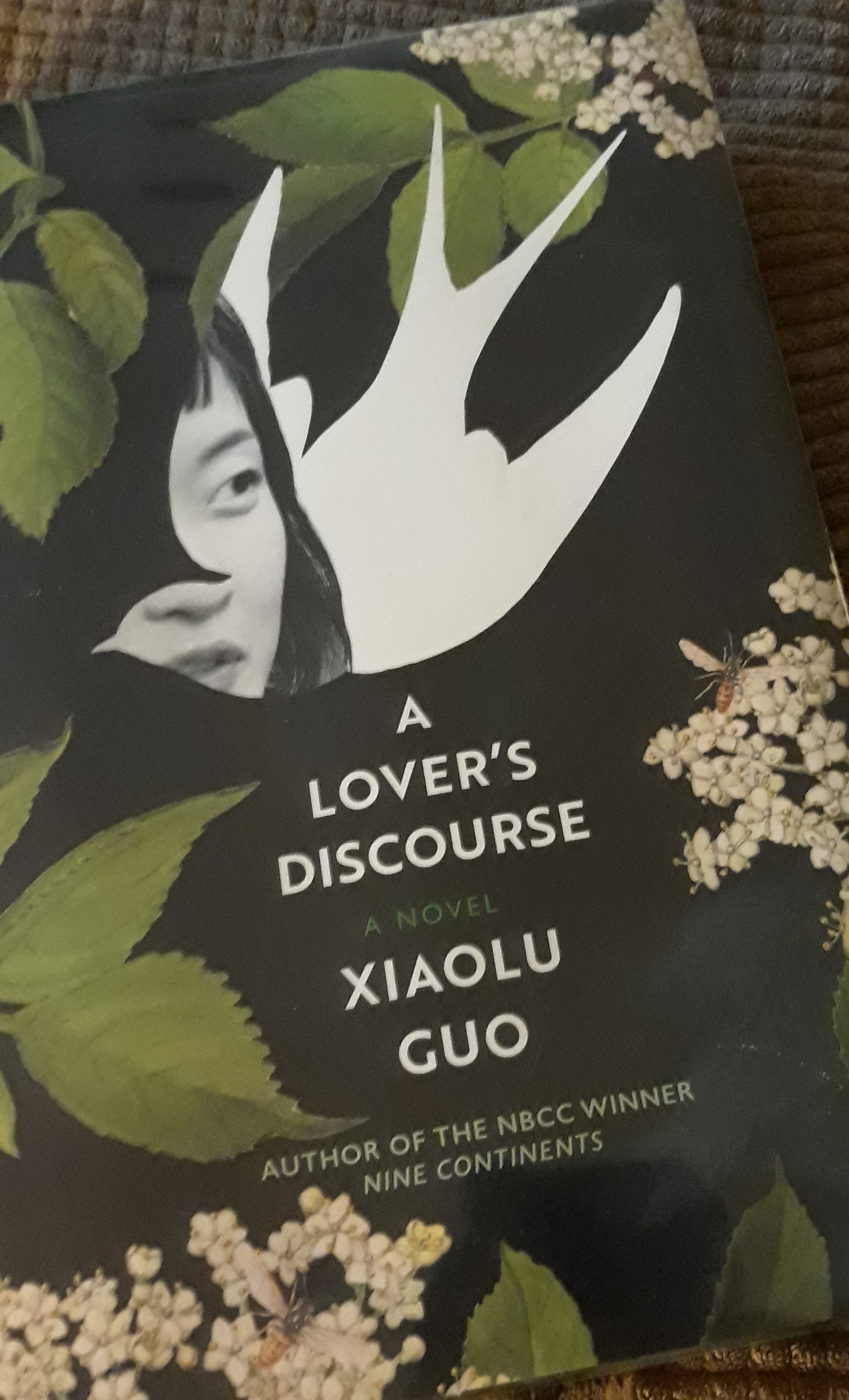
A Lover’s Discourse by Xiaolu Guo

I am blown away by the slow burn called A Lover’s Discourse by Xiaolu Guo. The first and majority of the book is a quiet, steady dialogue between the main character and her “lover.” As you know, I am not a theory hound, but this book was one of few that has made me want to turn steadily back to some of the theories presented in this book, and in grad programs across the world, including my own, and see if I can now find a different way in to them, more my own, perhaps feminine, a more first gen, working-class, creative, put two ideas next to each other to see the new, true, and also beautifully enigmatic knowing that emerges.

I love some of her snarky responses to the rote theories her partner espouses. I found the book to be an incredibly bold and feminist and completely empowering that she takes on subjects that are often, almost always (always?), interpreted through a male lens. She even uses Barthes’ exact same title. So bold! How might I do more of this myself? The book ends with both the theory and physicality of reproduction.

Often I find modern literature to be too cold and unemotional. This book had some of those qualities, but I still felt deeply and identified with many of the main character’s experiences. New motherhood is depicted in almost entirely negative terms, but much of the book is.

In new motherhood, I, too, started to think of mothers in response to every act of killing I heard on the news. These mothers have worked so hard to raise of their children, up until the very moment that their lives are taken. Guo has this exact same insight. We are all one, I suppose.

Finally, the relationship–I’ve felt nearly every one of the feelings or loneliness, isolation, desire, and confusion. I have yelled for him to “Bring wipes” as the baby’s mess grows, only to have him emerge too late, confused and groggy. “When have you had time to listen to music?” The changing home, the changing dynamic, described so uniquely and so true, perhaps especially for the creative woman.

Through it we are two people, changed, and in discourse with each other—lovers.