Category Archives: family

knitting a baby blanket (with pattern!)

I wanted to learn to knit for years before I finally got the chance. It was on my ‘things to do after graduate school’ list. However, I didn’t have to wait that long because in my last year of graduate school a new student offered to teach a group of us to knit. Before the lesson, she instructed me to go out and buy a big pair of knitting needles and a chunky skein of yarn. Later, I would learn that the chunky yarn knits up faster, which is encouraging for new knitters who spend the first few lessons staring at a strange little tangle of knots hanging from a stick. I can’t remember how many times we met (just a few, I think), and, in those sessions, she taught me to knit!

So, I’ve been knitting. In the past few years, I’ve knitted all manner of squares and rectangles and even branched out to a pretty terrible-looking hat (more on hats later). For Christmas, I made a blanket for my nephew, which turned out to be bigger than I originally intended (he’ll grow into it, right?) The blanket was fun through. It was simple, and it didn’t take a lot of concentration—it was something I could do while watching a show or in a meeting. I’ve decided to tackle a few more “baby blanket” projects, and now that I’m a little more confident, I’ve decided to start working more with textures and borders. My first post-holiday project has been a baby blanket for my cousin’s son’s first birthday. Since he’s a year old now, I wanted to make a blanket that was a little bigger than the patterns I was seeing online for newborn baby blankets.

Below is a description of the pattern I created (which is not in typical knitting pattern speak). If you try it out or alter it, please let me know what you think!

The Materials:

I used four skeins of “Loops & Threads Country Loom” in a color called “driftwood.” I chose this color because it has a natural green tone to it that I hope will complement the baby’s current bedding.

driftwood yarn

Loops & Threads Country Loom in Driftwood; image from Michaels

The Pattern:

Row 1-7: I cast on seventy stitches across. Many of the patterns called for 50-60 stitches across for a 32 inch width. Since my blanket is for a one-year old, I went a little bigger, and I’m glad I did because it was none too wide. Back to the pattern: I knit stitched for seven rows. (See notes below for what I would do differently.)

Row 8: I knit stitched seven stitches, marked it, then purl stitched 56 stitches, marked it again, and then knit stitched seven stitches.

Row 9: I knit stitched seven stitches, marked it, then knit stitched 56 stitches, marked it again, and then knit stitched seven stitches.

Row 10-?: I did a regular stitch for the first and last seven stitches, and then I alternated knit stitch and purl stitch until I had almost finished four skeins of yarn. I was aiming for about 36 inches long, but mine ended up being about 45 inches long—which looked about right.

Last 7 rows: I did a regular knit stitch for the last seven rows and then cast off.

Notes: I created this pattern myself, and I really liked the way it turned out. However, if I had to do it all over, I would probably knit ten rows instead of seven before beginning to alternate the knit/purl stitches in the middle of the blanket because the resulting boarder around the edge of the blanket is not quite as long as the border around the sides of the blanket. I was, however, happy with the length of sides of the border, which was the seven stitches that I marked off on either side of the blanket.

The Final Product:

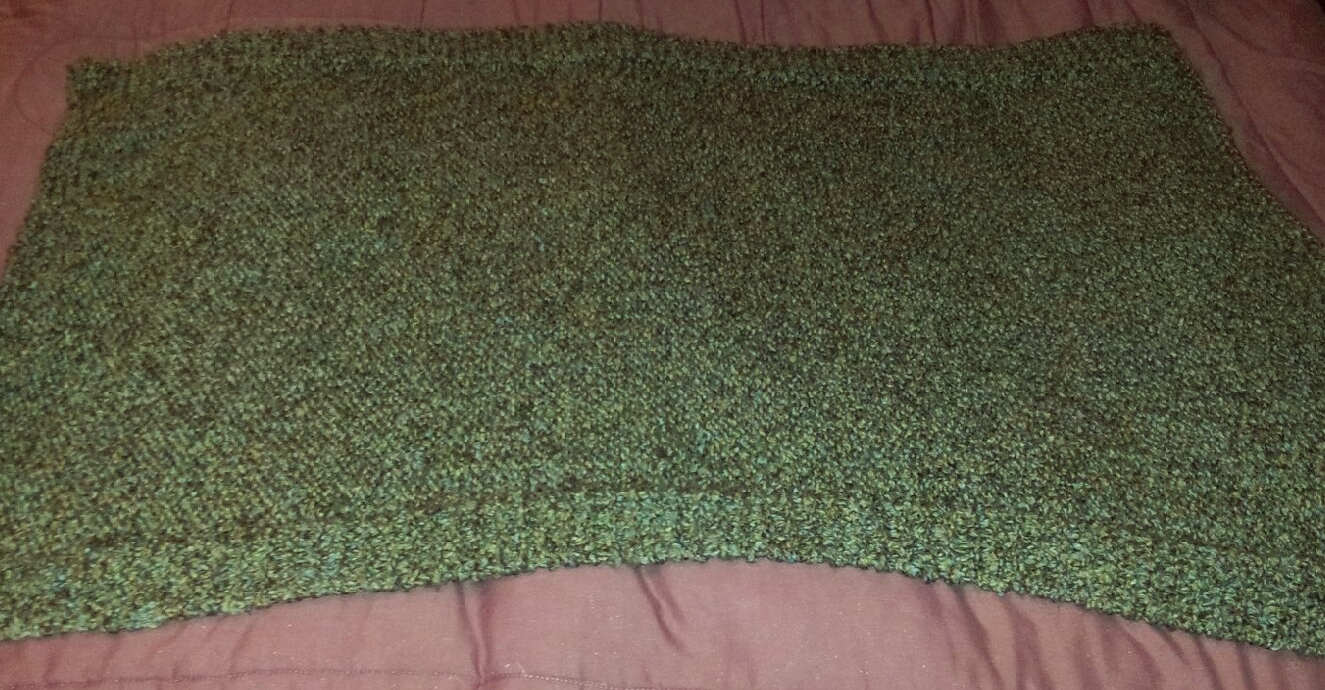
The final product was a bordered baby blanket about 32×45 inches. I should’ve taken better pictures, but I shipped it off too soon! Just trust me that the actual color is a little better than in this photo. Also, the border doesn’t show up very well–though it is a subtle border. Here it is:

20140121_204412

baby blanket with Loops & Threads Country Loom in Driftwood
back home

I’m going to be making more trips home to Oregon this summer than I originally anticipated. I’ve been travelings so much, especially to exhausting places like Las Vegas, that I’ve spent the last day just unwinding at home. It’s been great. But, my summer travels are not over yet. Soon enough, I’ll repack my bags and head to Oregon. Which is beautiful, and hard, and emotional, and puts me in a tailspin, but in a good way, and in a bad way. That’s just life, I suppose.

my beautiful home in Oregon

my beautiful homeland

patio gardening

There’s something you must know about me: I love to garden. My parents always kept a very large garden and enjoyed it throughout the summer and put up food for the winter. Sometimes, they kept two large gardens. And, there were always additional raspberry, garlic, and herb gardens too. That’s not even to mention the multiple orchards that my dad tends. So, yeah, I like to garden. It’s in my blood.

044

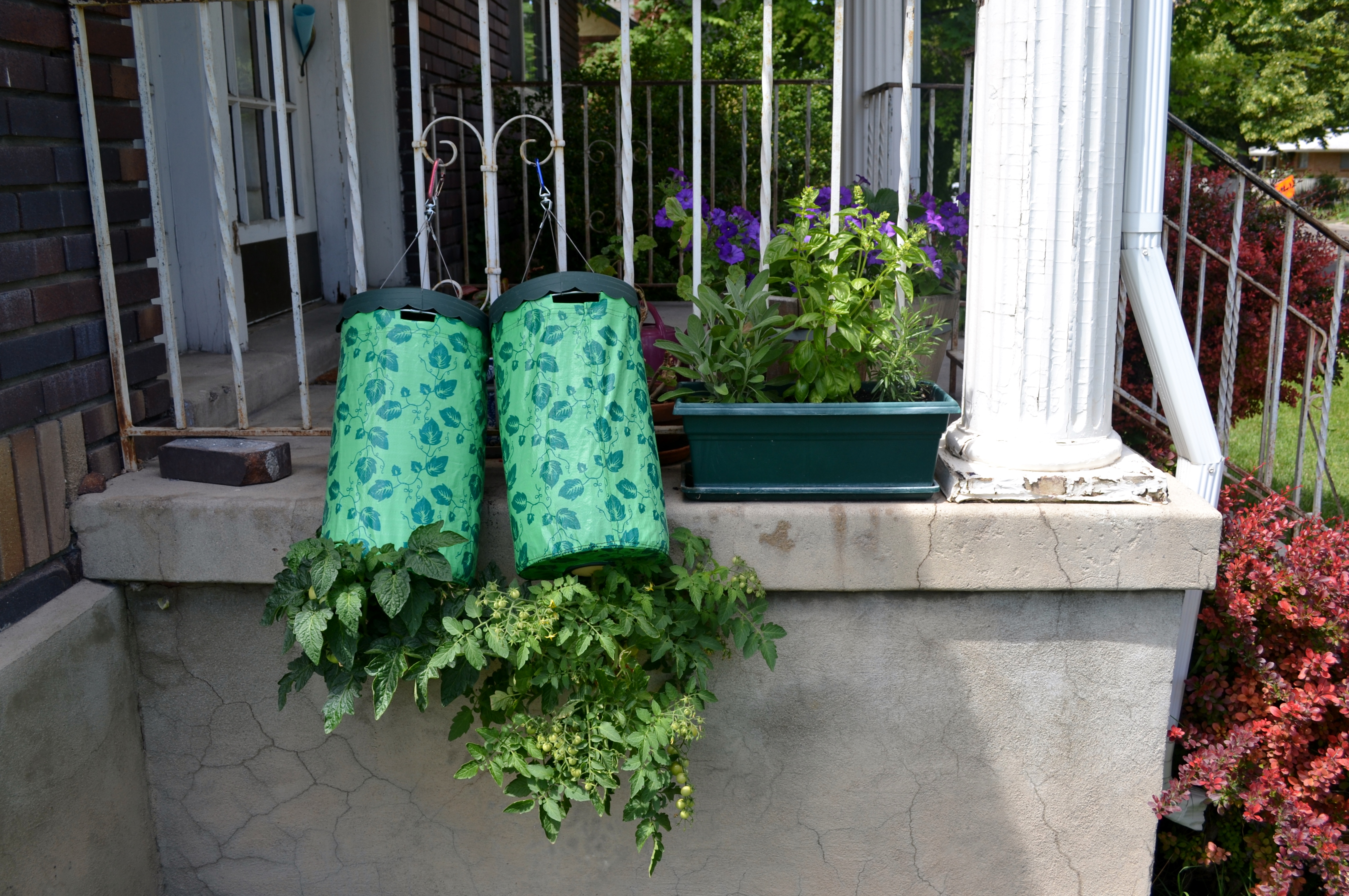
patio gardening with topsy turvies

When I was a little girl, I stole a bean and grew it in a cup in my windowsill. That bean grew until it ran out of space. Maybe it was transferred to the garden. Maybe it was tossed. Maybe I let it die. I don’t remember what happened to it. But, ever since I moved out of my parents’ home, I’ve kept houseplants–though I don’t love houseplants as much as I love gardening. Like my mother, I like expressive plants that change with the seasons, produce, die, or live, but change.

047

patio gardening: wave petunias

I’ve also taken every opportunity I’ve had to grow something on a patio. When I was an undergrad, I  grew daisies in a small plot of soil by my apartment patio. Those daisies were amazing! I wish I could remember the variety. They really thrived. A year after I moved out, I went back and saw that they were still there, but unattended, unwatered, and smaller. They are probably long gone now, years later.

034

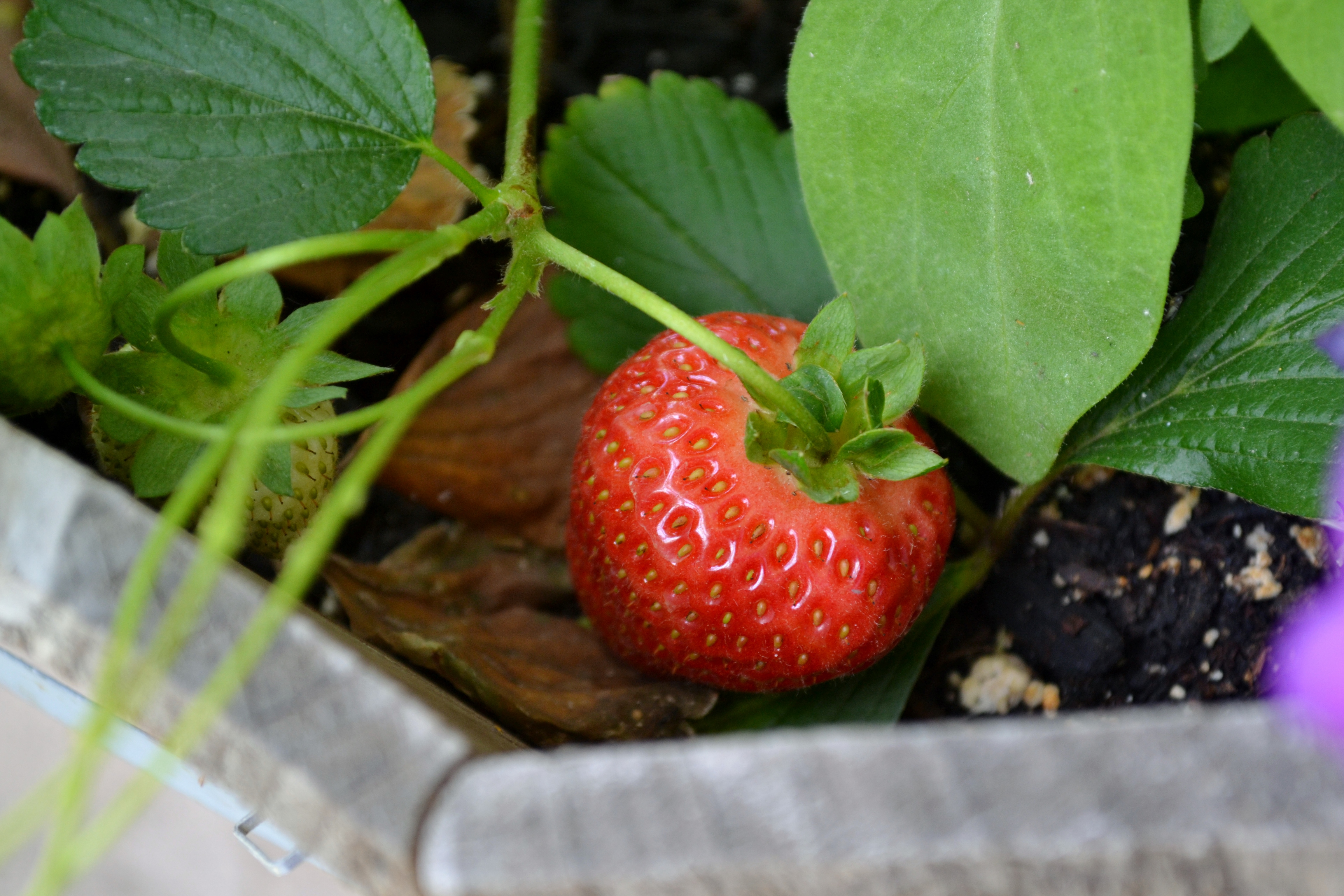
patio gardening: strawberry

I still wish I had more space for gardening, but I’m making use of what I have: a patio, a shaded back patio, and some shaded, rock hard soil that’s mostly clay. Despite these setbacks, I’ve actually been able to grow quite a few plants this summer, and they seem to be flourishing. An enormous tree was recently removed from my back patio, so the space that was once completely shaded is now only partially shaded. That means I can grow a few things, but since the tree was only removed a few weeks ago, it’s really too late to grow anything too substantial. I’ve got a few sunflowers going back there, and that’s only because I already had the seed.


041

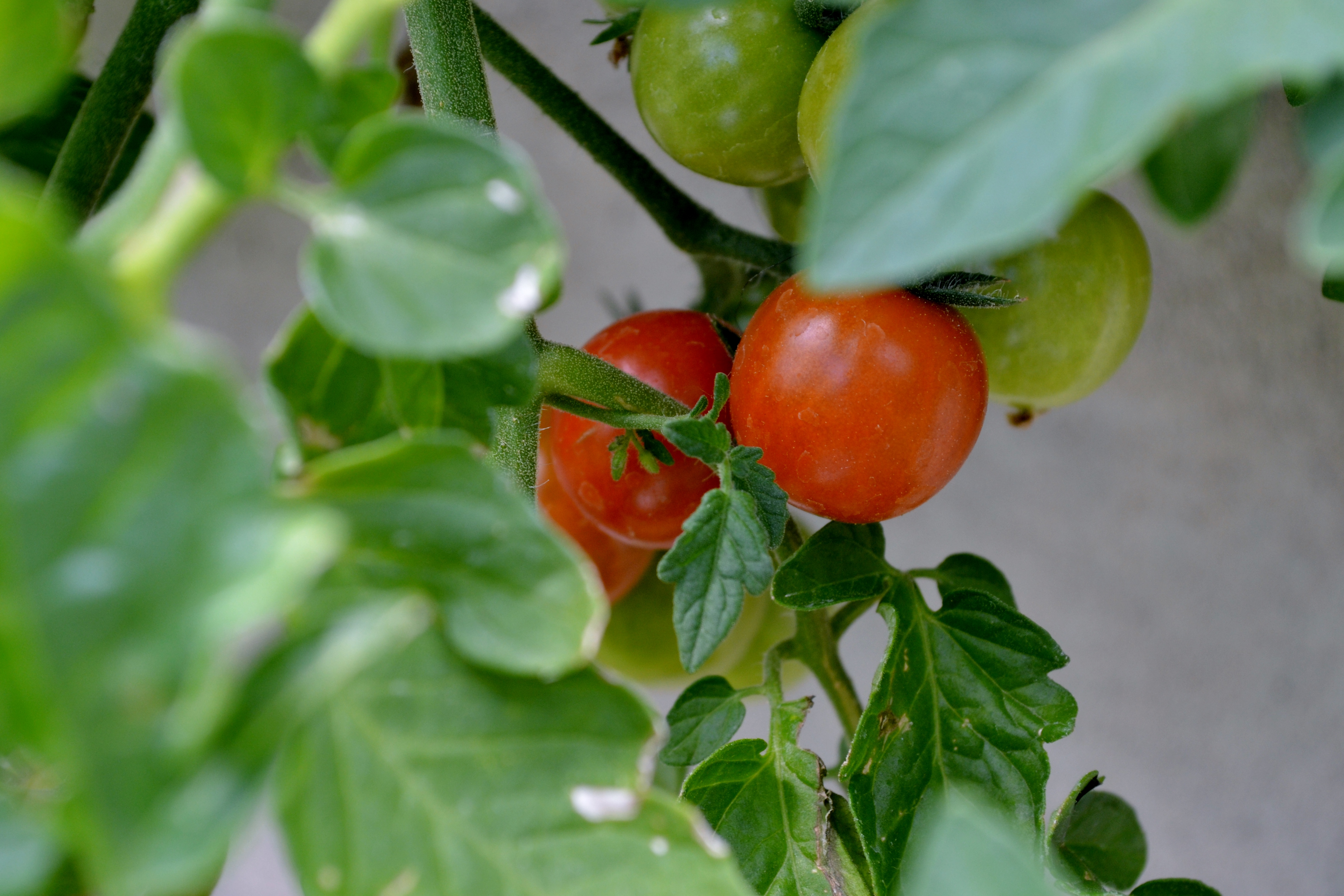
patio gardening: cherry tomatoes

Maybe next year I’ll be able to do more with the space. But, I can’t help but wonder if I’ll even be here next year. I’m a home body who would love nothing more than to have a space to live long-term, a space that included lots of room for gardening, but that’s not my situation. I’ve never imagined myself as someone who lived in the city permanently, and yet right now, that doesn’t seem like such a stretch.

049

planter box zucchini

The Lazy B by Sandra Day O’Connor and H. Alan Day

Sandra Day O’Connor is in the news today saying that the Supreme Court should have stayed out of the 2000 Bush/Gore election. So I thought I would take the opportunity to review her book, which I just finished, entitled The Lazy B: Growing Up on a Cattle Ranch in the American Southwest. She co-wrote it with her brother Alan.

image from Barnes and Noble

Since I grew up on a cattle ranch, I love reading these kinds of stories. They fill me with nostalgia for my childhood home. Since ranching in the Southwest is very different from ranch in NE Oregon, there really were quite a few differences between her upbringing and mine.

I loved the long descriptions of people who lived and worked on the ranch. I loved the honorable attitude of the farmers. This is something I’ve heard people give lip service to my whole life, but it’s something I’ve grown to appreciate more as I get older and see how it plays out in the real world. The people described in the book were completely honest with their word. In many ways, they selflessly sought the best outcome for each situation. In my world, people are far more self-serving and ambitious to a fault. It was refreshing to see how doing the right thing for the whole group was consistently best for the individual.

Of course, there were politics. O’Connor, like in her time on the Supreme Court, was a good politician in the book, pointing out problems, analyzing them, but never really taking a stance one way or the other. Good politicians and critical thinkers know that it’s usually more complicated than that. It’s usually not “one way or the other.” So I appreciated that nuance.

I would have seen more critical commentary of her father and a deeper portrait of her mother. The father calls the shots and wins every argument to a fault. The brother is cocky and bullheaded–even in adulthood. The mother seems typically suppressed for the time period. Everyone grew up, married, had children, and the lifestyle of the ranch–though beloved–was no longer sustainable because of the changing social and financial landscape. To me it represented a tragedy that could have been explored in more detail.