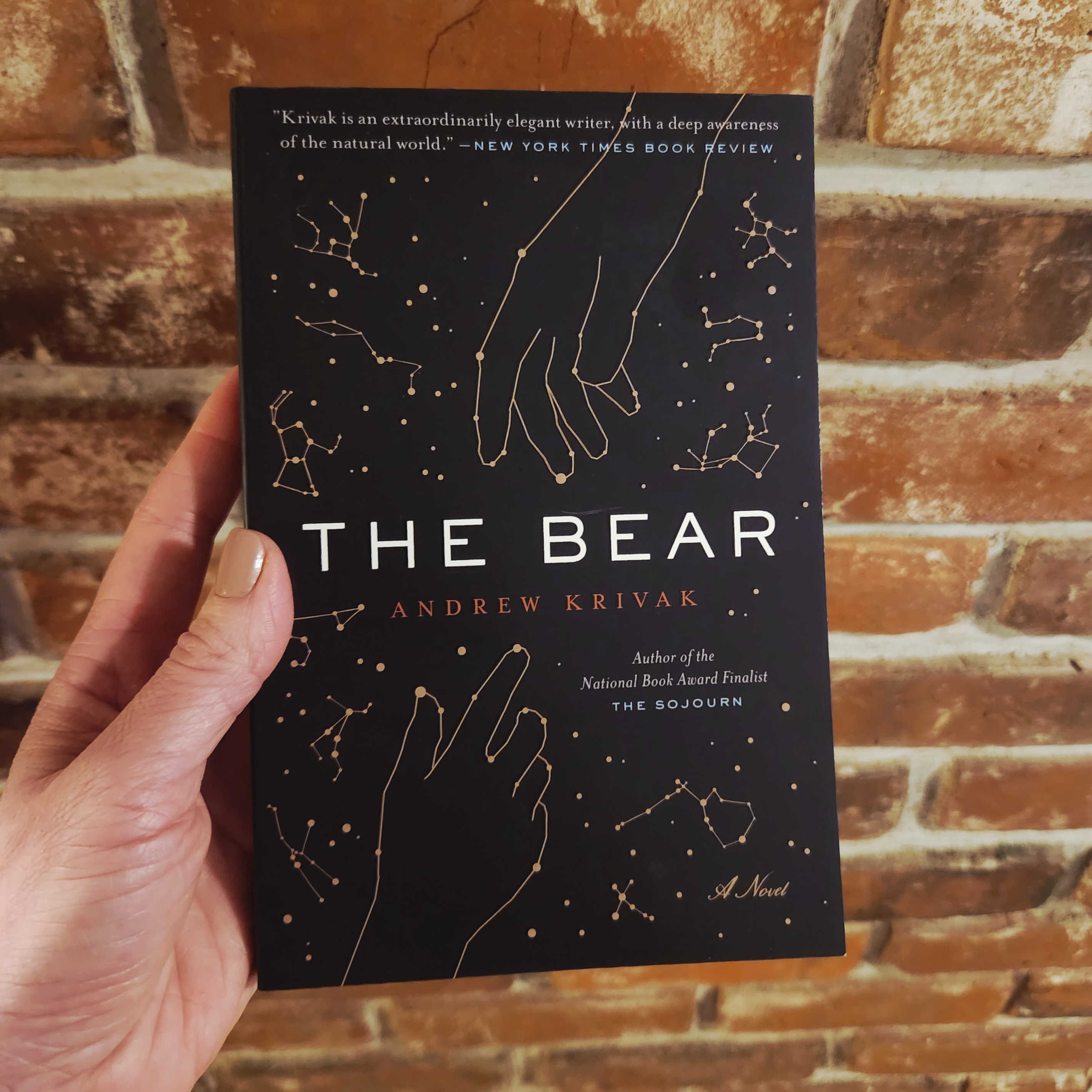
My local literary community (I’m honestly so glad I say I have a “local literary community”) is reading The Bear by Andrew Krivak, so I jumped on board, and I’m so glad I did. This is a beautifully written, beautifully paced, and completely consistently written book.
The subject matter is complex, but so gentle and pure that I think I might be able to read it to kids too. I don’t think it’s an exaggeration to that that this book is a balm for the soul. Needed now more than ever.
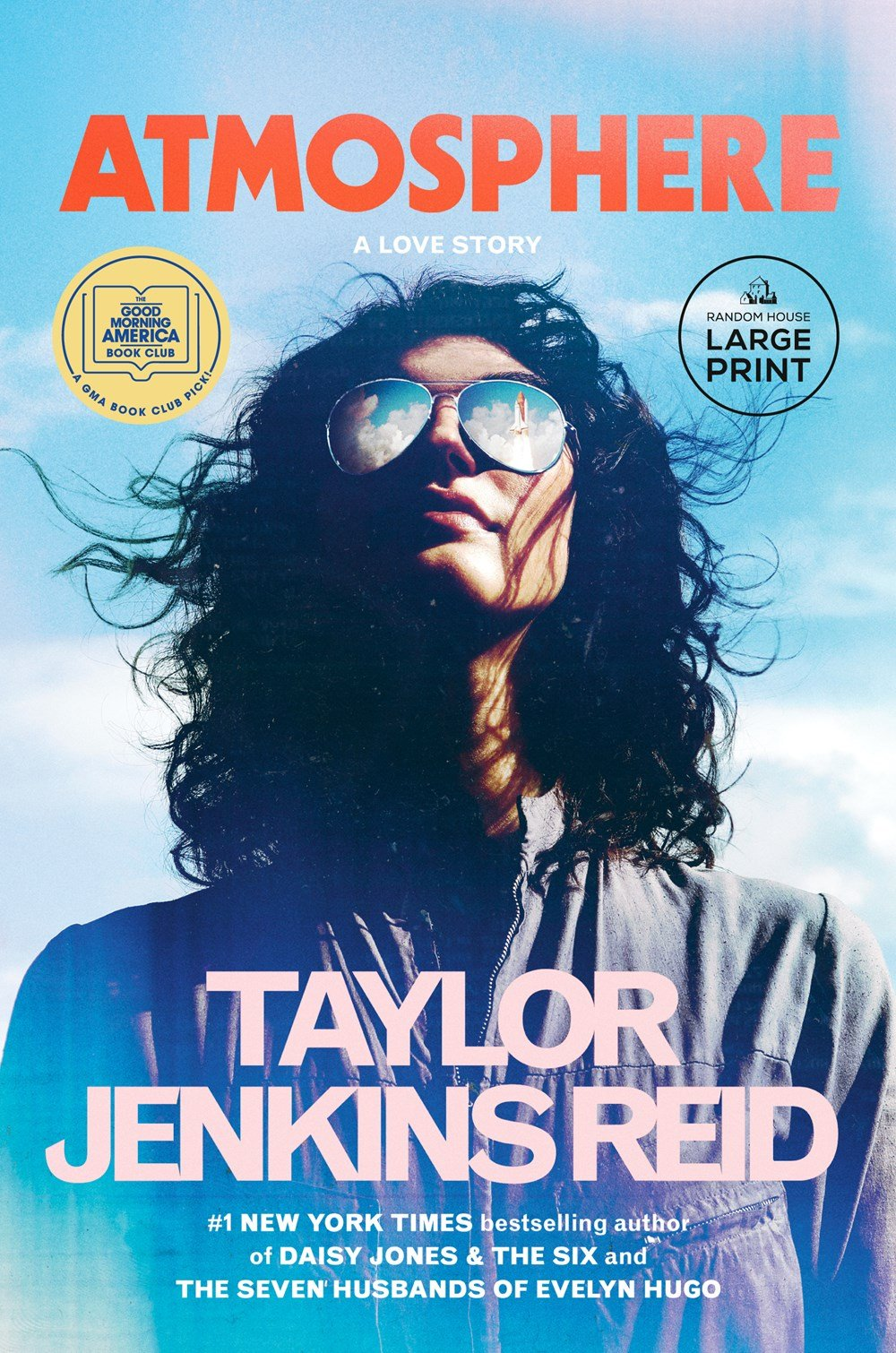
Again, not by typical genre, but after several people recommended the new book Atmosphere by Taylor Jenkins Reid to me, I added it to my tbr pile. I found the first section of the book to be really gripping and engaging and I also started to recommending it to people. This was the story of women (a woman?) who had passions and intellect, fully developed character sketches were emerging.
However, while most readers are going to love this, I found the center to be a deeply indulged love story, not unlike your typical Hallmark narratives, and again, most readers are going to deeply love this aspect of the book, I think, but for me, I guess I wanted more space content, more empowered women exploring space. This reaction kind of surprised me because while my interest in space has piqued in the last 6-ish years, I don’t consider myself deeply interested in space. Maybe I am!
This book has the two key elements of entertainment–love and adventure–and most readers are going to love that. The very ending, especially the very last sentence, are great and probably worth the read to arrive there.
A few years ago, a colleague recommended I read Silvia Federici for my scholarship. At the time, I tried her Caliban and the Witch, but it was not what I was looking for. Fast forward to now, and I Federici’s Witches, Witch-Hunting, and Women is what I was looking for! This past fall, it was finally time. I started learning more specific history about the European witch hunts and started reading more theory about it. Federici’s Witches, Witch-Hunting, and Women offers an interesting Marxian feminist lens to the phenomenon, which helps inform my study.
While typical academic texts may not be for everyone, Federici’s Witches, Witch-Hunting, and Women may be the exception. I think the book may have a wider readership. The concepts are fairly accessible. And, it’s short!
I didn’t really intend for this to happen, but Heart the Lover by Lily King was my first book of 2026! This book is a plot-driven piece of popular fiction, so it is not my typical go-to book. However, I read so many rave reviews of it that I decided to add it to my list.
My conclusion is that this is an excellent book for the nostalgic English major. In this book, college feels rich and heady, the best it could be. This book probably gets its best reviews from those nostalgic English majors (and I am one!), who recall college warmly. In the book, characters develop, the plot weaves, and meanings deepen.
Because it is so plot-based, literary prose readers may not be deeply interested in this one, no matter how nostalgic they are for days of yore. However, meanings don’t beat you over the head and conclusions are fairly subtle and I find that all to be very likable. For many, this will be an all-time favorite. At the very least, I think most readers will like the book.
As I look back on 2025, what stands out most is the increased flexibility in my schedule. I had more time to move freely, to travel solo, and to hear myself think. I need this quiet time to thrive, and so 2025 was a step in the right direction–with even more schedule flexibility coming around the bend.
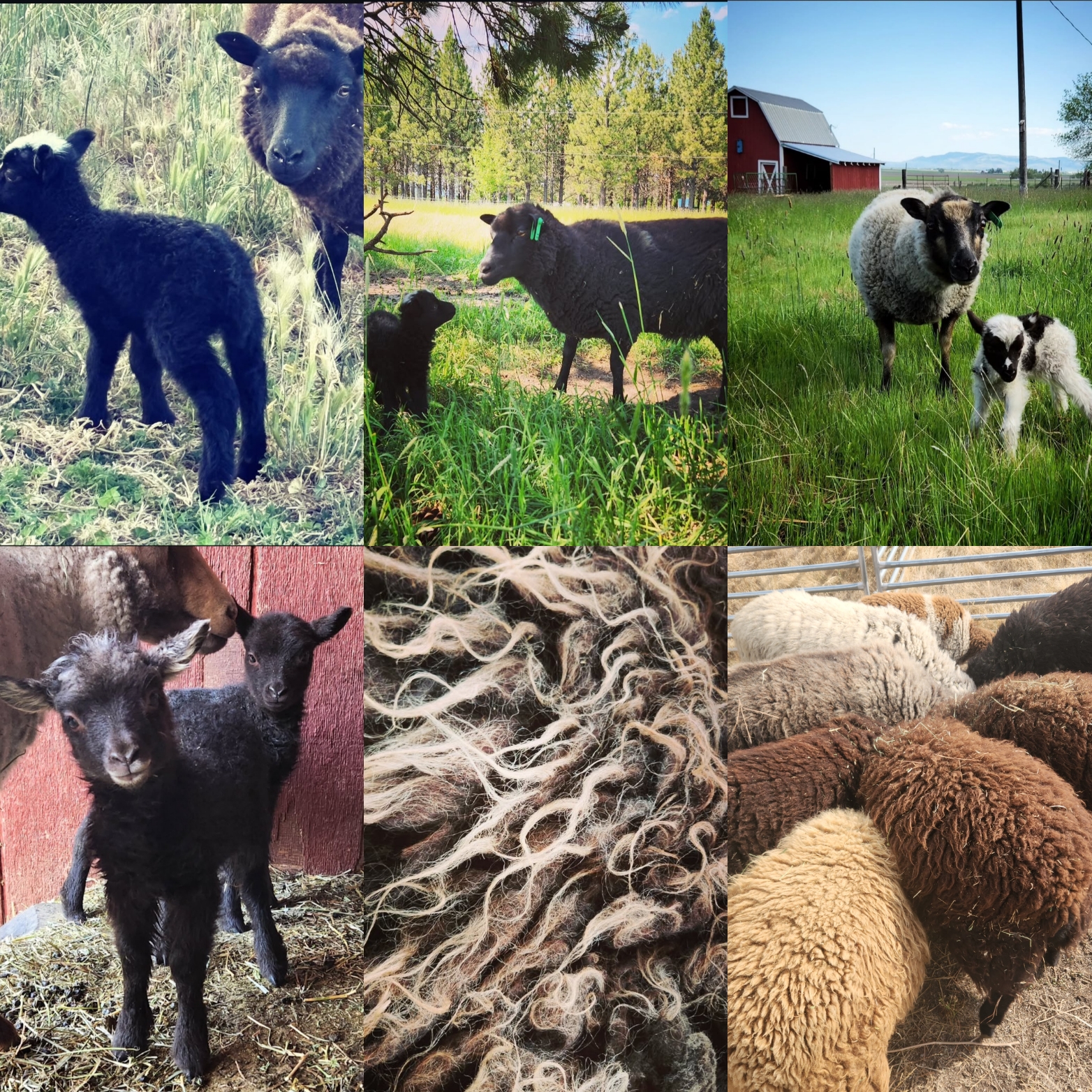
Last spring was marked by a bumper crop of new baby Shetland lambs, in so many colors! It was a charming time to shear and sell fleeces and to watch the sheep grazing in lush green pastures. I am so grateful for my little farm, for the renewing cycles of living with livestock and for the peace that the animals bring.
Professionally, I’ll also remember that spring as simultaneously deeply successful and deeply stressful. A promotion process went sideways, and it took months to resolve (thankfully, it did resolve positively in my favor). There was also amazing book news. This is the year that I saw my first book begin to populate on all major bookselling websites. 2026 is shaping up to be another big year for reading and writing, with my first book expected to be published in spring and my second book to follow shortly thereafter in the fall. Not one, but two books in one year?!?! I have to pinch myself. It’s truly a dream come true. And there are more projects in the works too, in addition to the books. Look for more birth work, birth classes, and more writing projects from me! Although all of this takes time, years even, these projects are now well underway.
The summer was spent in pure bliss–I spent my days writing hard toward daily goals and my afternoons reading outside on the porch where the weather was perfect for months on end. I beat my previous 5k time by an entire minute, coming in at 25.51 minutes, 4th in my class, 11th female, 39th overall. The weekends were spent on tiny adventures, and, of course, more work, because I still love my work. It was hands down one of the most productive AND restorative summers I’ve ever had, and I hope to repeat that schedule in years to come.
The highlight of the fall was a solo trip to Louisiana to celebrate 10 life-changing years with my love, and that was truly a transformational trip. I felt my old self again. I felt possibilities opening up. I felt freedom and satisfaction. It was also something I hope to replicate in years to come–finally breaking away from old routines and rigid “to do” lists. To be fair, those routines and “to do” lists have also saved my life over the past seven years, so I’m grateful for those too, and they will certainly continue!
Despite neglect and precarity, in the fall my garden produced a bumper crop of pumpkins and zinnias, along with the usual jungle of colorful hollyhocks, which I love. I also traveled to San Francisco for a work conference in the fall. These conferences usually feel less like work and more like rejuvenation and inspiration too. I returned in time for the avalanche of holiday activities and “to do” lists and I felt deep gratitude for my family and this season and tried to savor the swim lessons and holiday concerts and artwork–all of those unique and fleeting hallmark moments.
The big theme in 2025 was stretching my wings a bit more than previous years allowed, and it felt so good. I felt more myself again, more room to breathe, more room to move. I am looking forward to so much more of that in the years to come. It sometimes seems counter intuitive, but I feel that I have more to give to my loved ones when I also have time to care for myself. In numerology, 2026 is a 1 year for us all and turns into a strong 2 year for me personally, which is supposed to be about connection. I look forward to it!
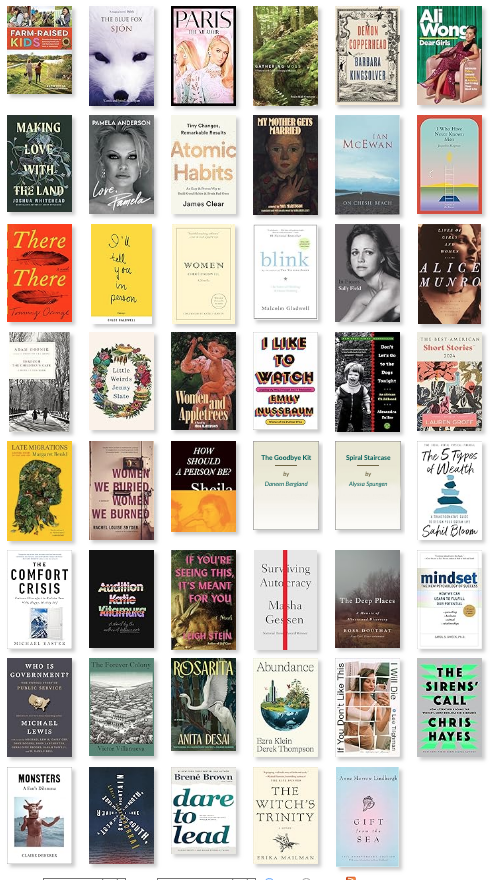
Here’s my 2025 reading list! It’s longer than I thought it would be, since I didn’t read much in the spring, summer, or even fall, it seemed. Summer is normally a big reading time for me, but my literacy energy this summer was mostly spent in writing. Perhaps the most noteworthy aspect of my reading was that this was the year that I became obsessed with Moa Martinson. There are other treasures here as well…
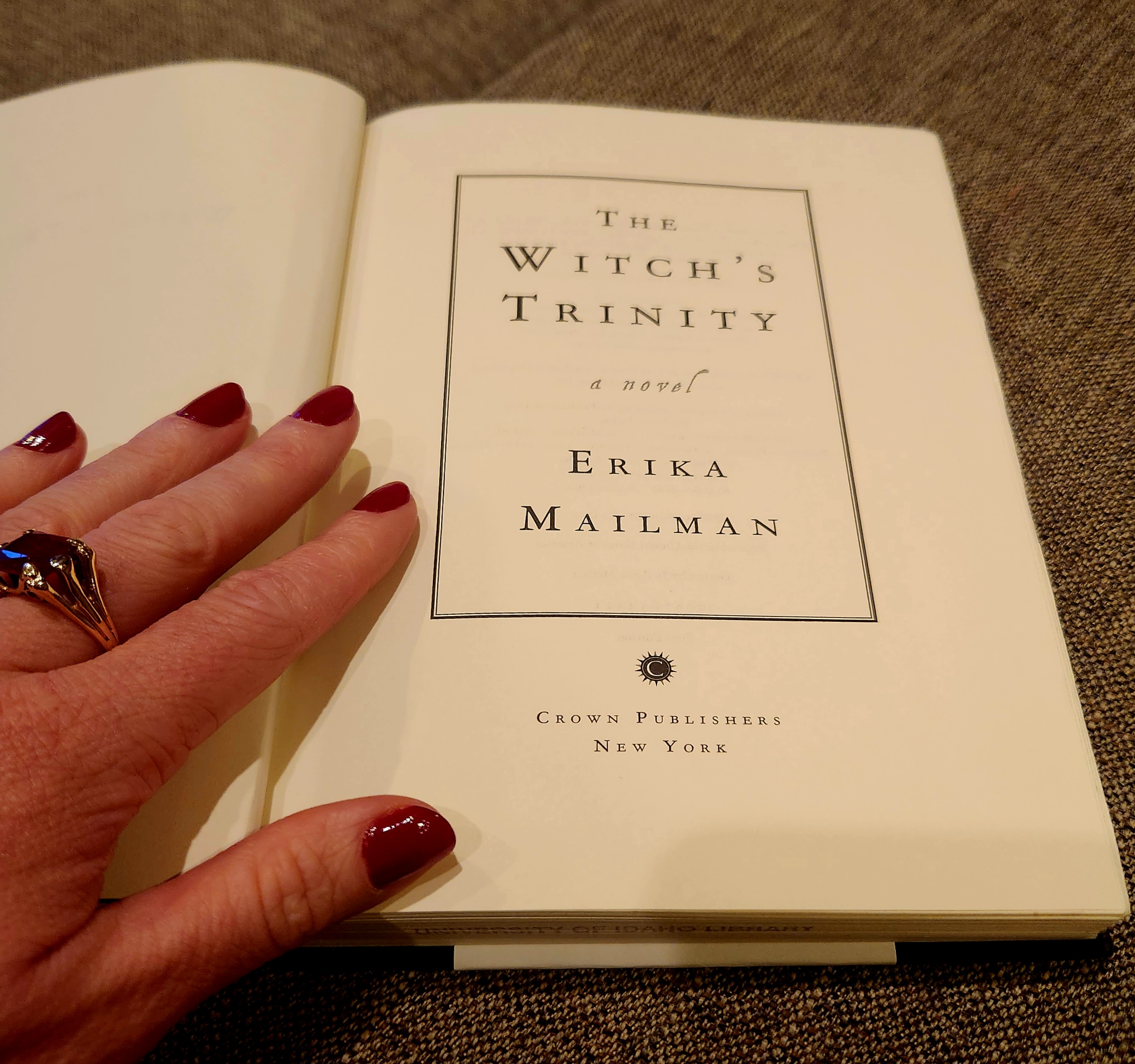
My research has recently lead me to the learn more about the horrendous witch hunts that took place, especially in Europe, circa 1400-1700s and about the book that was used for those persecutions, the Malleus Maleficarum. That research process lead me to read Erika Mailman’s book, The Witch’s Trinity. The book is not my typical genre, but it was an engaging read that helped inform my understanding of that time in history. Here are a few things that stood out:
Mailman’s scene setting in the book was phenomenal. The consistent tone and language throughout was effective. The details of village life and the beliefs of the time were captivating and really helped set the scene for the terrifying witch hunts of that time.
The book takes place in a village that is experiencing famine, and the reader can easily see how the intensity of starvation completely skews people’s ability to think straight, to be reasonable, or to act with justice. I also recently learned that people with anorexia begin to loose their reasoning abilities due to lack of calories, and that lack of reasoning only exacerbates the problem. So too could I see the role of starvation and suffering in the witch hunt accusations.
Next, in reading this book, and having recently reading through the Malleus Maleficarum, I was struck by just how dangerous these books can be, how dangerous it can be to so completely trust a perspective or an interpretation that disadvantages and even outwardly harms certain individuals. As I read, I thought of all of the good people I know who might be accused just because of their differences. In the end, nobody is except from the dangerous mob mentality that can plague human thinking.
The Witch’s Trinity is an engaging, plot driven book that is expertly told by the author. It’s an interesting read for those interested in this place, time, and circumstances.
Like the long title, this book is full of long passages, sentences that are entire paragraphs long. Entire chapters, in fact! A Mountain to the North, a Lake to the South, Paths to the West, a River to the East by László Krasznahorkai is a strange and fascinating medication on obsession, focus–deep, deep focus–of the absurdity, of the pain and beauty of life. Big stuff.
Krasznahorkai won the Nobel Prize in literature this year, and so I grabbed this book to see what he was all about. The deep descriptions in this book is what does it, I think. Krasznahorkai pairs deep description with complete control and poetry on the line level, informs, and conveys to readers some deeper understanding of the human psyche than they otherwise would have known. Yes, Krasznahorkai wins this award.
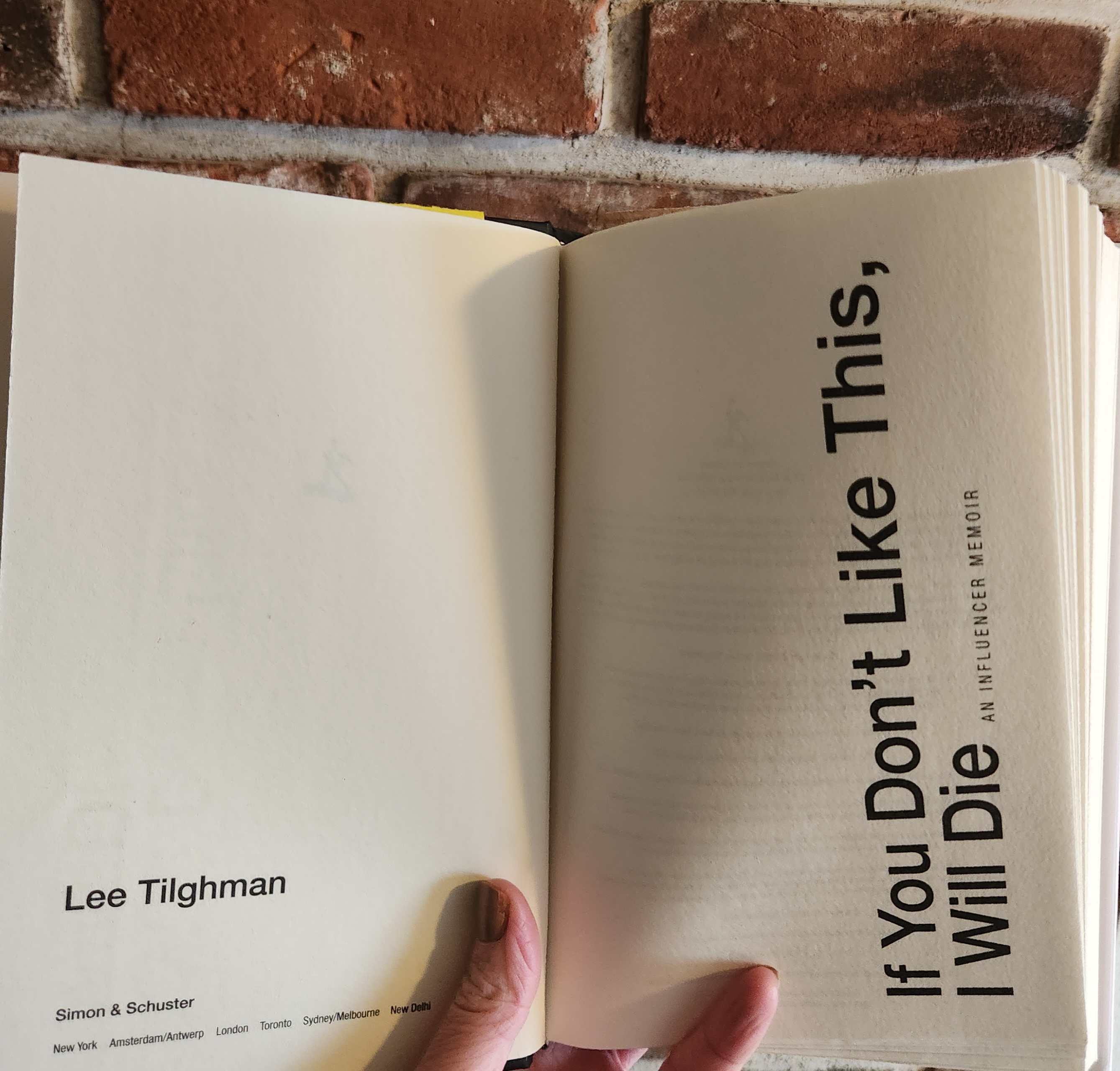
When Lee Tilghman’s followers said she was problematic, out of touch, too privileged– that she should be cancelled–she responded with her book, If You Don’t Like This, I Will Die, where she basically says, “Yes, I am, and you don’t even know the half of it.”
What follows is a behind the scenes look at the life of an “influencer.” Most people follow influencers, and Tilghman offers a behind the scenes look at the work, the lifestyle, and the mental sacrifice that can go into that world. Things are definitely not what they seem. Tilghman’s book highlights just how all consuming social media is–from excessive time, to resources, and to our attention too, of course. Posting became her entire life. She saw everything from the perspective of a post, and she worked very hard at it constantly. But she was so focused that she could not enjoy regular life.
Many people say that social media makes people sad because it makes them feel fomo. I do not experience that. However, I do experience the time suck that is synonymous with social media usage.
I paired this reading with Chris Hayes’s The Sirens’ Call, a book about the attention economy, and they work really well together! I recommend!
Rosarita by Anita Desai is a book for literary readers who want to spend some more mental energy in the beautiful cities of Mexico. Decades have passed now since I spent a summer traveling through Mexico on a trip with my school, but this book brought back that wonderful sense of travel–the unique sights and sounds that can only be experienced by being in Mexico, as an outsider perhaps. Readers who do not have the same connect to the country will still enjoy the prose, the rich description, and the strange emotional journey of our main character.




 SHEREWIN