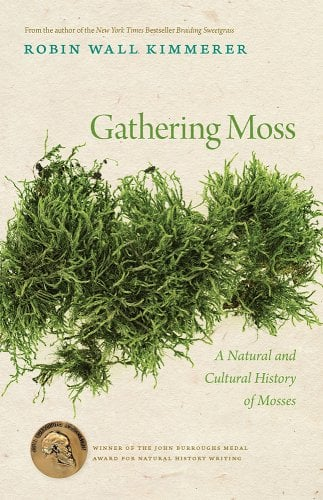
As predicted, this little book piqued my interest in mosses, offering both an education, appreciation, and lovely little connections and narratives to guide the process.
I could also see myself returning to this book for guidance on organizational structure in my own future written works.
On principle, I love these slow, detailed meditations. And on the topic of moss? Something that is tiny, unassuming, and often slow to grow? Even better. That said, I mean, it is moss, and so I did find certain points of the book to be a bit boring. Somehow the book gains momentum in the last half, though, and was easy to finish.
This author also has a newer book on serviceberries, and I’m looking forward to reading that book as well.
As you know, I love a good celebrity memoir, and Paris: A Memoir by Paris Hilton did not disappoint. I’m actually surprised this book hasn’t been more widely advertised or talked about in my media streams because the book is quite interesting, and I think everyone who has watched the Paris juggernaut over past decades will find this book to be of interest.
Most interestingly, Paris relays the horrifying treatment facilities she was put in as a child (in great detail) and her tumultuous teen (and adult) years. She contextualizes it all with her ADHD/neurodiversity, and honestly, as a reader, this context made it all make sense for me. It was also interesting to see the focus and vision she’s had for her career from very early on.
In the end, I think this book will truly be a gift to teens with ADHD and to people who aspire toward greatness. I would have liked to see more “how I built this”-style insights and more insights into social class, access, and fame, but she does touch on all of these to some extent.
She is entering a new era now–marriage and motherhood–and in the future I’ll definitely read another memoir from her that goes more into depth on these subjects as well.
A few weeks ago, as we approached the end of 2024, I began looking back through old photos, and I was surprised to see just how much I did this year: a winter break in Idaho, a springtime trip to Louisiana, some good summer fun in Idaho; a epic trip to the Oregon coast; and then up to Guemes Island in the San Juans for a beautiful wedding, and then back through the state of Washington; and finally a trip to Palm Springs, before buckling up for the marathon of end-of-year holiday festivities.
In 2023, I started exercising a bit, but in 2024 I actually got strong. I ran two 5ks and one 10k, and even ran a PR (post high school) in one of the 5ks at 26.29 minutes, which is not fast, for the record, but felt good and fast in my body, and I was 5th in my category!
I loved my little farm, I sheared my little sheep, and I watched the northern night sky light up with aurora borealis. I put together a two-story playhouse, made what is becoming an annual pilgrimage to Yellowstone (especially Lake Isa), watched rodeos, and entered my homegrown raspberries in the county fair. I got two new chicks, hatched from my hen’s own fertilized eggs, so now I have three: the original hen and her two black and white-laced daughters. Hopefully I’ll get my first eggs from them in 2025.
Through it all I also worked on several major work-related writing projects and one major creative project, which I hope will soon see the light of day, so that I can share them with everyone! I also read many lovely books.
As this year comes to an end, I also find myself at the end of a nine year in numerology. I can see some obvious themes and projects wrapping up in my life, but if the upcoming one year is anything like my last one year, it will be full of big, transformative life changes that I can’t yet fully see now. There’s a lot to like about life right now, but I’m trying to work on embracing the inevitable changes and growth that come my way.
I’m not sure there’s anything left for me to say that hasn’t already been said about Miranda July’s new book, All Fours, but I read it and so I’ll try to say something here. First, I always really appreciate July’s work and read it when I get the chance. She offers some great insights on the human condition and pairs it with lots of absurd, disgusting, and confusing action. Furthermore, for a bestseller, I can guarantee the writing will not be bad, and that’s more than I can say for a lot of bestsellers.
What I think it so important about the book, and what has given it all of this #allfoursgroupchat energy is that the the book tackles aging; emotional labor, especially in heterosexual relationships; and some of the physical changes and hormonal shifts women experience in their 40s and 50s. There are so many unique and terrible aspects of this reality that July captured accurately for me. I really appreciated that she gave it voice.
There are also many details seemingly based on some real events from her own life. This makes the book all the more engaging and compelling. The conclusion of the book does even more to mirror real life as the main character goes on book tour, except you know July hasn’t gone on tour yet before she’s done writing. It’s just a very unique way to end a book.
Overall, I know some readers won’t be able to handle this book because it is a lot. July’s work usually is. But, some of us will, and I hope that those of us who do like this book will be able to find that group chat.
For the last decade or so, I’ve had a heightened interest in Elvis. What a legend! I love his staying power. I love his unique voice. I love the performance of it all. I especially love this song that totally melts my face.
So when I found out that Riley Keough and Lisa Marie Presley had written a memoir, I could not wait to read it. I was really hoping that Lisa Marie would have narrated her part, but it was read by Riley and Julia Roberts, and that was good too. Julia Roberts has a subtle Southern accent that really piques the imagination. There are also a few excerpts from Lisa Marie, and that is very satisfying.
Overall, From Here to the Great Unknown is an excellent book. Lisa Marie’s life was incredibly intense and full of tragedy, and the book portrays much of that in extreme detail. I learned new things. The descriptions of Graceland were incredible that I felt like I was there. Now I really want to visit Graceland!
I just finished the beautiful, haunting, absurd, and magitragic novel, The Seas, by Samantha Hunt. This is a book with a rich sense of place, compelling characters, and layers upon layers of themes and possible meanings, which shoot out in every direction.
At times, while reading, I had some judgement about the contemporary’s literary community’s dealings of mental illness. So often, it seems, authors borrow symptoms in ways that do not always feel ethical to me, but instead are used to shock and awe. However, by the end of this novel, Hunt had really earned it, in my opinion, and was able to demonstrate a deeper meaning and a broader purpose in her depiction of this strange and mesmerizing mermaid main character.
We’re nearing the end of the reading year now, and I’ll count this one among my favorites.
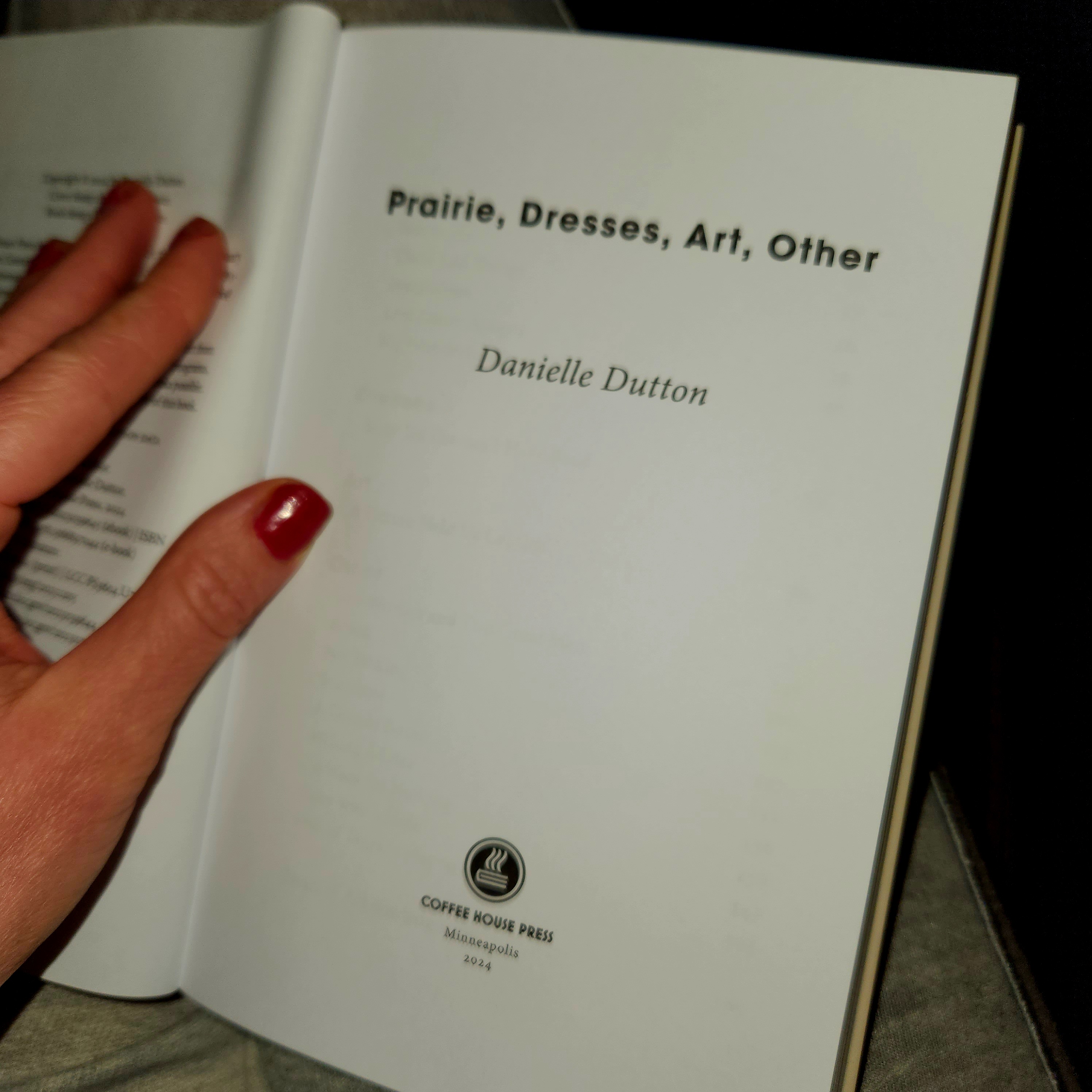
The beginning of this book was not what I expected. The middle part, however, was. I expected Prairie, Dresses, Art, Other by Danielle Dutton to be much more theoretical (and it was!), but the first few chapters threw me. In a good way. The first few chapters were even scary!
This book reminds me of some of Maggie Nelson’s recent stuff, but this book of Dutton’s has more imagery, perhaps even more narrative, throughout than Nelson’s most recent, On Freedom, for example. Both are from Coffee House Press, which continues to publish all of the best stuff that the mainstream publishers are afraid of.
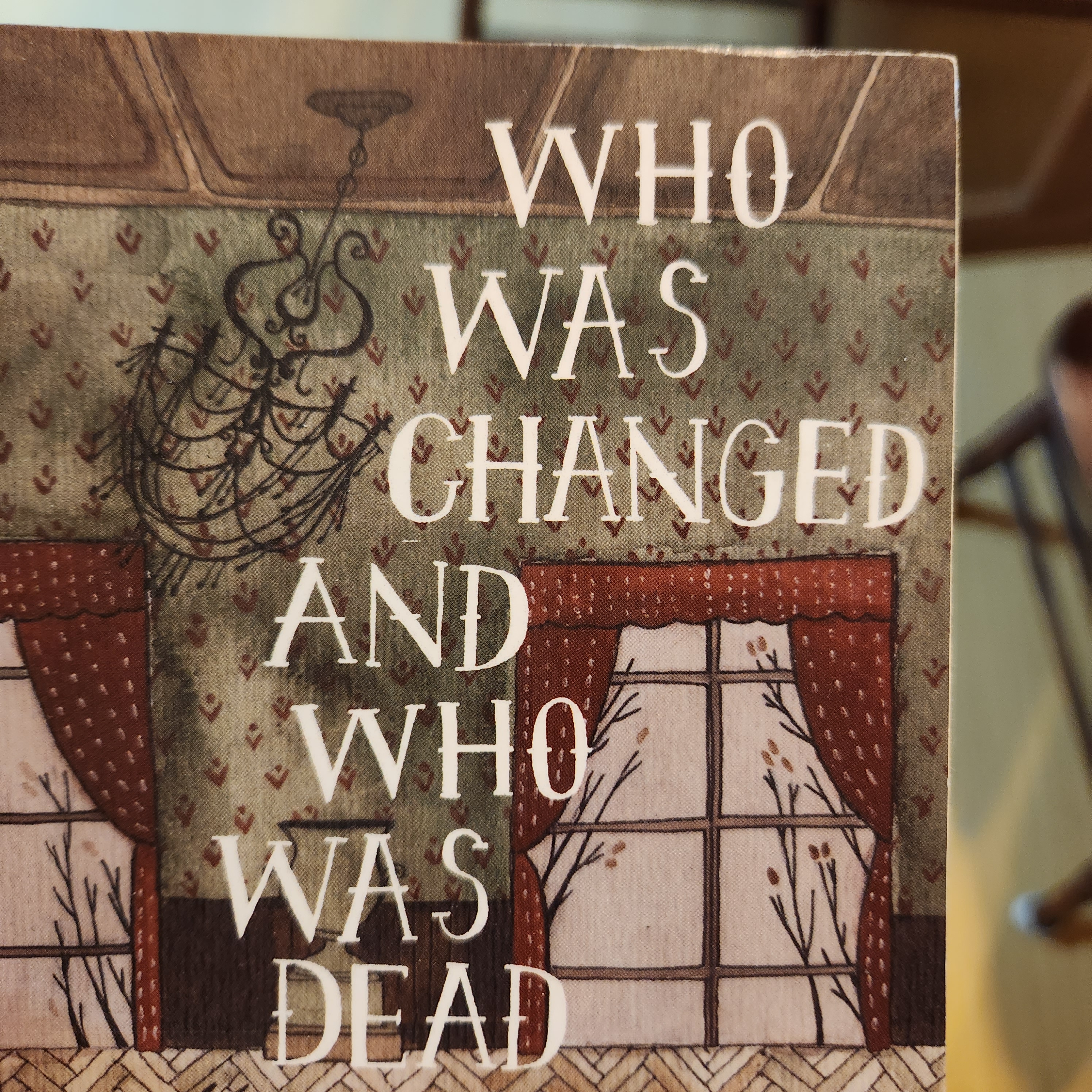
I’m grateful for Dorothy, A Publishing Project for breathing life back into this 1954 gem by Barbara Comyns, entitled Who Was Changed and Who Was Dead. The title alone got my attention, and the rest of the book did not disappoint either. It is a great narrative, that paints a bizarre, almost mystical crisis within a small town. Comyns portrays all of human ugliness with great humor and insight. The imagery is also beautifully done.
Interestingly, I started the year with an Agatha Christie murder mystery, and there is something I really appreciate about this era of writing. It is very straightforward, but that close and careful approach also highlights the intentional writing and brings the descriptions into greater focus.
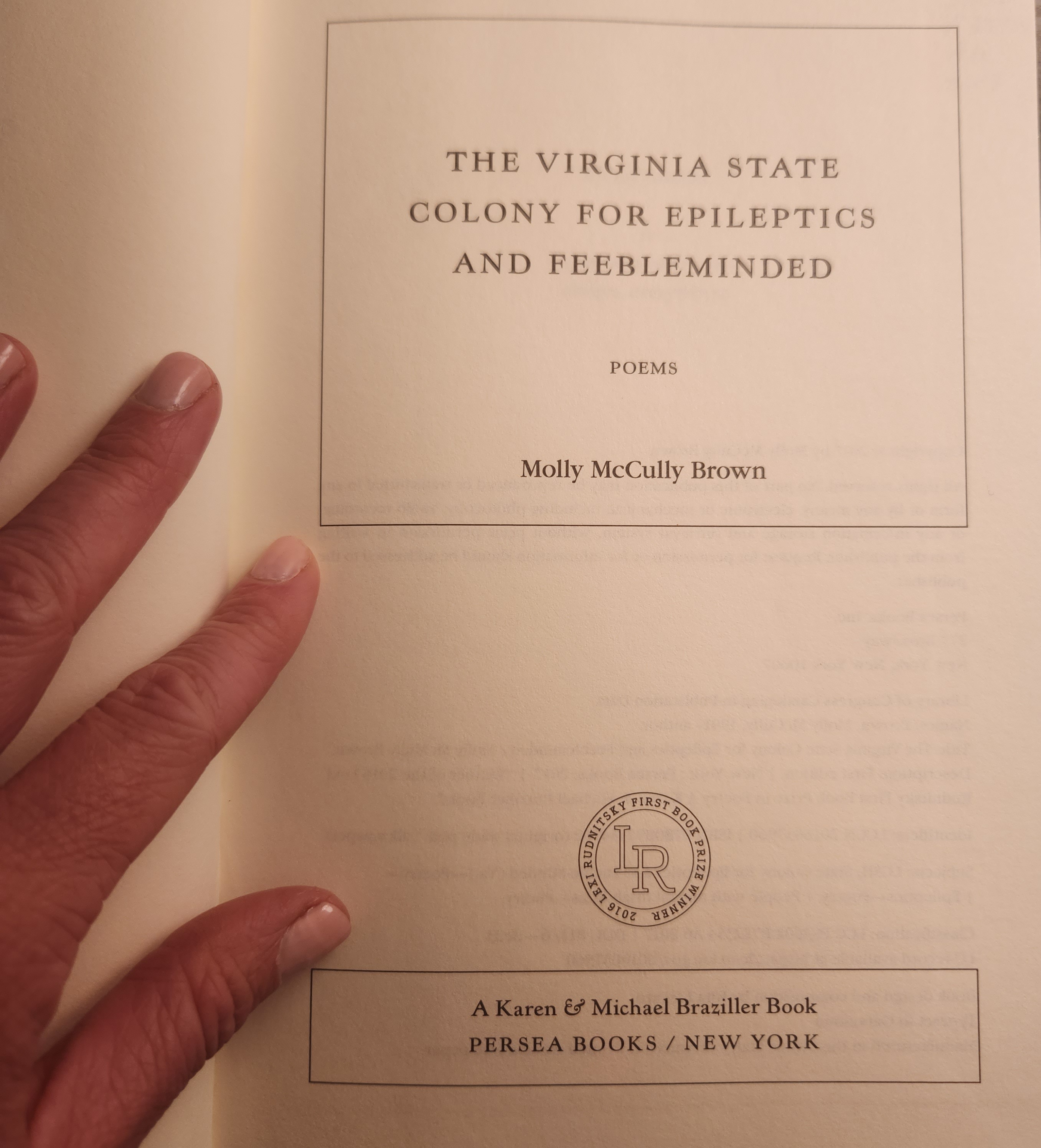
I don’t read a lot of poetry, but recently picked up The Virginia State Colony for Epileptics and Feebleminded by Molly McCully Brown, and I’m so glad I did. I first read Molly McCully Brown when someone shared a link to an article she had written. I was blown away by the quality of the writing then. I follow her socials, and see that we know some people in common. So, I follow her work. In fact, I thought for sure that I had already read The Virginia State Colony for Epileptics and Feebleminded, but once I picked it up, I realized I had not. I would have remembered!
This is an excellent book of poetry. The whole project really needs to be poetry, and I like that about it, and I think nonpoetry readers (beyond popular poetry, anyway) will find this book to be a bit more accessible, and still completely artful. It reads up quickly. It does not need to be belabored. It just exists, and it is good. Go read it.
Molly McCully Brown won the Lexi Rudnitsky First Book Prize The Virginia State Colony for Epileptics and Feebleminded
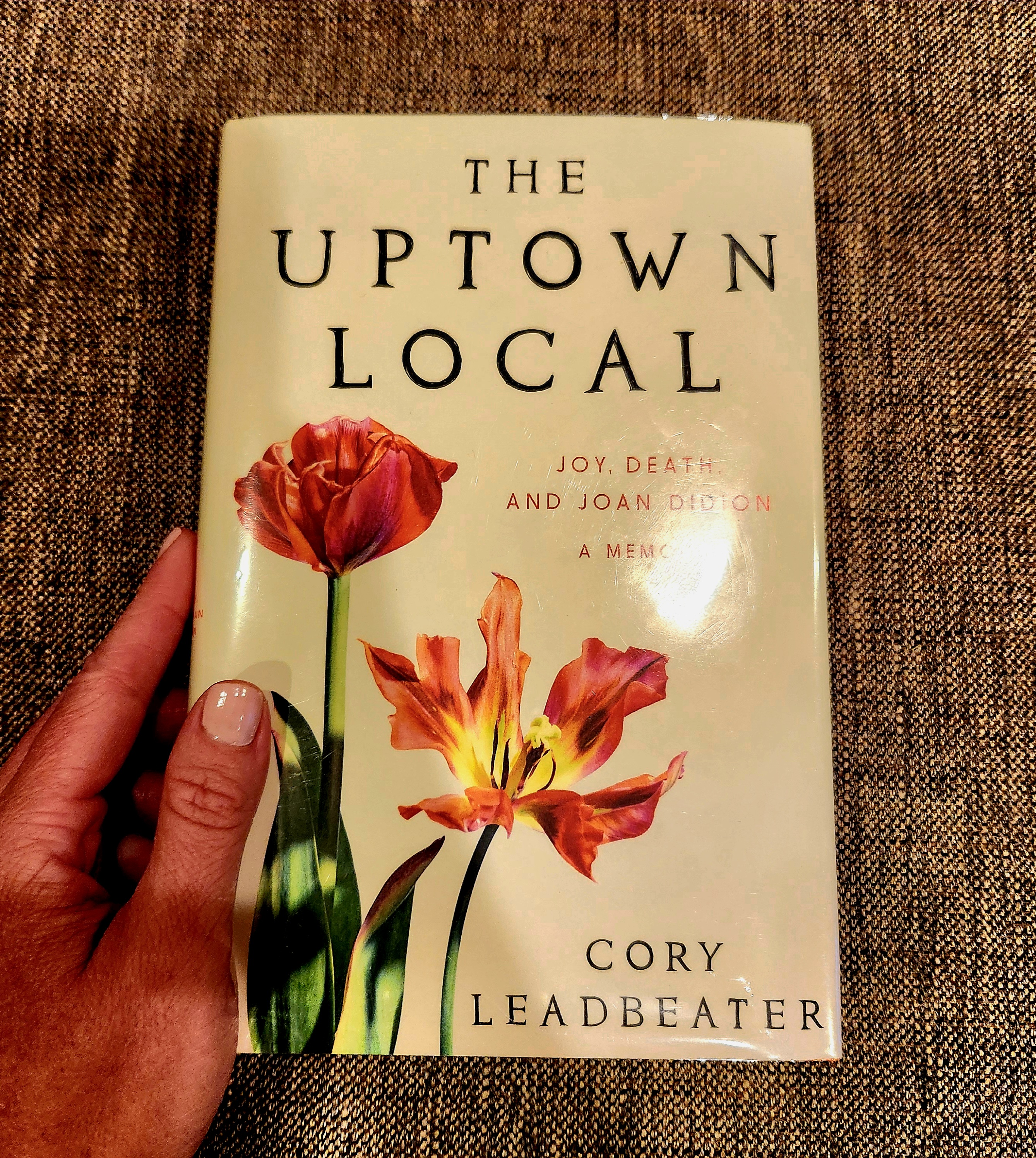
After reading Joan Didion’s Blue Nights, I picked up Cory Leadbeater’s The Uptown Local at the library because it is about his life working as Didion’s assistant, and my interest in Didion had been renewed. This is a memoir, and Leadbeater has quite a lot to share about his own life and creative process, as well as what it meant to him to work so closely with Didion.
This book is honest and insightful, and very self aware. Readers will get some Didion fixes, but more than that, it offers insight into what it might’ve been like to be her assistant in her final years. And, I’m sure many readers and writers probably have fantasized about just such a job. I have.
Leadbeater portrays their dynamic as a kind of mother son relationship. In fact, Didion refers to herself a “mommy” in her book inscription to him. Leadbeater seems to wear his troubles on his sleeve, and Didion seems to not shy away from them. She seems to fully embrace and welcome him, even despite (or because?) of his challenges. Even when her more aristocratic friends disregard him, Didion is stalwart. I wonder if she saw her own daughter in Leadbeater. Some of their troubles seemed the same, from what I can gather, which is very little.
In the end, both Didion and Leadbeater both offer insights on relationships, art appreciation, poetry, and how to live a meaningful life–something we could all probably use.


 SHEREWIN