Category Archives: reading

The First Bad Man by Miranda July

An autographed copy of Miranda July’s The First Bad Man arrived in a cardboard box propped against my front door. I did not order it. I was coming back from yoga. It was any old day, and my mind very slowly bended around the idea that someone had bought something for me. I brought it inside and carefully opened it. Inside was a note from Z and the book. I immediately read the first few paragraphs, smiled to myself, and set it aside for later.

I’ve been reading a lot lately and savored this one, reading it slowly over the course of a few weeks. There are so many lines in the first few chapters that made me laugh, or made me reach for a pencil to draw a thin gray line under a phrase or beside a passage. Miranda July is an artist who makes me feel not alone in this world. It is absolutely novel how she can capture all the strange little quips and quirks that brains do.

July also writes about really disgusting, gross-out, putrid sorts of things, and the sheer quantity of that mid-way through The First Bad Man started to get me down. The suffocation the main character creates for herself, her home, her kitchen, her frying pan, her throat condition, the containers of urine, the breast punching—it all got to be too much, and I didn’t want to spend any more time in the book. But, of course, I did and in the last few chapters, I started underlining things again, and smiling as I read, and once again, felt that I was not alone in the world.

When I read a particularly delightful passage, I found myself turning to the title page and running my finger over her indecipherable magic marker signature. Who was this woman? Is she like me? Or, is she commenting on what it’s like to be me?

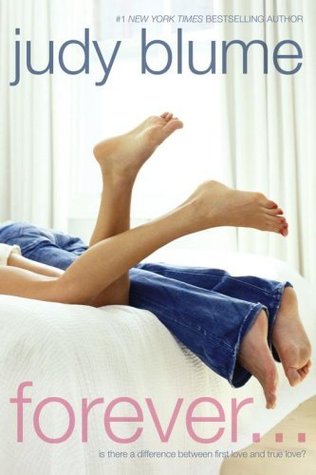
Forever by Judy Blume

I recently saw Forever by Judy Blume on a list of great books by women for women. I haven’t read young adult literature since…probably since I was a teenager. I was immediately struck by how bad the writing was. The book is a study in telling instead of showing. After deciding early on that it was not worth a close read, I just skipped ahead, read all of the sexy parts, and called it a day.

image from goodreads.com

image from goodreads.com

However, after a few days of reflection, I’ve come to realize that it probably is an important book. Sure, I found most of the writing off-putting, but it was probably pretty good/typical/appropriate/accessible for young adult fiction. Evidently, it’s one of the first books that’s about young people entering into their first sexual relationships. Blume portrays a very white, middle class, private school kind of normal. So, that was limiting, but still useful. It depicts young people being very straightforward with each other. All of the experiences are very consensual and thoughtful. If someone has a feeling or doesn’t want to do something, that’s okay. They talk about it. Blume is modeling a relationship, though perhaps overly simplified, is straightforward and consensual, and sadly, that’s really rare. So, after reading the thing, I’d agree that this is an important book for all women, especially young women, and the people who want to be intimate with them.

Palo Alto: Stories by James Franco

Despite having recently lost my ability to read anything with a discernible plot, I read and enjoyed James Franco’s first selection of shorts stories, entitled, Palo Alto: Stories. And, it was good. I mean, everyone’s reading it and wondering if they’re just reading it because he’s famous, and while that might be the case, the writing holds its own. He tips his hat to his teachers, and I so hope that he workshopped this stuff like the rest of us.

While it’s got a major publisher, it feels independent. Ideally, this is the sort of text that could help bridge the gap between big conglomerate publishers and small independent presses. I don’t really think capitalism or consumerism work that way, but as a reader, I cannot tell you how badly I want to read more of this kind of work.

Anyway, these are small, plot-driven stories. They are careful and conceptually rich. While I’ll admit I wasn’t too eager to spend a lot of time with teenaged-boys or high school, I think some of the territory Franco covers is important, even necessary. The first story, “Halloween,” is really so good. It’s one that has stuck with me for the past few days. It’s one I’ll remember.

I’ve been a fan of Franco’s since his Freaks and Geeks years (or rather, when I watched it on DVD several years after the fact), but even still, I’ve been a fan, and I’m glad to see his genuine success in writing.

As you know, I read George Saunders this summer, and I actually thought Franco’s work could be categorized with Saunders. Franco’s work is much more accessible, mind you, but it is somewhat indicative of the real made strangely dystopic that is happening in contemporary male writing these days, and it’s satisfying to see that aesthetic emerge culturally.

Also, and more importantly, is it just me, or do the pages smell vaguely of cologne?

palo alto

image from amazon.com

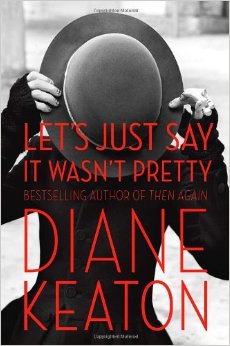
Let’s Just Say It Wasn’t Pretty by Diane Keaton

I read Let’s Just Say It Wasn’t Pretty by Diane Keaton because I remembered liking her Then Again awhile back. Also, more importantly, Diane Keaton has done things a little differently, and I’m always looking to read about women who are doing things a little differently because I do things a little differently too.

image from amazon.com

image from amazon.com

It’s an odd book, and much more stream of consciousness than I remember of Then Again. And, so I was glad to read something entirely different. It was insightful to be privy to Diane Keaton’s mind, which was, just like her, brilliant, annoying, confusing, legendary.

I mean, you can tell that a frenzied editor tried to assemble her bedside journal scribblings, but that’s okay. It never needed to be a perfect to begin with.

She writes about beauty. It’s mostly about beauty. The introduction is so promising, and there are only glimpses (though worth it!) of this promise throughout. She writes about the process of discovering beauty as a young girl, and hearing the opinions of others, she and writes “Don’t tell me what beauty is before I know if for myself.” I think that line is so important. The most honest, provocative moments are when we fall in love with something beautiful before we realize or understand if it meets a shared social standard of beauty: our mothers, the fabric on grandmother’s old chair, a tiny glass figurine weighted just right. Of course, soon enough, we are told what beauty is, and all is lost, and we can never again really know how much we’ve mixed up our own sense of beauty with society’s standards. C’est la vie.

Later, of Picasso’s depiction of Marie- Thérèse, Keaton writes that Picasso paints her, “through loving her, living with her, and seeing her as both ugly and magnificent. Because of his sculptures, Marie- Thérèse emerged as a symbol of unsightly, frightening, even hideous but also, I have to say, complete beauty” (xix). I can think of nothing more romantic than the thought of two people loving each other and timelessly fascinated with the ugly and the magnificent in the other—the unsightly, the frightening, the hideous, and the beauty.

Keaton is a romantic and appears to be unlucky in love, but has also had some luck in love. Her questions of love and beauty were really nice to think through with her, even if just for a couple hundred pages.

The Room Lit by Roses by Carole Maso

Carole Maso is one of the few authors who I will read over and over again. Her work has a quality that just gives and gives each time I read it. Oddly, I haven’t even come close to reading all of her work. With the short time before work for the semester really starts in earnest, I decided to grab a few books to frantically and recklessly read before I got down to business. That has involved forsaking some exercise and sunlight to read while lounging in air-conditioned spaces–sometimes with a popsicle.

I grabbed a few new books from the New York Times Bestseller list along with Carole Maso’s The Room Lit by Roses. I began reading it after working a long shift as a doula. My wrist was sore (still not recovered from a bike wreck two months ago) and my body weary. I tossed by hospital clothes in the hamper and showered the hospital germs away and propped myself up in bed with pillows on my cool white feather down comforter (enter also swamp cooler and popsicle).

I was done thinking about childbirth and labor when I cracked the spine and for the first time realized the rest of the book’s title: A Journal of Pregnancy and Birth. The universe clearly wants me to examine the issue more closely, so “here we go again,” I thought. I scarcely could put it down until it was finished about 24 hours later with the strong impulse to turn around and read it again, which I will not do right now.

Years ago, I read The American Woman in the Chinese Hat and read it again to prepare for my trip to France. I assume I’ll return to The Room Lit by Roses if I become pregnant or want to write more extensively on the topic. For now, I’m glad it exists and I’m glad I can return to it. What I love about Maso’s work is how real and raw and open she is. The ultimate sacrifice, I get the feeling that she splays herself open for us, dear reader, and for art and probably for world peace. Carole Maso is one of those authors for whom I am incredibly grateful.

Sometimes a line or two will be entirely dumb and petty and ugly, which works to magnify the stuff that is brilliant and important and beautiful. As I read her work, I find myself saying yes! That’s how it is. That’s how I feel! She wrote, “Always knew I wanted to have the experience of pregnancy.” I swear I say those exact words. The rest of it, the child, the life, that’s the part I’m not always sure about. But pregnancy and labor, yes. It’s such a bizarre and most intense human experience that is felt only a few times, or once, or never, so of course I’d like to have that. Maso puts into words how absolutely terrible and wonderful and necessary the experience can be, and I clung to each word.

Tenth of December by George Saunders

I recently finished a collection of short stories by George Saunders called Tenth of December. I’ve never read Saunders before and didn’t intend to, but I saw the title in a favorite new and used bookstore and had to pick it up. I’ve always loved the bookstore. It used to be called Earth ‘N Book in La Grande, Oregon. Years ago, it changed hands, and I felt that it wasn’t quite what it used to be. However, I popped my head in on a recent visit to Oregon, and it drew me in—just like a good new and used bookstore (is there any other kind?) always does.

image from usatoday.com

image from usatoday.com

I scanned the new releases, and that’s when the title caught my attention: Tenth of December. You see, that’s a significant date for me. That’s the date that My Love was born. (Though for years I had it in my head that his birthday was on the seventh.) I picked it up and read some praise on the back cover. There was a conversation at the end with David Sedaris—a favorite! I decided to get it as a gift for Z, who would be visiting me in Oregon on his way through. (He is currently on a bike trek from Utah through the Northwest.) So, I bought the book, along with another great book called This is Not My Hat for my nephew. (That book encouraged a good four-year old-appropriate conversation on the ethics of stealing. Z pointed out that it also taught dramatic irony.)

Tenth of December starts with a short story called “Victory Lap,” which is absolutely stunning. It is hilarious and traumatic—something Saunders does very well. He also has a distinct and innovative voice, but doesn’t seem like he’s trying too hard—which means he was probably trying very, very hard. I know that seems so very nonspecific, so I’ll try to elaborate. Saunders does this thing where he integrates these informal aspects of text-speak and typing. So, for example, the “ha ha has” we get when we’re chatting or texting are integrated into his work in a profound and poetic, but (of course) understated way. There are a few good authors who are absolutely genius with their ability to make the colloquial profound (Raymond Carver is among them), and Saunders does that too. But, what’s most interesting, I think, is the way he integrates a really modern colloquial that is clearly influenced by the way changing and omnipresent technology evolves our language.

“Victory Lap” was probably my favorite piece. I also really appreciated “Puppy.” In my opinion, a few pieces were too dark and/or difficult for their payoff, but I am particularly sensitive to such things. As you, dear readers, may recall, I am making an effort to read mostly female authors for the time being. It’s difficult to describe why exactly, but suffice it to say that for my current creative endeavors, I want to have the voices of women in my head.

Despite that current constraint, I picked up and read Tenth of December as quickly as I could. When Z arrived in Oregon, I kept reading it for several days, trying to finish in case he wanted to take it with him on his bike trek. Though it was an emotional rollercoaster, I’m glad I read it. I’m also glad I’ve given it as a gift. I won’t mind that it is in someone else’s care for awhile.

Birth, Breath, and Death: Meditations on Motherhood, Chaplaincy, and Life as a Doula by Amy Wright Glenn

Since I began the doula certification process through DONA International, I have had to read myriad required books on labor and the work of being a labor companion. My favorite book by far has been Ina May Gaskin’s Ina May’s Guide to Childbirth. I pretty much love everything she does, but that book was has been the best so far.

image from Amazon

image from Amazon

As I’ve completed the required reading for the doula certification, I’ve been able to branch out and read some related works that are not on the list. While I’ve browsed through a few other titles, Birth, Breath, and Death: Meditations on Motherhood, Chaplaincy, and Life as a Doula by Amy Wright Glenn has been the standout. It’s a really interesting book that (perhaps controversially) makes the connection between doula work and chaplaincy.

Let me get my criticisms out of the way first (because that’s always the worst part). Organization. This book has an organization problem. It appears to be a mash up of personal reflection (that is wonderful!) and what reads like long excerpts from a recycled academic paper on spirituality, love, philosophy (which is fine, but less wonderful). I sometimes found myself wanting her to get back to her stories, lovely insights, and self-reflection.

Glenn’s experience and her perspective is absolutely rich. It felt like an indulgence, and I wanted more. Since I began this work, I have often thought of the close connection between doula work and chaplaincy—although I haven’t thought chaplaincy was the right word—it makes me think of religion. Like yoga, doula work is more than spirituality. It also deals with the emotional and very much the physical. In fact, I imagine that chaplaincy work would do well to take a lead from the female-centric way that doulas have of guiding new life on to Earth (no big deal).

At a recent doula gathering, a new friend, still very emotional, shared that her father had recently passed away. As doulas, we discussed the way that doulas might facilitate a more peaceful, less medicalized passing, just like we are often asking questions and making plans in advance to help facilitating a more peaceful, empowered, and oftentimes a less medicalized birth.

It appears that Glenn has made that connection between birth and death in her own life’s work. A highlight of her book is her birth story. It’s one of the best I’ve ever read (though I have read [and witnessed!] many beautiful birth stories). Like all births, Glenn’s labor is unpredictable, and she is skilled at reflecting and sharing insights from the experience. More generally, I loved her insights on motherhood. I wanted to know even more about her thoughts on her own mother. I loved reading about the way she loves her son and the hesitations she had at becoming a mother in the first place.

If you find deep complexity in doula work, motherhood, childhood, life, and death, you’ll like this book. You might have to forgive it for lacking some of the polish (and organization) of other books, but if you’re like me, that forgiveness will be easy for the insight she offers.

The Favored Daughter: One Woman’s Fight to Lead Afghanistan Into the Future by Fawzia Koofi

I just finished reading The Favored Daughter: One Woman’s Fight to Lead Afghanistan Into the Future by Fawzia Koofi. It was a fascinating glimpse into the life of a Middle Eastern woman and a reminder of how quickly a dictatorship can destroy people’s lives, especially women.

The Favored Daughter

image from NPR

Several years ago, I also read Inside the Kingdom: My Life in Saudi Arabia by Carmen Bin Laden, and it was also spellbinding. The books are both from the perspective of educated women from the Middle East. I love getting their perspective because that experience is so vastly different than my own and also because it is represented so infrequently in literature. On one hand, these women are very similar to me in that we are all highly educated. On the other hand, I have much more relative freedom here in the US than many women in the Middle East. A highly educated woman living in an incredibly conservative patriarchal society is fascinating.

What I loved most was Koofi’s description of her childhood, growing up in the remote mountains of Afghanistan to a politician father in a polygamous family. It illustrated the bygone days when rampant spousal abuse and deadly sexism prevailed. The book provides a lens to a culture that is very different from my own. The passages about her childhood and early womanhood are lovely and interesting. It seemed that the love and unusual attention her mother gave her, even though she was “only” a girl, inspired her to a different life than one lived by most women in Afghanistan.

It is no spoiler than Koofi goes on to have a political career and that is where the book falters a bit. The last few chapters become a bit repetitive and have a distinctly political. The book ends in a tone that is political and not always in a good way. Not at that her points aren’t valid. They are! And, she is incredibly inspiring and her work as one of the few female politicians is no doubt incredibly important. All of that is gripping and exciting—but it’s not as exciting as the personal view she takes of her life in the first two-thirds of the book. By the end, she sounds like a politician who is on the campaign trail—a politician who might one day become the president of Afghanistan.

Let’s Explore Diabetes with Owls by David Sedaris

I recently finished another book by David Sedaris, Let’s Explore Diabetes with Owls. As with all of his books, this one was well worth the read. I found myself having deep feelings of gratitude for the author as I laughed, and was moved by, his prose.

Let's Explore Diabetes with Owls

image from NPR

My favorite stories are the ones where he pokes fun at himself. I love the stories of his childhood. “Loggerheads” is wonderfully cringe-worthy and funny and sad. I love the stories of his early adulthood. For me, “Stand Still” covered the well-worn territory of parental expectations, masculinity vs. humanism, and adulthood vs. pettiness. I love the stories of his life now. His story “Rubbish” tackles the fine line between being a good human and the deep relationship with neuroses that such an endeavor might inspire.

Though I’m on board with his politics, the overtly political pieces were funny, yes, but less engaging on all counts.  Still, it’s funny. And smart. And absolutely worth reading. Framed differently, perhaps in first person and expertly woven with his own life, they might be even better.

As I mentioned earlier, I had a strong feeling of gratitude as I read. I frequently hear stories of people “thanking” their favorite  artists for their work. Sedaris is one whom I want to thank, and this sense of gratitude was with me throughout the entire book.

Flight Behavior by Barbara Kingsolver

My introduction to Barbara Kingsolver happened over a decade ago when I first read her debut novel, The Bean Trees. At the time, I loved the book. I had just discovered popular, contemporary women writers, and I could not get enough. I can’t remember exactly what went down in The Bean Trees, but it had to do with a woman living life on her own terms, a theme that makes me weak in the knees. There was probably also some troubling imperialist nostalgia stuff going on there too, but, like I said, it’s been over a decade. Who can remember?

I hadn’t read Kingsolver for many years, when I picked up her latest book, Flight Behavior. The book takes place in Appalachia and centers on Dellarobia, an uneducated, but curious and sympathetic character, who is trapped in an unhappy marriage, which is really just an unhappy life. That life is changed forever when the family land is inundated with monarch butterflies, whose migratory patterns are disrupted by climate change. The butterflies are the catalyst for opening up a world of possibilities and [spoiler alert!] ultimately leading Dellarobia to self fulfillment and transformation. The message is education and information are key.

image from NPR

The book has everything I love: a down on her luck Appalachian woman, monarch butterflies, and sheep! It’s everything I look for in a novel, and yet the book sometimes fell flat. Kingsolver is writing from a rural poor Appalachian perspective, but in many ways Kingsolver herself seems to lack that perspective. I think of myself as someone who understands both sheep farming and the rural poor (though, to be fair, not the Appalachian variety), two things that are dealt with extensively in the novel. The book demonstrates that Kingsolver is a scientist at heart and a keen observer of humans and nature, but seems one step removed.

In regards to the sheep details, I recognized most of the information from a sheep raising manual written by Carol Ekarius, who herself is a transplant to sheep farming and a hobby farmer. In Flight Behavior, these characters are trying to make a living off of sheep, and to do so, they would need a completely different approach than the hobby farming Kingsolver portrays.

Next, it has been my experience that the rural poor have a certain pride, but the Dellarobia character has none of that pride. She is just completely insecure and humiliated by her life in every way. This is made clear as visitors and highly educated scientists begin to visit the butterflies. Even the transformed Dellarobia seemed to lack some necessary perspective in regards to her own behavior. I guess that’s reality though, isn’t it?

The pros of the book are that Kingsolver is a scientist, and her nerdy descriptions of the labs, the butterflies, and the processes are endearing. This kind of novel has the difficult task of balancing an engaging narrative and characters, while simultaneously commenting on environmental politics, and that’s not an easy job. In the end, I think Kingsolver achieved that balance. I read the thing to the end, and got something out of it. There are lovely uses of language and description throughout, and her metaphors are apt. It wasn’t a story that allowed me to suspend disbelief and fully engage because of the moments where I was thinking, “She would never do/say that thing.” Or, “a sheep farmer would never do xyz.”

When I hear “Appalachian women’s literature,” my heart melts a little bit. If you’re like me, Flight Behavior is worth reading. If environmentalist gets your blood pumping, you’ll probably love the book. If you find that this book isn’t for you, do go back and read her first book, though. That one was a real gem.