Category Archives: relationships

All Fours by Miranda July

I’m not sure there’s anything left for me to say that hasn’t already been said about Miranda July’s new book, All Fours, but I read it and so I’ll try to say something here. First, I always really appreciate July’s work and read it when I get the chance. She offers some great insights on the human condition and pairs it with lots of absurd, disgusting, and confusing action. Furthermore, for a bestseller, I can guarantee the writing will not be bad, and that’s more than I can say for a lot of bestsellers.

What I think it so important about the book, and what has given it all of this #allfoursgroupchat energy is that the the book tackles aging; emotional labor, especially in heterosexual relationships; and some of the physical changes and hormonal shifts women experience in their 40s and 50s. There are so many unique and terrible aspects of this reality that July captured accurately for me. I really appreciated that she gave it voice.

There are also many details seemingly based on some real events from her own life. This makes the book all the more engaging and compelling. The conclusion of the book does even more to mirror real life as the main character goes on book tour, except you know July hasn’t gone on tour yet before she’s done writing. It’s just a very unique way to end a book.

Overall, I know some readers won’t be able to handle this book because it is a lot. July’s work usually is. But, some of us will, and I hope that those of us who do like this book will be able to find that group chat.

From Here to the Great Unknown by Lisa Marie Presley and Riley Keough

For the last decade or so, I’ve had a heightened interest in Elvis. What a legend! I love his staying power. I love his unique voice. I love the performance of it all. I especially love this song that totally melts my face.

So when I found out that Riley Keough and Lisa Marie Presley had written a memoir, I could not wait to read it. I was really hoping that Lisa Marie would have narrated her part, but it was read by Riley and Julia Roberts, and that was good too. Julia Roberts has a subtle Southern accent that really piques the imagination. There are also a few excerpts from Lisa Marie, and that is very satisfying.

Overall, From Here to the Great Unknown is an excellent book. Lisa Marie’s life was incredibly intense and full of tragedy, and the book portrays much of that in extreme detail. I learned new things. The descriptions of Graceland were incredible that I felt like I was there. Now I really want to visit Graceland!

The Seas by Samantha Hunt

I just finished the beautiful, haunting, absurd, and magitragic novel, The Seas, by Samantha Hunt. This is a book with a rich sense of place, compelling characters, and layers upon layers of themes and possible meanings, which shoot out in every direction.

At times, while reading, I had some judgement about the contemporary’s literary community’s dealings of mental illness. So often, it seems, authors borrow symptoms in ways that do not always feel ethical to me, but instead are used to shock and awe. However, by the end of this novel, Hunt had really earned it, in my opinion, and was able to demonstrate a deeper meaning and a broader purpose in her depiction of this strange and mesmerizing mermaid main character.

We’re nearing the end of the reading year now, and I’ll count this one among my favorites.

Who Was Changed and Who Was Dead by Barbara Comyns

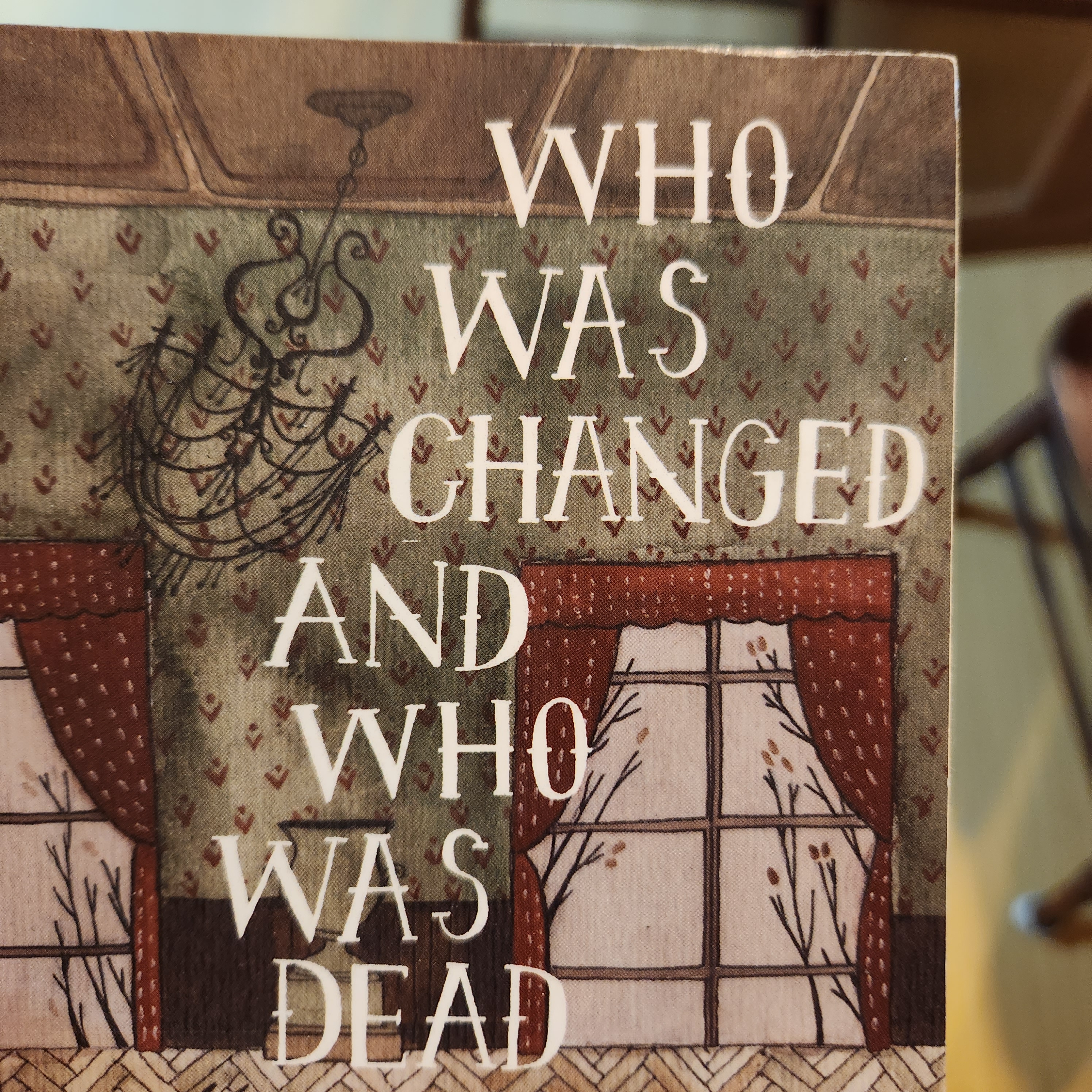
I’m grateful for Dorothy, A Publishing Project for breathing life back into this 1954 gem by Barbara Comyns, entitled Who Was Changed and Who Was Dead. The title alone got my attention, and the rest of the book did not disappoint either. It is a great narrative, that paints a bizarre, almost mystical crisis within a small town. Comyns portrays all of human ugliness with great humor and insight. The imagery is also beautifully done.

Interestingly, I started the year with an Agatha Christie murder mystery, and there is something I really appreciate about this era of writing. It is very straightforward, but that close and careful approach also highlights the intentional writing and brings the descriptions into greater focus.

The Uptown Local by Cory Leadbeater

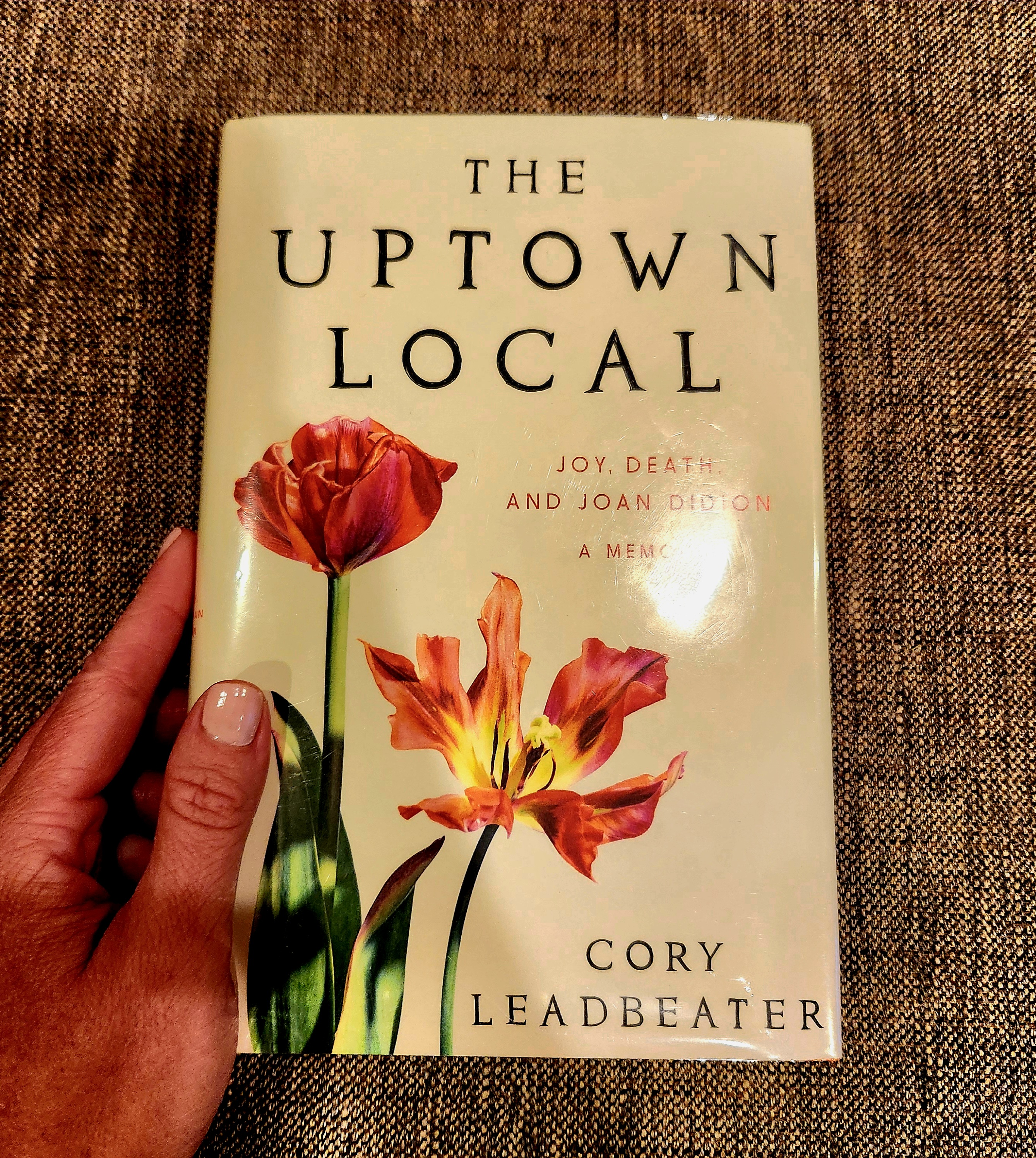
After reading Joan Didion’s Blue Nights, I picked up Cory Leadbeater’s The Uptown Local at the library because it is about his life working as Didion’s assistant, and my interest in Didion had been renewed. This is a memoir, and Leadbeater has quite a lot to share about his own life and creative process, as well as what it meant to him to work so closely with Didion.

This book is honest and insightful, and very self aware. Readers will get some Didion fixes, but more than that, it offers insight into what it might’ve been like to be her assistant in her final years. And, I’m sure many readers and writers probably have fantasized about just such a job. I have.

Leadbeater portrays their dynamic as a kind of mother son relationship. In fact, Didion refers to herself a “mommy” in her book inscription to him. Leadbeater seems to wear his troubles on his sleeve, and Didion seems to not shy away from them. She seems to fully embrace and welcome him, even despite (or because?) of his challenges. Even when her more aristocratic friends disregard him, Didion is stalwart. I wonder if she saw her own daughter in Leadbeater. Some of their troubles seemed the same, from what I can gather, which is very little.

In the end, both Didion and Leadbeater both offer insights on relationships, art appreciation, poetry, and how to live a meaningful life–something we could all probably use.

Fleishman is in Trouble (miniseries)

Each year I budget time for about one show, and this year that show was the tv miniseries Fleishman is in Trouble. After reading the book, and hearing all the hype about the show, I wanted to see what it was all about. And, let me tell you, the show was what they said it would be. I think the show is better than the book, and I don’t need to feel bad about saying that since the author, Taffy Brodesser-Akner, also wrote the tv adaption.

[Continue reading only after you’ve seen the show.]

Basically, I just want to write out some of the things that I thought were really interesting about this piece. I thought the role reversal of the Toby character was interesting. I appreciated how he was in the traditional “woman’s” role in the show as emotional laborer and primary caretaker of the children in the family. His work is meaningful, but it (and he) is chronically undervalued.

I also appreciated how complicated Rachel’s role was. Like all of the characters in the book (really), she behaves terribly, and is good, but her backstory and raison d’être is fully and humanely formed. As a career-driven woman, she cannot win with her husband, and yet she is sexualized by a friend’s husband exactly because she is career driven, opposed to his own stay-at-home wife.

Lastly, and I think this is where the tv series really shines in the last few episodes, I really appreciated Libby’s complexity too. As the narrator, I wanted to trust her to make sense of these people, but it becomes clear that she is also emotionally stuck and is actually behaving in really sexist ways, even though she identifies and pontificates as an outspoken feminist. Her husband also takes on a typically female role in the relationship, managing the family and holding it all together as Libby gallivants around.

A take away for me lately is that relationships are hard and divorce is hard. We are too caught up in our own stories to see anything clearly. And yet, there is hope. And also cynicism. Everything. The entire show just pulls it together beautifully.

Blue Nights by Joan Didion

I just finished Joan Didion’s Blue Nights with actual tears running down my face. That’s probably not the best way to describe this book because while it is known to be about loss and aging, it is also not a tear jerker in my opinion. It is a beautifully written book that I read with great care, even taking the time to look up some of images and stories from the designers and famous characters she mentions. Even still, this slow burn packs a powerful punch as readers round the bend toward the ending.

Didion is one of the most famous writers of our time and is critically untouchable in my opinion. Some reviewers said this book was not as tight as her earlier work, but if that is true, and I do not think that it is, it is still a great book that offers a good deal of artistry around some of the most challenging of human experiences.

I read female writers of this generation with a good deal of interest (and I seem to read a lot of them lately). The tone in their writing has this formal, northeastern accent type of thing going on, and they have this deep femininity that I don’t think even exists anymore due to cultural constraints. I just…marvel at these people.

Didion is completely modern and completely relevant, and she made her daughter’s school lunches, and she wore red leather sandals with four-inch heals every day. What an icon.

Women Talking by Miriam Toews

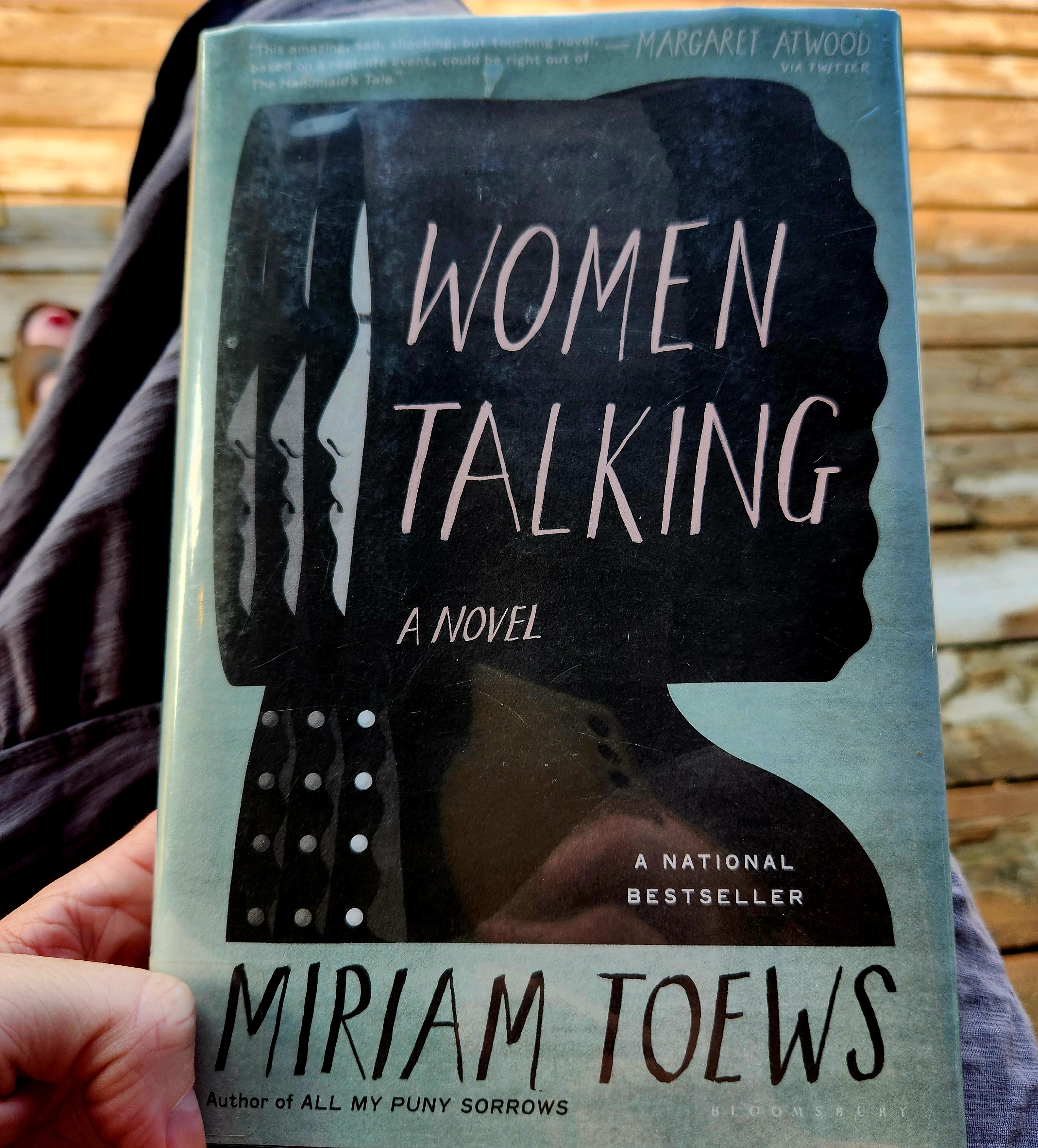
My latest read was Women Talking by Miriam Toews. I did not see the film, but heard about the horrifying real-life premise, and it really stuck with me. This book was excellent yes, but I do have more to say about it.

This is a dialogue-heavy book. And those are tough, imho. It actually is mostly “women talking.” Most of the book struck me as a kind of feminist 12 Angry Men, and that was exciting to me. Toews pulls off the heavy dialogue, though it must have been no easy task. Toews was also able to draw out the unique qualities of the characters in a fairly limited space. Furthermore, Toews is particularly well-positioned to write this book, based on her own Mennonite background. She is able to draw on the kinds of religious philosophy in a way that felt very real to me as a reader.

[Spoiler] (though I still think the book would be worth reading): The book is narrated by a male character, August, who is a troubled young man and village teacher of the local young men. He is also a victim of the same oppressive culture of men that has also preyed upon these women. He takes notes during the women’s meetings. (The women are not allowed to learn to read and write, so they cannot take notes themselves.) At first, it seems powerful that the women cannot take their own notes, and August’s presence serves as a reminder of that. He also helps add some drama and intrigue.

However, by the end of the book, the emotional landscape really shifts to August entirely. On one hand, this is the reality for so many women’s lives: their story is not told, except maybe through the perspective of men. I was cheering this book on, as one that was still able to center women’s voices and dialogue throughout. In the end, though, I felt that the story became August’s story, and I am willing to entertain the notion that this is just the framing, and this is just how it is, and this can still be a feminist account, but as a reader, I wanted it to end differently. I wanted it to end through the lenses and perspectives of the women.

If you read it, tell me if you loved the ending, or if you wanted something different.

Kairos by Jenny Erpenbeck

The reviews and the title made me read Jenny Erpenbeck’s book, Kairos. Indeed, this is a complicated and well-written book. It is about a relationship between a very young woman and a much older man. The romance between the two is intense and heady. Most people with a beating heart in their chest will recognize these feelings, and both of these main characters are able to fully express the intensity of their love. The book is also set against the backdrop of Germany in the 1980s.

Slowly, over the course of the book, the relationship ages and the characters’ feelings change in their complexity, and that is, I think, meant to parallel the political changes occurring in Germany as well.

The book also has deep political, cultural, and artistic references throughout. Unfortunately, I read the book at a time when I could not give it my full attention, and this is definitely a book that requires a close read in order to pick up what felt to me like dense literary references and subtle commentary. Honestly, I also had a hard time with the heavy themes. I think in another era, I might not be so fazed by them because it is all very well-done.

Witches, Midwives, and Nurses by Barbara Ehrenreich and Deirdre English

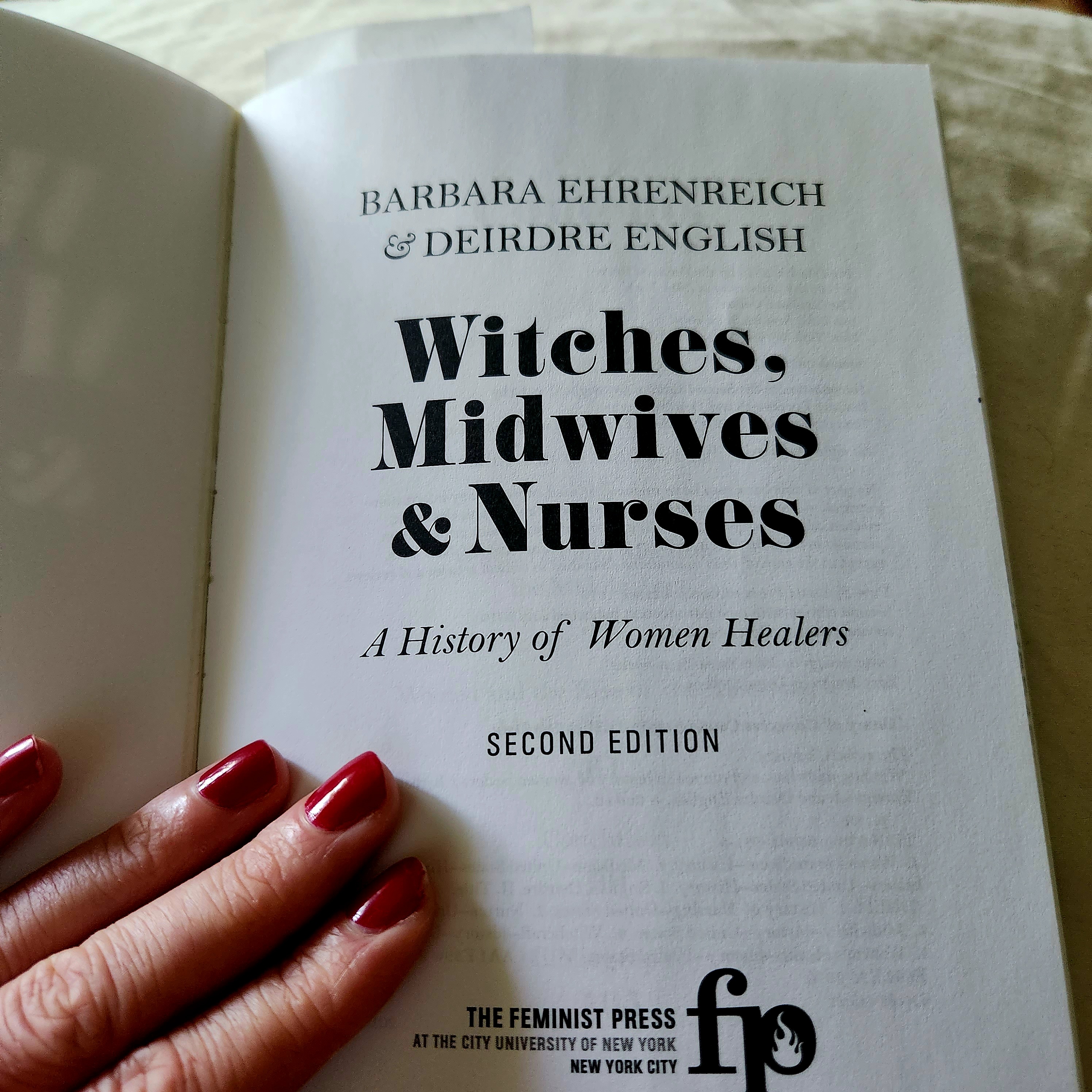
I read Witches, Midwives, and Nurses: A History of Women Healers, by Barbara Ehrenreich and Deirdre English, for my book project, but ended up reading it like one of my recreational reads, so I’m including it here. In my opinion, this is a book that should still be taught in medical classes to this day. Although it was originally published in 1973, this brief history–and the justified rage–are still relevant and important for everyone to understand to this today.

The long history of the witch trials are placed in context next to how babies came to be delivered (mostly by men) in modern medicine. The history is portrayed as a hostile takeover. While science improved some aspects of maternal medicine, the losses and violations from extracting women from childbirth seemed to exceeded any sense of progress.

This book, sometimes referred to as a “pamphlet,” is a kind of manifesto that offers a scathing, but not inaccurate account of the history of sexism in medicine.