Category Archives: work

Iep Jāltok: Poems from a Marshallese Daughter by Kathy Jetñil-Kijiner

Iep Jāltok: Poems from a Marshallese Daughter is a beautiful book of poetry by Kathy Jetñil-Kijiner. I don’t usually read a lot of poetry, but this one drew me in and held me there.

The place where I work has a relatively large population of Micronesian students. In fact, a summer program for work put this book on my radar, and I’m so glad it did. I find myself wanting to learn more about this population. From the book I read about the indigenous connection to place, language, racism, climate change, climate refugees, refugees from US nuclear testing, food, love, religion, womanhood, family, and more.

I found myself searching for plane tickets. Just how far away are the Marshall Islands?

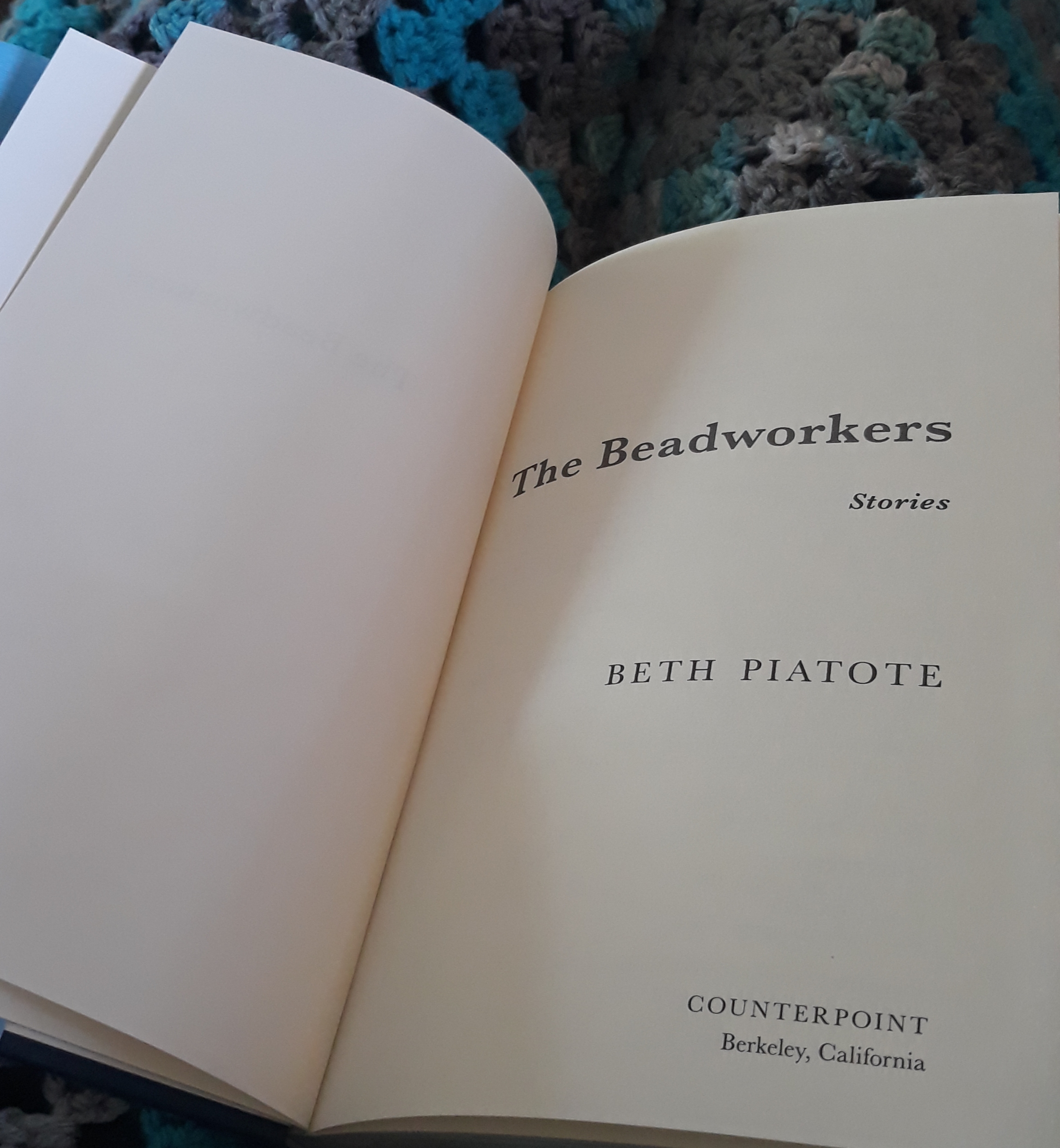
The Beadworkers by Beth Piatote

The Beadworkers by Beth Piatote brought back memories of gingham table clothes and picnics near Clark Creek with Grandma, trips to Omak, where I learned about suicide races, and the smell of tender beef stew from the crock pot, sliding in Grandma’s passenger seat as she accelerated over the railroad tracks, the proper way to make a flowerbed, the importance of reading, assimilation because your life depended on it, adoption.

Piatote knows the inland northwest well, and reading her work is like learning that someone else has the same secret you do. I have a similar feeling when reading authors like Sherman Alexie and Raymond Carver. They know these places and these people too, and it’s so nice to feel seen by them.

Reading is one thing that renews me and gives me a stronger sense of who I am. That sense of who I am has changed in wonderful ways in the past few years as I’ve become a mother, but also in worrisome ways. There is a daily grind, a constant sense of work to be done, no rest for the weary. Reading Piatote’s bio, I saw that she is also a mother, and I felt even more reaffirmed. She is able to remember. So can I.

The book made me feel creative and curious and revitalized, and in reading it, I am overwhelmed with gratitude for my job, my colleagues, and my students and the life I get to live that puts me in the way of this literature.

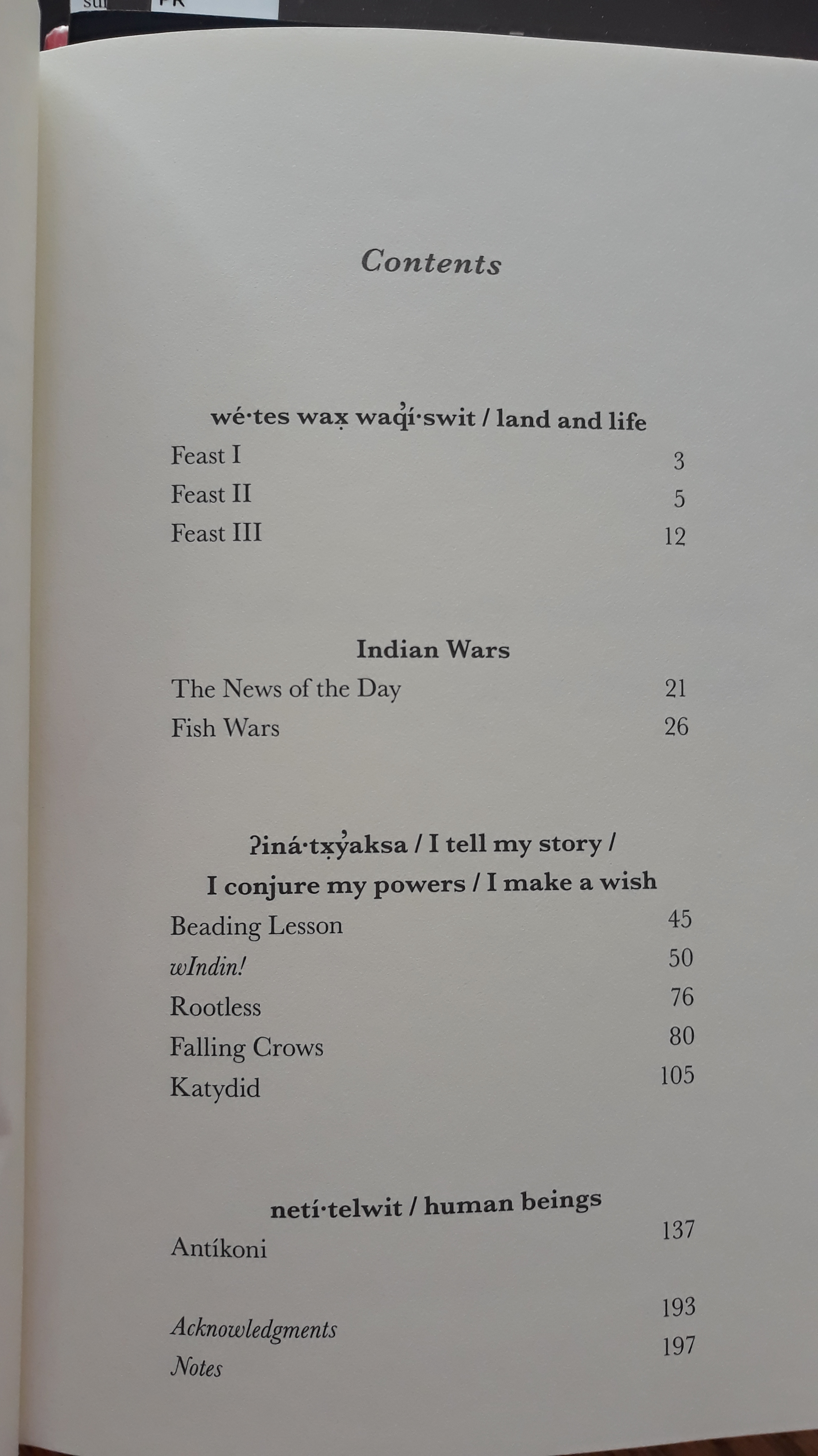
The Nez Percé language throughout
the book was powerful to see and sound out.

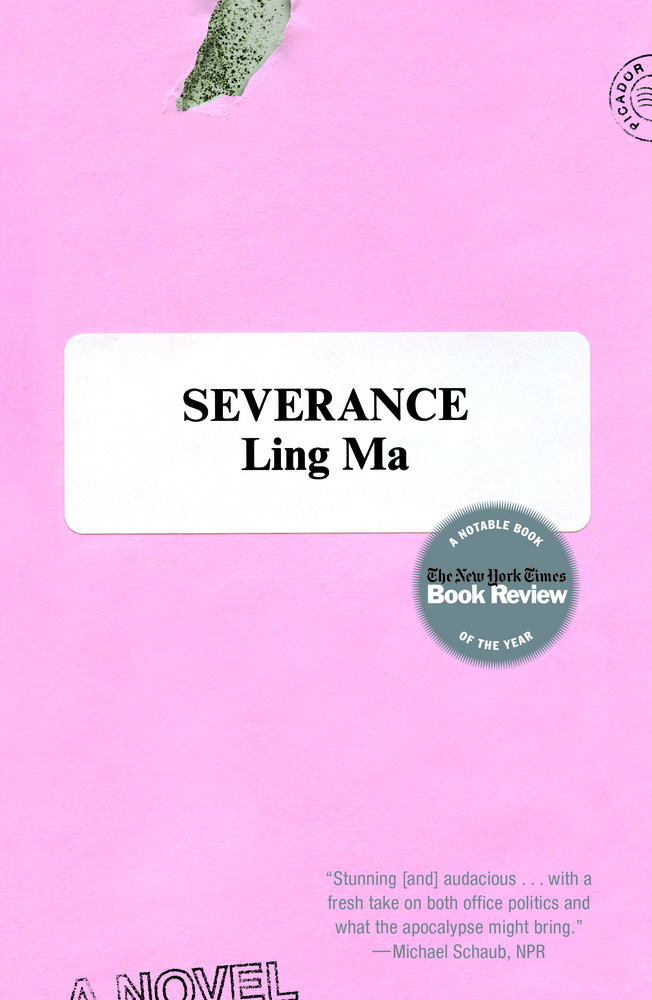
Severance by Ling Ma

While Covid19 was gaining momentum in China and just barely on my radar, I read Severance by Ling Ma. This is normally not my genre. Not by a mile. But, it’s well written and was gifted to me through an academic mamas holiday book exchange. I was in my first weeks after having a baby, and it was in between semesters. So, found myself with time to read while my baby took those nice, long newborn naps.

Character development: I did not identify with the main character whatsoever until near the end, when she was built up enough that I could see her suffering was human and shared by us all.

Plot: The premise is that a fever, originating in China, steadily makes it’s way through the human race. The “fever” is always deadly, taking 1-3 weeks to kill it’s host. It renders people into a zombie-like state, where they repeat seemingly mundane tasks until they perish by wasting away. The few who remain exist in a strange new world.

It’s a metaphor. It’s all a metaphor. That we’re all zombies going through the motions. That we are our parents’ memories. That existence is a memory. That knowing is memory. Something like that–I’m sure there’s more to it.

***spoiler alert*** below (mild)

severance1


Anyway, if you read it, tell me who you think was fevered in the end.

Misconceptions by Naomi Wolf

For whatever reason, I haven’t been able to bring myself to read much about pregnancy since I got pregnant, which is a surprise because in the past I’ve enjoyed reading and pregnancy and reading about pregnancy. It might have to do with the fact that I’ve been working on an article that *to a degree* has to do with rhetoric and pregnancy. So, most of my reading in the past few months has been toward that end.

I read Misconceptions: Truth, Lies, and the Unexpected on the Journey to Motherhood by Naomi Wolf, and I loved it! It’s a hefty tome, and I pretty much just sat down one day and read it. I read it for the article, yes, but I’m including it here because it became joy reading as well.

I’ll admit that, throughout the entire reading, I had her confused with Naomi Klein, who’s The Shock Doctrine: The Rise of Disaster Capitalism, which I read in 2008, at the beginning of my doctoral program, deeply informed my thinking about political economy. I thought Wolf’s work was more accessible, but I read it voraciously, thinking it would provide the deep intellectual analysis that Klein’s work is known for. I’ll admit that Wolf’s work was far more accessible, less hard hitting, but a nice blend of journalistic blend of smart analysis and storytelling. Wolf’s book is stark and honest, but not so dark that it doesn’t also include the bright side (which I need at this point in my pregnancy).

Wolf’s book is about mourning the previous identity as women change irreversibly to become mothers. The deep estrogenic surge in my body now is physically changing me. I’m aware that I’ll never look the same again. Those hormones are also making more compassionate toward people, toward their stories. I’m aware that this is a biological imperative that will help me have compassion and provide good care for my new infant, even when it is hard. And Wolf says it will be hard. She outright states what I already knew, and what few people can bring themselves to say aloud: that my body will be different, that the hormones will take me to the lowest low, that my love for the baby will be more like an addict’s obsession that any kind of consensual love, that I’ll have less power in my relationship with my partner, that I’ll be less respected as a professional, and that I will spend many sleep deprived months deeply mourning these loses. That sounds about right. And yet, I chose this still. And I’ve enjoyed a beautiful, healthy adult woman’s body for several decades. I’ve earned the highest degree available. I’ve had a professional career that is fulfilling and well-respected. And while I hope I am still able to have a fulfilling professional life, and I hope my body is fit and healthy, I am so ready for something else. For me, the timing feels absolutely perfect. I’ve checked a lot of boxes on my life’s “to do” list. This one’s next.

Here were some lines from the book that I liked:

  • “The medical establishment too often produces a birth experience that is unnecessarily physically and psychologically harmful to the women involved” (6).
  • “[W]omen carrying babies must be nurtured and supported intensively” (114).
  • “I heard comparable ordinary traumas among many women I talked to–what I have come to call “ordinary bad births” (145).
  • A typical sentiment from a woman who recently gave birth: “Nothing happened according to what we had wanted or planned. And we had absolutely no say; the institution just took over” (147).
  • “A number of women who had given birth described a moment at which they felt the medical institution simply took over; oblivious to the mother’s wishes, experience, or concerns” (149).
  • “Midwives working on their own terms do not try to guide births along a path determined by unnecessary medical interventions. Rather, midwives wait, encourage, and prepare the way, successfully keeping medical intervention to a minimum” (151).
  • “I have never yet seen a physician show the respect of informing a woman of waht is required–‘I need to do this procedure’; instead they just cut, often without even telling the woman–sometimes when the baby is just about born; sometimes the husband is shouting for the doctor to stop. Many women find this cut the most traumatic part of the birth. Yet episiotomy is seen in the same light as taking a temperature–it’s that routine,” remarked midwife Elissa March” (193).
  • From Wolf’s doctor during her second pregnancy: “You had to be sectioned last time. You probably have an unusually narrow birth canal. Maybe your body just is not made to have babies.” And, “[M]y doctor wanted to be right about my being in need of his surgical help more than he wanted to heal” (278).


Talking As Fast As I Can by Lauren Graham

In a development that surprises me as much as it does you, last year, I watched the entire series of The Gilmore Girls. When I was done, I watched the new Netflix reboot. I’m not exactly sure why I did this. Some of the plot lines were infuriating. Some of the characters were inconsistent (Lorelai was such a powerful outspoken person when it came to raising her daughter, but a complete push over when it comes to the men in her life??).

But, I liked the relationship between mother and daughter, and I liked what the show was *trying* to do (and sometimes succeeded in doing), and I liked that I could see a quaint little town, with happy, supportive people, who always felt welcome and at home. Cheesy as it sometimes was, I needed it.

Lauren Graham plays Lorelai Gilmore, and Lauren Graham is also an English major in real life, who evidently wrote some successful, thinly disguised fiction awhile back, and so I thought I would read her memoir, Talking as Fast as I Can: From Gilmore Girls to Gilmore Girls (and Everything in Between).

It wasn’t half bad. Unlike all of these famous actor memoirs I’ve been reading over the past few years, this book did not appear to be ghost written. I was struck by how much the tone was very much like Lorelai Gilmore’s. It’s hard to tell where the actor/person Lauren ends and the character Lorelai begins. Perhaps that’s because it’s the truth of who Graham is, and that influenced her portrayal of the character, or perhaps it’s because she wrote the book, in part, during the Netflix reboot.

It’s mostly amusing and insightful, particularly if you’re interested in any aspect of the show. I did find myself tiring of some of the schtick, much like I tired of some of the long jabbering she did as Lorelai in the show. But, I’m still a fan. It reads up quickly, and if you’re a fan, you’ll read it. In fact, I’m sure you already have.

2017: year in review

2017 started as one of, if not the, worst years of my life, but it got a whole lot better by the end. I got sick (for the first time in my life, really). Weirdly sick, and doctors couldn’t figure it out, until finally some fringe health workers said maybe stress, maybe anxiety, maybe adrenal fatigue, but still nothing certain. So, after all of the scans and doctors appointments that showed nothing, I took lots of supplements, and ate green salads, and was very still and gentle with myself for several months. It was isolating. I was fearful. I laid on the couch a lot. I read books. In fact, I read a lot of books last winter to pass the time, which ultimately helped me heal, I think. (My 2017 reading list is posted here.) Slowly, my strength returned. Slowly I began to exercise again. Slowly, slowly.

Despite that cloud hanging over my head in the first half of the year, lots of good, and beautiful, and life changing things happened in 2017 as well. Just as I was regaining my strength, I traveled to Portland, Oregon in March, to present at an academic conference. Then I took a trip to Spokane, Washington (I love that city), then a trip to Tri-Cities, Washington, then Moab to hike through Arches, then lots of time in Idaho, gardening and working and writing, then back to Oregon for my cousin’s wedding and good time spent with the kiddos, the Stampede, more gardening with my mom, riding lessons (I hadn’t been on a horse in years), a few trips around the pond on a paddle boat with my dad and nephew, a tiny raspberry harvest from my tiny new raspberry patch, and a conversation that had my heart pounding in my throat and ended with him saying, “Ok,” ejc’s visit (twice), along with Piper, a trip to Teton National Park, and the Table Rock hike, despite horrible smoke from forest fires last summer, a tiny huckleberry harvest (that actually took forever because—huckleberries), a road trip through Wyoming, Nebraska, and Kansas to Missouri, for some art, a train depot, and wandering through Kansas City, MO, and a return to Little Sweden, then the total solar eclipse viewed from an overlook in the Idaho mountains, an experience that completely exceeded my expectations and changed my perspective on what the world was capable of, then on to Mom’s fall visit, and I loved having her here, and then back to Oregon for another cousin’s wedding (where I was maid of honor for the first time!), a little more time with my family in Oregon, and then back to work, and then back to Spokane (I love that city! (even though it was unseasonably cold this time)) to present at another conference, and then teaching my last class of yoga for the foreseeable future, and then on to Florida, where I walked in the warm Atlantic surf in December, and napped my way through a road trip in Alabama and on to Louisiana, where I spent some time with people I will probably know forever, and then back to Oregon for a really charming, idyllic Christmas week, with lots of baking, just the right amount of snow, and good visits with my family, and lots of good news and good cheer to share.

Cheers to a happy new year, everyone.

sherewin

my 2017 “best nine” from Instagram
my 2017 book list

(I’ve blogged about all of these in the past year, but here they are again with easy, clickable links.)

The Last Supper: A Summer in Italy by Rachel Cusk
We Made a Garden by Margery Fish
I, Rigoberta Menchú: An Indian Woman in Guatemala translated by Ann Wright and edited by Elisabeth Burgos-Debray
The Long Loneliness by Dorothy Day
Wild Woman’s Garden: 7 Radical Weeds for Women Over 40 by Jillian VanNostrand and Christie V. Sarles
The Doulas: Radical Care for Pregnant People by Mary Mahoney and Lauren Mitchell
Lessons from the Great Gardeners by Matthew Biggs
Down the Garden Path by Beverley Nichols
A Lotus Grows in the Mud by Goldie Hawn
The Sea and Sardinia by D.H. Lawrence
Bluets by Maggie Nelson
Why I Am Not a Feminist by Jessa Crispin
Idaho by Emily Ruskovich
Transit by Rachel Cusk
Walk Through Walls by Marina Abramović
Housekeeping by Marilynne Robinson

Why I Am Not a Feminist by Jessa Crispin

I read Why I Am Not A Feminist: A Feminist Manifesto by Jessa Crispin when it was recommended by a colleague and when just hearing the title made my blood boil as I recalled countless bad Jezebel articles and dead end arguments on social media about feminism over the past few years. So, I read it.

As expected, Crispin makes some good points, but also made my blood boil. It reads like being in an argument with the most gaslighting, narcissistic lover or family member you can’t escape. You bring up a problem. They put words in your mouth. They turn it around and accuse you of doing the thing that they were doing. Everything gets spun around. They deny saying the thing they just said. You feel like you’re taking crazy pills. Actually, that’s exactly what it’s like to read this book if you are me–a college-educated woman who has identified as a feminist since the halcyon days of undergraduate school.

The good aspects are that there are some smart and critical observations about social justice, and embracing an ideology like feminism, and life in general. She brings up important points and social events that we could probably all benefit from thinking about more critically and understanding in new ways. The bad points are that it is full of soundbites that lack real depth, and in that way it is also not very literary. It reads more like a Ted Talk, and she is constantly essentializing–to the degree that her insights are often inaccurate and/or misleading. There are straw man arguments throughout.

If you think the Crispin has miscategorized the term, and that feminism is still useful, then Crispin’s book will fall short as a manifesto.

Here are some lines that stood out to me (and a response):

  • “In order to make feminism palatable to everyone, they have to make sure no one is made uncomfortable by feminism’s goals” (8). I agree that this is a problem. Not all feminisms will be “palatable” to the masses and that’s ok/inevitable.
  • “If the goal is universality, then these feminists need to simplify the message to such a degree that the only people who would disagree with their pitch are religious freaks and hardcore misogynists” (10). This seemed to be the case with the Women’s March. The voices were so varied that everyone could easily feel good about participating. I didn’t (and don’t) think that’s a bad thing. There will be easy things and there will be hard things. The Women’s March was an easy thing.
  • “If you are surrounded by people who agree with you, you do not have to do much thinking…you do not have to work at constructing a unique identity. If you are surrounded by people who behave the same way you do, you do not have to question your own choices” (15). This is just a great reminder.
  • “What needs to be restored, and can be restored, is a feminist philosophy” (22). There never was a central “feminist philosophy.” Crispin does this throughout–essentializes or argues for or against things that were never “things” to begin with.
  • “There is a way a woman can deflect the worst effects of patriarchal control, and that is through money” (55). As a “Marxian feminist” this just stood out to me. This is a thing.
  • “Outrage culture” (106). I liked this phrasing. Social media and an “easy share” culture facilitates outrages culture, and there’s really no evidence that any of it is helpful.
  • “If you want to create a better world and a better existence for your people, you must participate in the imperfect world that exists now” (143). The whole “better world” narrative isn’t very convincing to me, but the participating part? That’s something with which I can agree. 

A Lotus Grows in the Mud by Goldie Hawn

I can’t remember where exactly, but Goldie Hawn’s book, A Lotus Grows in the Mud was recommended to me while I was reading some respectable piece of literature, and so I ordered it and set it aside for a month or so. I finally got the chance to read it over spring break, and it was surprisingly delightful–thanks in no small part, I’m sure, to “co-author” Wendy Holden.

Lotus Grows In The Mud

image from powells.com

Hawn has led a fascinating life, and her book really tries to get at some of the wisdom she’s gained in this life. And, you know what? Some of that wisdom was pretty darn inspiring and insightful.

Here’s what impressed me–Hawn follows her purpose, even when it is not obvious, even when she has doubt, even when others criticize her and roadblocks threaten her faith.

When I think about my purpose in life, I often have doubt and uncertainty. However, the predominant narrative one hears about one’s path is that it is easy and clear. But, that hasn’t been the case for me. I was an English major because I liked reading, but that seemed incidental. Now, I’ve made an entire career out this. I love practicing yoga because it is good for me, but a lot of times I phone it in, or have to talk myself into going, and sometimes I don’t go at all. I’m never the most flexible, most enlightened, or coolest person in the class. Still, I trained to teach yoga, and I’ve been teaching it since 2008. Most days when I enter into that classroom to teach, it feels really, really *right*. Same goes for the garden, for writing, for my friendships, for My Love.

So, I loved the message of her book. She was brave. She did hard things. It made me feel like I could be brave. I could do hard things–all while making a living and having Kurt Russell unexpectedly waltz in and save me in the final hour and then stay for the remainder of my decades. Yeah, I’ll have what she’s having.

In perfect timing, just as I finish this book, I see that Hawn is teaming up with Amy Schumer in a new film called Snatched. It looks lovely and hilarious, and I can’t wait to see it. I love seeing mother/daughter duos (that’s in the book too).

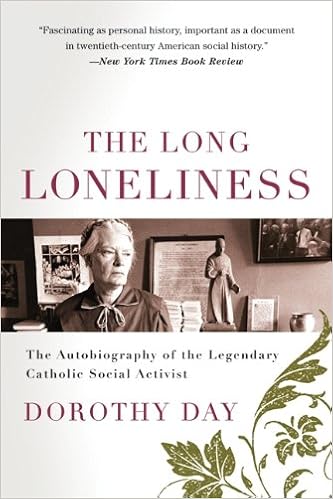
The Long Loneliness by Dorothy Day

As usual, I’ve had a hard time finding the right thing to read lately. I want something that’s light and easy–a break from difficult scholarship. But, I also want it to be substantive. The Long Loneliness by Dorothy Day was the perfect solution during the holiday break. First of all, I had to read it with a title like that. (When I saw her face on the cover, I also knew I had to read it.) Secondly, I am always fascinated with and inspired by women who are doing things a little differently than the status quo, and Dorothy Day certainly has. The book is about her experience with community and the sacrifices she’s made in pursuit of her beliefs about the best way to live.

image from amazon.com

The first two-thirds of the book was of the most interest to me personally. In the first third of the book, she writes extensively about her childhood, about her friendships, her family life, and the reader can see the subtle ways these experiences influenced the choices she made later. Her descriptions of various little girls she befriended seemed tedious at times, but I think it helped make her larger point–that these connections and interactions we have with people are the stuff of life and far from inconsequential.

Next, she wrote about being a young women, her unconventional “marriage,” the birth and joy of her daughter, and the decisions she made to convert to Catholicism. In this section, I was deeply interested in her relationship with her partner and her response to her baby. I identified much with those very human experiences, even though I haven’t had them myself exactly.

The last third dragged on and I had to force myself to finish. I didn’t identify quite as strongly with her decision to convert to Catholicism. Like much of her thinking and decision making, as a reader, I sometimes had a hard time understanding her motivations. She’s very matter of fact about everything, and I found myself responding, “Yes, but…” That said, I love her unapologetic descriptions of joy and love earlier on, and I don’t need her to explain “why.” Still, the social activism, the writing, and the experiences with various people are a part of her story, but I was less interested, in part, because it was less about her and more about them.

Here are some insights I gained from reading the book. Day is unfaltering convinced that we must live together. After living alone for the bulk of my adult life, I am feeling ready to not live alone. I have felt loneliness and fear–something that was quite rare for me throughout my twenties. That’s fine. I was pursuing other things. Now I’m in a new stage, and I want to live in meaningful relationships. I have a much stronger urge to connect to other people and invest in them. In this way, Day’s message really resonated with me at this time.

Here are a few lines and ideas worth further consideration:

  • One hundred years ago, there were free medical clinics. If you were not poor, there was also affordable medical clinics that were a little nicer.–I can’t imagine how freeing it would be to go through life knowing that, should a major medical event occur, you could go on living without being forever indebted to a financial institution. We are living in fear or modern slavery.
  • Much of Day’s life’s work is in writing and writing for The Catholic Worker, and she understood what I am only being forced to understand now, which is just how crucial freedom of the press is and how important it is to communicate with the masses in this way.
  • “We cannot love God unless we love each other, and to love we must know each other. We know him in the breaking of bread, and we know each other in the breaking of bread, and we are not alone anymore” (285).
  • “We have all known the long loneliness and we have learned that that only solution is love and that love comes with community” (286).

By the end, I sort of just wanted to rise with the sun, and garden and bake bread, and pray and read and meditate, and wake the next morning to do it all over again.