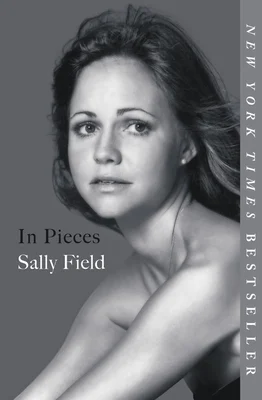
In Pieces by Sally Field

I cannot tell you how important these books that are written by driven women who are coming of age during the dawn of feminism are to me. With all of the sensitivity and emotional intelligence she’s known for in her acting, Sally Field, adeptly shares her life and insights in her memoir, In Pieces.

Trigger warning, Field shares a good deal of trauma in this book, which she experiences throughout her childhood. However, there’s a deep sense of honesty and insight in the book that makes the message feel important for a broad audience.

With the wisdom of hindsight, Field is able to see how she repeatedly lost herself to men–to her intimate relationships with men and to her sometimes troubled relationships with movie makers. I felt that in my bones. But, Field ends triumphant. It seems she is self-possessed. She knows herself now. She is the main character in her life. That change and realization is possible.

Her relationship with her mother (and the other women in her family) is also interesting. I’m finding that familial relationships and friendships are so rich with emotional fodder and context and potential for story, and Field’s insights here are so moving!

Selfishly, I wanted this book to be more about her role in Forrest Gump, which I found to be stunning and immaculate, but it barely gets mentioned. Instead, more attention goes to her role as Mary Todd Lincoln, which was of course a role that was more recent and seemed more consequential. I guess now I should watch it!

Overall, this is a tough book, but a good one. The reader watches Field gain self awareness and confidence over the course of her career, and it’s really inspiring!

Blink by Malcolm Gladwell

I’m not sure if I’ve ever read anything by Malcolm Gladwell. This book, Blink, came up recently for me, so I decided this was the one. I heard that the book has been pretty widely criticized, but I didn’t know why. It’s one of his older books. Now that I’ve read it, I think I know why it’s been criticized. And, I think most of the problem could have been avoided if Gladwell had used more tentative language. Instead of “X people are Y,” a simple, “Many X people experience Y.” This approach is less essentialist and more accurate. However, whether Gladwell thought the more essentialist approach was stronger, or whether an editor pushed him into that so-called “stronger” language (I could see either being the case), the outcome is a language and an approach that simply hasn’t aged well. Most of this problem wasn’t noticeable to me until the last part of the book, but then he really doubles down. I think the book is interesting and entertaining, but may not have a whole lot of value beyond that. Now I’m very curious to read another one of his books to see how his writing has evolved. I assume it has. Like the rest of us.

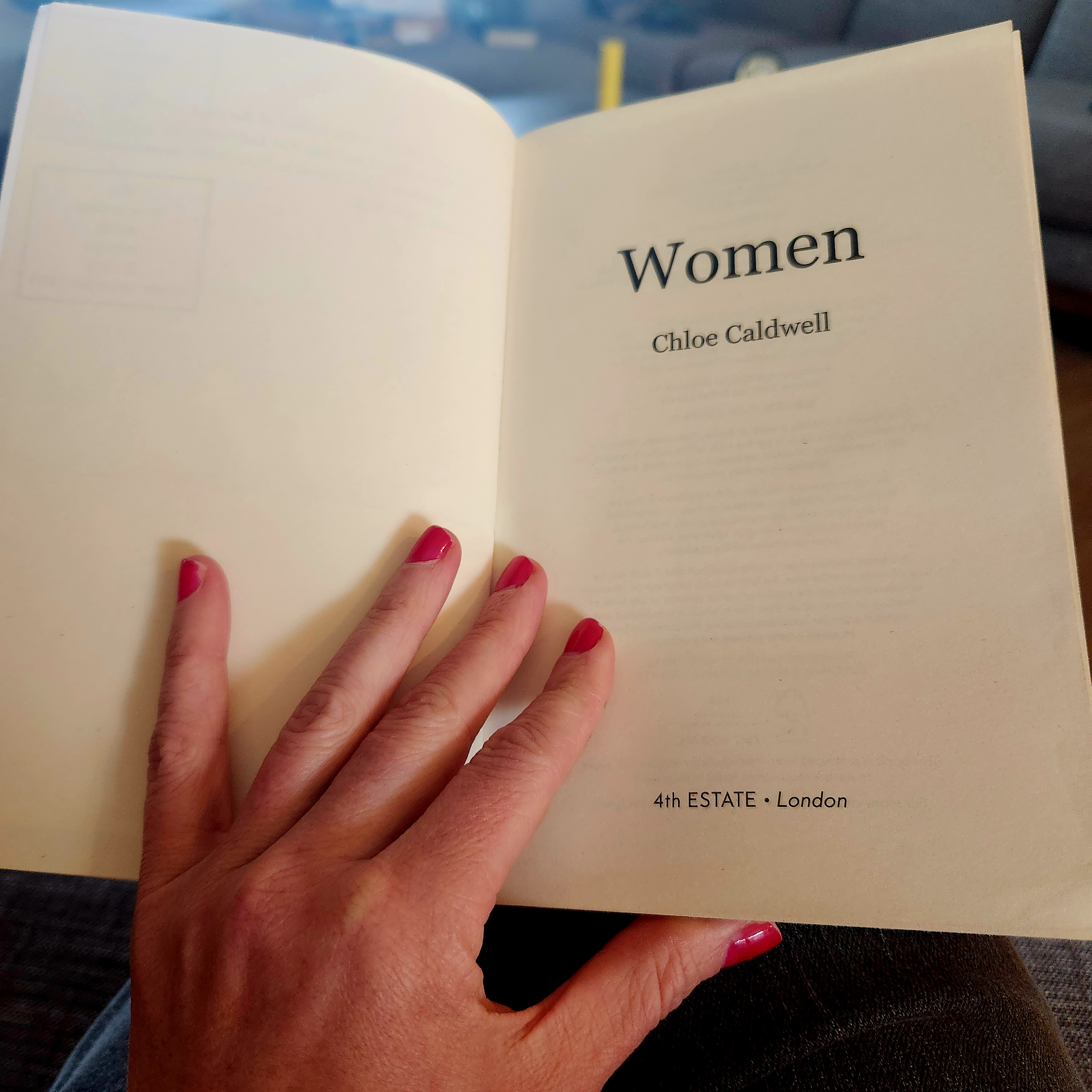
Women by Chloe Caldwell

I had two of Chloe Caldwell’s books in my backpack, and so I read them back to back. Women by Chloe Caldwell is her more well-known book, and I do think it it has the most literary merit and staying power of her work that I’ve read so far. Caldwell offers a very focused, very detailed immersion into an intense, obsessive, and destructive relationship with a woman.

This book is not the triumphant lesbian novel I think people want it to be. It is unclear to the reader the extent that Caldwell is lesbian, bisexual, or heterosexual, and this is a key question throughout the book–for Caldwell and for her readers.

A clear look at the experience of being intensely caught up in forbidden love is the point of the book, I think, and also just that experience of living life as a human with desires, stupidity, and pleasure, plus some good old fashioned bed rot and mental illness. Most readers with a beating heart will recognize at least some pieces of this book.

I’ll Tell You in Person by Chloe Caldwell

I read I’ll Tell You in Person by Chloe Caldwell right before reading her other more well-known and previous book entitled Women. The book reads as a memoir and Caldwell as the main character is unhinged and insufferable, but recognizable, and this seems intentional and is the interesting thing about this book.

Caldwell’s depictions of coming of age in the 90s and early aughts is detailed and nostalgic, and this part will resonate with most readers who have lived through that era.

There’s something to say about privilege/social class and mental illness, but I’m not sure what except maybe just that people with support networks can experience drug addiction and depression more safely than those in more precarious situations.

I found myself wishing I’d read the book 20 years ago, but it was published in 2016.

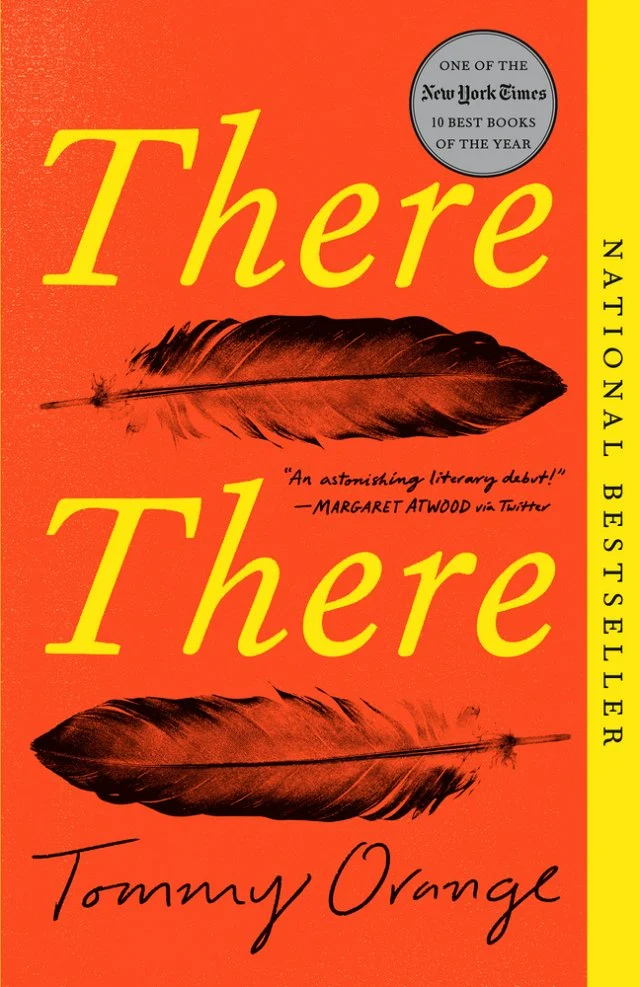
There There by Tommy Orange

There There by Tommy Orange has been on my tbr pile since shortly after it was published in 2019. The timing was right when I finally got around to reading it, as, interestingly, I have been reading more indigenous work for my scholarship this winter, learning more about my family’s history, and this book has helped inform all of that thinking.

It’s a good book. It is another one that I’ve read recently that has a very cinematic quality, and I could easily see it being made into a movie at some point. The book has an intentional and unique plot and timeline, with characters unknown to each other moving apart and together in each other’s lives.

I’m not sure what to say about the theory, exactly. Orange’s characters are urban Indians. Orange has them defying societal expectations and also interacting with stereotypes.

I think most readers have a lot of learn from a book like this, both in terms of good literary prose and the commentary about contemporary, urban indigenous lives.

I Who Have Never Known Men by Jacqueline Harpman

I can admit when a book is perfect, and I Who Have Never Known Men by Jacqueline Harpman is a perfect book. While maybe I do not love this book, and while maybe this book will never be one that I recall with fondness, and while this is not typically my genre, it is one that is wholly unique and one that will stick with me forever. 

2025 fleeces are ready!

I raise fine fleeced Shetland sheep, which is a breed of primitive short-tailed sheep from the Shetland Isles. My ewes are colorful and (mostly) friendly. I shear them each spring, and occasionally I shear lambs in early fall.

Each spring this breed of sheep starts to “rise,” which is a natural release of their fleece. However, the fleeces do not actually release, and the process leaves a layer of wool close to the skin that is tough to shear through. So, I’ve been experimenting with shearing earlier in the year. I see that farmers in Montana routinely shear in mid-late February, and their climate is much colder than mine.

This year I sheared earlier than ever, and I could tell that some of the fleeces were just starting to rise, but mostly they were easy to shear, and I think I caught it in time. The other option is to wait until late spring and after the rise, which I like, and tried last year, but it can cause some confusion between lambs and ewes, and that’s a risk that I’d rather not take. So, I prefer to shear earlier if possible, before the ewes have lambed.

I was happy with this year’s fleeces. I loved the dark coming from Blackberry’s lambs, but also found it to be a little tough to shear. The light fleeces were mostly really light soft and easy to shear, and I might move more in that direction in years to come.

Someday I’d love to learn to weave, but until then, I love seeing what others create with these lovely fleeces!

On Chesil Beach by Ian McEwan

On Chesil Beach by Ian McEwan is a painstaking, painstaking novella. It’s beautifully written, no doubt. McEwan captures human nature and places it in a time of properness, confusion, ignorance. The book offers some wisdom about coupling, big picture, that would likely be lost on most readers who have not yet been in a relationship with a partner or spouse. McEwan uses a very detailed account of a sexual encounter to make some smart, larger commentary about human coupling. It’s good, but it is painful.

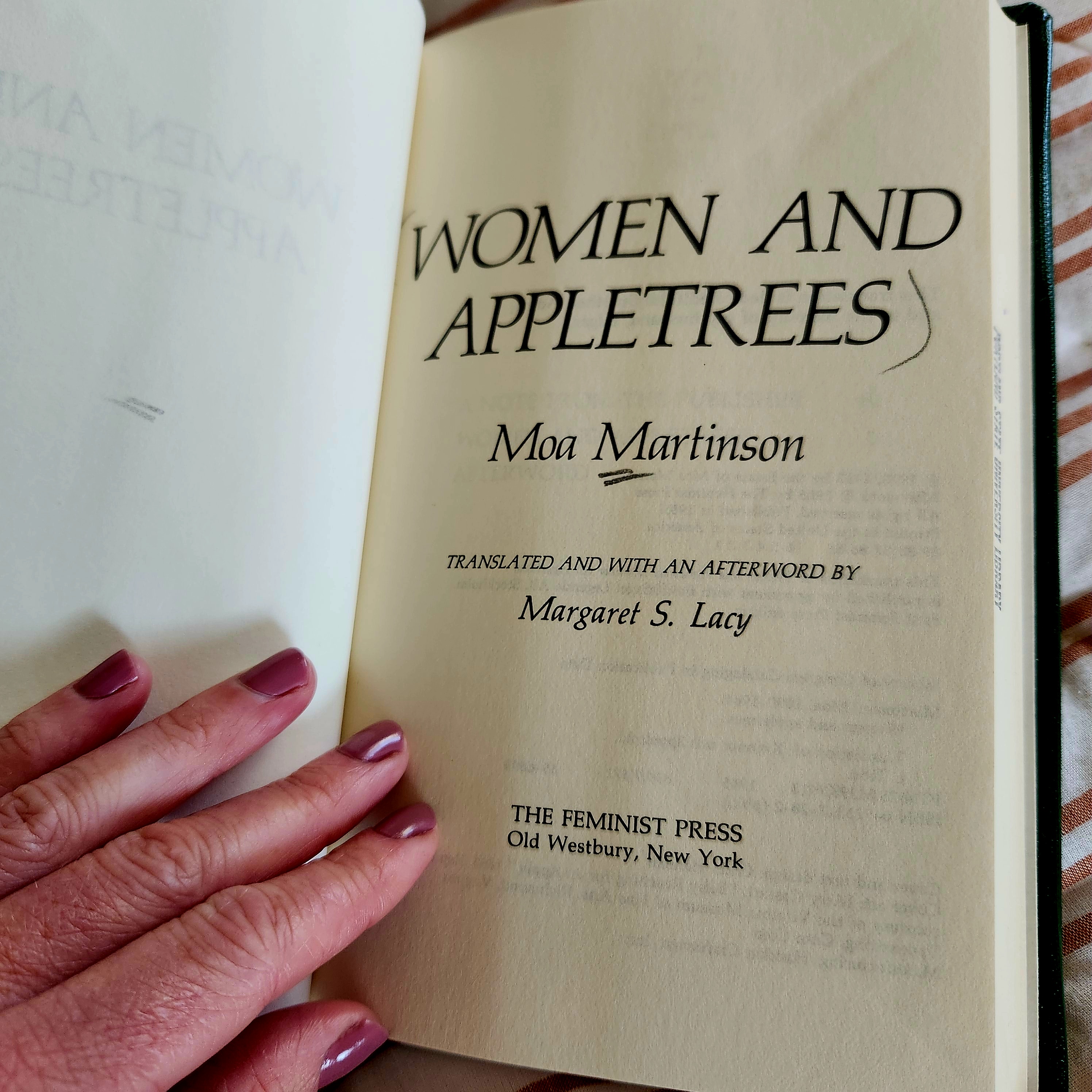
My Mother Gets Married by Moa Martinson

This book has been on my tbr list for over a year now, and I finally found a copy to read through interlibrary loan. My Mother Gets Married is an account of Moa Martinson’s own childhood growing up in impoverished Sweden around the turn of the last century

My own grandma was frugal, but everyone was who lived through the great depression. It wasn’t clear to me if her family immigrated more because of harsh living conditions in the old country or more because of the promise of the “new” world.

While I can’t be exactly certain of my family’s exact circumstances, I think perhaps things weren’t so dark as Martinson depicts in her book based on some information I have. Either way, the book offers insights into some of the culture in Sweden at that time. I appreciated learning about the schooling they would have received, the dresses they would have worn, and the tokens that would have been important to them.

Personal interests aside, Martinson’s writing is strong. There is a subtle, underlying and scathing observations on gender, social class, and justice. Martinson’s writing reveals a deep insight and understanding of the human condition.

Atomic Habits by James Clear

I listened Atomic Habits by James Clear almost entirely while running on the treadmill. Learning about the compounding effects of healthy habits over time helped motivate me to keep putting one foot in front of the other. Much of this information is not new, but it does help me to be reminded and reinspired from time to time.

This time around, one of the take aways that stuck with me the most is that habits are easier than motivation. It is easier to stick with a habit than it is to muster the motivation to decide do a thing day after day. Take the decision away whenever possible. If you’re just a person who does certain healthy things, then over time, you’ll just be a healthier version of yourself.

The book had me reflecting on my own habits. There are a few areas where I’m doing okay–lately I’ve been getting more exercise, eating a (slightly) cleaner diet, and I’ve stuck to some tough work deadlines over the past year and a half.

The book also highlights that I’m still spending plenty of time scrolling and sitting around. Now, sitting around is good and essential. Some scrolling might be okay too. But, intentional effort is still needed in this area, so that I can be more present and engaged with my family. This attention economy is no joke.