Tag Archives: book review

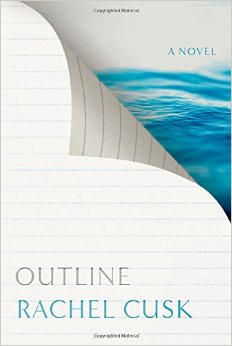
Outline: A Novel by Rachel Cusk

image from amazon.com

image from amazon.com

Outline by Rachel Cusk was something different. I haven’t read popular fiction in quite a long time, and I was worried when, in the beginning, the main character becomes engaged in a conversation with her “neighbor” on a flight to Athens. Through his line of questioning, we learn a little about the protagonist, which felt like a plot point contrived solely for the purpose of giving the reader information about the main character.

However, I liked the book and found the brilliance in that, as the protagonist meets several different characters, there are interesting and universal insights to be gained about human nature. For the most part, the characters themselves are very self-aware and analytical, sharing meaningful insights with the protagonist. Though, like all people, their assessment is not always accurate. Cusk presents these quirks and character flaws in entirely novel ways, but they resonate as true and important glimpses into the human psyche.

Interestingly, as the protagonist meets the various characters, Cusk’s voice or tone remains consistent throughout. So, there is little sense of the individuality of these characters. In many ways, the novel reads like an outline, a sketch, of the characters and ideas that Cusk is presenting.

The last character to enter the novel speaks about a troubling condition she’s gained, which she calls “summing up.” It prohibits her writing because just as she really gets in to writing a play, she finds the meaning creeping into her brain, words like “tension,” “mother-in-law,” or “meaninglessness.” Once she finds the significance of her work, she loses interest. In the summing up concept, the reader sees the ways in which Cusk has both avoided and indulged a summing up of the various characters and meanings in her own novel.

This section was also meaning to me because I’ve been stricken by the same sense of summing up since my early 20s. I was probably 21 when I realized, with a start, that every story is the same with few uninteresting variations. This is why I have a hard time with popular fiction. I have a longstanding joke, which is likely only amusing to me, that is called “I saw it the first time when it was called…,” wherein I liken every new book or movie to a book or movie that came before and grumpily deduce that it will offer nothing new.

Furthermore, I see the same patterns play out not just in movies, but in real people in real lives. I rarely think anyone is ever having a unique experience, and the result of that is, I suppose, a somewhat jaded view of the world. I’ve never known anyone else to sum things up quite like I do, and so to see it portrayed in a novel was strangely validating.

Here are a few ideas from the novel that I think render further discussion:

  • “The bump in the road hadn’t only upset his marriage; it caused him to veer off on to a different road altogether, a road that was but a long, directionless detour, a road he had no real business being on and that sometimes he still felt himself to be travelling even to this day” (15).
  • “The memory of suffering had no effect whatever on what they elected to do: on the contrary, it compelled them to repeat it” (18).
  • “We are all addicted to it, he said…the story of improvement, to the extent that it has commandeered our deepest sense of reality” (99).
  • “I had friends in Athens I could have called. But I didn’t call them: the feeling of invisibility was too powerful” (248).

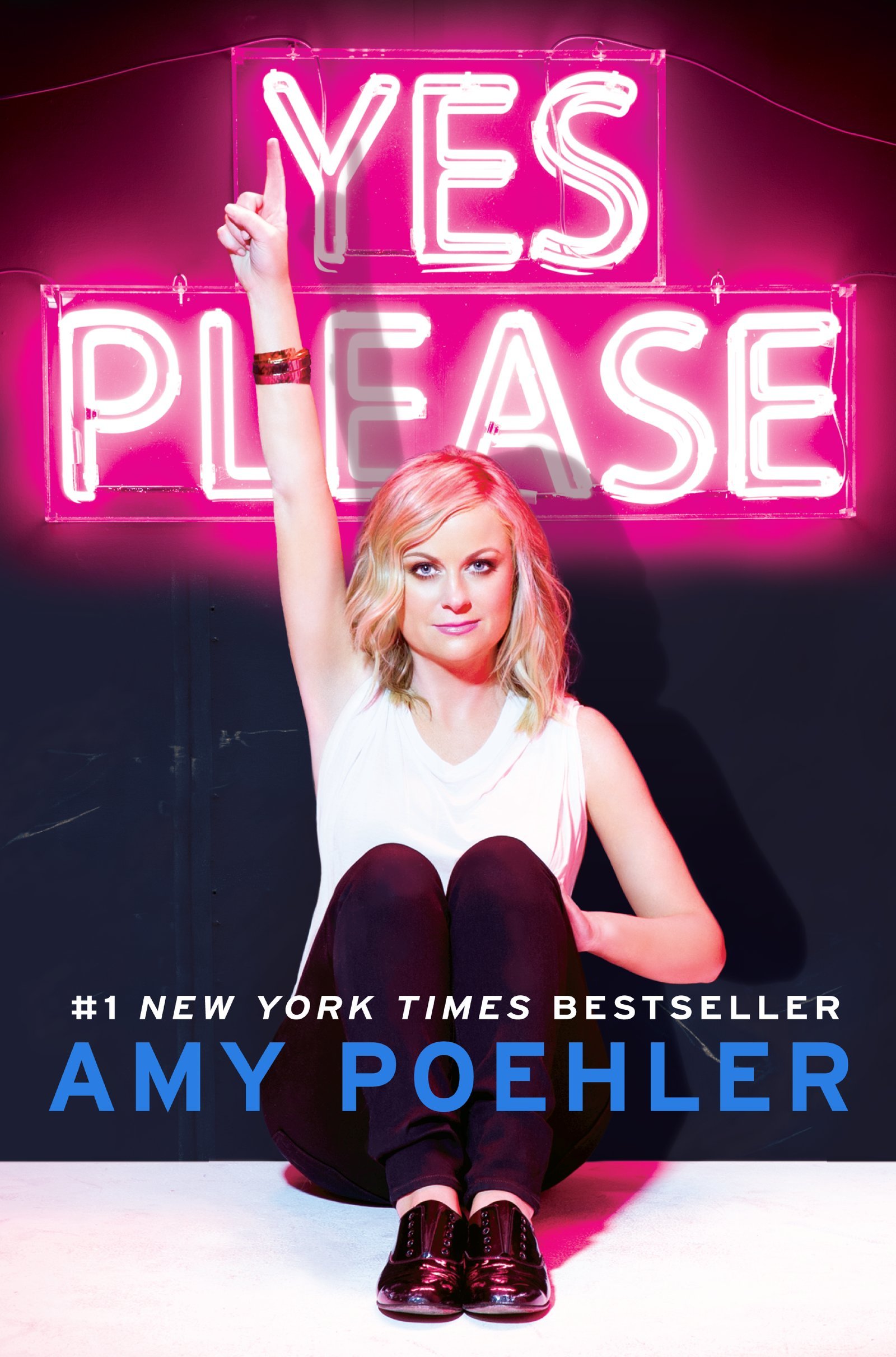
Yes Please by Amy Poehler

After reading books like Tina Fey’s Bossypants, Mindy Kaling’s Is Everyone Hanging Out Without Me?, and Chelsea Handler’s Are You There, Vodka? It’s Me, Chelsea, I was excited to read this latest one by a comedian. I’m a die hard fan of Saturday Night Live. I tend to love the work that comes from their alums–probably because they know all the good writers. Of her SNL bits, I mostly loved the ensemble skits she was in. Leslie Knope, the character she’s gone on to play in Parks and Recreation, is just great. When it comes to Amy Poehler, I like her, but I think she’s best in collaborative efforts.

Her book was not a favorite. If you’re a die hard fan and will read anything related to SNL, then read it. Otherwise, it’s okay to skip this one. There are funny moments, there are insightful moments, there’s biographical information, and there’s behind the scenes stuff from her work in comedy. But, there’s also a difficult self consciousness that doesn’t always work. Throughout, she complains about how hard and terrible it is to write a book, and those feelings begin to wear off on the reader. The book is repetitive in some ways that don’t seem intentional. The book’s organization is baffling. More importantly, the pages are thick and weird and glossy. What is probably supposed to be “good quality” comes off as too slick, and it makes the book too heavy. It will hurt your wrists while you are reading it in bed.

image from amazon.com

image from amazon.com

Here are a few lines for further discussion:

  • “Make sure he’s grateful to be with you” (202). This wisdom is via Poehler’s mother. It’s simple, but it resonated with me. I’ve had a few relationships for which I am (and was) very grateful. Like, look around at the sun shining and birds chirping and thank my lucky stars kind of grateful every day. With other people, not so much. Your level of gratitude for the other person says a lot.
  • “Hairspray was king, and the eighties silhouette…was big hair, giant shoulder pads, chunky earrings, thick belts, and form-fitting stretch pants. My silhouette was an upside-down triangle. Add in my round potato face and hearty eyebrows and you’ve got yourself a grade-A boner killer” (207-08). See, there were plenty of lolz! (Also, I want to reintroduce “grade-A boner killer” into more of my conversations.)
  • “And I count myself very lucky. That is what “very lucky” feels like. Oof” (235). These sentences ended a long paragraph on the various violences Poehler has endured–muggings, physical and sexual harassment, sexual violence–but never rape. She makes a powerful point here.
  • “‘Smile’ doesn’t really work either. Telling me to relax or smile when I’m angry is like bringing a birthday cake into an ape sanctuary. You’re just asking to get your nose and genitals bit off” (236). I like this for two reasons. One, being told to “smile” is a weird thing that men say to women. To be on the receiving end of this kind of command feels icky. Two, I love making jokes about ape violence despite the fact that it rarely draws laughs. I’m glad to see Poehler going for it here.
  • “[I]f you do start crying in an argument and someone asks why, you can always say, “I’m just crying because of how wrong you are” (237). This one made me laugh, and I hope I have the wherewithall to use it sometime.

**Edit: There’s also this place where she tells a story of having a casting director ask her to share her most embarrassing story. Poehler refused and didn’t get the job. Then, she told the reader that you don’t have to tell people your most embarrassing story when they ask. I liked that.

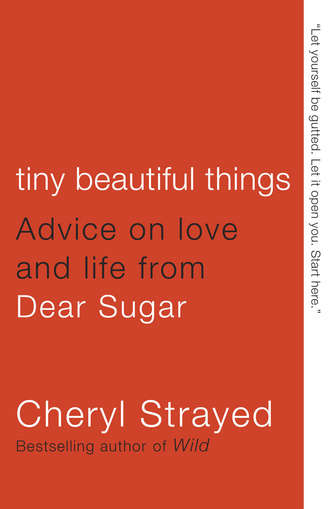
Tiny Beautiful Things: Advice on Love and Life From Dear Sugar by Cheryl Strayed

I ordered Tiny Beautiful Things and my mom was visiting when I got it. So, she read it first and kept saying out loud, “You need to read this.” She even marked a few passages for me. I watched the movie adaptation of Wild about a month earlier, but could never get into the book. Tiny Beautiful Things was not hard to get into. It takes right off.

I started reading it after my mom went home. I’m not sure if there was one catalyst, or just all the things, but I was an emotional wreck during the few weeks it took me to read the book. I sent frantic texts to my long-suffering bff, and I droned on and on to my dear, long-suffering mother, and I even sobbed a little on the phone with Z, who either suffers most or least of all.

I read and quietly sobbed the duration of a long, cross-country flight. People on either side of my armrests humanely ignored me. The flight attendant retrieved a fistful of tissues for me. Clearly, I’m going through some stuff, and I think it was the potent cocktail of heartache, family, fear, love, effort, HUMANITY!, and Tiny Beautiful Things that created a big emotional purge.

Here are two quotes that meant something to me:

  • On partnering: “This is called intimacy. This is called fuck yes. When people do this with us, it’s an honor” (197).
  • On doing crazy things for love: “Love is our essential nutrient. Without it, life has little meaning. It’s the best thing we have to give and the most valuable thing we receive. Its’ worthy of all the hulabaloo” (219).

Is the book any good? I think it is good. It might be good like wine and ice cream are good: indulgent. I think there’s some useful stuff there. Cheryl Strayed turns herself inside out, revealing her most intimate and painful stories, and in doing so, we readers see the universality of our most painful and humiliating experiences, but also the universality of love, passion, of falling in love. In this book of advice, Strayed convinced me again that the heady passion between two people is rare and real and beautiful and possible and sacred, and I so, so need to believe that right now.

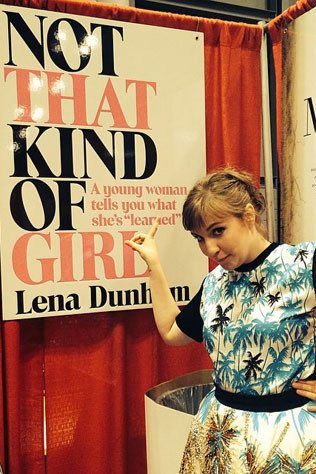
Not That Kind of Girl by Lena Dunham

I have a [smart] friend who thinks Lena Dunham’s work is bad, irresponsible. We go rounds on this because I love her and think that he’s too caught up on having morally good, heroic main characters. He says I’m missing the point. Dunham’s work is shrouded in controversy, but if you’re a fan of her show Girls, you’ll definitely like Not That Kind of Girl. In fact, if you just sort of like her show, you’ll still like her book. Lena Dunham’s work is so incredibly personal and vulnerable and embarrassing and painful, and human. I identify with her so much.

First, I am fascinated with the way she deals with first/early sexual experience. It is the most honest depiction of the kinds of sexual experiences people have in their late teens and early twenties. It can be weird, awkward, and embarrassing. People are unsure about what to do where and for how long. There are strange acts that exist solely because porn tells us that’s what people do for pleasure, even if very few people are doing that thing for pleasure. I actually think this is unavoidable for the most part because there are very few activities that are comparable to coupled sex. In the process, mistakes are made and confusion abounds. Young women are in a constant negotiation with owning and expressing their sexuality, while simultaneously figuring out where the media pressures and social expectations end and where their own pleasure and desire begins. [By the way, I think this is true for men, too, but I don’t read much about it.] So, that’s important.

She’s also balancing art and social commentary, which can be weird and bad, but she does it well. One could easily assume that her work is this off the cuff confessional style, and it is, but there is also real artistry in her work. She has a deep familiarity with language and a knack for creative expression through  her writing. My expectation is that she will continue to write books, and they will be revolutionary, yes, and will only improve from a literary perspective.

Now, let me address the whole scuttlebutt over childhood sexual abuse when the book first came out. I assumed that it would be honest and artfully done, and even be good in that it would help us to think more critically about childhood sexuality. I wanted to read it first before forming my opinion, and after reading it, I thought it was good and important, and did the thing of making us think openly about childhood sexuality. The story is weird, and a bit uncomfortable, but true and not abuse, in my opinion. You can bet that Dunham thinks about consent and abuse because they are major themes in her work.

While I am highly invested in the topic of female sexuality, obviously, Dunham covers other ideas that resonate with me so strongly. Like, there are people who love people, and people who can’t stand to be alone, and people who are curious about other people [I might fall into that last category], but usually I have, as Dunham states, “the nagging sense that my true friends are waiting for me” (xiii). I have met some of my true friends, and when we meet, and recognize each other, there is much rejoicing! I love these people. They are my forever friends and lovers. But, they number so few I can count them on my hands, and I often feel lonely or out of place, wishing that I could be with one of my people when I’m tired of being alone. Lena Dunham—she gets me.

image from vogue.com

image from vogue.com

Here are some quotes I highlighted:

  • “There is nothing gutsier to me than a person announcing that their story is one that deserves to be told, especially if that person is a woman” (xvi).
  • “He was nervous, and, in a nod toward gender equality, neither of us came” (7).
  • “This was the time in life before I learned it wasn’t considered appropriate by society at large to like yourself” (34).
  • She quotes Joan Didion: “There is a common superstition that “self-respect” is a kind of charm against snakes, something that keeps those who have it locked in some unblighted Eden, out of strange beds, ambivalent conversations, and trouble in general. It does not at all. It has nothing to do with the face of things, but concerns instead a separate peace, a private reconciliation” (38).
  • A list from a relationship…”One very unnecessary pregnancy test” (54).
  • “Wherever you go, there you are” (69). An old favorite.
  • “After several interactions in which he questioned my authority and pretended not to hear me speaking, it was clear he was my type” (71).
  • “I had broken up with him on my seventh try, and one try didn’t even count because all I could muster was “I love you” (76).
  • On meeting her love: “Look, there is my friend” (76).
  • “…desire is the enemy of contentment” (143).
  • “You will find,” she says, “that there’s a certain grace to having your heart broken” (144).
  • “…you’ll see that later and be very, very proud” (262).

And so many others.

Men Explain Things to Me by Rebecca Solnit

I just finished Men Explain Things to Me by Rebecca Solnit over the course of a few evenings. It’s a *heavy* read, but it’s composed of short, manageable essays. The first most noticeable thing about this book is that it is not funny. There is absolutely nothing funny or lighthearted about it, and that was a surprise. The title is sort of funny, and alludes to “mansplaining,” which is terrible and indicative of larger social issues surrounding gender, but it’s also sort of funny. The title is not a good indication of the book.

image from amazon.com

image from amazon.com

Solnit is unrelenting in her depiction of the “longest war,” a war on women. Reading it was overwhelming—a reminder of the violence and disdain lobbed at women by our society. The statistics were staggering. Having heterosexual relationships with men seemed increasingly fraught for both genders. I was left wondering how we navigate these weird power dynamics in our most personal relationships. I felt overwhelmed by the violence. I felt overwhelmed by the reminders of the constraints I face each day as a woman.

For example, each day before dark, I try to accomplish all tasks that require me to walk any distance alone or through a parking lot. Every day, I, mostly subconsciously at this point, plan my day with safety in mind. When I overtly think about these habits, it makes me sad that I live in such a violent world, and it makes me sad that safety has to be such an underlying factor in my daily decisions. Surely this has unknown negative effects. Solnit writes, “My feminism waxed and waned, but the lack of freedom to move through the city for women hit me hard and personally at the end of my teens, when I came under constant attack in my urban environment and hardly anyway seemed to think that is was a civil rights issue” (128). Solnit argues for an emphasis on turning the lens on men and why they are so frequently the perpetrators of violence, opposed to giving women the sole responsibility of preventing violence. This “Top 10 Tip to Avoid Rape” meme has made the rounds and points out the profound role that men (obviously) play in “rape culture.”

image found here

image found here.

Like Solnit, I wonder why these problems are not viewed as a deeper crisis and as a civil rights issue. In recent years, I have felt a real personal fear as politicians have made absolutely horrifying, and often scientifically inaccurate, claims about women’s bodies. As the Hobby Lobbys and various right wingers argue about what I can and cannot do with my own body, for the first time, it has felt very personal and very stifling.

Of course, the reaction to these issues is often, yes, but “not all men.” And, Solnit carefully dedicates sections of each chapter, writing “not all men, but…” This is unfortunate. We can’t just talk about this issue without spending a lot of time reassuring men and women that not all men are bad. In so many ways it seems like this reassurance is also indicative of the problem. It’s a problem that we literally can’t even talk about women’s issues without spending a good deal of time reassuring men and talking about men and turning the focus, even just briefly, back to men. On the other hand, they’re half the population, and they’re our partners, fathers, brothers, and friends, and so it makes sense that we can’t talk about women without spending some time also talking about men.

The book isn’t entirely matched thematically, and she delves into some literacy criticism, as a way to address the larger social problems that she unpacks earlier in the book. She wrote of a criticism that “does not put the critic against the text” (101). In her exchange with Susan Sontag, Solnit writes that “you don’t know if your actions are futile; that you don’t have the memory of the future” (93). This is in response to Sontag’s assertion that resistance is required, even if it is futile, and maybe it is always futile.

On Woolf, Solnit writes of a botanist that had “a knack for finding new species by getting lost in the jungle, by going beyond what he knew and how he know it, by letting experience be larger than his knowledge, by choosing reality rather than the plan” (96), and I love this idea so much. For living life, for finding new ideas, for creating art. I am such a planner and a researcher, and I love the idea of this kind of purposeful method (which, yes, requires planning and research). I love the idea of using this method as a means of discovery, rather than following what is known: “a compass by which to get lost” (106).

Of measurement and discovery, Solnit also writes about “the tyranny of the quantifiable,” which is “the way what can be measured almost always takes precedence over what cannot” (104-105). This has been a frustration for me lately. Working in bureaucracies, and within high education, too often means a singular focus on the quantifiable, on the assessable. When other ways of being or knowing are scoffed at as being dangerous, even life-threatening, we are limited by what we can do as dreamers, thinkers, creators, and teachers.

This book reads up so quickly and so powerfully that there’s really no reason not to read it. Afterward, you can spend some time thinking through what it all means for gender, relationships, and the way men and women exist in the world. I think I’ll even pick up her other book, Wanderlust because it is about walking and maybe other things too.

Be Free Where You Are by Thich Nhat Hanh

I’m supposed to be gearing up for a spiritual year according to sundry esoteric readings and such. I entertain these mostly for fun, but when the idea reappeared to me in multiple venues, I thought, okay, I’m listening. I’m not particularly excited by the prospect of a spiritual year, but recognize that it’s a part of being. And, there’s no time like the present.

So, the other day on a friend’s table, I saw a copy of Thich Nhat Hanh’s Be Free Where You Are, which is a little pocket-sized book based on a lecture he have to a group of prisoners a few decades ago. “Take it,” she said. So, I slipped it into my purse and read it the other night. It is a very quick read. I read half of it, then decided to read the rest of it, and then read the Q&A after that—all in one sitting. I chose to read and reread a few key sections  slowly to try to really absorb his potential meanings.

Thich Nhat Hanh’s been on my radar after a respected mentor mentioned that his work had valid philosophical and scholarly potential. After reading this short book, I can’t say that I agree. Of course, it’s way too soon to make a definitive statement either way. But, he spoke about things like being in your heart and being positive, and while I can make a lot of assumptions about what that might mean, I’m not sure that means much. Or, maybe it means everything. The book is full of these kinds of assertions, and I can only hope that his longer works offer more depth.

Thich Nhat Hanh said that understanding is crucial for forgiveness.

He said to think about each bite of food and where it came from with gratitude.

He said to meditate always, while walking and washing dishes. While inhaling and exhaling. He encourages his audience to be present. Describing this, he wrote, “Here I am.” I read it a few times:  “Here I am.” I walked over to my full-length bedroom mirror and tore away the tens of sticky notes upon which I had scribbled affirmations in permanent marker, affirmations that I had written months earlier as they occurred to me. I threw the tiny stack of words into the recycling, got out a new sticky note and wrote, “Here I am.” I placed it alone on the mirror. Here I am.

I thought about an eye-gazing meditation I did recently that was either good or meaningless, and I thought, “Here I am. Here I am.”

The First Bad Man by Miranda July

An autographed copy of Miranda July’s The First Bad Man arrived in a cardboard box propped against my front door. I did not order it. I was coming back from yoga. It was any old day, and my mind very slowly bended around the idea that someone had bought something for me. I brought it inside and carefully opened it. Inside was a note from Z and the book. I immediately read the first few paragraphs, smiled to myself, and set it aside for later.

I’ve been reading a lot lately and savored this one, reading it slowly over the course of a few weeks. There are so many lines in the first few chapters that made me laugh, or made me reach for a pencil to draw a thin gray line under a phrase or beside a passage. Miranda July is an artist who makes me feel not alone in this world. It is absolutely novel how she can capture all the strange little quips and quirks that brains do.

July also writes about really disgusting, gross-out, putrid sorts of things, and the sheer quantity of that mid-way through The First Bad Man started to get me down. The suffocation the main character creates for herself, her home, her kitchen, her frying pan, her throat condition, the containers of urine, the breast punching—it all got to be too much, and I didn’t want to spend any more time in the book. But, of course, I did and in the last few chapters, I started underlining things again, and smiling as I read, and once again, felt that I was not alone in the world.

When I read a particularly delightful passage, I found myself turning to the title page and running my finger over her indecipherable magic marker signature. Who was this woman? Is she like me? Or, is she commenting on what it’s like to be me?

Forever by Judy Blume

I recently saw Forever by Judy Blume on a list of great books by women for women. I haven’t read young adult literature since…probably since I was a teenager. I was immediately struck by how bad the writing was. The book is a study in telling instead of showing. After deciding early on that it was not worth a close read, I just skipped ahead, read all of the sexy parts, and called it a day.

image from goodreads.com

image from goodreads.com

However, after a few days of reflection, I’ve come to realize that it probably is an important book. Sure, I found most of the writing off-putting, but it was probably pretty good/typical/appropriate/accessible for young adult fiction. Evidently, it’s one of the first books that’s about young people entering into their first sexual relationships. Blume portrays a very white, middle class, private school kind of normal. So, that was limiting, but still useful. It depicts young people being very straightforward with each other. All of the experiences are very consensual and thoughtful. If someone has a feeling or doesn’t want to do something, that’s okay. They talk about it. Blume is modeling a relationship, though perhaps overly simplified, is straightforward and consensual, and sadly, that’s really rare. So, after reading the thing, I’d agree that this is an important book for all women, especially young women, and the people who want to be intimate with them.