Tag Archives: feminism

Women We Buried, Women We Burned by Rachel Louise Snyder

I can’t remember how Women We Buried, Women We Burned by Rachel Louise Snyder got on my reading list, but about half way through the book, I realized I was vaguely familiar with Snyder’s work from NPR. I could recall some of difficult human rights stories she reported on, especially surrounding women’s rights abroad.

In that regard, this books nearly reads like two books. First, there is the story of Snyder’s traumatic and tumultuous childhood. Then, there is her life and journey to motherhood, and finally there is the story with Barb at the end. To me these all feel like a cohesive whole.

This is an important book, with a main character that grapples with tough cultural questions, chief among them have to do with women having a right to understand and have control of their own bodies. The painful stories she recounts illustrate these issues and bring to light the ways in which social controls take away basic bodily autonomy.

At times I thought some of the details were strangely specific, without being clear as to why, the book too lengthy. By the end, I was convinced that most of it was necessary. The books is a beautiful and important book. Next, I’d like to see her write more about the middle part, about her life abroad, about motherhood and marriage. About relationships. I hope she does.
All Fours by Miranda July

I’m not sure there’s anything left for me to say that hasn’t already been said about Miranda July’s new book, All Fours, but I read it and so I’ll try to say something here. First, I always really appreciate July’s work and read it when I get the chance. She offers some great insights on the human condition and pairs it with lots of absurd, disgusting, and confusing action. Furthermore, for a bestseller, I can guarantee the writing will not be bad, and that’s more than I can say for a lot of bestsellers.

What I think it so important about the book, and what has given it all of this #allfoursgroupchat energy is that the the book tackles aging; emotional labor, especially in heterosexual relationships; and some of the physical changes and hormonal shifts women experience in their 40s and 50s. There are so many unique and terrible aspects of this reality that July captured accurately for me. I really appreciated that she gave it voice.

There are also many details seemingly based on some real events from her own life. This makes the book all the more engaging and compelling. The conclusion of the book does even more to mirror real life as the main character goes on book tour, except you know July hasn’t gone on tour yet before she’s done writing. It’s just a very unique way to end a book.

Overall, I know some readers won’t be able to handle this book because it is a lot. July’s work usually is. But, some of us will, and I hope that those of us who do like this book will be able to find that group chat.

Fleishman is in Trouble (miniseries)

Each year I budget time for about one show, and this year that show was the tv miniseries Fleishman is in Trouble. After reading the book, and hearing all the hype about the show, I wanted to see what it was all about. And, let me tell you, the show was what they said it would be. I think the show is better than the book, and I don’t need to feel bad about saying that since the author, Taffy Brodesser-Akner, also wrote the tv adaption.

[Continue reading only after you’ve seen the show.]

Basically, I just want to write out some of the things that I thought were really interesting about this piece. I thought the role reversal of the Toby character was interesting. I appreciated how he was in the traditional “woman’s” role in the show as emotional laborer and primary caretaker of the children in the family. His work is meaningful, but it (and he) is chronically undervalued.

I also appreciated how complicated Rachel’s role was. Like all of the characters in the book (really), she behaves terribly, and is good, but her backstory and raison d’être is fully and humanely formed. As a career-driven woman, she cannot win with her husband, and yet she is sexualized by a friend’s husband exactly because she is career driven, opposed to his own stay-at-home wife.

Lastly, and I think this is where the tv series really shines in the last few episodes, I really appreciated Libby’s complexity too. As the narrator, I wanted to trust her to make sense of these people, but it becomes clear that she is also emotionally stuck and is actually behaving in really sexist ways, even though she identifies and pontificates as an outspoken feminist. Her husband also takes on a typically female role in the relationship, managing the family and holding it all together as Libby gallivants around.

A take away for me lately is that relationships are hard and divorce is hard. We are too caught up in our own stories to see anything clearly. And yet, there is hope. And also cynicism. Everything. The entire show just pulls it together beautifully.

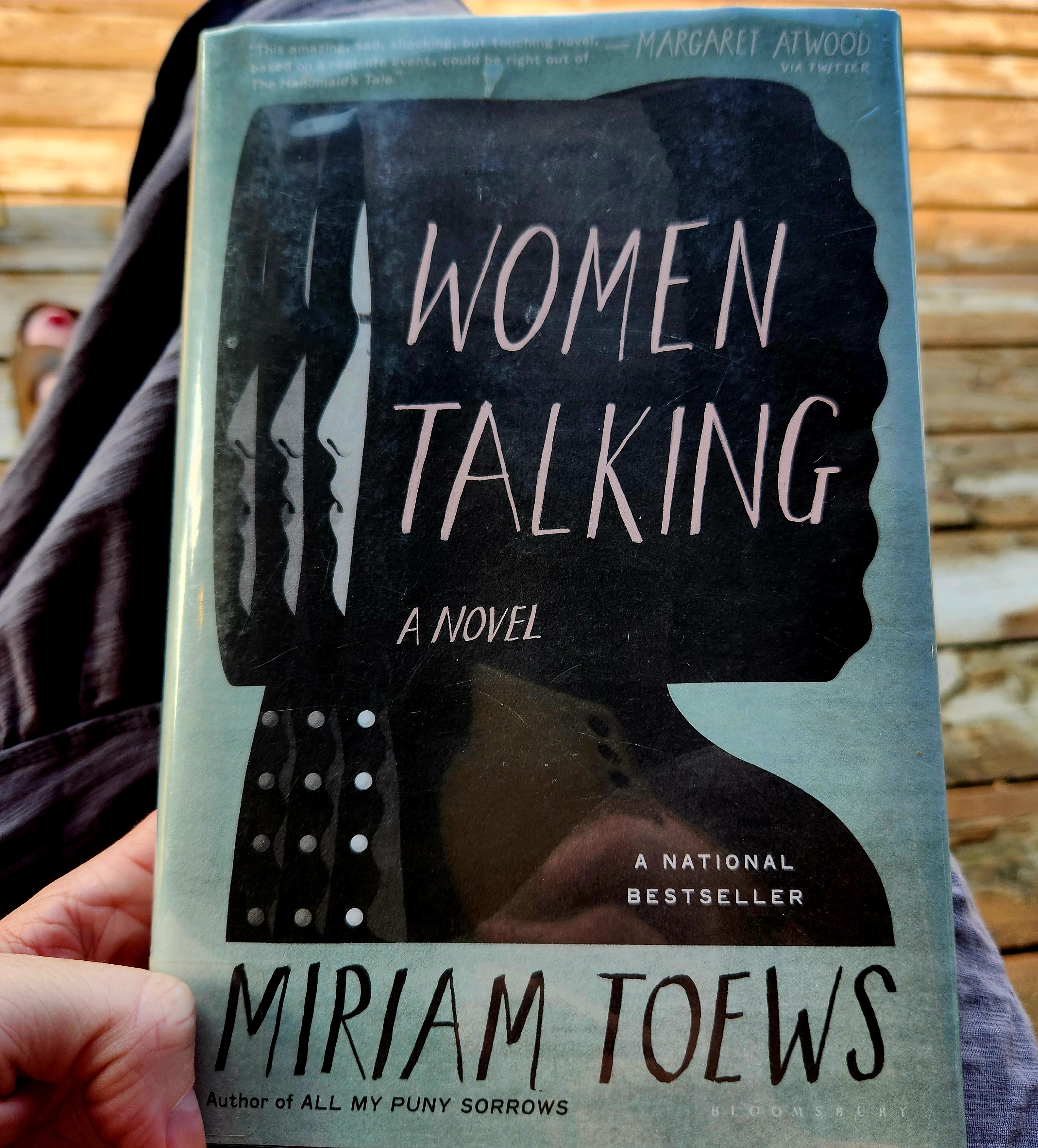
Women Talking by Miriam Toews

My latest read was Women Talking by Miriam Toews. I did not see the film, but heard about the horrifying real-life premise, and it really stuck with me. This book was excellent yes, but I do have more to say about it.

This is a dialogue-heavy book. And those are tough, imho. It actually is mostly “women talking.” Most of the book struck me as a kind of feminist 12 Angry Men, and that was exciting to me. Toews pulls off the heavy dialogue, though it must have been no easy task. Toews was also able to draw out the unique qualities of the characters in a fairly limited space. Furthermore, Toews is particularly well-positioned to write this book, based on her own Mennonite background. She is able to draw on the kinds of religious philosophy in a way that felt very real to me as a reader.

[Spoiler] (though I still think the book would be worth reading): The book is narrated by a male character, August, who is a troubled young man and village teacher of the local young men. He is also a victim of the same oppressive culture of men that has also preyed upon these women. He takes notes during the women’s meetings. (The women are not allowed to learn to read and write, so they cannot take notes themselves.) At first, it seems powerful that the women cannot take their own notes, and August’s presence serves as a reminder of that. He also helps add some drama and intrigue.

However, by the end of the book, the emotional landscape really shifts to August entirely. On one hand, this is the reality for so many women’s lives: their story is not told, except maybe through the perspective of men. I was cheering this book on, as one that was still able to center women’s voices and dialogue throughout. In the end, though, I felt that the story became August’s story, and I am willing to entertain the notion that this is just the framing, and this is just how it is, and this can still be a feminist account, but as a reader, I wanted it to end differently. I wanted it to end through the lenses and perspectives of the women.

If you read it, tell me if you loved the ending, or if you wanted something different.

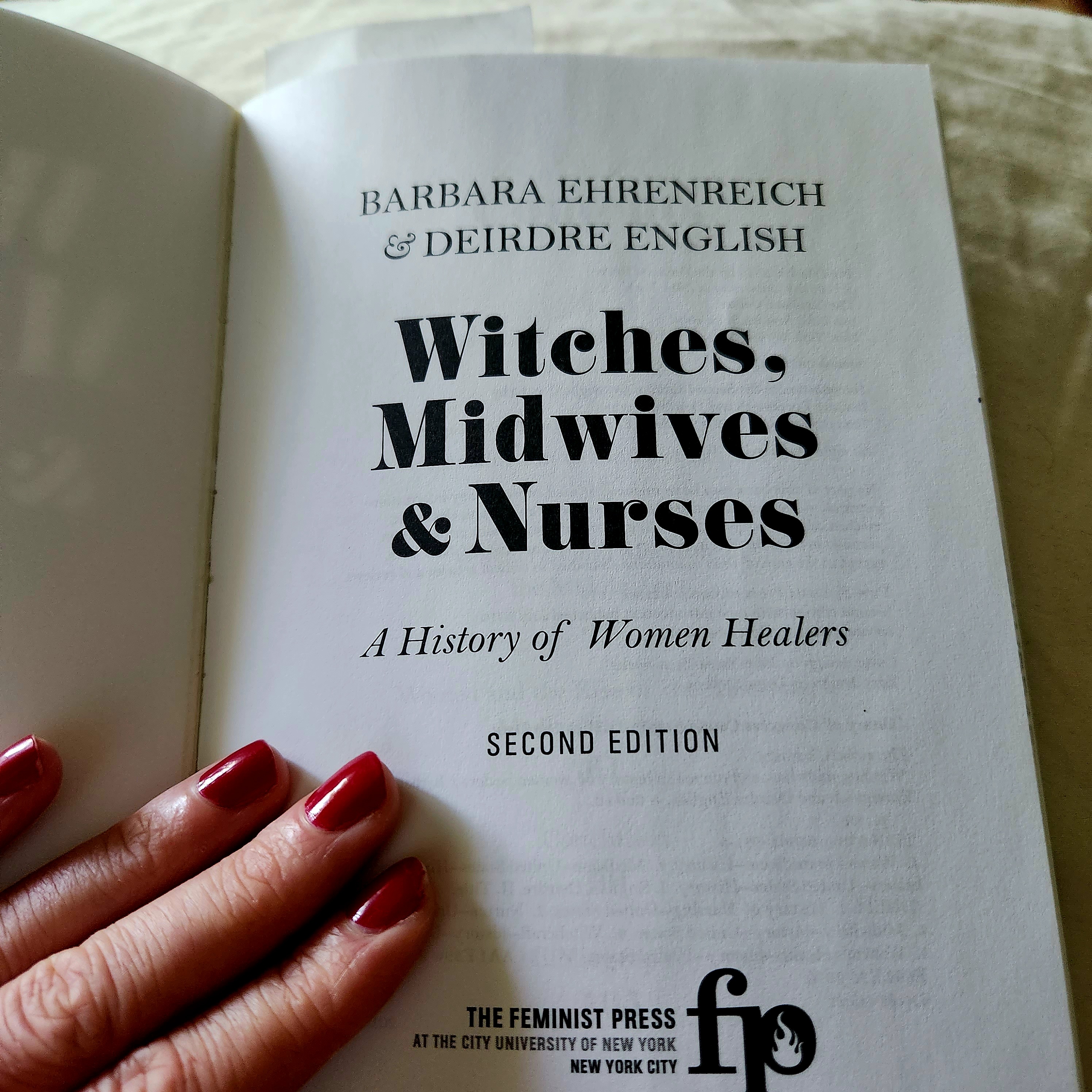
Witches, Midwives, and Nurses by Barbara Ehrenreich and Deirdre English

I read Witches, Midwives, and Nurses: A History of Women Healers, by Barbara Ehrenreich and Deirdre English, for my book project, but ended up reading it like one of my recreational reads, so I’m including it here. In my opinion, this is a book that should still be taught in medical classes to this day. Although it was originally published in 1973, this brief history–and the justified rage–are still relevant and important for everyone to understand to this today.

The long history of the witch trials are placed in context next to how babies came to be delivered (mostly by men) in modern medicine. The history is portrayed as a hostile takeover. While science improved some aspects of maternal medicine, the losses and violations from extracting women from childbirth seemed to exceeded any sense of progress.

This book, sometimes referred to as a “pamphlet,” is a kind of manifesto that offers a scathing, but not inaccurate account of the history of sexism in medicine.

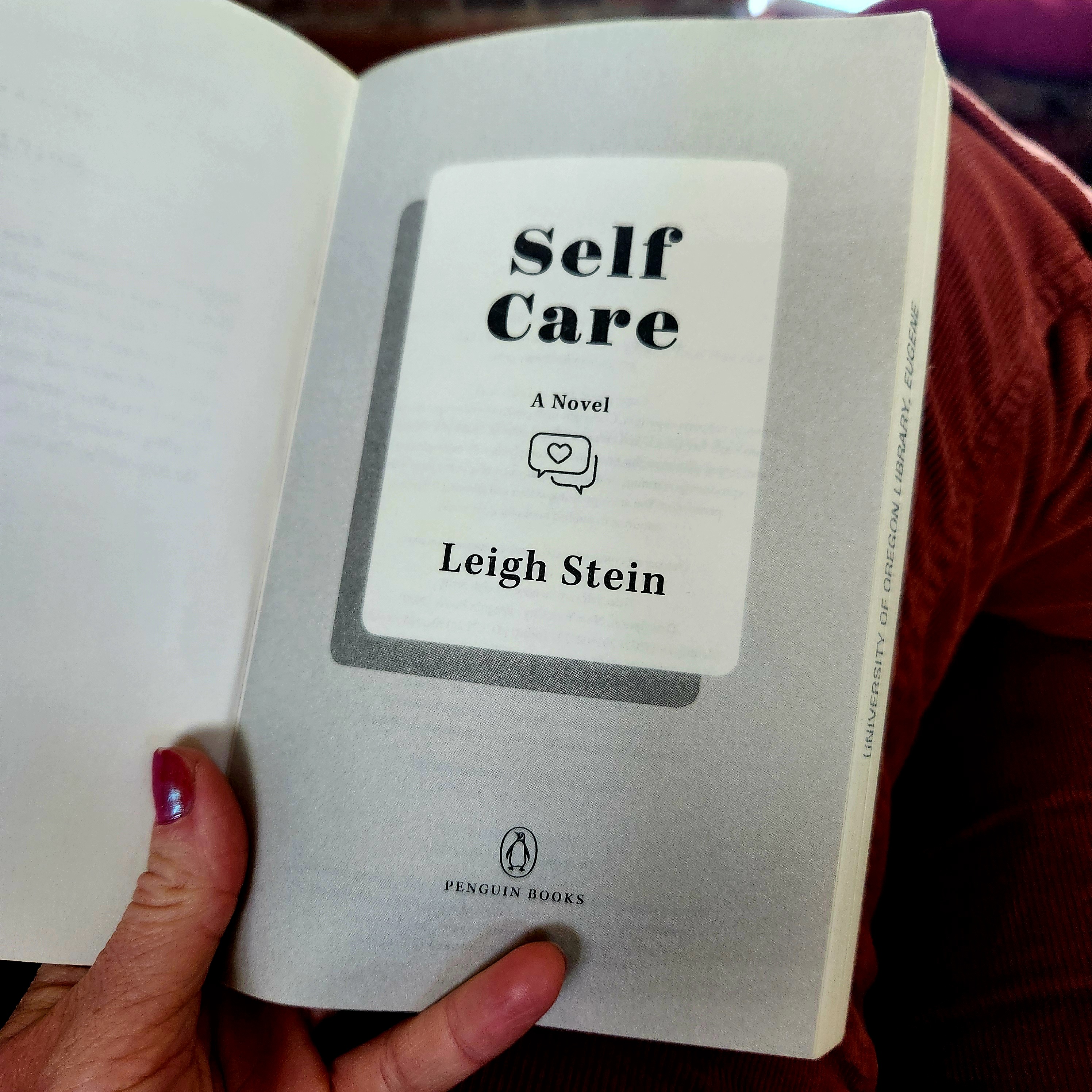
Self Care by Leigh Stein

Self Care by Leigh Stein is a scathing, scathing cultural critique. I really enjoyed it, and I think you will too. On one hand, this novel functions as a plot driven story, with some interpersonal insights, relationships, and drama throughout, and a plot that moves along nicely. However, on the other hand, it also working on the level of cultural critique in a way that is deeply insightful. I have not read such a wise critique of women and social media ever.

The characters are, on every level and in every action, hashtag influenced. These women are smart, insightful, and good at their jobs, but, much like Stein’s own social media account (which I thoroughly enjoy), it is sometimes unclear if we’re working in a real life drama or a comedic cultural critique. As for the social media account, it is clearer (to me) that Stein is working in satire, but in the book, Self Care, it is not so obvious. The actions and beliefs of many of the characters will be funny/ridiculous to most readers (and also sad and tragic), but the main characters seem to be fully and unironically immersed in the work and the drama.

I do not say this often, but I think this novel would work well in a college class. It is light, and entertaining, and very readable, but the themes are so very relevant to the feminist and the contemporary human experience. Go read it, and let me know what you think!

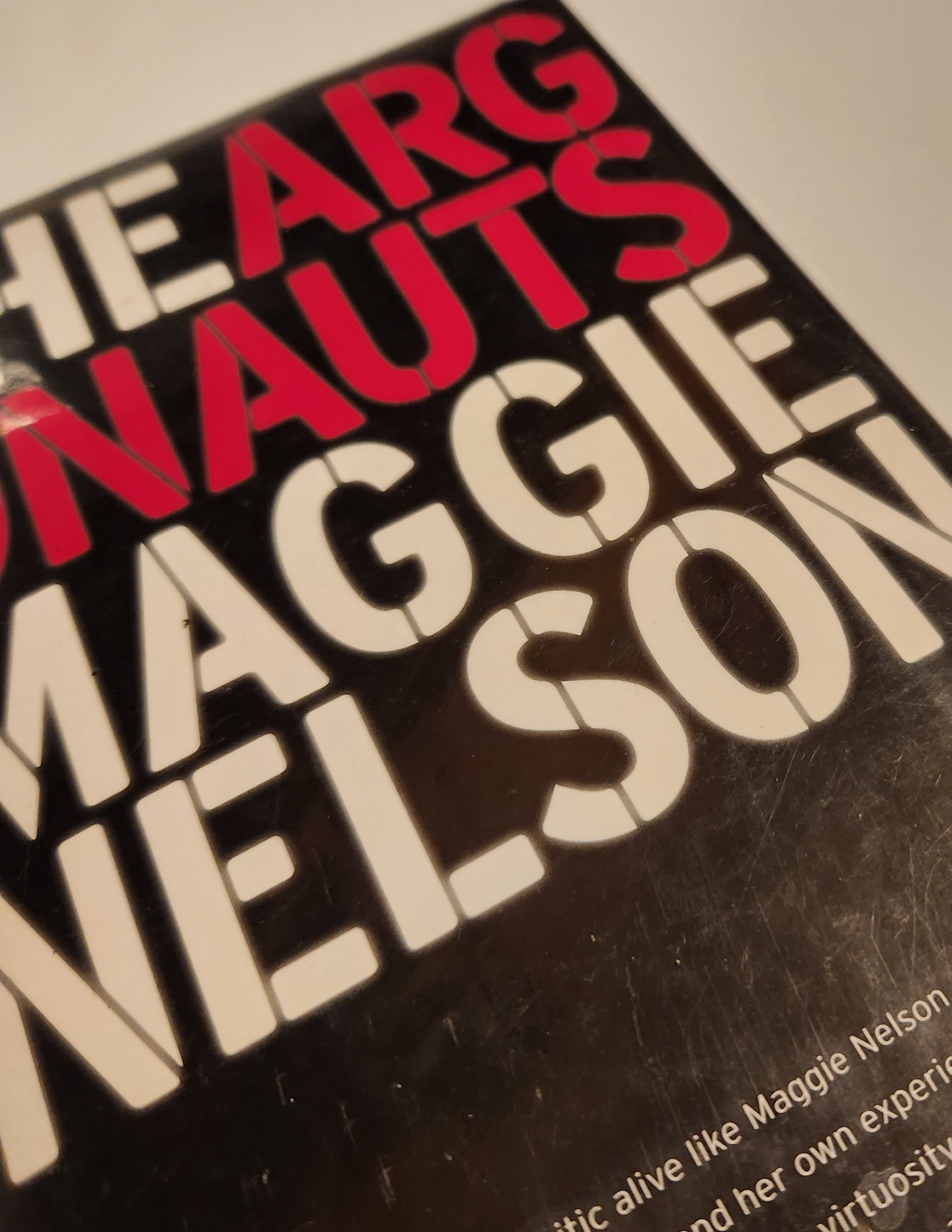
The Argonauts by Maggie Nelson

The Argonauts by Maggie Nelson wasn’t on my reading list, but I dropped everything when I remembered I hadn’t read it. What a great book! First, it should be taught in graduate-level theory courses. (It probably is, but nothing like this was taught in mine.) We need more feminist theory like this that truly integrates the (deeply) personal with the philosophical. I can’t be the only one who gobbled this up, and I suppose I can do my part by quoting it and integrating it into my scholarship myself.

The blurbs about this book say it’s about art and philosophy, but, I don’t know, somehow those descriptions fail to capture what Nelson is doing, which is, admittedly, unparalleled and difficult to describe.

The book helped me understand some philosophy and culture more deeply through her insights and critique. Unsurprisingly, I clung to her thoughts on motherhood, joy, femininity, womanhood, and culture. Perhaps especially as a mother, I appreciated the spare, yet complex prose. What can I say–The Argonauts is yet another important book by Nelson.

Deep Creek: Finding Hope in the High Country by Pam Houston

I could have sworn it’s been 20 years since I read Cowboys Are My Weakness by Pam Houston in a beautiful little old home near Durango, Colorado (can you imagine a better location?!), but a quick search reveals that it was actually published in 2005!

What I remember is that Cowboys Are My Weakness was a transformational book for me. It was so real and so unlike anything I’d ever read before. Remembering this book is saying something because I started this blog to keep track of my reading!

When I realized Houston had written her most recent book, Deep Creek: Finding Hope in the High Country, I was anxious to read it. The book is a collection of short stories, and the most pervasive thread is probably her own growth in adulthood and her increasing appreciation for, and rootedness to her animals and to the land–in this case, a 120-acre farmstead in the Colorado mountains.

As a woman who has also spent a good deal of time solo and who has also acquired her own little “slice of heaven” and sheep (even some Icelandic!) and other animal friends, while also working as a writer, teacher, and scholar, I was drawn to her story and her insights, like maybe she could lend a little guiding light. And she did. Somehow reading her writing feels to me like taking a refresher grad class in creative writing. What a gift!

This Is the Story of a Happy Marriage by Ann Patchett

What can I say? I thought this was a novel going in, so immediately it defied expectations. This Is the Story of a Happy Marriage is a book of *essays* by Ann Patchett. Before reading this book, my knowledge of Patchett was only vaguely that she’s a well-known female author. (I’m putting “female” in there for political reasons.)

These essays are good and follow the style of, some of the women I’ve read lately: Anne Lamott, Jane Smiley, Nora Ephron, etc. There’s an easiness and confidence in their voice and tone and especially in Patchett’s. Lamott perhaps is more questioning. Smiley a bit more interested in story, and so forth, but these women all seem very much a part of second wave feminism, confidently taking up spaces and stories.

I don’t fully relate to this confident and in control tone, but sometimes I do. These stories are worth reading. The writing is solid. Patchett marks an important time for female writers and perfectly captures a moment (okay, many decades) of women gaining and stage and gathering their voices.

It’s a great title too, am I right?

My Body by Emily Ratajkowski

My Body by Emily Ratajkowski is a unique book–part expose on the seedy world of modeling, fashion, Hollywood, and fame, and part memoir, with deep personal introspection. In the book, Ratajkowski, whom I was vaguely aware of as a model, but now a fan and follower on Instagram, shares the story of her rise to fame, known for her perfect body. But, she’s also critic of the abuse she suffers at the hands of both the industry and the larger culture. She’s a critic of herself too, acknowledging stories when she was too naive, too confused, too scared, or too complacent to do better. It’s a complicated book that sends readers on a trajectory of introspection about women’s bodies, while also offering a look into an elite (and also surprisingly not glamorous in so many ways) world that few get to experience. I hope she’ll write more, especially about motherhood. This book is worth the read!