Tag Archives: literary fiction

The Best American Short Stories 2024

My creative writing classes keeps me reading The Best American Short Stories each year, but looking back through my notes, it appears that I don’t typically write about it, which is a shame! This year’s story collection was edited by Lauren Groff, who I have been reading and enjoying lately. (Though honestly I typically don’t have a sense of an editor’s taste from one year to the next.)

This year’s collection was epic and stunning as always. In my opinion, these anthologies are the single best way to get a sense of contemporary writing, although the works remain fairly conservative in their form and approach. These are all typical short stories.

One of the most memorable stories this year had abuse in it. As I think back over the years, I now realize that some of the stories that stand out the most have featured some type of abuse. Not because they are better stories, but because they can be so traumatizing to the reader. I don’t like it and seem to get increasingly sensitive to it with each passing year. I even think the series may need to start integrating trigger warnings. Maybe literary fiction more broadly needs to integrate trigger warnings. And, yet, as I write this, I am aware that the trigger warning significantly changes the reading experience. I don’t have the answers. I think this work should exist. It lends insight into the human condition. Even still, at this point I can’t help but think that the subtler works are the greater works.

The Seas by Samantha Hunt

I just finished the beautiful, haunting, absurd, and magitragic novel, The Seas, by Samantha Hunt. This is a book with a rich sense of place, compelling characters, and layers upon layers of themes and possible meanings, which shoot out in every direction.

At times, while reading, I had some judgement about the contemporary’s literary community’s dealings of mental illness. So often, it seems, authors borrow symptoms in ways that do not always feel ethical to me, but instead are used to shock and awe. However, by the end of this novel, Hunt had really earned it, in my opinion, and was able to demonstrate a deeper meaning and a broader purpose in her depiction of this strange and mesmerizing mermaid main character.

We’re nearing the end of the reading year now, and I’ll count this one among my favorites.

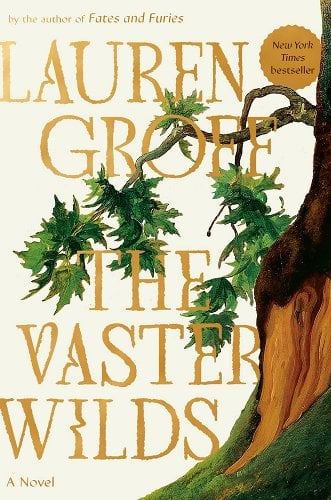
The Vaster Wilds by Lauren Groff

I can now join your book club because I have finally finished reading Lauren Groff’s The Vaster Wilds. Now, what to say.

I am a fan of Groff since I read her book of shorts titled Florida. So, I knew The Vaster Wilds would be good, and it was. It was also torturous. I feel like culturally we have a Game of Thrones kind of obsession with torture right now, and that also makes sense culturally, and all of the anger, hate, and misogyny we see is reflected in our art, and so it does makes sense. However, that does not make it easy.

Still, the book is good and worth reading. This is especially true if you like popular books, but strive to read more literary works because this has some of the elements of popular fiction, while also feeding the nourishing steamed broccoli that is literary-quality writing. (Given the starvation of colonizers in early 1600s America, all food analogies probably fall flat.) Funnily enough, I was near the end before I realized the vaster in the title was not a reference to a proper noun. In years to come, I could see this piece taught in college courses because I think there is just so much here.

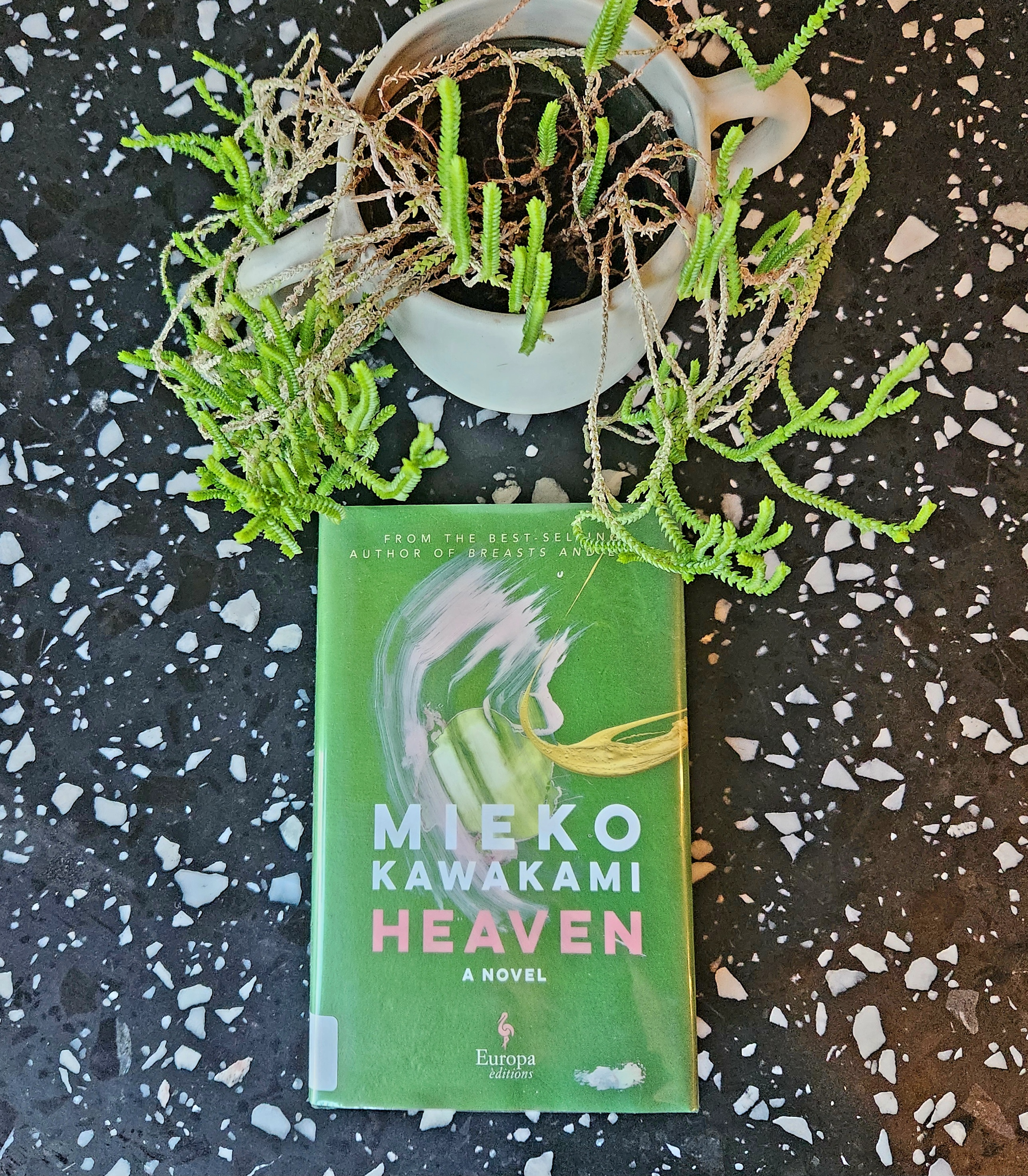
Heaven by Mieko Kawakami

I decided to go ahead and read Heaven by Mieko Kawakami this summer while I was at it, and, wow, this is a heavy, but, of course, excellent book. It is such a departure from the much more distanced and gentler narrative in Breasts and Eggs, which I also read and wrote about a few weeks ago.

I’m not sure how I missed this, but there is a heavy portrayal of bullying in Heaven, and I don’t think that’s a spoiler, but I do think it actually does need kind of a big “trigger warning” splashed across the front of this book because it.is.intense.

However difficult this book may be, it is excellent, as Kawakami is proving herself (to me) to be an excellent writer–excellent pacing, character development, and a deep emotional landscape.

As an aside, this book is also much shorter than Breasts and Eggs, but my copy also included an excerpt of Breasts and Eggs at the end, and I’m not quite sure why this choice is being made because the current version available of Breasts and Eggs is also an elongated version of the original, but I just wanted to add here that this length of book–just Heaven–is a great length, and I think Kawakami works really well within this frame.