Tag Archives: Mieko Kawakami

Heaven by Mieko Kawakami

I decided to go ahead and read Heaven by Mieko Kawakami this summer while I was at it, and, wow, this is a heavy, but, of course, excellent book. It is such a departure from the much more distanced and gentler narrative in Breasts and Eggs, which I also read and wrote about a few weeks ago.
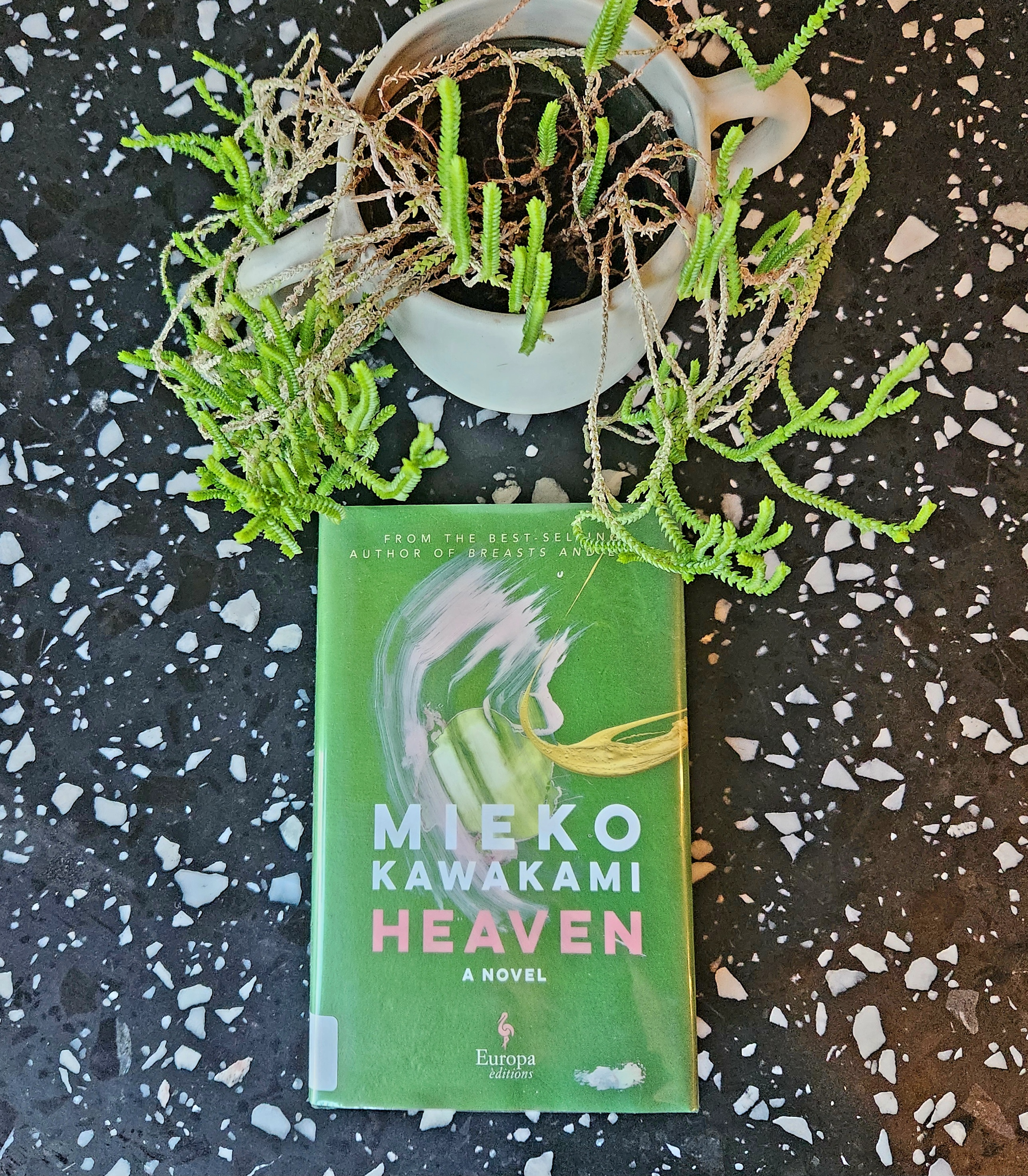
I’m not sure how I missed this, but there is a heavy portrayal of bullying in Heaven, and I don’t think that’s a spoiler, but I do think it actually does need kind of a big “trigger warning” splashed across the front of this book because it.is.intense.

However difficult this book may be, it is excellent, as Kawakami is proving herself (to me) to be an excellent writer–excellent pacing, character development, and a deep emotional landscape.

As an aside, this book is also much shorter than Breasts and Eggs, but my copy also included an excerpt of Breasts and Eggs at the end, and I’m not quite sure why this choice is being made because the current version available of Breasts and Eggs is also an elongated version of the original, but I just wanted to add here that this length of book–just Heaven–is a great length, and I think Kawakami works really well within this frame.

Breasts and Eggs by Mieko Kawakami

Breasts and Eggs by Mieko Kawakami delves into a modern, urban female experience. The main character navigates the big questions women must face and the relationships they must navigate. Kawakami leads the reader through these issues without defaulting to any oversimplifications. The opposite, actually. Each question and relationship is as complex as real life. This book feels almost memoiristic, as I imagined Kawakami as the main character. (I’m prone to doing this though.)

The main character, Natsu, comes from poverty and brings herself out of that slowly as a novelist (the most unlikely of stories!). This character’s life leads her away from her family roots (in a sense) and complicates her relationships with her now very small extended family, not that these relationships are ever uncomplicated.

Her past (experiences with poverty and loss) also complicate her relationships and her abilities to be in a romantic relationship and to create a family of her own.

The book is strange. Natsu is confused. There is tragedy and there is triumph. It is nuanced, and that is true of the human experience, and in this case, it’s focused especially on the female experience.

I read that Breasts and Eggs was once published as a novella and then was expanded into a longer novel, which is the version I read. Through most of the book, I found myself wishing that this was two separate books, but then again, I love a good, short, digestible read. However, now that I’ve reached the conclusion, I do think extending it into one long book is defensible.