Tag Archives: summer read

Separation Anxiety by Laura Zigman

My second real “pop” book of this year, after Modern Lovers, is Separation Anxiety by Laura Zigman. If I recall, I found this book referenced on Instagram, I added it to my Libby list, and, lo and behold, had time for it when my turn came up on the app. This is a summer read? A beach read? I’m not really sure of the genre, but as popular books go, it was pretty good, had some good depth, unexpected twists, and the writing was solid.
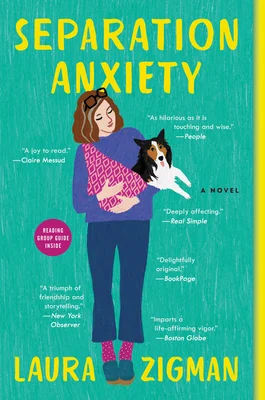
I found the main character to be a little too cold, shutdown, and removed in a way that did not feel like great “main character energy,” but the rest was pretty good. I also found the conflict between the central couple to be a bit unrealistic. The guy seems…pretty decent actually. So, why is the main character so repulsed by him? Why are they separating? The reason is stated, but never quite believable. I think there’s sort of an East Coast cultural difference may be at play here.

I appreciated the themes and the artful movement through scenes and the way Zigman built clear, and direct meaning throughout. I found some of the concepts to be repulsive, but in the end, none of it was gratuitous. I don’t think it is a spoiler to share that the main character begins wearing her dog in a baby sling, and, honestly, at the end, I’m still not sure if I should be concerned for this fictional dog’s wellbeing. And there’s more of the same throughout.

Orwell’s Roses by Rebecca Solnit

True to form, my “breezy summer beach read” was neither breezy nor read on a beach. Instead, I read Rebecca Solnit’s 2021 book, Orwell’s Roses. Solnit is an incredibly prolific author, and I like her work, but it is heavy and deep, and I rarely feel up to the task. However, at the beginning of the summer, this copy caught my eye at the local library, so I checked it out and read it whenever grading was complete and babies were asleep.

Here’s the copy that I read.

This book is about Orwell. Politics. The roses that he grew at his cottage. His interest in gardening and the natural world, and the hope that can be found there. Writ large, the book is about labor and freedom and politics and all of the themes of Orwell’s own writing, reflecting on labor and illness in Orwell’s time and also today. Solnit draws links between political strife that Orwell wrote about and the political strife of today.

As you know from my Instagram, I am interested in plants and gardening, especially flowers. I love the idea of growing food in whatever piece of earth one might inhabit. I like my own sheep, chickens, and flowers. I love to take a close look at a plant and watch it as it changes throughout the seasons and over the years. Evidently, Orwell and I have that in common. Unlike Orwell (and Solnit), however, I am less insightful and imaginative when it comes to politics, so I appreciated Solnit’s ability to meld the two together in ways that helped me learn and see these subjects all in a new light.

When I start reading Solnit, I think “This is mostly boring and only a little interesting,” and those thoughts are interspersed with with absolutely lovely prose and engaging content, and I love that about her writing. Reading Solnit is like the good feeling I have after I eat my vegetables and get my exercise. When it comes to nonfiction, Solnit is the realest deal. She also gives me permission to go on long tangents, and take up words and space, because it is meaningful to me, and trust that it will be meaningful to others as well.