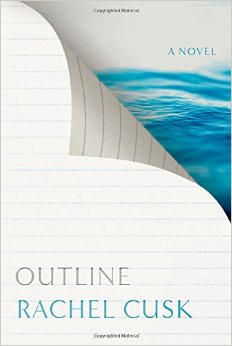
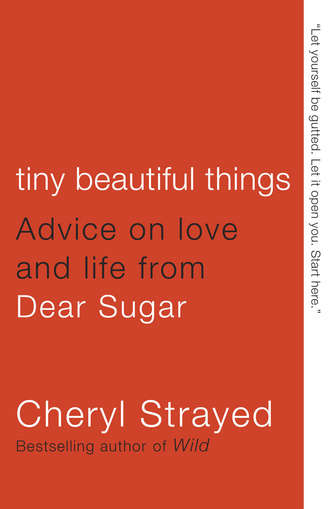
Category Archives: books

The Room Lit by Roses by Carole Maso

Carole Maso is one of the few authors who I will read over and over again. Her work has a quality that just gives and gives each time I read it. Oddly, I haven’t even come close to reading all of her work. With the short time before work for the semester really starts in earnest, I decided to grab a few books to frantically and recklessly read before I got down to business. That has involved forsaking some exercise and sunlight to read while lounging in air-conditioned spaces–sometimes with a popsicle.

I grabbed a few new books from the New York Times Bestseller list along with Carole Maso’s The Room Lit by Roses. I began reading it after working a long shift as a doula. My wrist was sore (still not recovered from a bike wreck two months ago) and my body weary. I tossed by hospital clothes in the hamper and showered the hospital germs away and propped myself up in bed with pillows on my cool white feather down comforter (enter also swamp cooler and popsicle).

I was done thinking about childbirth and labor when I cracked the spine and for the first time realized the rest of the book’s title: A Journal of Pregnancy and Birth. The universe clearly wants me to examine the issue more closely, so “here we go again,” I thought. I scarcely could put it down until it was finished about 24 hours later with the strong impulse to turn around and read it again, which I will not do right now.

Years ago, I read The American Woman in the Chinese Hat and read it again to prepare for my trip to France. I assume I’ll return to The Room Lit by Roses if I become pregnant or want to write more extensively on the topic. For now, I’m glad it exists and I’m glad I can return to it. What I love about Maso’s work is how real and raw and open she is. The ultimate sacrifice, I get the feeling that she splays herself open for us, dear reader, and for art and probably for world peace. Carole Maso is one of those authors for whom I am incredibly grateful.

Sometimes a line or two will be entirely dumb and petty and ugly, which works to magnify the stuff that is brilliant and important and beautiful. As I read her work, I find myself saying yes! That’s how it is. That’s how I feel! She wrote, “Always knew I wanted to have the experience of pregnancy.” I swear I say those exact words. The rest of it, the child, the life, that’s the part I’m not always sure about. But pregnancy and labor, yes. It’s such a bizarre and most intense human experience that is felt only a few times, or once, or never, so of course I’d like to have that. Maso puts into words how absolutely terrible and wonderful and necessary the experience can be, and I clung to each word.

Tenth of December by George Saunders

I recently finished a collection of short stories by George Saunders called Tenth of December. I’ve never read Saunders before and didn’t intend to, but I saw the title in a favorite new and used bookstore and had to pick it up. I’ve always loved the bookstore. It used to be called Earth ‘N Book in La Grande, Oregon. Years ago, it changed hands, and I felt that it wasn’t quite what it used to be. However, I popped my head in on a recent visit to Oregon, and it drew me in—just like a good new and used bookstore (is there any other kind?) always does.

image from usatoday.com

image from usatoday.com

I scanned the new releases, and that’s when the title caught my attention: Tenth of December. You see, that’s a significant date for me. That’s the date that My Love was born. (Though for years I had it in my head that his birthday was on the seventh.) I picked it up and read some praise on the back cover. There was a conversation at the end with David Sedaris—a favorite! I decided to get it as a gift for Z, who would be visiting me in Oregon on his way through. (He is currently on a bike trek from Utah through the Northwest.) So, I bought the book, along with another great book called This is Not My Hat for my nephew. (That book encouraged a good four-year old-appropriate conversation on the ethics of stealing. Z pointed out that it also taught dramatic irony.)

Tenth of December starts with a short story called “Victory Lap,” which is absolutely stunning. It is hilarious and traumatic—something Saunders does very well. He also has a distinct and innovative voice, but doesn’t seem like he’s trying too hard—which means he was probably trying very, very hard. I know that seems so very nonspecific, so I’ll try to elaborate. Saunders does this thing where he integrates these informal aspects of text-speak and typing. So, for example, the “ha ha has” we get when we’re chatting or texting are integrated into his work in a profound and poetic, but (of course) understated way. There are a few good authors who are absolutely genius with their ability to make the colloquial profound (Raymond Carver is among them), and Saunders does that too. But, what’s most interesting, I think, is the way he integrates a really modern colloquial that is clearly influenced by the way changing and omnipresent technology evolves our language.

“Victory Lap” was probably my favorite piece. I also really appreciated “Puppy.” In my opinion, a few pieces were too dark and/or difficult for their payoff, but I am particularly sensitive to such things. As you, dear readers, may recall, I am making an effort to read mostly female authors for the time being. It’s difficult to describe why exactly, but suffice it to say that for my current creative endeavors, I want to have the voices of women in my head.

Despite that current constraint, I picked up and read Tenth of December as quickly as I could. When Z arrived in Oregon, I kept reading it for several days, trying to finish in case he wanted to take it with him on his bike trek. Though it was an emotional rollercoaster, I’m glad I read it. I’m also glad I’ve given it as a gift. I won’t mind that it is in someone else’s care for awhile.

Birth, Breath, and Death: Meditations on Motherhood, Chaplaincy, and Life as a Doula by Amy Wright Glenn

Since I began the doula certification process through DONA International, I have had to read myriad required books on labor and the work of being a labor companion. My favorite book by far has been Ina May Gaskin’s Ina May’s Guide to Childbirth. I pretty much love everything she does, but that book was has been the best so far.

image from Amazon

image from Amazon

As I’ve completed the required reading for the doula certification, I’ve been able to branch out and read some related works that are not on the list. While I’ve browsed through a few other titles, Birth, Breath, and Death: Meditations on Motherhood, Chaplaincy, and Life as a Doula by Amy Wright Glenn has been the standout. It’s a really interesting book that (perhaps controversially) makes the connection between doula work and chaplaincy.

Let me get my criticisms out of the way first (because that’s always the worst part). Organization. This book has an organization problem. It appears to be a mash up of personal reflection (that is wonderful!) and what reads like long excerpts from a recycled academic paper on spirituality, love, philosophy (which is fine, but less wonderful). I sometimes found myself wanting her to get back to her stories, lovely insights, and self-reflection.

Glenn’s experience and her perspective is absolutely rich. It felt like an indulgence, and I wanted more. Since I began this work, I have often thought of the close connection between doula work and chaplaincy—although I haven’t thought chaplaincy was the right word—it makes me think of religion. Like yoga, doula work is more than spirituality. It also deals with the emotional and very much the physical. In fact, I imagine that chaplaincy work would do well to take a lead from the female-centric way that doulas have of guiding new life on to Earth (no big deal).

At a recent doula gathering, a new friend, still very emotional, shared that her father had recently passed away. As doulas, we discussed the way that doulas might facilitate a more peaceful, less medicalized passing, just like we are often asking questions and making plans in advance to help facilitating a more peaceful, empowered, and oftentimes a less medicalized birth.

It appears that Glenn has made that connection between birth and death in her own life’s work. A highlight of her book is her birth story. It’s one of the best I’ve ever read (though I have read [and witnessed!] many beautiful birth stories). Like all births, Glenn’s labor is unpredictable, and she is skilled at reflecting and sharing insights from the experience. More generally, I loved her insights on motherhood. I wanted to know even more about her thoughts on her own mother. I loved reading about the way she loves her son and the hesitations she had at becoming a mother in the first place.

If you find deep complexity in doula work, motherhood, childhood, life, and death, you’ll like this book. You might have to forgive it for lacking some of the polish (and organization) of other books, but if you’re like me, that forgiveness will be easy for the insight she offers.

The Favored Daughter: One Woman’s Fight to Lead Afghanistan Into the Future by Fawzia Koofi

I just finished reading The Favored Daughter: One Woman’s Fight to Lead Afghanistan Into the Future by Fawzia Koofi. It was a fascinating glimpse into the life of a Middle Eastern woman and a reminder of how quickly a dictatorship can destroy people’s lives, especially women.

The Favored Daughter

image from NPR

Several years ago, I also read Inside the Kingdom: My Life in Saudi Arabia by Carmen Bin Laden, and it was also spellbinding. The books are both from the perspective of educated women from the Middle East. I love getting their perspective because that experience is so vastly different than my own and also because it is represented so infrequently in literature. On one hand, these women are very similar to me in that we are all highly educated. On the other hand, I have much more relative freedom here in the US than many women in the Middle East. A highly educated woman living in an incredibly conservative patriarchal society is fascinating.

What I loved most was Koofi’s description of her childhood, growing up in the remote mountains of Afghanistan to a politician father in a polygamous family. It illustrated the bygone days when rampant spousal abuse and deadly sexism prevailed. The book provides a lens to a culture that is very different from my own. The passages about her childhood and early womanhood are lovely and interesting. It seemed that the love and unusual attention her mother gave her, even though she was “only” a girl, inspired her to a different life than one lived by most women in Afghanistan.

It is no spoiler than Koofi goes on to have a political career and that is where the book falters a bit. The last few chapters become a bit repetitive and have a distinctly political. The book ends in a tone that is political and not always in a good way. Not at that her points aren’t valid. They are! And, she is incredibly inspiring and her work as one of the few female politicians is no doubt incredibly important. All of that is gripping and exciting—but it’s not as exciting as the personal view she takes of her life in the first two-thirds of the book. By the end, she sounds like a politician who is on the campaign trail—a politician who might one day become the president of Afghanistan.

Let’s Explore Diabetes with Owls by David Sedaris

I recently finished another book by David Sedaris, Let’s Explore Diabetes with Owls. As with all of his books, this one was well worth the read. I found myself having deep feelings of gratitude for the author as I laughed, and was moved by, his prose.

Let's Explore Diabetes with Owls

image from NPR

My favorite stories are the ones where he pokes fun at himself. I love the stories of his childhood. “Loggerheads” is wonderfully cringe-worthy and funny and sad. I love the stories of his early adulthood. For me, “Stand Still” covered the well-worn territory of parental expectations, masculinity vs. humanism, and adulthood vs. pettiness. I love the stories of his life now. His story “Rubbish” tackles the fine line between being a good human and the deep relationship with neuroses that such an endeavor might inspire.

Though I’m on board with his politics, the overtly political pieces were funny, yes, but less engaging on all counts.  Still, it’s funny. And smart. And absolutely worth reading. Framed differently, perhaps in first person and expertly woven with his own life, they might be even better.

As I mentioned earlier, I had a strong feeling of gratitude as I read. I frequently hear stories of people “thanking” their favorite  artists for their work. Sedaris is one whom I want to thank, and this sense of gratitude was with me throughout the entire book.

Flight Behavior by Barbara Kingsolver

My introduction to Barbara Kingsolver happened over a decade ago when I first read her debut novel, The Bean Trees. At the time, I loved the book. I had just discovered popular, contemporary women writers, and I could not get enough. I can’t remember exactly what went down in The Bean Trees, but it had to do with a woman living life on her own terms, a theme that makes me weak in the knees. There was probably also some troubling imperialist nostalgia stuff going on there too, but, like I said, it’s been over a decade. Who can remember?

I hadn’t read Kingsolver for many years, when I picked up her latest book, Flight Behavior. The book takes place in Appalachia and centers on Dellarobia, an uneducated, but curious and sympathetic character, who is trapped in an unhappy marriage, which is really just an unhappy life. That life is changed forever when the family land is inundated with monarch butterflies, whose migratory patterns are disrupted by climate change. The butterflies are the catalyst for opening up a world of possibilities and [spoiler alert!] ultimately leading Dellarobia to self fulfillment and transformation. The message is education and information are key.

image from NPR

The book has everything I love: a down on her luck Appalachian woman, monarch butterflies, and sheep! It’s everything I look for in a novel, and yet the book sometimes fell flat. Kingsolver is writing from a rural poor Appalachian perspective, but in many ways Kingsolver herself seems to lack that perspective. I think of myself as someone who understands both sheep farming and the rural poor (though, to be fair, not the Appalachian variety), two things that are dealt with extensively in the novel. The book demonstrates that Kingsolver is a scientist at heart and a keen observer of humans and nature, but seems one step removed.

In regards to the sheep details, I recognized most of the information from a sheep raising manual written by Carol Ekarius, who herself is a transplant to sheep farming and a hobby farmer. In Flight Behavior, these characters are trying to make a living off of sheep, and to do so, they would need a completely different approach than the hobby farming Kingsolver portrays.

Next, it has been my experience that the rural poor have a certain pride, but the Dellarobia character has none of that pride. She is just completely insecure and humiliated by her life in every way. This is made clear as visitors and highly educated scientists begin to visit the butterflies. Even the transformed Dellarobia seemed to lack some necessary perspective in regards to her own behavior. I guess that’s reality though, isn’t it?

The pros of the book are that Kingsolver is a scientist, and her nerdy descriptions of the labs, the butterflies, and the processes are endearing. This kind of novel has the difficult task of balancing an engaging narrative and characters, while simultaneously commenting on environmental politics, and that’s not an easy job. In the end, I think Kingsolver achieved that balance. I read the thing to the end, and got something out of it. There are lovely uses of language and description throughout, and her metaphors are apt. It wasn’t a story that allowed me to suspend disbelief and fully engage because of the moments where I was thinking, “She would never do/say that thing.” Or, “a sheep farmer would never do xyz.”

When I hear “Appalachian women’s literature,” my heart melts a little bit. If you’re like me, Flight Behavior is worth reading. If environmentalist gets your blood pumping, you’ll probably love the book. If you find that this book isn’t for you, do go back and read her first book, though. That one was a real gem.

The Lazy B by Sandra Day O’Connor and H. Alan Day

Sandra Day O’Connor is in the news today saying that the Supreme Court should have stayed out of the 2000 Bush/Gore election. So I thought I would take the opportunity to review her book, which I just finished, entitled The Lazy B: Growing Up on a Cattle Ranch in the American Southwest. She co-wrote it with her brother Alan.

image from Barnes and Noble

Since I grew up on a cattle ranch, I love reading these kinds of stories. They fill me with nostalgia for my childhood home. Since ranching in the Southwest is very different from ranch in NE Oregon, there really were quite a few differences between her upbringing and mine.

I loved the long descriptions of people who lived and worked on the ranch. I loved the honorable attitude of the farmers. This is something I’ve heard people give lip service to my whole life, but it’s something I’ve grown to appreciate more as I get older and see how it plays out in the real world. The people described in the book were completely honest with their word. In many ways, they selflessly sought the best outcome for each situation. In my world, people are far more self-serving and ambitious to a fault. It was refreshing to see how doing the right thing for the whole group was consistently best for the individual.

Of course, there were politics. O’Connor, like in her time on the Supreme Court, was a good politician in the book, pointing out problems, analyzing them, but never really taking a stance one way or the other. Good politicians and critical thinkers know that it’s usually more complicated than that. It’s usually not “one way or the other.” So I appreciated that nuance.

I would have seen more critical commentary of her father and a deeper portrait of her mother. The father calls the shots and wins every argument to a fault. The brother is cocky and bullheaded–even in adulthood. The mother seems typically suppressed for the time period. Everyone grew up, married, had children, and the lifestyle of the ranch–though beloved–was no longer sustainable because of the changing social and financial landscape. To me it represented a tragedy that could have been explored in more detail.

The Orchardist by Amanda Coplin

Let me start this way: it’s been a very, very long time since I read a book like Amanda Coplin’s The Orchardist. This kind of plot-driven book felt like a throwback to my junior high and high school days when I picked through the slim reading selection in my small town library in rural Eastern Oregon. The Orchardist is such a great title too! However, as a reader, I was hoping to learn more about the workings of an orchard.

book cover from NPR

In addition to the landscape, The Orchardist is driven by characters too, though. Like in the reading forays of my youth, Coplin’s characters are often completely transparent, irrational, and occasionally infuriating. I wonder if Coplin was ever irritated with her Talmadge character like the reader would be at times.

The following could be considered somewhat of a ******spoiler******:

Much of Talmadge’s behavior can be forgiven because of his traumatic upbringing and the loss of his sister. What cannot be forgiven of Talmadge, nor of Coplin, is the violence enacted upon Jane as she is giving birth. Jane is a woman who has endured incredible abuse. In her deepest moment of vulnerability, when she is in labor, the midwife, Caroline Middey, and Talmadge are both complacent in her violation as they ignore her desire to be left to labor alone. Instead, they struggle with her even as she is on the brink of exhaustion. Talmadge violently grips and presses her thighs until the child is born. Jane indicates over and over that she wants to be left alone physically, but the well-meaning Talmadge and the trustworthy midwife do not abide. When Jane takes irreversible action soon after, the reader knows she wasn’t kidding about wanting to be left alone.

Each character in the novel possessed a combined inability to reach out, communicate, and move beyond the confines of their past and their current circumstances. There is no real character transformation in this book. The product of the story is Angelene, and this character’s welfare is completely unknown by the end of the book. As a reader, I was left wondering what became of Angelene.

In her debut novel, Coplin is a master of creating a gripping plot. However, the first page of the book is a long physical description of the main character that will make you want to put the book down. Those descriptions continue throughout without the book, without adding much if anything to the reader’s understanding of the plot or the characters. That said, Coplin will, no doubt, have a long career as a novelist, and hopefully she’ll learn to rein in those long descriptions.

Even with the long descriptive flourishes, the book will hold your attention and curiosity after the first few pages. In fact, I couldn’t put it down. Beyond her long-winded descriptions, her writing is effortless and entertaining. Some of the character’s insights are truly enlightening. If she writes a sequel about her character Angelene, I will read it. In fact, I’m quite curious to see what Amanda Coplin will write next.

When Women Were Birds by TTW

When Women Were Birds, the latest book from Terry Tempest Williams (TTW), is a wonderful, painful, poetic, and intensely personal meditation on Williams’ life: her femininity, her spirituality, her relationship with her mother, and more. Her work resonates with me because, like TTW, my family has been affected by cancer–cancer that was likely caused by exposure to radiation. “Clan of the One-Breasted Women” was the first beautiful thing I’d ever read that spoke directly to that experience.

Grandma on her wedding day

My own grandmother died after a painful, decade-long battle with cancer at the age of 54. I gasped as I read that TTW’s mother also died of cancer at 54–an age that becomes painfully young the older I get. My grandmother’s youngest sister was also afflicted with cancer and did not survive childhood. Her siblings, who lived to adulthood, got cancer too. The doctor said the type of cancer indicated that the kids “must have gotten into something.” Indeed, they lived along a river in Northeast Oregon, with an air stream that carried plutonium from Hanford, Washington. Though it was over 100 miles away, the pollution seeped into the atmosphere and even caused green snow one winter. Locals were unaware of it’s toxic nature.

Williams reminds us that silence and secrecy have long plagued the female experience. But within a family, women also navigate the most beautiful and painful experiences together: the loneliness and intimacy of marriage, the pain and power of childbirth, the joy of children, the suffering of disease; death. TTW navigates this territory with raw honesty and vulnerability. In addition to her connection to the women in her family, she reveals her own unique path, her own choices.

Like Williams, I have often felt that I have very few role models. I am a woman who has chosen a somewhat unconventional life. I tend to give less energy to relationships (although, at times, my love for Z has been completely consuming), and I currently have no children. I have not always understood my path, but it is one that has clearly deviated from my peers. My friends from high school have careers, yes, but they have also invested their energy profoundly into their husbands and their children in ways that I have not.

My nearest role models are women in my field, colleagues and former teachers. Even still, I’ve yet to meet one whose relationship to her partner and to her children, or lack thereof, has really reflected my own choices and relationships. This is a theme that TTW explores in When Women Were Birds. In the early years of her marriage, her inclination not to have children (at least not right away) made her different from her peers. And yet, like me, she does not seem to reject or disidentify with her femininity or her capacity and potential as a mother.

In a world where these stories seem too few and far between, her admissions are brave. It is this bravery that allows her to share her fear in enduring a hemangioma in her brain. For a writer, a woman whose world is in her thoughts and creativity, I cannot imagine the trauma, fear, and doubt involved in recovering from such an injury. But she does recover–though changed, perhaps–and the eloquence and insight in her book is a testament to that.

I first discovered TTW sometime during my undergraduate degree. I was struck by the accuracy with which she addressed the themes that most interested me in my own life. She feels like a kindred spirit, and I think that’s the sign of a great artist: she shares her secrets with the reader, and the reader has the same secrets, and then everyone is united in realizing how much we are the same.

After finishing the book, I remembered a bird feeder that was still boxed up in the basement from my recent move. I brought it upstairs, dusted it off, and filled it with fresh sunflower seeds. It now hangs on my front porch, waiting for birds.