Category Archives: doula

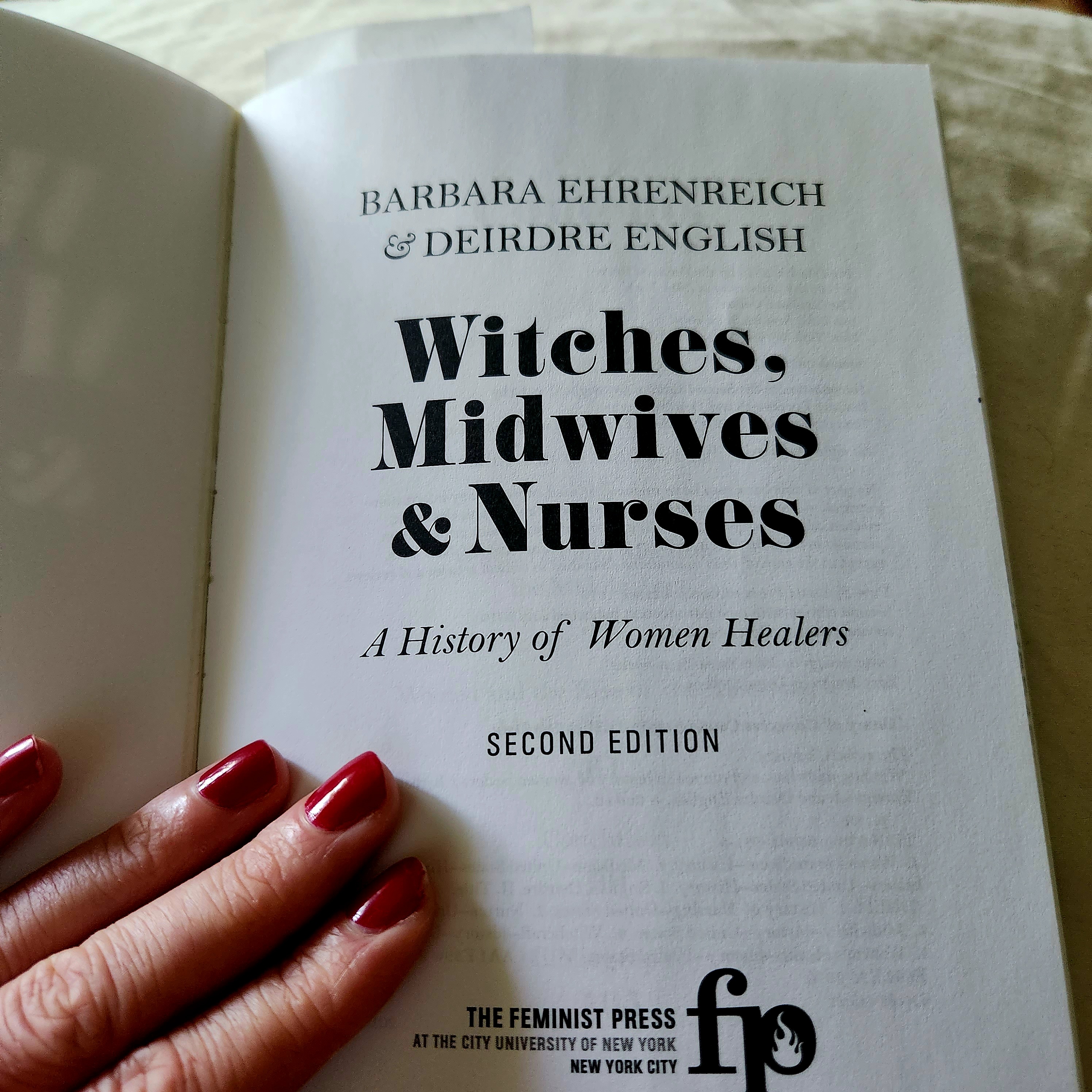
Witches, Midwives, and Nurses by Barbara Ehrenreich and Deirdre English

I read Witches, Midwives, and Nurses: A History of Women Healers, by Barbara Ehrenreich and Deirdre English, for my book project, but ended up reading it like one of my recreational reads, so I’m including it here. In my opinion, this is a book that should still be taught in medical classes to this day. Although it was originally published in 1973, this brief history–and the justified rage–are still relevant and important for everyone to understand to this today.

The long history of the witch trials are placed in context next to how babies came to be delivered (mostly by men) in modern medicine. The history is portrayed as a hostile takeover. While science improved some aspects of maternal medicine, the losses and violations from extracting women from childbirth seemed to exceeded any sense of progress.

This book, sometimes referred to as a “pamphlet,” is a kind of manifesto that offers a scathing, but not inaccurate account of the history of sexism in medicine.

Challenging Pregnancy: A Journey Through the Politics of Science of Healthcare in America by Genevieve Grabman

I don’t normally include the scholarship I read for work here on my book list, but this one had an engaging narrative, a strong argument woven throughout, and I read it all the way through. In Challenging Pregnancy: A Journey Through the Politics and Science of Healthcare in America, Genevieve Grabman writes about her experience being pregnant with and birthing twins in the US healthcare system.

In the book, Grabman effectively argues that the the care she needed, received, but was sometimes was denied was often influenced more by politics than by her own medical needs. Anti-abortion sentiment filtered in to most aspects of her healthcare in a way that deprived her of choice and even sometimes put her in danger. Or put one or both of her babies in danger. Or put all three in danger. This is an important, but dark read that will have female readers thinking hard about the risks of becoming pregnant during such a hostile time for women’s (reproductive) rights, when choices about women’s bodies are placed in the hands of politicians and influenced review boards more than the expert doctors and wishes and preferences of the pregnant person.

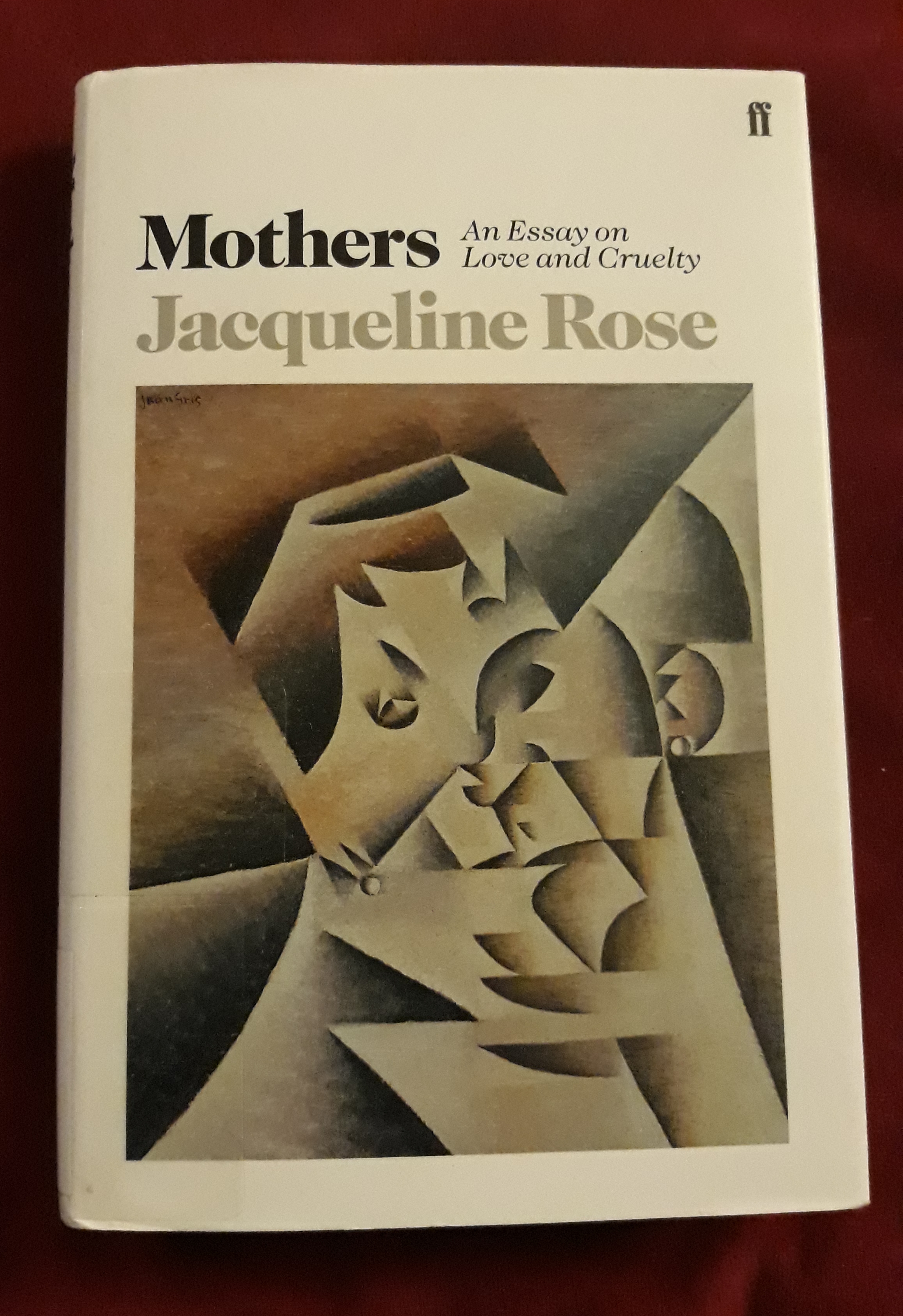
Mothers: An Essay on Love and Cruelty by Jacqueline Rose

I started reading this book after a friend challenged me to mini book club. I thought it would be an interesting take on motherhood, perhaps essays, although the title calls itself an essay, singular, which reads, in hindsight, as pretentious as it is by no means an essay, and is, at the very least, essaysss. This books is basically theory, with some fairly dense analysis and criticism, but also some accessible hot takes and also slow burning takes mixed in.

The perks of this book are in some of the one liners, which I’ll share below. Her literary knowledge of mothers is vast and deep and fascinating. I found myself wanting to read all of the literary works she mentions, something that would take me years. I always (and will continue to) return to de Beauvoir and Rich.

The drawback of the book is only that it was more academic than I was hoping, something that might be reconciled by a more accurate title. I did not always understand the connection between mothering and immigration, although that connection is made frequently throughout the book. This was especially true for me in the first chapter. I found myself arguing—aren’t immigrant mothers the most sympathetic of all immigrants? This point felt underdeveloped to me throughout the book. Also, I felt that, based on my own experience, the dogged connection between breastfeeding and eroticism was a stretch and over-developed.

Even still, I appreciated the vulnerability and honesty throughout the entire book. It’s really like no other and tells a story of matrescence that is important, but rarely told. For me, motherhood has required me to be an almost entirely different person. Giving up such a huge sense of self is the sacrifice that seems too great and also unnecessary. Nothing could prepare me for how much I would change, would be forced to change in order to survive, and how that change felt inevitable, and necessary, and okay, and part of my life’s path and development, but also, in many ways, a jarring loss.

Overall, if you’re doing scholarship in motherhood, this is a must read. I may even be able to use some gems in my own scholarship, which is often, just adjacent, although I haven’t isolated any yet.

Here are a few lines/questions worth returning to:

“[W]hat are mothers being asked to carry, what forms of failure and injustice are they made accountable for, above all, in the modern Western world?” (37).

(Indeed, I have found the motherhood to be too demanding, asking too much, and unnecessarily so. With a better social network, motherhood could be vastly improved for (most) women.)

“We talk of a mother’s suffocating love. But the one in danger of being smothered by love might not be the infant but, under the weight of such a demand, the mother” (81).

(See above.)

“For several yars she has tried in vain to adapt to his point of view, to her mother-in-law’s exacting standards and ‘to all the unintelligible ritual with which they barricaded themselves against the alarming business of living’” (99).
(I just thought this was a profoundly accurate description of how I perceive some people to be doing life. (I have been wrong in my interpretations of this though.))

“[T]he child’s demands drive the mother to insane perfection; the inconsiderate child underscores the radical neglect of her own life” (187).
(I don’t think it can be helped.)

“‘[H]is implanting himself inside me; unreasonably and totally destroying the me I was’” (206).

planting the placenta

Today I finally planted the placentas that I saved from both of my hospital births. I kept them in case I was struggling postpartum and wanted to have them encapsulated. Fortunately, I never ended up needing to use them postpartum. So, I stored them in the freezer with a plan to bury them. I learned that once you have them, there’s no turning back. I moved across two states with a placenta in a cooler on ice. I started to have my doubts about keeping them, but what else could I do?

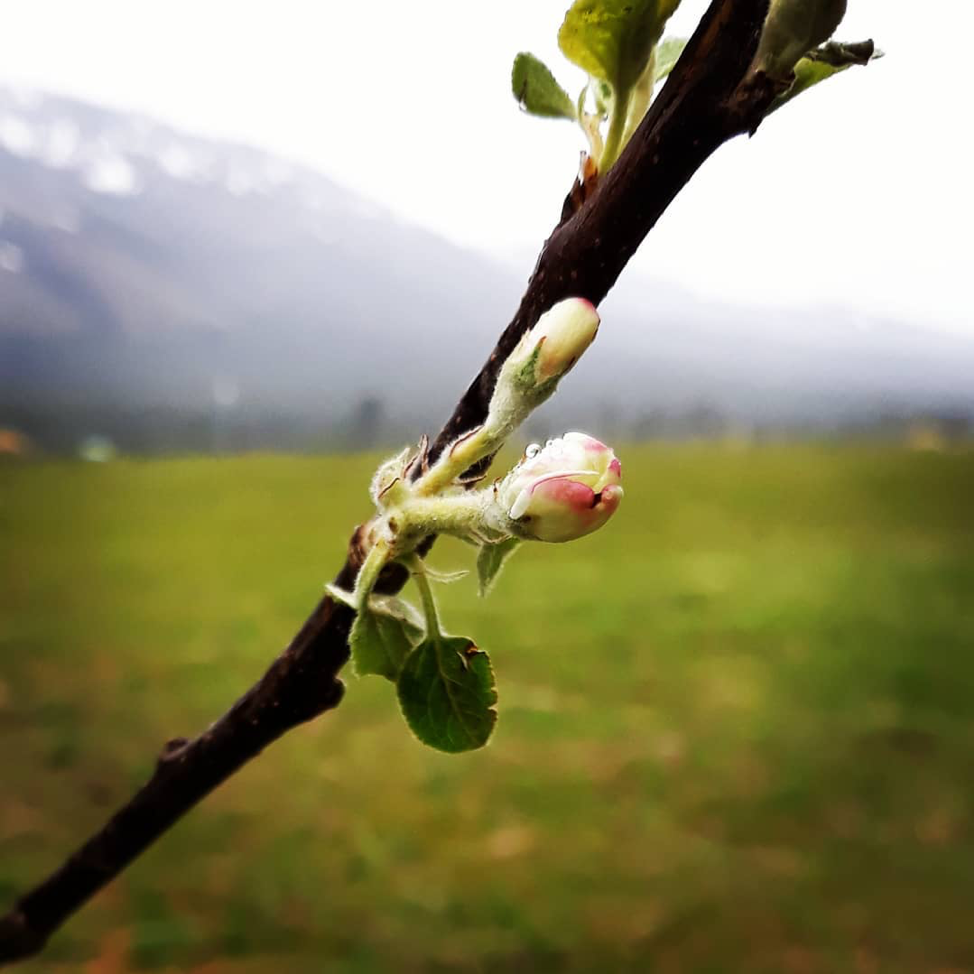
Finally, it is springtime, and I am settled, and I am planting my first orchard: apples, pears, apricot, and peach. It is time.

appleblossom

a new fruit tree for the orchard

To begin, it felt like a chore. Get trees. Remember to get the placentas out of the deep freeze so that I can plant trees tomorrow. Dig holes. Do it all quickly before the babies wake up from their naps.

I’m so glad I did it though. It was a beautiful and surprisingly introspective process. When I opened the containers, they were so fresh, like I had just given birth. Everything slowed down. The memories of my pregnancy, of growing and birthing these beautiful babies came flooding back as I prepared the placentas that connected us in every way. It was bittersweet to let them go. To put them in the earth felt like letting go of the most physical connection I have with my boys. It’s something I’ll never get back.

I hope I’ll remember. I hope sometimes when I am in the orchard, I’ll slow down, and I’ll remember the absolute miracle of life and the life changing gift this experience of motherhood has been to me.

How fitting that today is also Earth Day. Happy Day!

Misconceptions by Naomi Wolf

For whatever reason, I haven’t been able to bring myself to read much about pregnancy since I got pregnant, which is a surprise because in the past I’ve enjoyed reading and pregnancy and reading about pregnancy. It might have to do with the fact that I’ve been working on an article that *to a degree* has to do with rhetoric and pregnancy. So, most of my reading in the past few months has been toward that end.

I read Misconceptions: Truth, Lies, and the Unexpected on the Journey to Motherhood by Naomi Wolf, and I loved it! It’s a hefty tome, and I pretty much just sat down one day and read it. I read it for the article, yes, but I’m including it here because it became joy reading as well.

I’ll admit that, throughout the entire reading, I had her confused with Naomi Klein, who’s The Shock Doctrine: The Rise of Disaster Capitalism, which I read in 2008, at the beginning of my doctoral program, deeply informed my thinking about political economy. I thought Wolf’s work was more accessible, but I read it voraciously, thinking it would provide the deep intellectual analysis that Klein’s work is known for. I’ll admit that Wolf’s work was far more accessible, less hard hitting, but a nice blend of journalistic blend of smart analysis and storytelling. Wolf’s book is stark and honest, but not so dark that it doesn’t also include the bright side (which I need at this point in my pregnancy).

Wolf’s book is about mourning the previous identity as women change irreversibly to become mothers. The deep estrogenic surge in my body now is physically changing me. I’m aware that I’ll never look the same again. Those hormones are also making more compassionate toward people, toward their stories. I’m aware that this is a biological imperative that will help me have compassion and provide good care for my new infant, even when it is hard. And Wolf says it will be hard. She outright states what I already knew, and what few people can bring themselves to say aloud: that my body will be different, that the hormones will take me to the lowest low, that my love for the baby will be more like an addict’s obsession that any kind of consensual love, that I’ll have less power in my relationship with my partner, that I’ll be less respected as a professional, and that I will spend many sleep deprived months deeply mourning these loses. That sounds about right. And yet, I chose this still. And I’ve enjoyed a beautiful, healthy adult woman’s body for several decades. I’ve earned the highest degree available. I’ve had a professional career that is fulfilling and well-respected. And while I hope I am still able to have a fulfilling professional life, and I hope my body is fit and healthy, I am so ready for something else. For me, the timing feels absolutely perfect. I’ve checked a lot of boxes on my life’s “to do” list. This one’s next.

Here were some lines from the book that I liked:

  • “The medical establishment too often produces a birth experience that is unnecessarily physically and psychologically harmful to the women involved” (6).
  • “[W]omen carrying babies must be nurtured and supported intensively” (114).
  • “I heard comparable ordinary traumas among many women I talked to–what I have come to call “ordinary bad births” (145).
  • A typical sentiment from a woman who recently gave birth: “Nothing happened according to what we had wanted or planned. And we had absolutely no say; the institution just took over” (147).
  • “A number of women who had given birth described a moment at which they felt the medical institution simply took over; oblivious to the mother’s wishes, experience, or concerns” (149).
  • “Midwives working on their own terms do not try to guide births along a path determined by unnecessary medical interventions. Rather, midwives wait, encourage, and prepare the way, successfully keeping medical intervention to a minimum” (151).
  • “I have never yet seen a physician show the respect of informing a woman of waht is required–‘I need to do this procedure’; instead they just cut, often without even telling the woman–sometimes when the baby is just about born; sometimes the husband is shouting for the doctor to stop. Many women find this cut the most traumatic part of the birth. Yet episiotomy is seen in the same light as taking a temperature–it’s that routine,” remarked midwife Elissa March” (193).
  • From Wolf’s doctor during her second pregnancy: “You had to be sectioned last time. You probably have an unusually narrow birth canal. Maybe your body just is not made to have babies.” And, “[M]y doctor wanted to be right about my being in need of his surgical help more than he wanted to heal” (278).


The First Forty Days by Heng Ou

When I first found out I was pregnant (yes, pregnant!), The First Forty Days: The Essential Art of Nourishing the New Mother by Heng Ou was the first book I ordered. Over the years, as part of my doula training, I’ve read many books about childbirth (my favorite probably being Ina May Gaskin’s Ina May’s Guide to Breastfeeding: From the Nation’s Leading Midwife).

So much is written about the pregnancy and childbirth, and rightly so, but relatively little has been written about the postpartum period, now sometimes referred to as the “fourth trimester.” So, I read this book to learn more about that period, and I’m glad I did.

My only criticism of the book is that it is quite repetitive and the content is better than the writing. Through the first half, and then again at the very end, it reads more like a book proposal, like she’s still trying to sell the reader on the idea, than like reading the body of a book.

However, it’s absolutely still worth reading. In fact, I highly recommend it for pregnant people, new parents, and their caretakers. The highlights of the book are in the information provided about the postpartum period in different cultures, how to care for a new mother in the first 40 days or 6 weeks after a baby is born. The novel recipes are inspiring, and I found the thoughtful commentary that goes along with each recipe to be  interesting. The images of the meals and ingredients are also gorgeous. I’ve been craving so much junk food that seeing lovely pictures of “real” food has helped me out a bit.

Even if I don’t end up making or eating any of the meals from this book, I think just reading about this postpartum philosophy would help new mothers recover, heal, and adjust. At the very least, I think I’ll probably drink broths and soups and try to stay cozy and warm during this time. I’m always cold, and so I loved the emphasis on prioritizing warmth. I felt like the book gave me permission to do so in general, and I appreciated that.

My doula just recommended Mindful Birthing: Training the Mind, Body, and Heart for Childbirth and Beyond, which is another one I haven’t read yet. I think I’ll try it next.

A Lotus Grows in the Mud by Goldie Hawn

I can’t remember where exactly, but Goldie Hawn’s book, A Lotus Grows in the Mud was recommended to me while I was reading some respectable piece of literature, and so I ordered it and set it aside for a month or so. I finally got the chance to read it over spring break, and it was surprisingly delightful–thanks in no small part, I’m sure, to “co-author” Wendy Holden.

Lotus Grows In The Mud

image from powells.com

Hawn has led a fascinating life, and her book really tries to get at some of the wisdom she’s gained in this life. And, you know what? Some of that wisdom was pretty darn inspiring and insightful.

Here’s what impressed me–Hawn follows her purpose, even when it is not obvious, even when she has doubt, even when others criticize her and roadblocks threaten her faith.

When I think about my purpose in life, I often have doubt and uncertainty. However, the predominant narrative one hears about one’s path is that it is easy and clear. But, that hasn’t been the case for me. I was an English major because I liked reading, but that seemed incidental. Now, I’ve made an entire career out this. I love practicing yoga because it is good for me, but a lot of times I phone it in, or have to talk myself into going, and sometimes I don’t go at all. I’m never the most flexible, most enlightened, or coolest person in the class. Still, I trained to teach yoga, and I’ve been teaching it since 2008. Most days when I enter into that classroom to teach, it feels really, really *right*. Same goes for the garden, for writing, for my friendships, for My Love.

So, I loved the message of her book. She was brave. She did hard things. It made me feel like I could be brave. I could do hard things–all while making a living and having Kurt Russell unexpectedly waltz in and save me in the final hour and then stay for the remainder of my decades. Yeah, I’ll have what she’s having.

In perfect timing, just as I finish this book, I see that Hawn is teaming up with Amy Schumer in a new film called Snatched. It looks lovely and hilarious, and I can’t wait to see it. I love seeing mother/daughter duos (that’s in the book too).

Wild Woman’s Garden: 7 Radical Weeds for Women Over 40 by Jillian VanNostrand and Christie V. Sarles

Image result for Wild Woman’s Garden: 7 Radical Weeds for Women Over 40

image from amazon.com

I’m not sure how I came across Wild Woman’s Garden: 7 Radical Weeds for Women Over 40, but I knew I was interested in reading more about these seven herbs that support women’s health. (I think I somehow missed the “Over 40” part in the title.) This text works best as a very short reference guide on how to start using herbs—as teas, tinctures, and oil infusions. (I also liked the drawings!)

I’m familiar with all of these herbs. Black cohosh is powerful and used in birthing communities. Chaste berry is used for fertility. This short book focuses specifically on the gynecological issues that many women face as they go through the “Change” [their word], such as fibroids and hot flashes.

After reading the book, I found myself searching for images of these different herbs. Were they cold hardy? (Yes to black cohosh, st. john’s wort, and yarrow.) Would they attract bees? (Yes.) Would they be attractive in a garden? (Yes, many of these herbs appear to be very floral.) Were they too weedy? I didn’t find all of the answers, but I did find myself emboldened to try some of these in the garden. I’ve been enjoying more familiar herbs like sage and yarrow in gardens for years. Maybe it’s time to try something different, like st. john’s wort and black cohosh.

The Doulas: Radical Care for Pregnant People by Mary Mahoney and Lauren Mitchell

Awhile back, a colleague in the field of feminist medical rhetorics recommended The Doulas: Radical Care for Pregnant People by Mary Mahoney and Lauren Mitchell (though it must not’ve been too long ago because this book was just published in 2016). I finally got around to read it in preparation for a presentation I am giving on rhetorics of consent and advocacy in childbirth at a conference in March.

First, notice that the title is “pregnant people,” not “pregnant *women*.” We know now that it isn’t just women who get pregnant and/or give birth. I emphasize pregnant and/or give birth because this books also acknowledges that pregnancy ends in many different ways–some more socially acceptable than others.

For the most part, this book is politically sensitive to  the wide range of experiences people have as it relates to pregnancy and caring for the pregnancy and/or childbirth experience (aka doula work). Doulas provide people with support, especially in situations that are less socially acceptable. Of course, there are also doulas who hold intense, open biases. Some won’t work with gay couples (the legalities of which I question), and some are vehemently pro-life. It’s been my experience, though, that, in general, the doula community tends to be quite open to, and advocates for, variations of the pregnancy experience. (Still, the doula interview is crucial because pregnancy and birth work is incredibly political and contentious.) Unfortunately, the current cultural climate is one that is still obsessed with policing women’s bodies. Anything from choosing abortion to opting out of an epidural can be, and is, met with resistance.

Another approach I liked from this book is one of narrative medicine. Ina May Gaskin is notorious for writing childbirth guides that are full of childbirth stories. These stories work to help teach the reader about the many different healthy and normal experiences people can have in childbirth. This is important because when there is a very narrow definition of “normal,” and variations are treated as “abnormal,” interventions become the norm, and interventions too often mean trauma, surgery, injury, delayed bonding–the list goes on.

Back to the book: for my own purposes, I didn’t need or want to read most of the content. I wanted this to be a more theoretical work, but it mostly wasn’t. I also had a hard time understanding the relevance of some of the content.

Here are a few lines I liked (from the intro and forward because that’s where the book was most theoretical):

-“These doulas call it “story-based care” because they hear many stories of people for whom some choices are straightforward, while others offer extreme complexity” (x).

Since becoming a doula, I have been shocked by the number of *high stakes* choices that people have during pregnancy and childbirth. Navigating those choices and feeling empowered in through the process has been one of the most important aspects of my job as a doula.

-“Racism can distort a birthing or adoption experience. Transphobia can lead to the denial of vital healthcare. Prejudice against immigrants can divide families through deportation. Misogyny can reduce pregnant women to walking wombs without rights” (xv).

-“[Doulas] don’t sky away from naming oppressions–white supremacy, colonialism, xenophobia, homophobia, transphobia–yet they are not there to preach, but to serve” (xv).

Sure, some doulas might preach, but one unique aspect of this type of work is that, for doulas, activism is in the work–making political statements through actions, through work within the institutions and with the people most affected.

-“While much feminist and social justice activism was taking place online, the doula movement allowed activists to connect face-to-face with people confronting the realities of what the “spectrum of choice” really means” (xxi).

-On people during pregnancy and childbirth: “Worse still, they suffer the loss of personal agency as decisions that should be private become politically and bureaucratically charged” (xxi).

-On doulas: “People frequently refer to us as “advocates.” While we would not argue that point, we hope this book will show you how advocacy as a doula looks different from advocacy in other realms. Often it simply means this: we are “holders.” We hold space by creating safe, comfortable environments where our clients can be heard” (xxii).

-“Our practice as doulas is a daily expression of the union between compassion and advocacy” (xxii).

-“Though understanding systemic oppression is crucial to the way we approach doula care, we believe that individual stories have the ability to pierce the veil covering systems that affect millions of people; they are unique but universal” (xxiv).

-“So much of doula work is that transference of story and the transference of emotional burden that goes with it” (xxvi).
Meru directed by Jimmy Chin, et al

This year at Sundance, I had the opportunity to see Meru, a documentary film about Conrad Anker, Jimmy Chin, and Renan Ozturk’s summit of Mount Meru, or the “Shark Fin” in the Himalayas. I was a little worried that I might spend most of my time averting my gaze from the vertigo-inducing shots of men hanging by a rope over 20,000 foot drops. While there were plenty of those shots, there are also a lot of beautiful scenes that did not invoke a need to cover my eyes. The cinematography is absolutely beautiful and unforgiving throughout.

image from Meru trailer

image from Meru trailer

At about the mid-point, viewers get a lot of backstory on these three climbers. Each of them overcomes absolutely unbelievable obstacles. (Well, maybe not so unbelievable given that they are elite climbers.) I went in worried that this would be one of these films when men (yes, men) do these insane things that make no sense and risk their lives and everyone’s lives, and for what? But I enjoyed and admired these men throughout the film.

They each brought such unique personalities to the screen. Conrad is the hardened old-timer with tons of experience. He’s got a remarkable record for safety, but he’s got a thin exterior might be pushing too hard at this point in his career. There is evidence that Jimmy is aggressive and unstoppable in his pursuit of success, but he’s so quiet and understated about it. Renan has a natural, physical ability, but he’s got a spooked look in his eyes—maybe it’s the fear of being a newcomer or maybe he’s haunted by what’s to come.

Watching the film, I was proud to be in the same species as these guys. It makes me think about the things we’re driven to do. The things we obsess over until we absolutely must do them. Some of us know what we have to do, and it usually means logging countless hours alone with one’s self. This is why, though I recognize my need for relationships, I trust solitude. Important things happen there, and etching out that time and being willing to spend that time alone is key. For some people, that great thing is having a child.

During this film, though it is very masculine, I was reminded of doula work. Like the men climbing Meru, women in labor are inexplicably driven, but they reach their breaking point, they’re brought to the brink, and then beyond to the place where their skin starts to break—just like the climbers. They continue on as the animal body takes over and the higher intelligence and the spirituality are all forced to work together. All three are required, which is one of the lessons, I think. I always say, “What doesn’t kill you makes you stronger, or it weakens you badly.” However, in this film, what doesn’t kill them actually does make them stronger. Cliché as it may sound, the film reminded me of our greatness as human beings. I feel newly inspired to pursue the things I must do in this life, for more quiet focus to better understand what those things are, and a deeper commitment to the solitude they require.