Category Archives: enlightenment

Bluets by Maggie Nelson

I needed to read something artistic, and so I finally read Bluets by Maggie Nelson. I read it quickly. (It did not need to be read slowly.) It seemed like I’d read this book before. It reminded me of Coeur de Lion by Ariana Reines, but not as beautiful as that in terms of the sentence. It was beautiful, though, and smart–one of the best books I’ve read in the genre. I had little patience for the sexual aspects of the book. That’s me though. Lately, those inclusions seem cheap. I used to “get it.” Adding the sexual gave writing that perfect blend of raw and mystery. Anymore I only want to think about birds and botany.

Bluets - Maggie Nelson

image from wavepoetry.com


Lines I liked:

“My Thought has though itself through and reached a Pure Idea. What the rest of me has suffered during the at long agony, is in describable” (Mallarmé 2-3).

“Now I like to remember the question alone, as it reminds me that my mind is essentially a sieve, that I am mortal” (62).

“…the blue of the sky depends on the darkness of empty space behind it” (62).

“For some, the emptiness itself is God; for others, the space must stay empty” (86).

“…ask not what has been real and what has been false, but what has been bitter, and what has been sweet” (86).

“As a rule we find pleasure much less pleasurable, pain much more more painful that we expected” (87).

“She is too busy asking, in this changed form, what makes a livable life, and how she can live it” (88).

“Imagine someone saying, “Our fundamental situation is joyful.” Now imagine believing it…Or forget belief: imagine feeling, even if for a moment, that it were true” (89).

“When I was alive, I aimed to be a student not of longing, but of light” (95).

Words/concepts that inspired further study:

  • the male satin bowerbird
  • International Klein Blue
  • samsara
  • the jacaranda tree
  • the Tuareg
  • The Oblivion Seekers

Crazy Brave by Joy Harjo

I read this book almost entirely while lying in bed, while falling in love. Joy Harjo’s a fixture in poetry and literature. Before now, I’d only ever read a poem or two here and there, but I’d never really gotten into her work…that is until I read her memoir, Crazy Brave. It was one of those books that I started reading in a bookstore, and then read a chapter or two from the library, and then finally bought my own damn copy and finished it at home…while lying in bed. I love this book.

image from amazon.com

Harjo is mostly known for her poetry. I don’t enjoy reading a lot of poetry, and so that’s why I haven’t been very familiar with her work. After reading and loving Crazy Brave, I read She Had Some Horses, which is also beautiful, and I love it, and it’s poetry. It’s a collection I see myself returning to.

As for Crazy Brave, what I love about the book is how she captures a creative, feminine life experience that I (mostly) really relate to. It’s soulful. It captures pain, and specifically women’s pain, in a profound way. It shows us another way. It does so in poetic prose–she’s a poet after all.

This is from the back cover of She Had Some Horses, but I think it pertains to all Harjo’s work: “If you want to remember what you never listened to & what you didn’t know you knew, or wanted to know, open this sound & forget to fear. A woman is appearing in the horizon light.” ~ Meridel Le Sueur.

And then I saw her picture and remembered that maybe I met her. Or maybe I heard her read once. She is familiar to me. Her name. Her face. Her work. And yet I only really found her work now, when of course I needed it most.

I was captured throughout the entire book, but  by the end, I was a little lost: WHAT DOES IT ALL MEAN?! I wondered about the title: crazy brave. Now I think I can say that the larger message was, for me personally, a message to women to be brave, an admonition that it will be crazy, and you will be crazy, and you will be brave, and that is life.

Part of this is about surrendering to the flow of the river, instead of fighting against it, using the strength of the current to pursue yourself, but also acknowledge or accept that the river will be violent, and it will wound you deeply, and it might kill you, and it might lull you to sleep, and part of this we can control, and part of it we cannot control, and this is the wisdom we gain from being in the river. I am reminded of the time I went underwater in the Colorado River, the immense crushing noise turned warm and quiet and then I emerged. Part of this book is about acknowledging fear, working around it, using it, but not being controlled by it. I left the book thinking I should do what I must do before the river does it for me, even as the river does it for me.

Some of the words I loved:

“Yet everyone wanted the same thing: land, peace, a place to make a home, cook, fall in love, make children and music” (19).

“Because music is a language that live sin the spiritual realms, we can hear it, we can notate it and create it, but we cannot hold it in our hands” (19).

“In the end, we must each tend to our own gulfs of sadness, though others can assist us with kindness, food, good words, and music. Our human tendency is to fill these holes with distractions like shopping and fast romance, or with drugs and alcohol” (23).

“Water people can easily get lost. And they may not comprehend that they are lost. They succumb easily to the spirits of alcohol and drugs. They will always search for a vision that cannot be found on earth” (25).

“They continue to live as if the story never happened” (43).

“Our  heartbeats are numbered. We have only so many allotted. When we use them up, we die (52).

“All of these plant medicines, like whiskey, tequila, and tobacco, are potent healers. There’s a reason they’re called spirits. You must use them very carefully. They open you up. If you abuse them, they can tear holes in your protective, spiritual covering” (77).

“I noticed a marked change in the quality of light when we made it to New Mexico” (83).

“Each scar was evidence that we wanted to live” (90).

“I told Lupita I wanted to paint, to be an artist. She told me that what she wanted was someone to love her” (102).

“I was given the option of being sterilized” (121).

“I believe that if you do not answer the noise and urgency of your gifts, they will turn on you” (135).

“We were in that amazed state of awe at finding each other in all the millions and billions of people in the world” (143).

“Her intent made a fine unwavering line that connected my heart to hers” (146).

Be Free Where You Are by Thich Nhat Hanh

I’m supposed to be gearing up for a spiritual year according to sundry esoteric readings and such. I entertain these mostly for fun, but when the idea reappeared to me in multiple venues, I thought, okay, I’m listening. I’m not particularly excited by the prospect of a spiritual year, but recognize that it’s a part of being. And, there’s no time like the present.

So, the other day on a friend’s table, I saw a copy of Thich Nhat Hanh’s Be Free Where You Are, which is a little pocket-sized book based on a lecture he have to a group of prisoners a few decades ago. “Take it,” she said. So, I slipped it into my purse and read it the other night. It is a very quick read. I read half of it, then decided to read the rest of it, and then read the Q&A after that—all in one sitting. I chose to read and reread a few key sections  slowly to try to really absorb his potential meanings.

Thich Nhat Hanh’s been on my radar after a respected mentor mentioned that his work had valid philosophical and scholarly potential. After reading this short book, I can’t say that I agree. Of course, it’s way too soon to make a definitive statement either way. But, he spoke about things like being in your heart and being positive, and while I can make a lot of assumptions about what that might mean, I’m not sure that means much. Or, maybe it means everything. The book is full of these kinds of assertions, and I can only hope that his longer works offer more depth.

Thich Nhat Hanh said that understanding is crucial for forgiveness.

He said to think about each bite of food and where it came from with gratitude.

He said to meditate always, while walking and washing dishes. While inhaling and exhaling. He encourages his audience to be present. Describing this, he wrote, “Here I am.” I read it a few times:  “Here I am.” I walked over to my full-length bedroom mirror and tore away the tens of sticky notes upon which I had scribbled affirmations in permanent marker, affirmations that I had written months earlier as they occurred to me. I threw the tiny stack of words into the recycling, got out a new sticky note and wrote, “Here I am.” I placed it alone on the mirror. Here I am.

I thought about an eye-gazing meditation I did recently that was either good or meaningless, and I thought, “Here I am. Here I am.”

Meru directed by Jimmy Chin, et al

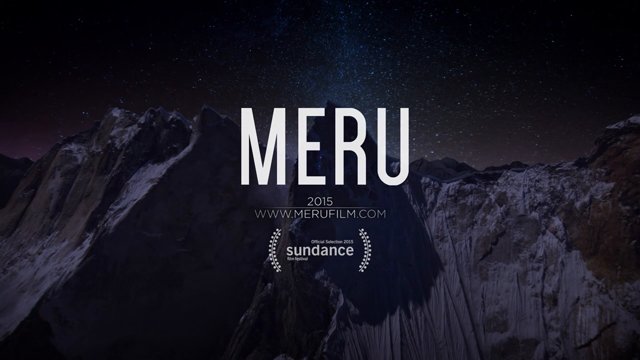
This year at Sundance, I had the opportunity to see Meru, a documentary film about Conrad Anker, Jimmy Chin, and Renan Ozturk’s summit of Mount Meru, or the “Shark Fin” in the Himalayas. I was a little worried that I might spend most of my time averting my gaze from the vertigo-inducing shots of men hanging by a rope over 20,000 foot drops. While there were plenty of those shots, there are also a lot of beautiful scenes that did not invoke a need to cover my eyes. The cinematography is absolutely beautiful and unforgiving throughout.

image from Meru trailer

image from Meru trailer

At about the mid-point, viewers get a lot of backstory on these three climbers. Each of them overcomes absolutely unbelievable obstacles. (Well, maybe not so unbelievable given that they are elite climbers.) I went in worried that this would be one of these films when men (yes, men) do these insane things that make no sense and risk their lives and everyone’s lives, and for what? But I enjoyed and admired these men throughout the film.

They each brought such unique personalities to the screen. Conrad is the hardened old-timer with tons of experience. He’s got a remarkable record for safety, but he’s got a thin exterior might be pushing too hard at this point in his career. There is evidence that Jimmy is aggressive and unstoppable in his pursuit of success, but he’s so quiet and understated about it. Renan has a natural, physical ability, but he’s got a spooked look in his eyes—maybe it’s the fear of being a newcomer or maybe he’s haunted by what’s to come.

Watching the film, I was proud to be in the same species as these guys. It makes me think about the things we’re driven to do. The things we obsess over until we absolutely must do them. Some of us know what we have to do, and it usually means logging countless hours alone with one’s self. This is why, though I recognize my need for relationships, I trust solitude. Important things happen there, and etching out that time and being willing to spend that time alone is key. For some people, that great thing is having a child.

During this film, though it is very masculine, I was reminded of doula work. Like the men climbing Meru, women in labor are inexplicably driven, but they reach their breaking point, they’re brought to the brink, and then beyond to the place where their skin starts to break—just like the climbers. They continue on as the animal body takes over and the higher intelligence and the spirituality are all forced to work together. All three are required, which is one of the lessons, I think. I always say, “What doesn’t kill you makes you stronger, or it weakens you badly.” However, in this film, what doesn’t kill them actually does make them stronger. Cliché as it may sound, the film reminded me of our greatness as human beings. I feel newly inspired to pursue the things I must do in this life, for more quiet focus to better understand what those things are, and a deeper commitment to the solitude they require.

i do rush home

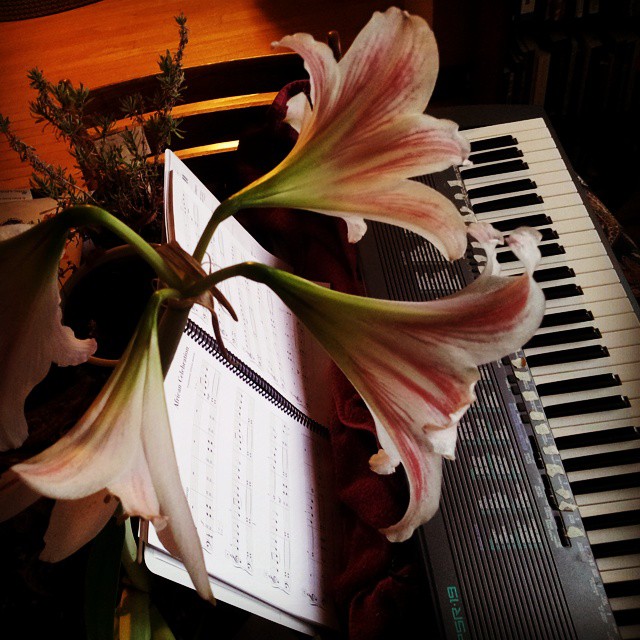
I rush home to play the piano. (Well, keyboard.) I listen to songs on the radio and try to figure them out while driving. I fill out all of the exercises in my lesson book just for the joy of it.

My mom’s pretty competent at the piano, but has always wanted to play the violin. She started taking lessons this summer and absolutely loved it. I, on the other hand, have always wanted to play the piano. I took lessons when I was very young, but they were short-lived.

This summer, my mom inspired me with her violin lessons. She kept saying things like, “I just love it,” and “It’s so great.” It’s probably the English major in me, but I’m always prompting her to explain what she means. “What’s great about it?” She couldn’t quite explain. Now, neither can I.

I found a teacher who lives nearby and signed up for lessons this fall. I immediately loved it and, like my mom, find myself sort of inarticulate about it: “It’s the best thing ever,” and “It’s just so great.” At first I really loved the forced meditation. Music requires your entire brain, and when I’m concentrating, there is no room for chatter. There is no room for anything else, and it is divine.

One of the things I miss from my last relationship is music. I miss singing (though I am shy!) and I miss hearing the new song and the song that’s dedicated to me. So, I’ve tried to create that for myself. I’ve been surprised by how quickly I’ve been able to move through the lesson book and how satisfying it is to play.

I’ve always felt drawn the to piano. I have always wanted to be able to play. I love the sound of the piano. I’m also really fast at typing (and I think that actually helps.)

I don’t know what else to say. See how rambling and incoherent I am about it? Other than just “YES! I am doing it! And it is so great!”

morning scene

morning scene

Birth, Breath, and Death: Meditations on Motherhood, Chaplaincy, and Life as a Doula by Amy Wright Glenn

Since I began the doula certification process through DONA International, I have had to read myriad required books on labor and the work of being a labor companion. My favorite book by far has been Ina May Gaskin’s Ina May’s Guide to Childbirth. I pretty much love everything she does, but that book was has been the best so far.

image from Amazon

image from Amazon

As I’ve completed the required reading for the doula certification, I’ve been able to branch out and read some related works that are not on the list. While I’ve browsed through a few other titles, Birth, Breath, and Death: Meditations on Motherhood, Chaplaincy, and Life as a Doula by Amy Wright Glenn has been the standout. It’s a really interesting book that (perhaps controversially) makes the connection between doula work and chaplaincy.

Let me get my criticisms out of the way first (because that’s always the worst part). Organization. This book has an organization problem. It appears to be a mash up of personal reflection (that is wonderful!) and what reads like long excerpts from a recycled academic paper on spirituality, love, philosophy (which is fine, but less wonderful). I sometimes found myself wanting her to get back to her stories, lovely insights, and self-reflection.

Glenn’s experience and her perspective is absolutely rich. It felt like an indulgence, and I wanted more. Since I began this work, I have often thought of the close connection between doula work and chaplaincy—although I haven’t thought chaplaincy was the right word—it makes me think of religion. Like yoga, doula work is more than spirituality. It also deals with the emotional and very much the physical. In fact, I imagine that chaplaincy work would do well to take a lead from the female-centric way that doulas have of guiding new life on to Earth (no big deal).

At a recent doula gathering, a new friend, still very emotional, shared that her father had recently passed away. As doulas, we discussed the way that doulas might facilitate a more peaceful, less medicalized passing, just like we are often asking questions and making plans in advance to help facilitating a more peaceful, empowered, and oftentimes a less medicalized birth.

It appears that Glenn has made that connection between birth and death in her own life’s work. A highlight of her book is her birth story. It’s one of the best I’ve ever read (though I have read [and witnessed!] many beautiful birth stories). Like all births, Glenn’s labor is unpredictable, and she is skilled at reflecting and sharing insights from the experience. More generally, I loved her insights on motherhood. I wanted to know even more about her thoughts on her own mother. I loved reading about the way she loves her son and the hesitations she had at becoming a mother in the first place.

If you find deep complexity in doula work, motherhood, childhood, life, and death, you’ll like this book. You might have to forgive it for lacking some of the polish (and organization) of other books, but if you’re like me, that forgiveness will be easy for the insight she offers.

Let’s Explore Diabetes with Owls by David Sedaris

I recently finished another book by David Sedaris, Let’s Explore Diabetes with Owls. As with all of his books, this one was well worth the read. I found myself having deep feelings of gratitude for the author as I laughed, and was moved by, his prose.

Let's Explore Diabetes with Owls

image from NPR

My favorite stories are the ones where he pokes fun at himself. I love the stories of his childhood. “Loggerheads” is wonderfully cringe-worthy and funny and sad. I love the stories of his early adulthood. For me, “Stand Still” covered the well-worn territory of parental expectations, masculinity vs. humanism, and adulthood vs. pettiness. I love the stories of his life now. His story “Rubbish” tackles the fine line between being a good human and the deep relationship with neuroses that such an endeavor might inspire.

Though I’m on board with his politics, the overtly political pieces were funny, yes, but less engaging on all counts.  Still, it’s funny. And smart. And absolutely worth reading. Framed differently, perhaps in first person and expertly woven with his own life, they might be even better.

As I mentioned earlier, I had a strong feeling of gratitude as I read. I frequently hear stories of people “thanking” their favorite  artists for their work. Sedaris is one whom I want to thank, and this sense of gratitude was with me throughout the entire book.

When Women Were Birds by TTW

When Women Were Birds, the latest book from Terry Tempest Williams (TTW), is a wonderful, painful, poetic, and intensely personal meditation on Williams’ life: her femininity, her spirituality, her relationship with her mother, and more. Her work resonates with me because, like TTW, my family has been affected by cancer–cancer that was likely caused by exposure to radiation. “Clan of the One-Breasted Women” was the first beautiful thing I’d ever read that spoke directly to that experience.

Grandma on her wedding day

My own grandmother died after a painful, decade-long battle with cancer at the age of 54. I gasped as I read that TTW’s mother also died of cancer at 54–an age that becomes painfully young the older I get. My grandmother’s youngest sister was also afflicted with cancer and did not survive childhood. Her siblings, who lived to adulthood, got cancer too. The doctor said the type of cancer indicated that the kids “must have gotten into something.” Indeed, they lived along a river in Northeast Oregon, with an air stream that carried plutonium from Hanford, Washington. Though it was over 100 miles away, the pollution seeped into the atmosphere and even caused green snow one winter. Locals were unaware of it’s toxic nature.

Williams reminds us that silence and secrecy have long plagued the female experience. But within a family, women also navigate the most beautiful and painful experiences together: the loneliness and intimacy of marriage, the pain and power of childbirth, the joy of children, the suffering of disease; death. TTW navigates this territory with raw honesty and vulnerability. In addition to her connection to the women in her family, she reveals her own unique path, her own choices.

Like Williams, I have often felt that I have very few role models. I am a woman who has chosen a somewhat unconventional life. I tend to give less energy to relationships (although, at times, my love for Z has been completely consuming), and I currently have no children. I have not always understood my path, but it is one that has clearly deviated from my peers. My friends from high school have careers, yes, but they have also invested their energy profoundly into their husbands and their children in ways that I have not.

My nearest role models are women in my field, colleagues and former teachers. Even still, I’ve yet to meet one whose relationship to her partner and to her children, or lack thereof, has really reflected my own choices and relationships. This is a theme that TTW explores in When Women Were Birds. In the early years of her marriage, her inclination not to have children (at least not right away) made her different from her peers. And yet, like me, she does not seem to reject or disidentify with her femininity or her capacity and potential as a mother.

In a world where these stories seem too few and far between, her admissions are brave. It is this bravery that allows her to share her fear in enduring a hemangioma in her brain. For a writer, a woman whose world is in her thoughts and creativity, I cannot imagine the trauma, fear, and doubt involved in recovering from such an injury. But she does recover–though changed, perhaps–and the eloquence and insight in her book is a testament to that.

I first discovered TTW sometime during my undergraduate degree. I was struck by the accuracy with which she addressed the themes that most interested me in my own life. She feels like a kindred spirit, and I think that’s the sign of a great artist: she shares her secrets with the reader, and the reader has the same secrets, and then everyone is united in realizing how much we are the same.

After finishing the book, I remembered a bird feeder that was still boxed up in the basement from my recent move. I brought it upstairs, dusted it off, and filled it with fresh sunflower seeds. It now hangs on my front porch, waiting for birds.