Category Archives: existence

Across the Wide and Lonesome Prairie by Kristiana Gregory

Recently, I’ve found a renewed interest in the history of the Oregon trail. My ancestors actually came across on the Oregon trail about a 170 years ago, and it is because of them that I still live in this region today! Someone recommended Across the Wide and Lonesome Prairie: The Oregon Trail Diary of Hattie Campbell by Kristiana Gregory, and so I got it from the library and read it with the boys.

The book is a fictional account of a young girl’s journal with her family from Missouri to Oregon City. The book is a real treasure trove of historically accurate details! It was also fascinating to read as the characters traveled over familiar land where I live and travel now (mostly by freeway) all the time.

This book came from the library’s “juvenile” collection. It was interesting for me to read, but also fairly engaging for my little ones as well. They were interested to learn about their ancestors and interested as the travelers in the book crossed territory that my kids are familiar with.

Some accounts were too brutal, and I glossed over them as best I could for my very young readers. Some estimates say that traveling the Oregon trail had a 10% fatality rate, and it seemed this book held to that number pretty closely. This is probably a great book for independent readers, who are a little older than my little ones.

Tracing the Desire Line by Melissa Matthewson

I read Tracing the Desire Line by Melissa Matthewson over the course of a few months. I started the first half before the holidays and the last half after. The book is beautifully written on the level of the line. I mean, it has a lovely structure overall as well, but the line really stands out.

The content of the book was personally challenging for me to read. The author navigates desire, FOMO, long term relationships, and does so through a lot of pain, and also some pleasure, though even that pleasure often seems anything but pleasurable (I often imaged the smells of old cigarettes, sour alcohol sweat oozing through pores, and someone else’s odor that just does not smell right).

I guess because of my age, and the relationships that are all around me. So many are navigating similar relationships, reactions, etc., and so it felt true and also frustrating. I admired the author’s ability to be the “bad guy” in the book. I think it’s so much easier to write from a sense of false victimhood, but the author doggedly avoids that and stays firmly in a place of truth telling, even when it is not flattering, even when it is something readers might imagine she’d rather forget, and even when this mistakes are out there for everyone to see.

I am reminded just how vulnerable one has to be in order to write good books. As for this one–it is worth reading for the line, but also because of the honesty, even when it is ugly and difficult.

Remembering Laughter by Wallace Stegner

Remembering Laughter by Wallace Stegner is a classic novel that reveals why people are the way they are. Or, more specifically, why this one family is the way they are.

In his book, Stegner reveals himself to be a master author, demonstrating artful craft on the sentence level, accompanied by deep insights into the human condition. None of this is news though. Stegner is obviously a renowned author–though I don’t think I’ve read his work before.

I found myself wondering why this novel isn’t taught more often. It’s a short, manageable size and one that students could easily get through in a short timeframe, leaving plenty of time for discussion, analysis, and response.

Stegner’s more famous work is Angle of Repose, which evidently has some criticisms on it surrounding plagiarism, which then calls into question his methods and all of his work. Remembering Laughter is worth the read though and won’t take up much of your time.

Siddhartha by Hermann Hesse

I have wanted to read more Hermann Hesse since reading his novel Demian some years back. A friend recommended Siddhartha a few years back, so here we are. This is a very short, manageable novel, and indeed, it is full of some of the great spiritual insights and teachings that have come out of the Indian tradition.

As someone who has studied and taught yoga for many years, much of the teachings in this novel resonated or sounded familiar to me. While these basic teachings have been distilled and distributed in many ways, by many people, over the years, I think Hesse’s novel must have been incredibly revolutionary for the time.

In fact, while reading, I frequently thought to myself that Hesse was brazen to even attempt such a novel, taking up such an important figure, such important and difficult teachings, and novelizing it. In the end, it seems that Hesse was a success, but what an incredible undertaking! As a writer, I would be worried of getting it wrong. I guess that’s be main difference between me and Hesse 😉

According to his bio, Hesse spent a good deal of time in India throughout his life. His family members were missionaries there for years. Maybe these are stories and teachings that became intimate and familiar to him. It certainly seems that way from the book.

I have to admit that Siddhartha did not blow me away like Hesse’s Demian did, but I think that was more about me than about the book itself. If this had been the first book I had from Hesse, maybe I would have had a bigger reaction. In the end, this is a carefully written book, worthy of its praise and longevity.

Black Beauty by Anna Sewell

Over the winter break, I read the 1877 book, Black Beauty, by Anna Sewell with my children. I believe this was the first time I’d read the book, and, although it is a “children’s book,” as you know, I like to include children’s books here if they have literary merit, and this one does!

Black Beauty is said to be the first book to anthropomorphize an animal. This seemed impossible to me when I read it, and it must be with the exception of fables and what not. I double checked The Jungle Book, and indeed it was published 17 years later.

The book follows the life of the horse, Black Beauty–from his youth as a colt running through the fields, to very many different owners and jobs across his life, and finally through to his retirement.

I frequently wonder what animals are thinking, feeling, and experiencing. I’m sure most people do. However, maybe unlike most people (perhaps?), I don’t assume animals are having a similar experience to humans. For example, I often perceive some dogs to be very nervous when their owner states that they’re actually being playful. However, in Black Beauty, the horse is depicted as experiencing life much like a human might assume. He appreciates gentle petting, and he grows to love his (good) owners and other horses he knows. He suffers in circumstances where when humans might also suffer. In fact, the horse even seems to suffer in situations sooner than I might imagine a horse would suffer.

Speaking of suffering, for a children’s book, this is an emotionally heavy book, with open depictions of abuse, suffering, tragedy, and death. My children were too young to pick up everything that was happening in the book, but I frequently found myself cringing as I read over some of the tougher scenes. I think this book would be much better read for older children, who are able to read well on their own. By then, maybe they will be ready for some of these heavier themes.

I am not a horse person myself. I appreciate horses, but I am not “horse crazy” like some people I know. (I do really love sheep though!) Anyway, Black Beauty is an excellent, classic book. Everyone, old or young, who loves horses, should read this book. It’s also worth reading for those who want a glimpse of what life was like 150 years ago, when horses were still the source of power for most people.

Hannah Coulter by Wendell Berry

My second book of the year is Hannah Coulter by Wendell Berry. I’ve heard of Wendell Berry before, as a respected author of natural and rural places, but this is the first book from Berry that I have read. I guess maybe I thought he was a poet, but this work, and his other books, are very much prose!

After reading, I can say that Berry walked a fine line between uncomplicated narrative, nostalgia, and truly solid writing. Normally, excellent prose is not deeply nostalgic (even cheesy?), but Berry goes there and (mostly) pulls it off.

Hannah Coulter is the narrator, and in the book she is simply retelling her life story. Her life story is one of an impoverished farm kid, then a farmer’s wife, living in rural Kentucky, born around 100 hears ago. Her story lasts through the turn of the 21st century, and the book was published in 2004.

In the book, through Hannah’s narrative, Berry captures a unique culture, experience, and perspective. Through Hannah’s eyes, readers follow a changing farmscape, a changing sense of community, and a changing (and probably worsening) world.

Coming from a small, rural community myself, I thought Berry’s depiction of small-town life was deeply accurate, and he captures the best, most wonderful aspects of a strong community–one that many people never experience.

Of course, there are also downfalls to rural, small-town living, and many are desperate to escape the confines. (The same is true, in reverse, of urban living too though.) Berry captures none of the contrary argument and focuses only on the benefits of rural living. In my mind, there is a place for this narrative in the world, and Berry gets to tell it.

Readers may marvel at the seeming poverty, the scrimping, and the hard work involved in Hannah’s life, the lack of technology, the close sense of a very large and dependable community. It’s an experience that many no longer have, as they are removed from extended families and generations-long relationships.

I’m never quite sure what to think when an author’s main character is opposite gender of the author, and I do think something is usually lost, and that may be the case in Hannah Coulter as well. This book and this content isn’t for everyone. But what is? It’s a slow, intentional read, uniquely structured, beautifully written, and appreciated by readers like me.

2023 reading list

For me, 2023 was a great year for reading, rivaling that one summer grade school reading program, when I read a very long list of age-appropriate books, and the year I read for the comprehensive exams in my Master’s program. Now that was a great list! There were years during my undergrad degree when I also read a lot of wonderful classic literature for school. However, this year rivals all of those other good years! This was the year that I discovered Elena Ferrante and many other great books as well. I don’t know how I managed to read so much, but most of these 30 books happened in the first eight months of the year. I took a break and then read the last few in December.

1. My Brilliant Friend by Elena Ferrante

2. The Lost Daughter by Elena Ferrante

3. Heartburn by Nora Ephron

4. All of This: A Memoir of Death and Desire by Rebecca Woolf

5. Why Be Happy When You Could Be Normal by Jeanette Winterson

6. My Body by Emily Ratajkowski

7. Spare by Prince Harry

8. Olivia: A Novel by Dorothy Strachey

9. A Thousand Acres by Jane Smiley

10. This Is the Story of a Happy Marriage by Ann Patchett

11. Lightening Flowers by Katherine E. Standefer

12. The Sun in a Compass by Caroline Van Hemert

13. Their Eyes Were Watching God by Zora Neale Hurston

14. Lucy by the Sea by Elizabeth Strout

15. Breasts and Eggs by Mieko Kawakami

16. Sea of Tranquility by Emily St. John Mandel

17. Mr. Popper’s Penguins by Richard and Florence Atwater

18. Charlotte’s Web by E.B. White

19. Deep Creek: Finding Hope in the High Country by Pam Houston

20. Heaven by Mieko Kawakami

21. The Argonauts by Maggie Nelson

22. Jane: A Murder by Maggie Nelson

23. Horse, Flower, Bird by Kate Bernheimer

24. The Old Ballerina by Ellen Cooney

25. Where the Crawdads Sing by Delia Owens

26. In the Distance by Hernan Diaz

27. The Woman in Me by Britney Spears

28. Talking As Fast As I Can by Lauren Graham

29. Small Things Like These by Claire Keegan

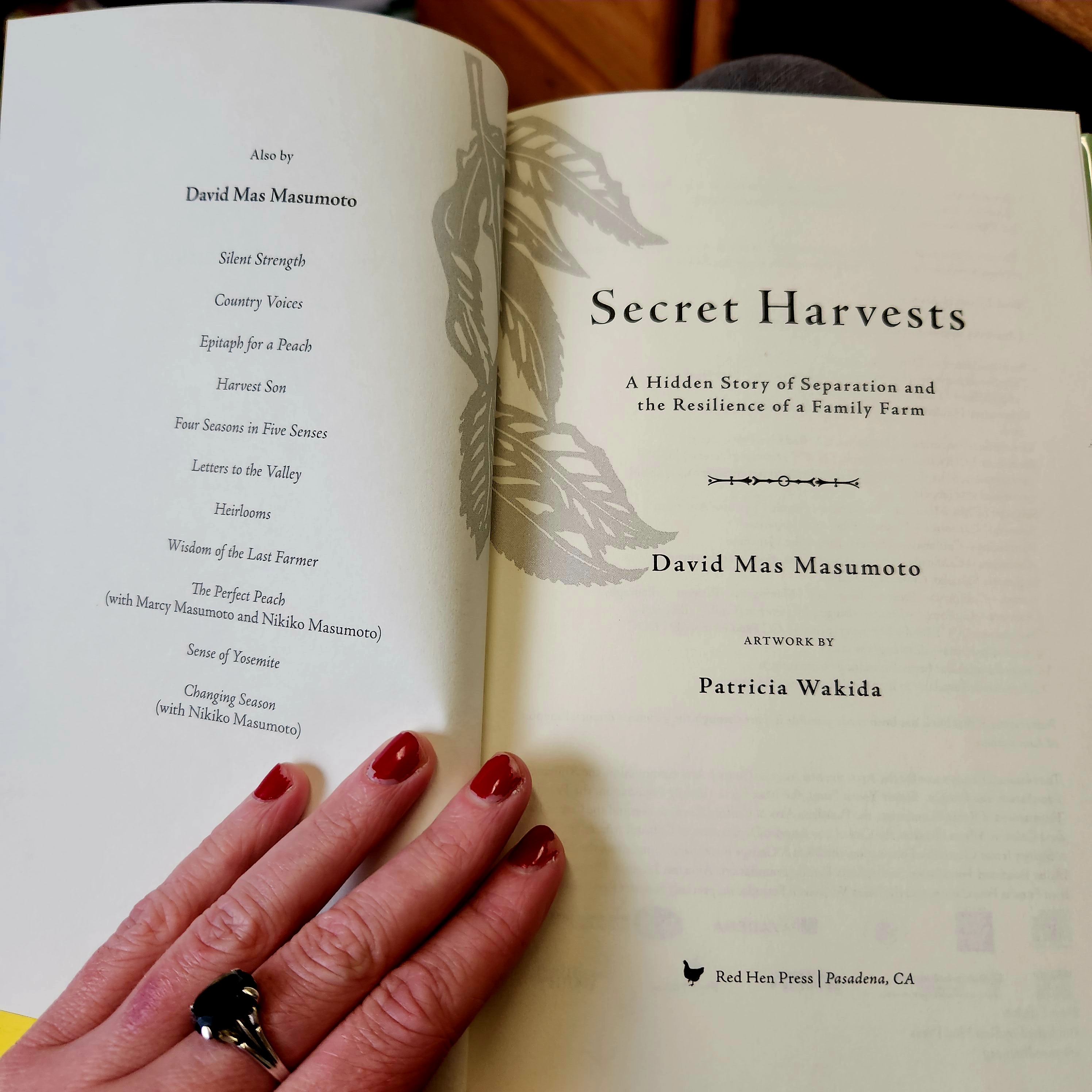
30. Trees at Leisure by Anna Botsford Comstock

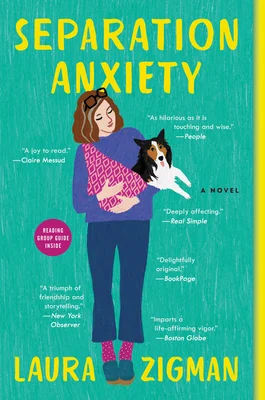
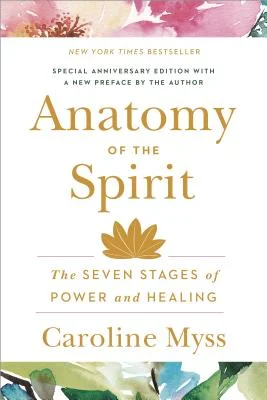
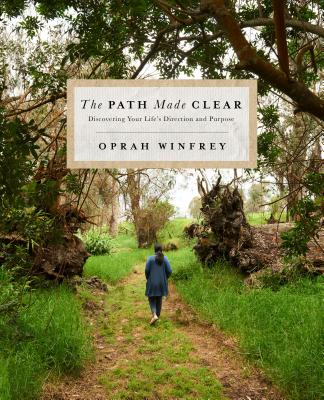
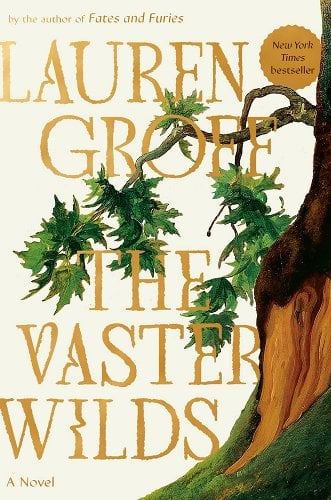
covers of my 2023 books

2023 year in review

Each year during this time of year, I love to reflect back on the previous year. I love to scroll through my old pictures. I like to look through all the books I’ve read. I like to reflect on the big, memorable moments. If I don’t stop to do this periodically, to look at it all, my life starts to feel like one big blur. I have come to cherish this annual reflection, which helps me stop time and appreciate where I’m at in my life, what I have accomplished, and all of the wonderful people who have inspired me and buoyed me up along the way—many of whom are you!  

This year I watched my children grow, and try new things, and learned more about who they are. I read more books than I have in years and found solace and regulation in all of my time spend in a good books. I traveled to Chicago, where I got to stay in a fancy hotel room with big, sweeping views of the city and Lake Michigan. Friends visited me in Oregon and Idaho, and they offered their wisdom, inspiration, and encouragement. A professional fire was lit in me this past year, from many embers that had been quietly burning, and I signed not one, but two book contracts and also completed another manuscript for an unrelated project that was a pure joy to create. I also enjoyed many much needed coffee dates and dinner dates with loved ones. All of this was made possible because, for the first time since having children, I have had sufficient childcare this past year. Each moment spent in my office was a cherished gift, and I worked (out of necessity) with a laser focus that I never had before becoming a mother.

Not all of my eras have been so good or so certain, and there has also been heartache, fear, and illness this year too. However, this era is a rich one for me. I awake to beautiful views, and wonderful people, and inspiring work, and I have felt grateful every single day. 

portrait of the author

Trees at Leisure by Anna Botsford Comstock

Trees at Leisure by Anna Botsford Comstock is a very unusual little book! At first I thought it was a chapbook. Then, perhaps a small book of poetry. I was a few pages in before I decided to Google it and find that this is actually an instructional book, intended and funded to inspire understanding and appreciation for trees–and originally published in 1916 no less! The illustrations are gorgeous. The text is strange and insightful. It’s worth the quick read through.

Small Things Like These by Claire Keegan

The pacing of Small Things Like These by Claire Keegan is more like that of a short story than a novel. This is nothing against the story–I love shorter works! I would classify this piece as a novella.

This book was a pleasant Christmas read, which was perfect because I finished it on Christmas Eve this year! This is a plot driven book with decent writing. It won the Orwell Prize for fiction that tackles a social issue, and it does that, and does a fine job of it.