Category Archives: motherhood

Fleishman is in Trouble (miniseries)

Each year I budget time for about one show, and this year that show was the tv miniseries Fleishman is in Trouble. After reading the book, and hearing all the hype about the show, I wanted to see what it was all about. And, let me tell you, the show was what they said it would be. I think the show is better than the book, and I don’t need to feel bad about saying that since the author, Taffy Brodesser-Akner, also wrote the tv adaption.

[Continue reading only after you’ve seen the show.]

Basically, I just want to write out some of the things that I thought were really interesting about this piece. I thought the role reversal of the Toby character was interesting. I appreciated how he was in the traditional “woman’s” role in the show as emotional laborer and primary caretaker of the children in the family. His work is meaningful, but it (and he) is chronically undervalued.

I also appreciated how complicated Rachel’s role was. Like all of the characters in the book (really), she behaves terribly, and is good, but her backstory and raison d’être is fully and humanely formed. As a career-driven woman, she cannot win with her husband, and yet she is sexualized by a friend’s husband exactly because she is career driven, opposed to his own stay-at-home wife.

Lastly, and I think this is where the tv series really shines in the last few episodes, I really appreciated Libby’s complexity too. As the narrator, I wanted to trust her to make sense of these people, but it becomes clear that she is also emotionally stuck and is actually behaving in really sexist ways, even though she identifies and pontificates as an outspoken feminist. Her husband also takes on a typically female role in the relationship, managing the family and holding it all together as Libby gallivants around.

A take away for me lately is that relationships are hard and divorce is hard. We are too caught up in our own stories to see anything clearly. And yet, there is hope. And also cynicism. Everything. The entire show just pulls it together beautifully.

Blue Nights by Joan Didion

I just finished Joan Didion’s Blue Nights with actual tears running down my face. That’s probably not the best way to describe this book because while it is known to be about loss and aging, it is also not a tear jerker in my opinion. It is a beautifully written book that I read with great care, even taking the time to look up some of images and stories from the designers and famous characters she mentions. Even still, this slow burn packs a powerful punch as readers round the bend toward the ending.

Didion is one of the most famous writers of our time and is critically untouchable in my opinion. Some reviewers said this book was not as tight as her earlier work, but if that is true, and I do not think that it is, it is still a great book that offers a good deal of artistry around some of the most challenging of human experiences.

I read female writers of this generation with a good deal of interest (and I seem to read a lot of them lately). The tone in their writing has this formal, northeastern accent type of thing going on, and they have this deep femininity that I don’t think even exists anymore due to cultural constraints. I just…marvel at these people.

Didion is completely modern and completely relevant, and she made her daughter’s school lunches, and she wore red leather sandals with four-inch heals every day. What an icon.

Women Talking by Miriam Toews

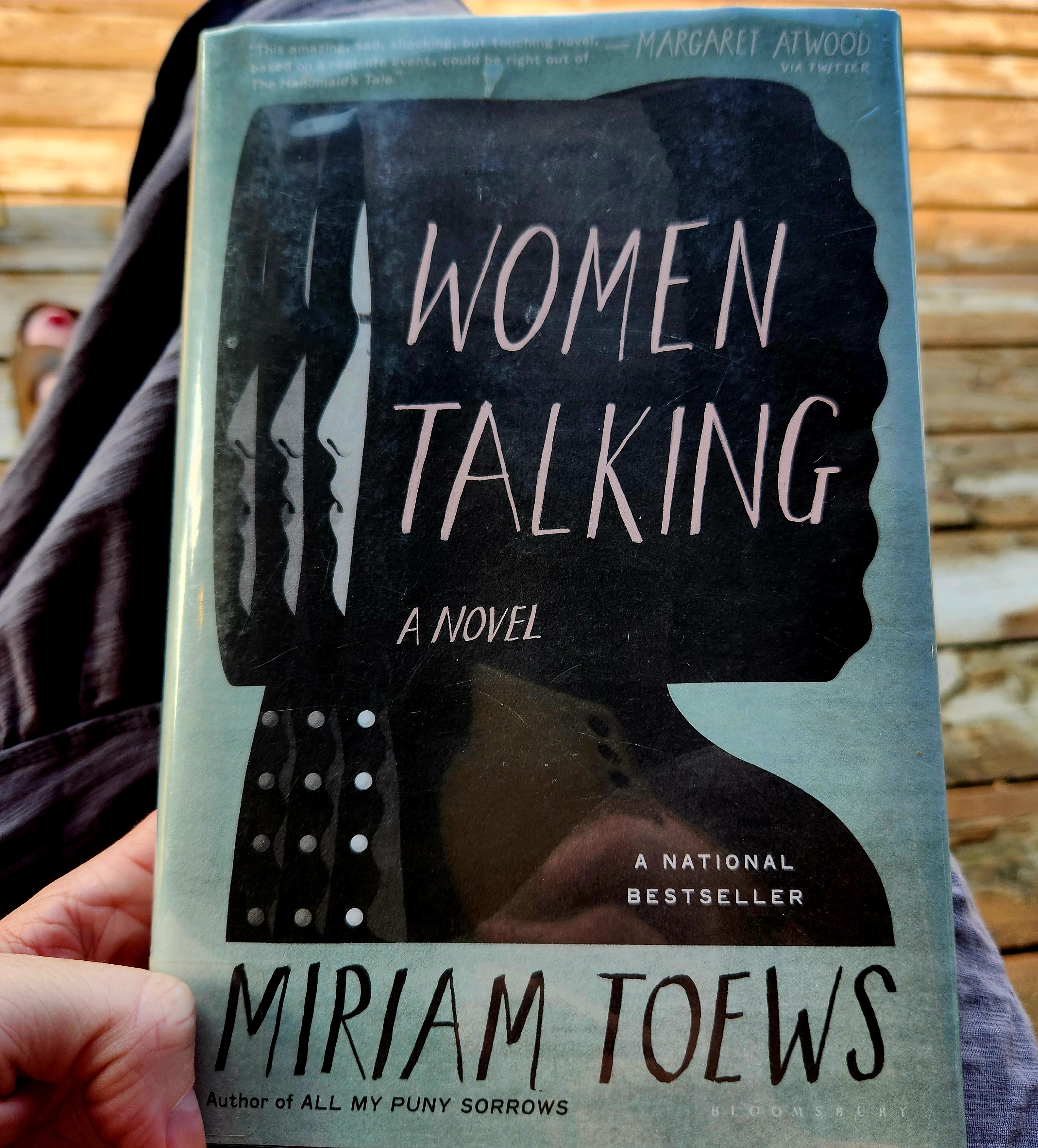
My latest read was Women Talking by Miriam Toews. I did not see the film, but heard about the horrifying real-life premise, and it really stuck with me. This book was excellent yes, but I do have more to say about it.

This is a dialogue-heavy book. And those are tough, imho. It actually is mostly “women talking.” Most of the book struck me as a kind of feminist 12 Angry Men, and that was exciting to me. Toews pulls off the heavy dialogue, though it must have been no easy task. Toews was also able to draw out the unique qualities of the characters in a fairly limited space. Furthermore, Toews is particularly well-positioned to write this book, based on her own Mennonite background. She is able to draw on the kinds of religious philosophy in a way that felt very real to me as a reader.

[Spoiler] (though I still think the book would be worth reading): The book is narrated by a male character, August, who is a troubled young man and village teacher of the local young men. He is also a victim of the same oppressive culture of men that has also preyed upon these women. He takes notes during the women’s meetings. (The women are not allowed to learn to read and write, so they cannot take notes themselves.) At first, it seems powerful that the women cannot take their own notes, and August’s presence serves as a reminder of that. He also helps add some drama and intrigue.

However, by the end of the book, the emotional landscape really shifts to August entirely. On one hand, this is the reality for so many women’s lives: their story is not told, except maybe through the perspective of men. I was cheering this book on, as one that was still able to center women’s voices and dialogue throughout. In the end, though, I felt that the story became August’s story, and I am willing to entertain the notion that this is just the framing, and this is just how it is, and this can still be a feminist account, but as a reader, I wanted it to end differently. I wanted it to end through the lenses and perspectives of the women.

If you read it, tell me if you loved the ending, or if you wanted something different.

Witches, Midwives, and Nurses by Barbara Ehrenreich and Deirdre English

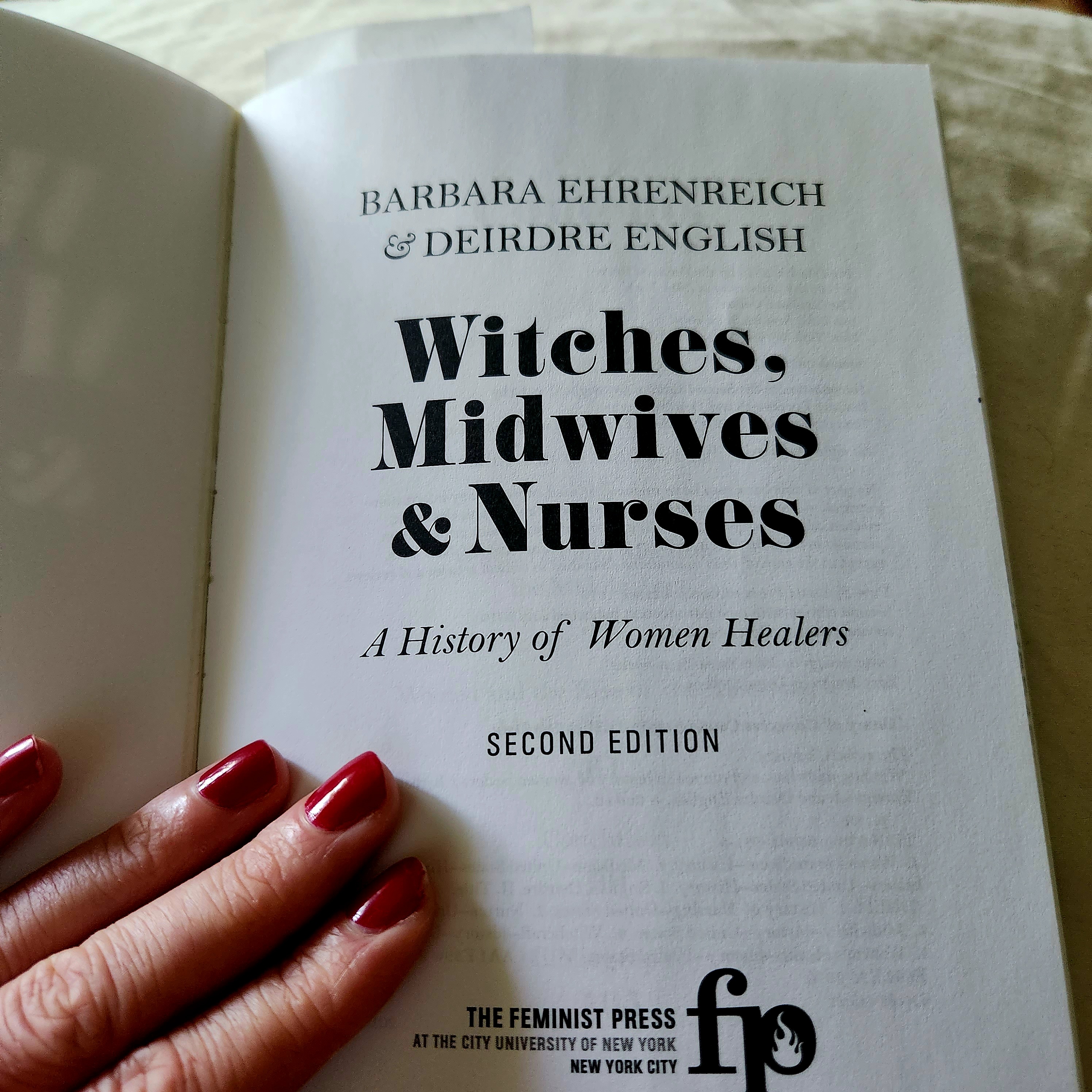
I read Witches, Midwives, and Nurses: A History of Women Healers, by Barbara Ehrenreich and Deirdre English, for my book project, but ended up reading it like one of my recreational reads, so I’m including it here. In my opinion, this is a book that should still be taught in medical classes to this day. Although it was originally published in 1973, this brief history–and the justified rage–are still relevant and important for everyone to understand to this today.

The long history of the witch trials are placed in context next to how babies came to be delivered (mostly by men) in modern medicine. The history is portrayed as a hostile takeover. While science improved some aspects of maternal medicine, the losses and violations from extracting women from childbirth seemed to exceeded any sense of progress.

This book, sometimes referred to as a “pamphlet,” is a kind of manifesto that offers a scathing, but not inaccurate account of the history of sexism in medicine.

Fleishman Is in Trouble

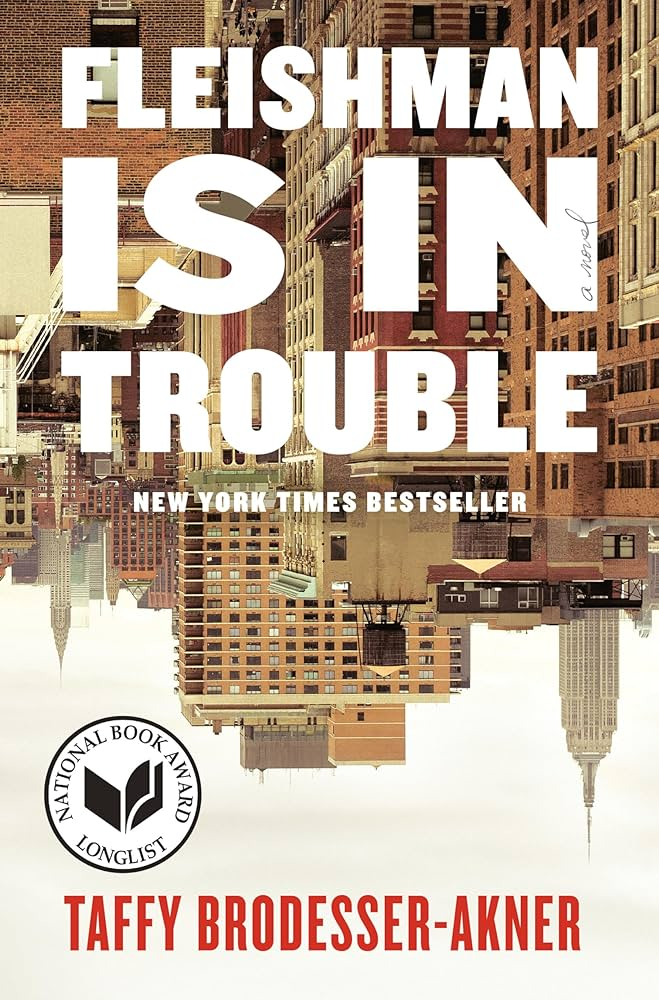
Awhile back, everyone was raving about the show Fleishman Is in Trouble, and I meant to watch it, but never got the chance. So, when I saw the book, Fleishman Is in Trouble by Taffy Brodesser-Anker, I decided to read it, and I’m so glad I did.

This was an excellent book–one of those human dramas that had great character building and, well, drama. I found the book to be real, intense, and human. It is a very “peoply” book, meaning that it is all people, and characters, and dialogue all the time, and normally that kind of wears me out, but in this case, I could handle it.

As you know, I’ve read a few popular titles in the past year, and this one has much more literary merit that your typical piece of pop fiction. All of that said, it is possible that this book is not for you, but I think you’ll know that immediately upon reading the blurb. If you do read it, and you’re intrigued, go grab this book, and tell me what you think!

And now, I really need to go back and watch the show!

Separation Anxiety by Laura Zigman

My second real “pop” book of this year, after Modern Lovers, is Separation Anxiety by Laura Zigman. If I recall, I found this book referenced on Instagram, I added it to my Libby list, and, lo and behold, had time for it when my turn came up on the app. This is a summer read? A beach read? I’m not really sure of the genre, but as popular books go, it was pretty good, had some good depth, unexpected twists, and the writing was solid.

I found the main character to be a little too cold, shutdown, and removed in a way that did not feel like great “main character energy,” but the rest was pretty good. I also found the conflict between the central couple to be a bit unrealistic. The guy seems…pretty decent actually. So, why is the main character so repulsed by him? Why are they separating? The reason is stated, but never quite believable. I think there’s sort of an East Coast cultural difference may be at play here.

I appreciated the themes and the artful movement through scenes and the way Zigman built clear, and direct meaning throughout. I found some of the concepts to be repulsive, but in the end, none of it was gratuitous. I don’t think it is a spoiler to share that the main character begins wearing her dog in a baby sling, and, honestly, at the end, I’m still not sure if I should be concerned for this fictional dog’s wellbeing. And there’s more of the same throughout.

Challenging Pregnancy: A Journey Through the Politics of Science of Healthcare in America by Genevieve Grabman

I don’t normally include the scholarship I read for work here on my book list, but this one had an engaging narrative, a strong argument woven throughout, and I read it all the way through. In Challenging Pregnancy: A Journey Through the Politics and Science of Healthcare in America, Genevieve Grabman writes about her experience being pregnant with and birthing twins in the US healthcare system.

In the book, Grabman effectively argues that the the care she needed, received, but was sometimes was denied was often influenced more by politics than by her own medical needs. Anti-abortion sentiment filtered in to most aspects of her healthcare in a way that deprived her of choice and even sometimes put her in danger. Or put one or both of her babies in danger. Or put all three in danger. This is an important, but dark read that will have female readers thinking hard about the risks of becoming pregnant during such a hostile time for women’s (reproductive) rights, when choices about women’s bodies are placed in the hands of politicians and influenced review boards more than the expert doctors and wishes and preferences of the pregnant person.

Florida by Lauren Groff

While awaiting the arrival of the highly praised The Vaster Wilds, I came across Lauren Groff’s collection of short stories entitled Florida, and what a delight.

First thing I’ll say is that this is a book of short stories that really deserves to be a book. The stories speak to each other so well that it’s almost like this is a way of making a “novel,” less linear, less plot driven, but still so very meaningful.

Next, I’ll say that, without subheadings or even making much mention of it in the blurb, this book captures motherhood is such a real and raw and genuine way. There are so many books on the market about motherhood, but many of them don’t capture my experience. However, the depictions of it in this book were so good.

That’s what I have to say about the book. I was on the fence about The Vaster Wilds, but now my curiosity is definitely piqued!

Tom Lake by Ann Patchett

The only other book I’ve read by Ann Patchett was This is the Story of a Happy Marriage, which I read last year. My thinking is that Patchett has had a long and illustrious career and has earned the time and patience it takes the readers to complete her books. Tom Lake is no exception. It might even be her crowing achievement in time and patience, which is not to say that it isn’t worth it.

Perhaps what strikes me most about Patchett, and that generation of woman writer, is the way they interact with men. Men seem to hold a higher interest than in contemporary literature. The women, even the author, seems to defer to them for knowledge and guidance.

I know of one woman of the same generation who is this way too. I’m not even sure if it’s a bad thing, but it strikes me as a bygone way being and thinking. Yeah, that little thing is probably what struck me most.

Second, I was struck by how much attention the people in the book gave the narrator, who is an aging mother and former actress. Her daughters were mostly riveted by her stories, and her husband was patient with her as well. Near the end, the reason for this interest becomes clearer, but throughout the bulk of the book, the narrator seems tedious and detailed, even delighting in her story and drawing it out for emphasis in a way that felt somewhat irritating to both the daughter and the readers.

In the end, I think it is a good book, calculating, safe, comfortable, and revealing a unique story not often told. It’s worth reading, but with patience.

Rough House by Tina Ontiveros

Rough House by Tina Ontiveros is excellent. Excellent. I don’t say it lightly when I say that I think she is like a female Raymond Carver–Carver, a magnificent writer, who, in my mind, so perfectly captured the unique culture of the Northwest, the logging, the mill towns, and the landscapes (portrayed unromantically, but true). In fact, Ontiveros has lived in some of the exact same towns as Carver!

Carver died decades ago, and the Northwest of the ’80s, ’90s, and today deserve their own new depictions. Ontiveros does just that. The author writes about her troubled childhood and geniusly pairs the horrific abuse with the love in that unique way that it is so often packaged together in families.

Because I am so deeply rooted in the Northwest, having grown up here myself, being a part of a larger family that has lived here since the time of the Oregon trail, and living in a family whose income came from logging, mill work and the like, Ontiveros’s novel was so very familiar to me. I loved how she captured the culture, the strong sense of place, even the language.

I am stunned by this work.