Category Archives: relationships

The Way of Integrity by Martha Beck

The Way of Integrity by Martha Beck was another “Oprah pick” that I listened to via audiobook. In it, Beck uses the framework of Dante’s Inferno to organize her own self help book. I have noticed this method with the other self help books, and, as a framework, my critique is…okay, fine, why not?

The book is full of examples from life coach clients and Inferno, but the strongest moments are when she writes about her own life and her own experiences. I have not read her other works, but it sounds like she’s written extensively about her personal life, so maybe that’s why it does not figure more prominently in this book. Even still, I would have loved to learn more about her own experiences, and how she continues to wrestle with, or overcome her own problems.

Interestingly, she writes about important issues in her own life, issues that sound incredibly difficult to navigate, but she writes about these issues with a calm, removed, even cool, understanding. Calmness is important and helpful and helps convey that she has resolved these difficult issues–she has processed them and moved on. However, sometimes her tone is even sort of droll and eye-rolly about her own painful experiences. I do not blame her for not writing about the stuff that is not entirely healed and processed. Not at all. Don’t do it. However, I would like to hear a bit more of navigating challenges during the process, while the thing is still “in process.” Just a thought. Maybe she’ll do that. Maybe someone else will.

Overall, Beck seems skills at quickly assessing and distilling people’s issues into manageable work that can be healed and overcome. That’s nice. That’s hopeful.

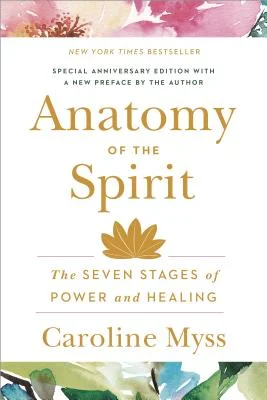
Anatomy of the Spirit by Caroline Myss

Next up in my series in the self-help genre was Anatomy of the Spirit by Caroline Myss. I have read, or skimmed (or was supposed to read?) Myss in the past–I can’t quite remember–but either way, this book was familiar. In it, Myss compares the Eastern concept of the seven chakras to the Catholic concept of the seven sacraments.

Peronally, I am much more familiar with the chakras than I am with the seven sacratments. But, based on my limited understanding, I thought the comparison was often clunky, especially in regards to the first three chakras and first of the seven sacraments. Sure, both are seven, and sure, seven is considered a sacred number across many traditions, but beyond that, the comparisons often felt like a stretch.

Myss, like many of the gurus in The Wisdom of Sundays, has to hedged her integration of an Eastern tradition into her practice or theory. I find this kind of hedging to be kind of sad and frustrating. On one hand, it can dumb down the content, and on the other hand, I am just baffled and disappointed about what this says about society’s ability to hold on to complex and/or competing ideas. Still, I suppose these baby steps are necessary. Either way, while I was sometimes weary of Myss’s use of Christianity as a foundation for the philosophies in ways that did not feel productive, I still found a lot of wisdom in her words. There are many nuggets of truth to be had here.

The Wisdom of Sundays by Oprah Winfrey

Next in the line up for self-help was more from Oprah: The Wisdom of Sundays. Similarly to The Path Made Clear, this book included excerpts and insights from Oprah’s interviewees.

As one might imagine from the title (Sundays), this book was heavy influenced by religion, mostly Christianity. However, I think other readers have something to gain from it because the interviewees (and Oprah) frequently refer to a sense of spirituality that will resonate with most audiences.

Interestingly, most of the interviewees shared a narrative of a big transformation, some moment, a stroke of insight, a miracle occurring, which is such a part of the Christian tradition (and probably others) that I had a hard time taking it seriously as anything other than a trope. I wanted to hear more about the gurus who gained enlightenment after a slow and steady path. These are the stories that feel most realistic to me.

That said, I have also had big, transformational moments in my life too. Haven’t we all? And there is a lot to learn from those moments too, and they are certainly more entertaining to read about.

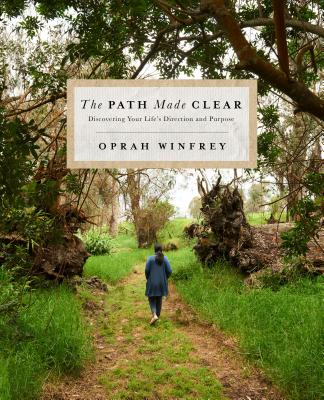
The Path Made Clear by Oprah Winfrey

Recently I’ve read several very digestible self-help books, so I’m going to do a few quick write ups for each. Before I do so, I want to say that I am very picky about this genre. There is a lot of crap out there that is not only just bad or ineffective, but is actually actively harmful, but is disguised as “help.” I won’t mention names, but a big breakthrough book came out in this genre with a catchy title, and I tried to read it twice and had to stop. It was horrible and harmful, imho.

The first in the series of self-help that I thought actually had some gems was The Path Made Clear by Oprah Winfrey. In audio form, this reads like a Ted Talk, with excerpts from interviews with Oprah, which captures the deepest and most poignant insights.

In this book, interviewees, along with Oprah, share insights as to how one can best find and follow one’s path. I think the principles apply broadly and are helpful, no matter the circumstances in which one might find one’s self. However, I did find myself wondering about manic illnesses, where people make big, life changing decisions/actions as symptomatic of their illness more so than as truly following their own paths.

Many of the interviewees describe big moments, events, or deep, sudden senses of knowing that caused them to make big changes to their lives. There are few, if any, examples in the book of these gurus making small and incremental changes over long periods of time to more fully express their own life paths. However, most of my successes have been the slow and steady kind. Yes, I’ve had sudden aha moments about the direction of my life, but even these were part of a clear trajectory. I think this book could be harmful for those who are prone to self-sabotage, self-destruction, or the like. For everyone else, the book is full of great reminders on how to follow one’s bliss and live life to the fullest and get outside the expectations of others and culture.

Challenging Pregnancy: A Journey Through the Politics of Science of Healthcare in America by Genevieve Grabman

I don’t normally include the scholarship I read for work here on my book list, but this one had an engaging narrative, a strong argument woven throughout, and I read it all the way through. In Challenging Pregnancy: A Journey Through the Politics and Science of Healthcare in America, Genevieve Grabman writes about her experience being pregnant with and birthing twins in the US healthcare system.

In the book, Grabman effectively argues that the the care she needed, received, but was sometimes was denied was often influenced more by politics than by her own medical needs. Anti-abortion sentiment filtered in to most aspects of her healthcare in a way that deprived her of choice and even sometimes put her in danger. Or put one or both of her babies in danger. Or put all three in danger. This is an important, but dark read that will have female readers thinking hard about the risks of becoming pregnant during such a hostile time for women’s (reproductive) rights, when choices about women’s bodies are placed in the hands of politicians and influenced review boards more than the expert doctors and wishes and preferences of the pregnant person.

Secret Harvests: A Hidden Story of Separation and the Resilience of a family Farm by David Mas Masumoto

Secret Harvests by David Mas Masumoto was a lovely, slow, circling meditation that encompassed such weighty topics as disability, the institutionalization of the disabled, family farming, and the Japanese internment of WWII. Each theme is threaded through the book, stitch by stitch. Masumoto mentions that he and his family are Buddhists, and it seemed that the practice was etched into this book, the questions, the acceptance of suffering, the cyclical nature, the peace. It’s a great book, and I wish more nonfiction was written in this way. I was inspired and hope to see more from this author and would especially like to read more of his ruminations on farming and on life. There are also gorgeous prints embedded throughout throughout the book!

The Girl with the Lower Back Tattoo by Amy Schumer

As you know I love a memoir from a comedian, and so Amy Schumer’s The Girl with the Lower Back Tattoo was right up my alley. This book has the kinds of jokes fans will know and love from her standup, but also includes some feminist, essayistic stuff that is worthwhile as well. Few people can capture all of the beauty, and humiliation, and desperation, and realities of woman and young girlhood quite like Amy Schumer, and there is such a need for this honesty.

Schumer is convinced she’s an introvert, and I can relate. I think you can be an entertainer and an introvert. I think it’s quite common actually. However, the level of public-facing work she does and intense friendships she keeps makes me think otherwise. Either way, she’s churning out great content, and for that I m grateful. This was a delightful book worth reading for both the laughs and also for the meat and potatoes and political content.

Tom Lake by Ann Patchett

The only other book I’ve read by Ann Patchett was This is the Story of a Happy Marriage, which I read last year. My thinking is that Patchett has had a long and illustrious career and has earned the time and patience it takes the readers to complete her books. Tom Lake is no exception. It might even be her crowing achievement in time and patience, which is not to say that it isn’t worth it.

Perhaps what strikes me most about Patchett, and that generation of woman writer, is the way they interact with men. Men seem to hold a higher interest than in contemporary literature. The women, even the author, seems to defer to them for knowledge and guidance.

I know of one woman of the same generation who is this way too. I’m not even sure if it’s a bad thing, but it strikes me as a bygone way being and thinking. Yeah, that little thing is probably what struck me most.

Second, I was struck by how much attention the people in the book gave the narrator, who is an aging mother and former actress. Her daughters were mostly riveted by her stories, and her husband was patient with her as well. Near the end, the reason for this interest becomes clearer, but throughout the bulk of the book, the narrator seems tedious and detailed, even delighting in her story and drawing it out for emphasis in a way that felt somewhat irritating to both the daughter and the readers.

In the end, I think it is a good book, calculating, safe, comfortable, and revealing a unique story not often told. It’s worth reading, but with patience.

Rough House by Tina Ontiveros

Rough House by Tina Ontiveros is excellent. Excellent. I don’t say it lightly when I say that I think she is like a female Raymond Carver–Carver, a magnificent writer, who, in my mind, so perfectly captured the unique culture of the Northwest, the logging, the mill towns, and the landscapes (portrayed unromantically, but true). In fact, Ontiveros has lived in some of the exact same towns as Carver!

Carver died decades ago, and the Northwest of the ’80s, ’90s, and today deserve their own new depictions. Ontiveros does just that. The author writes about her troubled childhood and geniusly pairs the horrific abuse with the love in that unique way that it is so often packaged together in families.

Because I am so deeply rooted in the Northwest, having grown up here myself, being a part of a larger family that has lived here since the time of the Oregon trail, and living in a family whose income came from logging, mill work and the like, Ontiveros’s novel was so very familiar to me. I loved how she captured the culture, the strong sense of place, even the language.

I am stunned by this work.

The Path Made Clear by Oprah Winfrey

For years, my yoga practice and author’s like Eckhart Tolle helped me to connect to my spiritual self. For whatever reason, these practices and readings have felt like necessary touchstones, reminders to help me stay on track with my authentic self and my unique spiritual path, reminders I have a hard time remembering on my own.

For whatever reason, these spiritual feelings, and my interest and curiosity in them, completely left me once I had children (although it seems like the opposite would be true). The only sense I can make of it now is that I was so deeply in my spiritual self as I transformed into a mother that I was unable to stand outside and observe, analyze, or even connect to the experience in a thinking way. I could not think it. I could only feel it, and I did feel it deeply! I have felt so profoundly grounded and assured since the transformation. Since becoming a mother, I am undeniable a new version of myself.

As the years pass, and I gain some distance from the initial experience of becoming a mother, and as I have more time for thinking and reflect than I did in the early days, I find myself having capacity for and appreciating the small *thinking* spiritual reminders that come my way.

Oprah Winfrey’s The Path Made Clear is just such a book, carefully curated with some of the great spiritual insights available to us. It is not too deep or too complicated, and it is not too long, but the insights shared from many of Oprah’s friends and peers are worth reading, even if they are just serving as familiar reminders.