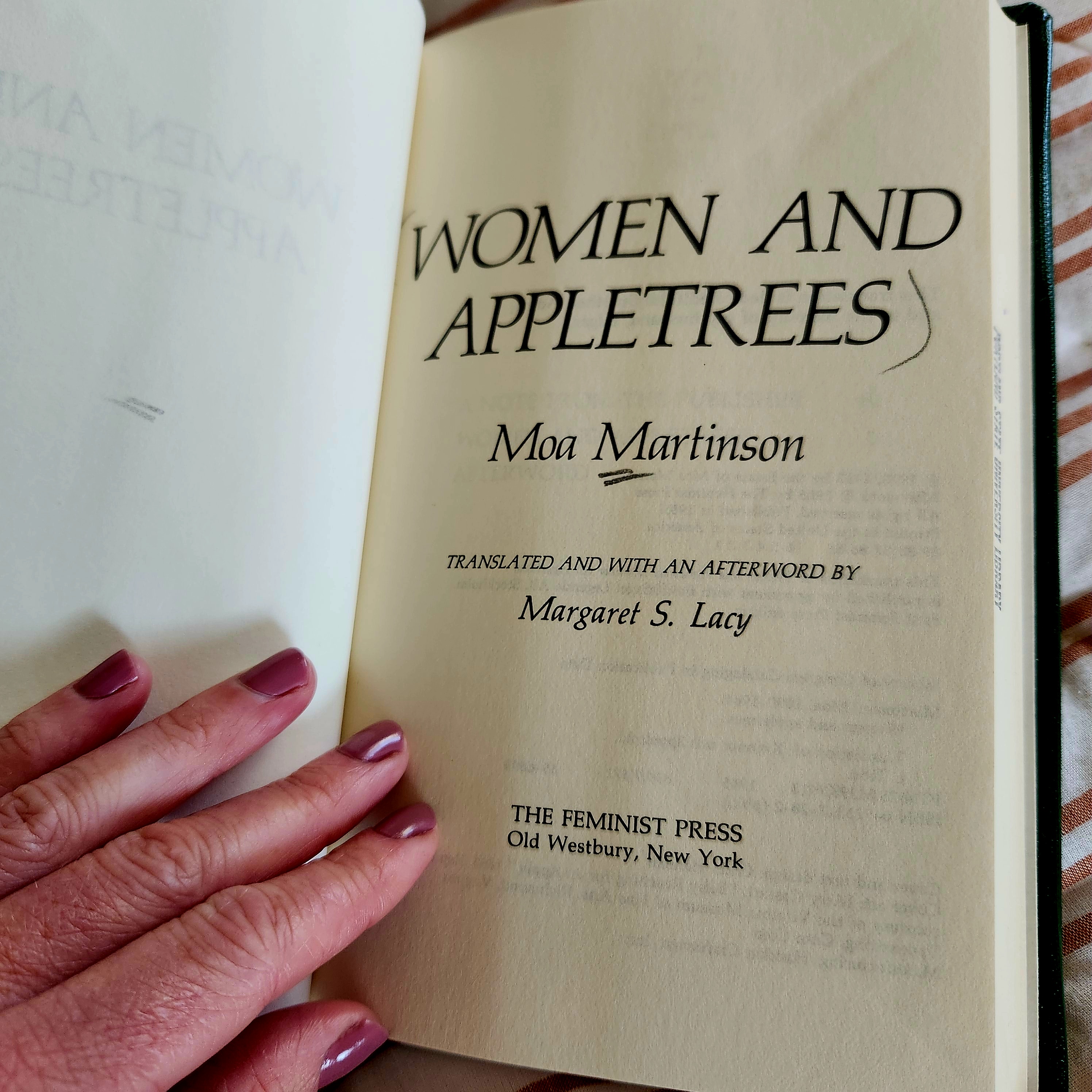
IMHO, some of the earliest Marxian feminist novels came from Sweden’s Moa Martinson, who wrote stories, many of which that were deeply personal, of poverty and life in Sweden around the turn of the last century. Since my great grandmother was born around this time in Sweden, I love getting this perspective on life and culture. Martinson’s social commentary is almost entirely shown instead of told, and so it’s particularly powerful. I am always amazed to see people break new ground, and Martinson does that in her novels. Women and Appletrees is particularly good.
Category Archives: Uncategorized
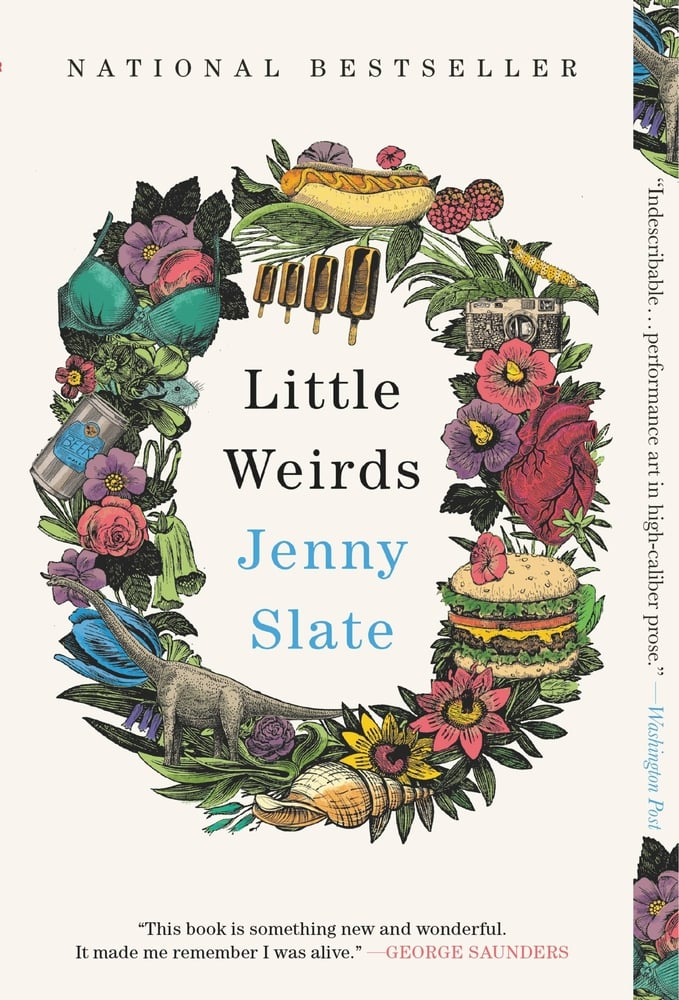
Little Weirds by Jenny Slate
I used to write more like Little Weirds by Jenny Slate. Maybe I still do. This work is quirky and literary, emotional and smart, and quirky. Did I say quirky? This is a woman who has been given (given herself?) permission to fly with the little weird thoughts and experiences that make up life. The books vacillates between deep heartache and desperate loneliness and also accounts of companionship, unexpected life-affirming experiences, and good people (mostly women), who have stepped in and made her life better, even if only for a short time. There are little weird encounters or weekends or trips that are healing. You can tell that Slate is a reader and surrounded by art and has a literary eye. Her bio says her dad is a poet, and you can tell. This isn’t the type of book that usually gets published. I’m glad it did.

Through the Children’s Gate by Adam Gopnik
Through the Children’s Gate: A Home in New York by Adam Gopnik is one of the best books on parenting I’ve read. This book is about life, so non-parents will enjoy it too. Fans of the New Yorker will like it for the beautiful writing and deep insights it offers. But, I think parents may appreciate this book the most.
This book reads like a series of connected essays. I can almost see the influence of an editor, trying to thread the themes more intentionally throughout to make this seem more like a novel than separate essays. It really reads like a collection of connected essays though, and it works. Of course it works.
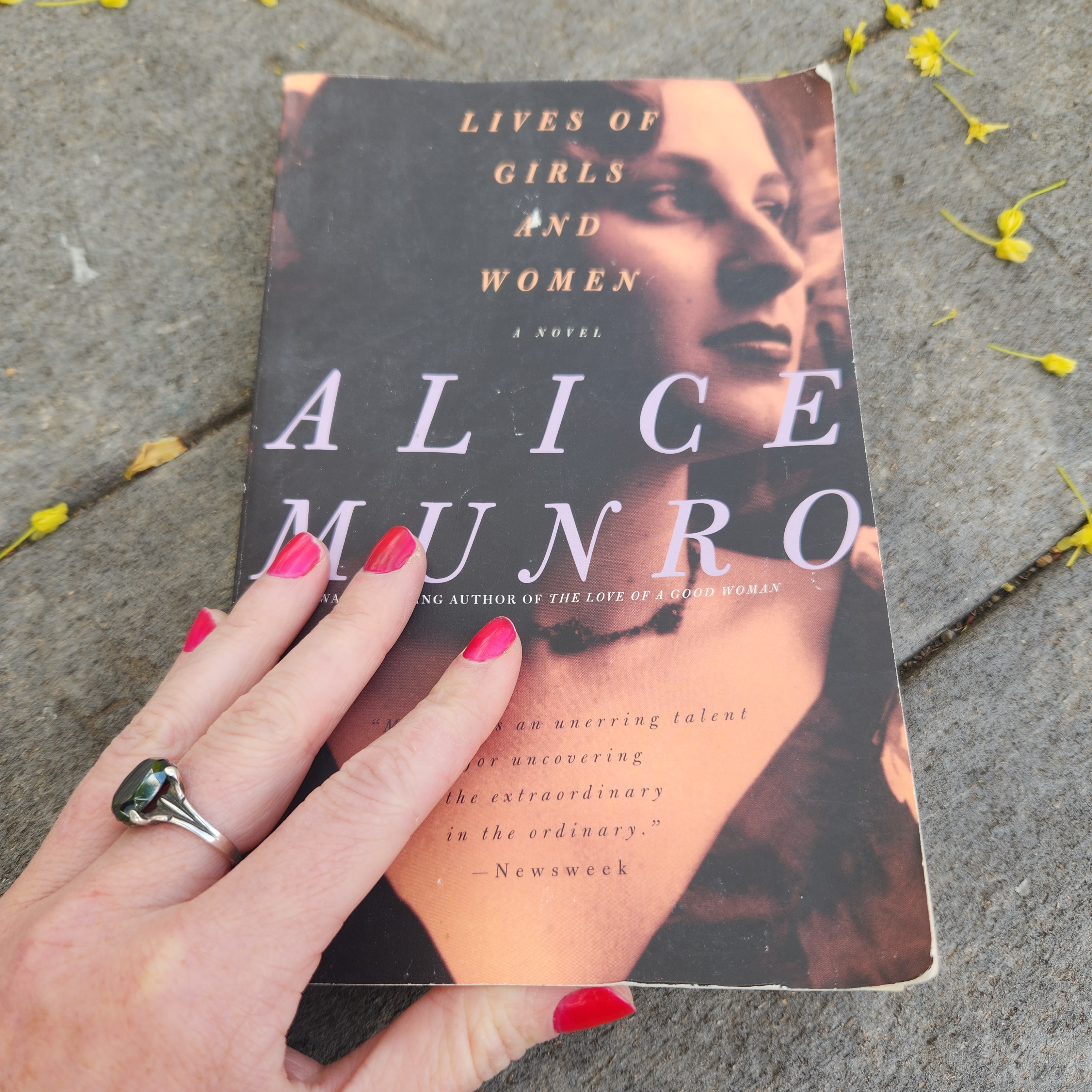
Lives of Girls and Women by Alice Munro
I found Lives of Girls and Women by Alice Munro at a blessed Little Free Library after I was on hour two of watching my kids play at a local park. The cover says “novel,” but it really reads like a series of connected short stories. There’s no question that Munro is an excellent writer, especially of short stories. The first story is “The Flats Road,” and the subtle, yet profound sense of place and character development truly puts Munro in a class of her own. That said, and probably because I was expecting a novel, I had a hard time sticking with the stories. I came expecting a cohesive whole, but the novel isn’t that. If you read it, expect a collection of (good!) shorts.

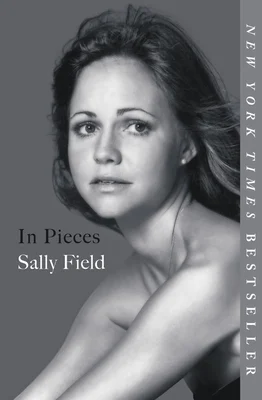
In Pieces by Sally Field
I cannot tell you how important these books that are written by driven women who are coming of age during the dawn of feminism are to me. With all of the sensitivity and emotional intelligence she’s known for in her acting, Sally Field, adeptly shares her life and insights in her memoir, In Pieces.
Trigger warning, Field shares a good deal of trauma in this book, which she experiences throughout her childhood. However, there’s a deep sense of honesty and insight in the book that makes the message feel important for a broad audience.
With the wisdom of hindsight, Field is able to see how she repeatedly lost herself to men–to her intimate relationships with men and to her sometimes troubled relationships with movie makers. I felt that in my bones. But, Field ends triumphant. It seems she is self-possessed. She knows herself now. She is the main character in her life. That change and realization is possible.
Her relationship with her mother (and the other women in her family) is also interesting. I’m finding that familial relationships and friendships are so rich with emotional fodder and context and potential for story, and Field’s insights here are so moving!
Selfishly, I wanted this book to be more about her role in Forrest Gump, which I found to be stunning and immaculate, but it barely gets mentioned. Instead, more attention goes to her role as Mary Todd Lincoln, which was of course a role that was more recent and seemed more consequential. I guess now I should watch it!
Overall, this is a tough book, but a good one. The reader watches Field gain self awareness and confidence over the course of her career, and it’s really inspiring!
Blink by Malcolm Gladwell
I’m not sure if I’ve ever read anything by Malcolm Gladwell. This book, Blink, came up recently for me, so I decided this was the one. I heard that the book has been pretty widely criticized, but I didn’t know why. It’s one of his older books. Now that I’ve read it, I think I know why it’s been criticized. And, I think most of the problem could have been avoided if Gladwell had used more tentative language. Instead of “X people are Y,” a simple, “Many X people experience Y.” This approach is less essentialist and more accurate. However, whether Gladwell thought the more essentialist approach was stronger, or whether an editor pushed him into that so-called “stronger” language (I could see either being the case), the outcome is a language and an approach that simply hasn’t aged well. Most of this problem wasn’t noticeable to me until the last part of the book, but then he really doubles down. I think the book is interesting and entertaining, but may not have a whole lot of value beyond that. Now I’m very curious to read another one of his books to see how his writing has evolved. I assume it has. Like the rest of us.
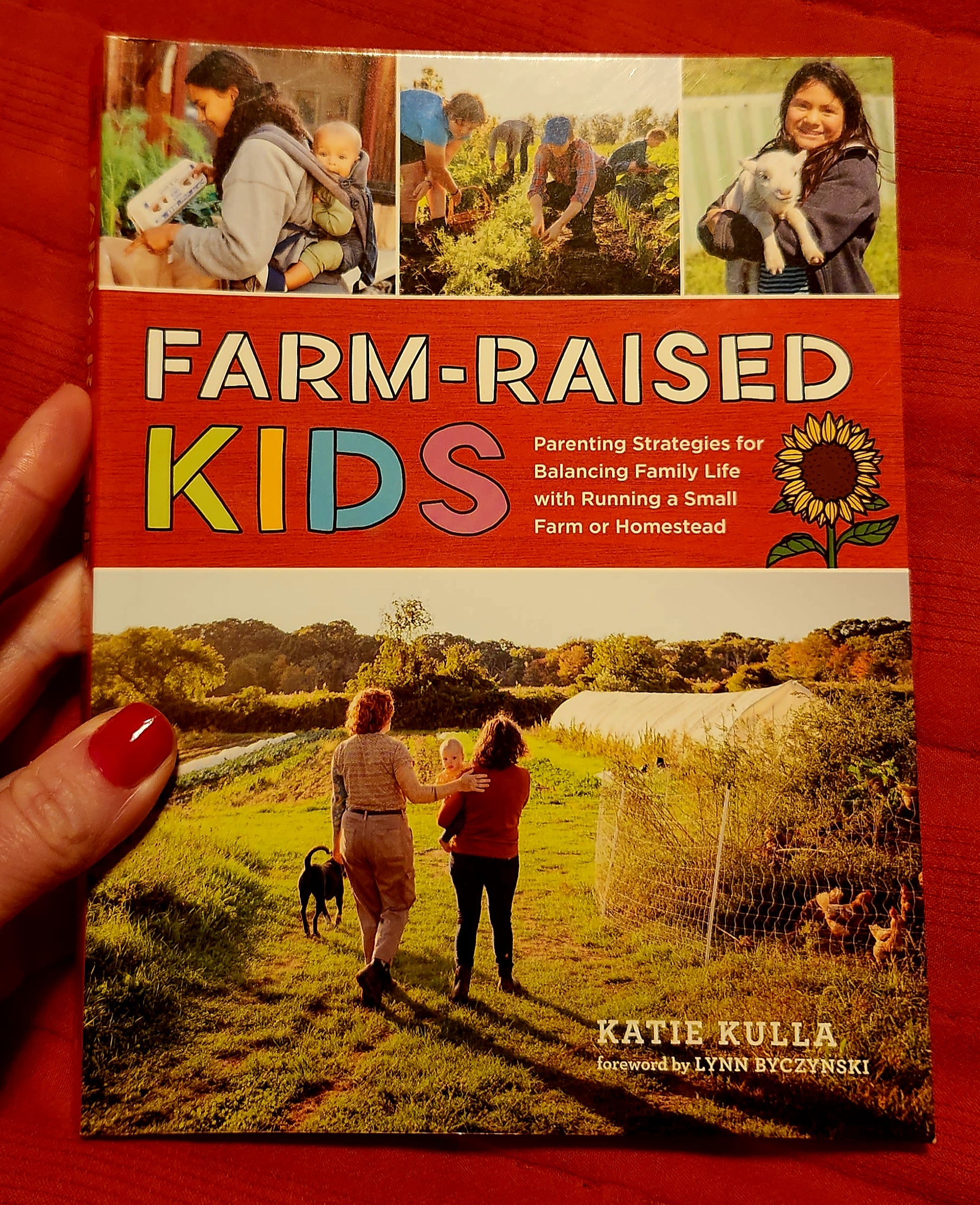
Farm-Raised Kids by Katie Kulla
This was a charming little book by a farmer I know from the west side of Oregon, Katie Kulla.
Parenting books can be difficult because parents tend to be exhausted, and advice and ideas are need, but there is no quiet, peaceful time to read! However, this book is easy to read, easy to digest, and it is informative, without making readers feel guilty or overwhelmed. It’s more like, “Hey, it’s good for kids walk go outside and walk on uneven ground.” Then, readers can feel good about letting their kid walk on uneven surfaces, play in dirt, or feel the sun on their skin once in awhile. It’s simple, basic stuff. It’s reaffirming, and I found it to be inspiring and encouraging.
I was also heartened to read that there are many different families, scenarios, and “farms” depicted, so that a broad range of readers might identify with the lives and lifestyles of these people. Go order Farm-Raised Kids by Katie Kulla now!
Where the Crawdads Sing by Delia Owens
Where the Crawdads Sing by Delia Owens was (is!) a bestseller, very popular, and was made into a movie. It is also not the kind of book I typically read. However, more than one person recommended I read it based on a project I’ve been working on, and so I did. While I used to listen to books on CD (and even tape!) when I had long commutes, this is the first book I’ve listened to via an app, and, for the most part, I really liked the experience. Unfortunately, much of what I read is not available on audio, and I usually need to mark stuff up for my own writing and scholarship. So, I’m not sure how much literature I’ll actually be able to consume in this way, but it feels good to have the option. Sometimes.
As for this book, the first quarter is really quite good, gripping, some lovely imagery, and some complicated ideas that go beyond what’s portrayed in a lot of popular fiction. Usually by the first line or two, I get a sense of plot-based genre fiction, but this one kept up to muster well beyond the first few lines. In fact, some of the insights were truly profound and beautifully written (as far as I could tell via audio).
However, near the end, there is a lengthy trial, and, let me just say that I find trials to be about as interesting as football games, which is to say: usually, not very. Using the lawyers and police people to work through the ideas and the drama of the crime was just not my cup of tea. Of course I still listened through to the end and with interest.
There’s a lot of plot and tension built around who will sleep with the beautiful “marsh girl” and then later, whodunit, and I found myself wishing that the book could go beyond these relatively common tension points. In some ways it does, but it also doesn’t break with plot form. If it had in the last quarter of the book, like if Owens had really done the unexpected, I think it could have elevated this book to capital “g” great literature. As it stands, the author made something that would be a bestseller and would make a lot of money, and with writing that she could be proud of, and that’s very nice too. And entertaining!
The Old Ballerina by Ellen Cooney
If you’re looking for a book that’s going to make you go “wtf” at the end, in a way that is neither particularly good, nor bad, well then The Old Ballerina by Ellen Cooney is the book for you.
I picked this book up for its compelling title, and the book does live up to the title. The book is compelling. It is experimental in form; it deals with plot in ways that are both typical and unusual, which is why I had a certain expectation for the denouement that were not met, which led to the muttering of “wft” as I closed the book.
I’m glad I read it because it is informative on what’s possible, on something to aspire toward, and, yes, this book does seem possible, and, also, necessary.
Horse, Flower, Bird by Kate Bernheimer
I recently read the short and delightful Coffee House Press book, Horse, Flower, Bird, by Kate Bernheimer. This is a delightful book of poetic prose pieces that are connected through haunting, sometimes confused, but always strangely familiar imagery of childhood, girlhood.
While reading this, I felt reconnected with the strangeness of being young and not yet fully understanding the world around me and the social expectations and information that would eventually become themes. Bernheimer is able to capture that world for me, which was stranger and more magical.
Reading it, I just found myself grateful that this quirky little book exists. Sometimes the world, and the literary world, starts to feel very similar to me, and this wasn’t that.