Category Archives: work

Self Care by Leigh Stein

Self Care by Leigh Stein is a scathing, scathing cultural critique. I really enjoyed it, and I think you will too. On one hand, this novel functions as a plot driven story, with some interpersonal insights, relationships, and drama throughout, and a plot that moves along nicely. However, on the other hand, it also working on the level of cultural critique in a way that is deeply insightful. I have not read such a wise critique of women and social media ever.
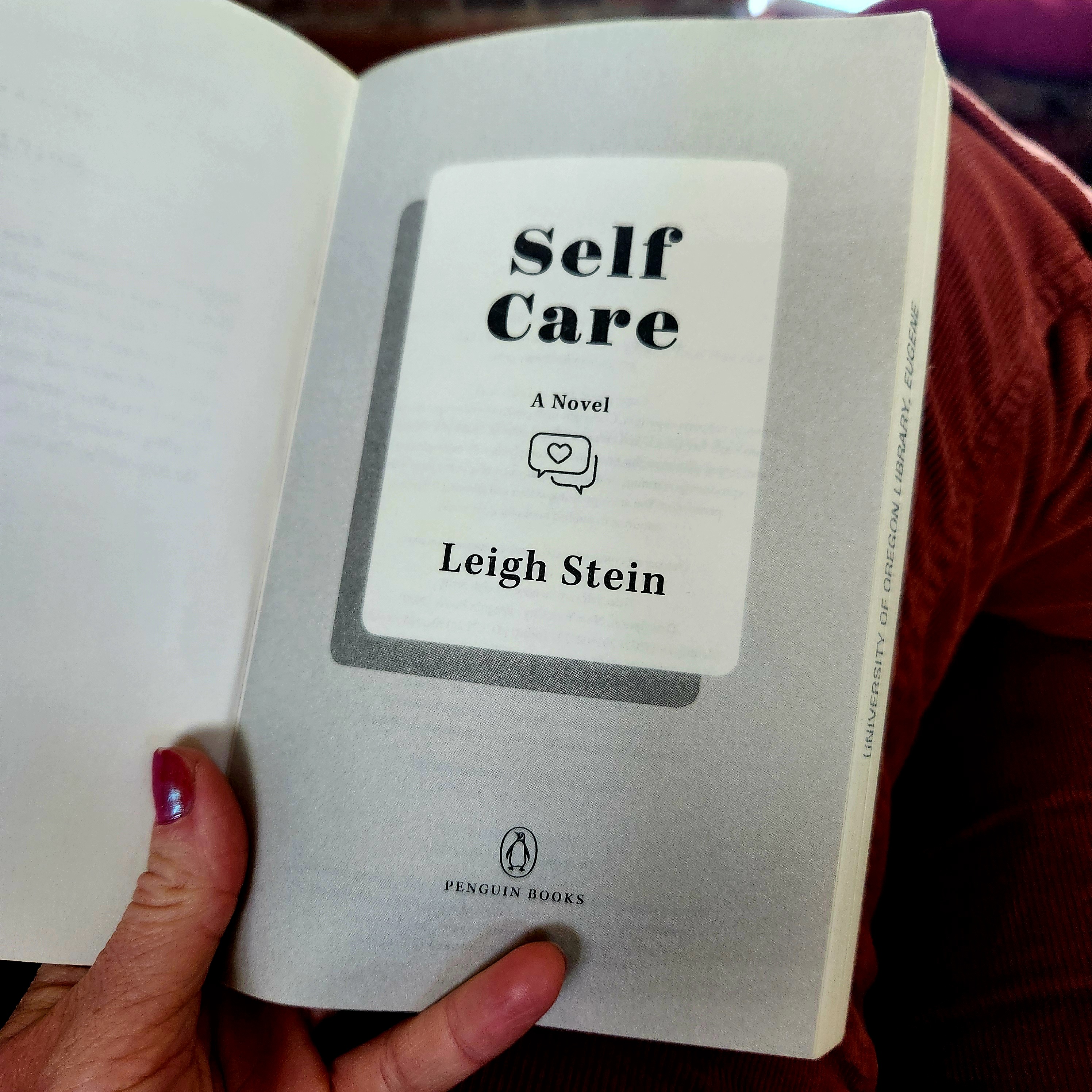
The characters are, on every level and in every action, hashtag influenced. These women are smart, insightful, and good at their jobs, but, much like Stein’s own social media account (which I thoroughly enjoy), it is sometimes unclear if we’re working in a real life drama or a comedic cultural critique. As for the social media account, it is clearer (to me) that Stein is working in satire, but in the book, Self Care, it is not so obvious. The actions and beliefs of many of the characters will be funny/ridiculous to most readers (and also sad and tragic), but the main characters seem to be fully and unironically immersed in the work and the drama.

I do not say this often, but I think this novel would work well in a college class. It is light, and entertaining, and very readable, but the themes are so very relevant to the feminist and the contemporary human experience. Go read it, and let me know what you think!
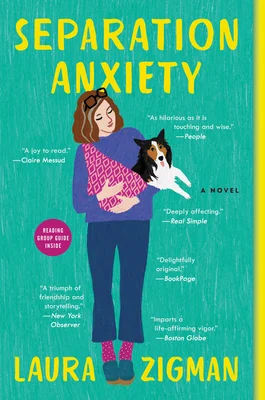
Separation Anxiety by Laura Zigman

My second real “pop” book of this year, after Modern Lovers, is Separation Anxiety by Laura Zigman. If I recall, I found this book referenced on Instagram, I added it to my Libby list, and, lo and behold, had time for it when my turn came up on the app. This is a summer read? A beach read? I’m not really sure of the genre, but as popular books go, it was pretty good, had some good depth, unexpected twists, and the writing was solid.

I found the main character to be a little too cold, shutdown, and removed in a way that did not feel like great “main character energy,” but the rest was pretty good. I also found the conflict between the central couple to be a bit unrealistic. The guy seems…pretty decent actually. So, why is the main character so repulsed by him? Why are they separating? The reason is stated, but never quite believable. I think there’s sort of an East Coast cultural difference may be at play here.

I appreciated the themes and the artful movement through scenes and the way Zigman built clear, and direct meaning throughout. I found some of the concepts to be repulsive, but in the end, none of it was gratuitous. I don’t think it is a spoiler to share that the main character begins wearing her dog in a baby sling, and, honestly, at the end, I’m still not sure if I should be concerned for this fictional dog’s wellbeing. And there’s more of the same throughout.

When: The Scientific Secrets of Perfect Timing by Daniel H. Pink

(Yes, audiobooks have entered the chat.) I recently finished When: The Scientific Secrets of Perfect Timing by Daniel H. Pink. This was an interesting book that was full of tidbits all loosely connected to the idea of timing. Pink pulls from every imaginable study on timing and presents them in the book, adding lots of his own examples and anecdotes.

While some will call this a kind of pseudoscience and others may find the content to be too broad or too common, I think Pink balances enough really interesting information on timing throughout to engage readers. I have already found myself sharing anecdotes from the book in the days since I finished it.

I think I might also be feeling some “life-hacking” or “bio-hacking” fatigue lately and sometimes just want to “let the soft animal of my body love what it loves.” However, I have to admit that in the past, I’ve known and used some of the tactics he mentions in the book, and there has definitely been a benefit. I think it’s worth the read, especially if you’re on an uptick in life and feeling motivated to improve.

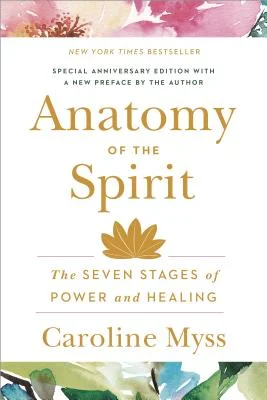
Anatomy of the Spirit by Caroline Myss

Next up in my series in the self-help genre was Anatomy of the Spirit by Caroline Myss. I have read, or skimmed (or was supposed to read?) Myss in the past–I can’t quite remember–but either way, this book was familiar. In it, Myss compares the Eastern concept of the seven chakras to the Catholic concept of the seven sacraments.

Peronally, I am much more familiar with the chakras than I am with the seven sacratments. But, based on my limited understanding, I thought the comparison was often clunky, especially in regards to the first three chakras and first of the seven sacraments. Sure, both are seven, and sure, seven is considered a sacred number across many traditions, but beyond that, the comparisons often felt like a stretch.

Myss, like many of the gurus in The Wisdom of Sundays, has to hedged her integration of an Eastern tradition into her practice or theory. I find this kind of hedging to be kind of sad and frustrating. On one hand, it can dumb down the content, and on the other hand, I am just baffled and disappointed about what this says about society’s ability to hold on to complex and/or competing ideas. Still, I suppose these baby steps are necessary. Either way, while I was sometimes weary of Myss’s use of Christianity as a foundation for the philosophies in ways that did not feel productive, I still found a lot of wisdom in her words. There are many nuggets of truth to be had here.

Challenging Pregnancy: A Journey Through the Politics of Science of Healthcare in America by Genevieve Grabman

I don’t normally include the scholarship I read for work here on my book list, but this one had an engaging narrative, a strong argument woven throughout, and I read it all the way through. In Challenging Pregnancy: A Journey Through the Politics and Science of Healthcare in America, Genevieve Grabman writes about her experience being pregnant with and birthing twins in the US healthcare system.

In the book, Grabman effectively argues that the the care she needed, received, but was sometimes was denied was often influenced more by politics than by her own medical needs. Anti-abortion sentiment filtered in to most aspects of her healthcare in a way that deprived her of choice and even sometimes put her in danger. Or put one or both of her babies in danger. Or put all three in danger. This is an important, but dark read that will have female readers thinking hard about the risks of becoming pregnant during such a hostile time for women’s (reproductive) rights, when choices about women’s bodies are placed in the hands of politicians and influenced review boards more than the expert doctors and wishes and preferences of the pregnant person.

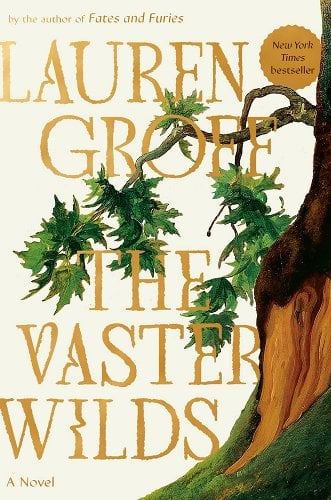
The Vaster Wilds by Lauren Groff

I can now join your book club because I have finally finished reading Lauren Groff’s The Vaster Wilds. Now, what to say.

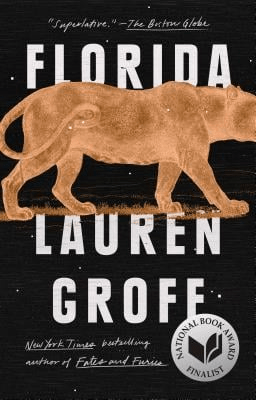
I am a fan of Groff since I read her book of shorts titled Florida. So, I knew The Vaster Wilds would be good, and it was. It was also torturous. I feel like culturally we have a Game of Thrones kind of obsession with torture right now, and that also makes sense culturally, and all of the anger, hate, and misogyny we see is reflected in our art, and so it does makes sense. However, that does not make it easy.

Still, the book is good and worth reading. This is especially true if you like popular books, but strive to read more literary works because this has some of the elements of popular fiction, while also feeding the nourishing steamed broccoli that is literary-quality writing. (Given the starvation of colonizers in early 1600s America, all food analogies probably fall flat.) Funnily enough, I was near the end before I realized the vaster in the title was not a reference to a proper noun. In years to come, I could see this piece taught in college courses because I think there is just so much here.

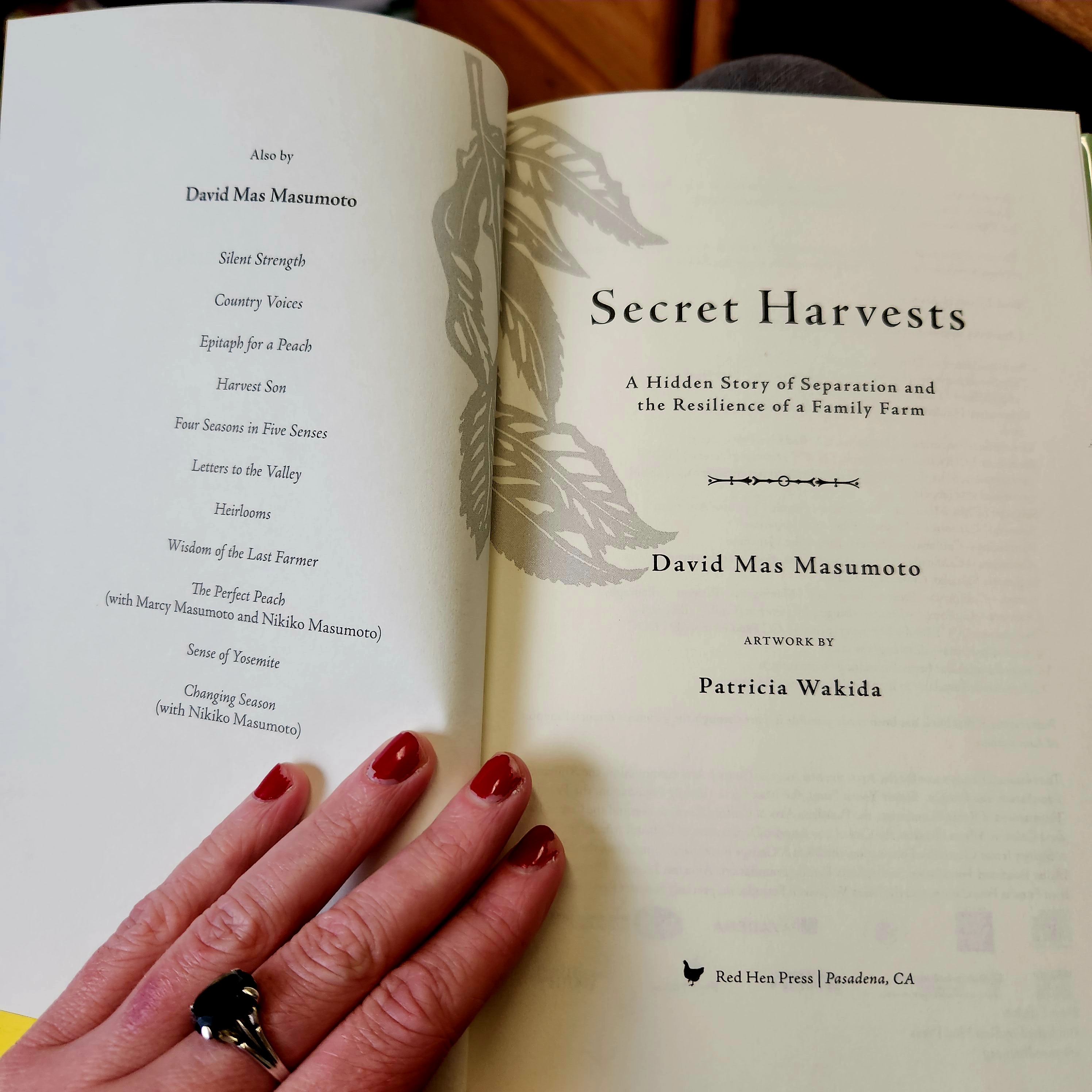
Secret Harvests: A Hidden Story of Separation and the Resilience of a family Farm by David Mas Masumoto

Secret Harvests by David Mas Masumoto was a lovely, slow, circling meditation that encompassed such weighty topics as disability, the institutionalization of the disabled, family farming, and the Japanese internment of WWII. Each theme is threaded through the book, stitch by stitch. Masumoto mentions that he and his family are Buddhists, and it seemed that the practice was etched into this book, the questions, the acceptance of suffering, the cyclical nature, the peace. It’s a great book, and I wish more nonfiction was written in this way. I was inspired and hope to see more from this author and would especially like to read more of his ruminations on farming and on life. There are also gorgeous prints embedded throughout throughout the book!

The Girl with the Lower Back Tattoo by Amy Schumer

As you know I love a memoir from a comedian, and so Amy Schumer’s The Girl with the Lower Back Tattoo was right up my alley. This book has the kinds of jokes fans will know and love from her standup, but also includes some feminist, essayistic stuff that is worthwhile as well. Few people can capture all of the beauty, and humiliation, and desperation, and realities of woman and young girlhood quite like Amy Schumer, and there is such a need for this honesty.

Schumer is convinced she’s an introvert, and I can relate. I think you can be an entertainer and an introvert. I think it’s quite common actually. However, the level of public-facing work she does and intense friendships she keeps makes me think otherwise. Either way, she’s churning out great content, and for that I m grateful. This was a delightful book worth reading for both the laughs and also for the meat and potatoes and political content.

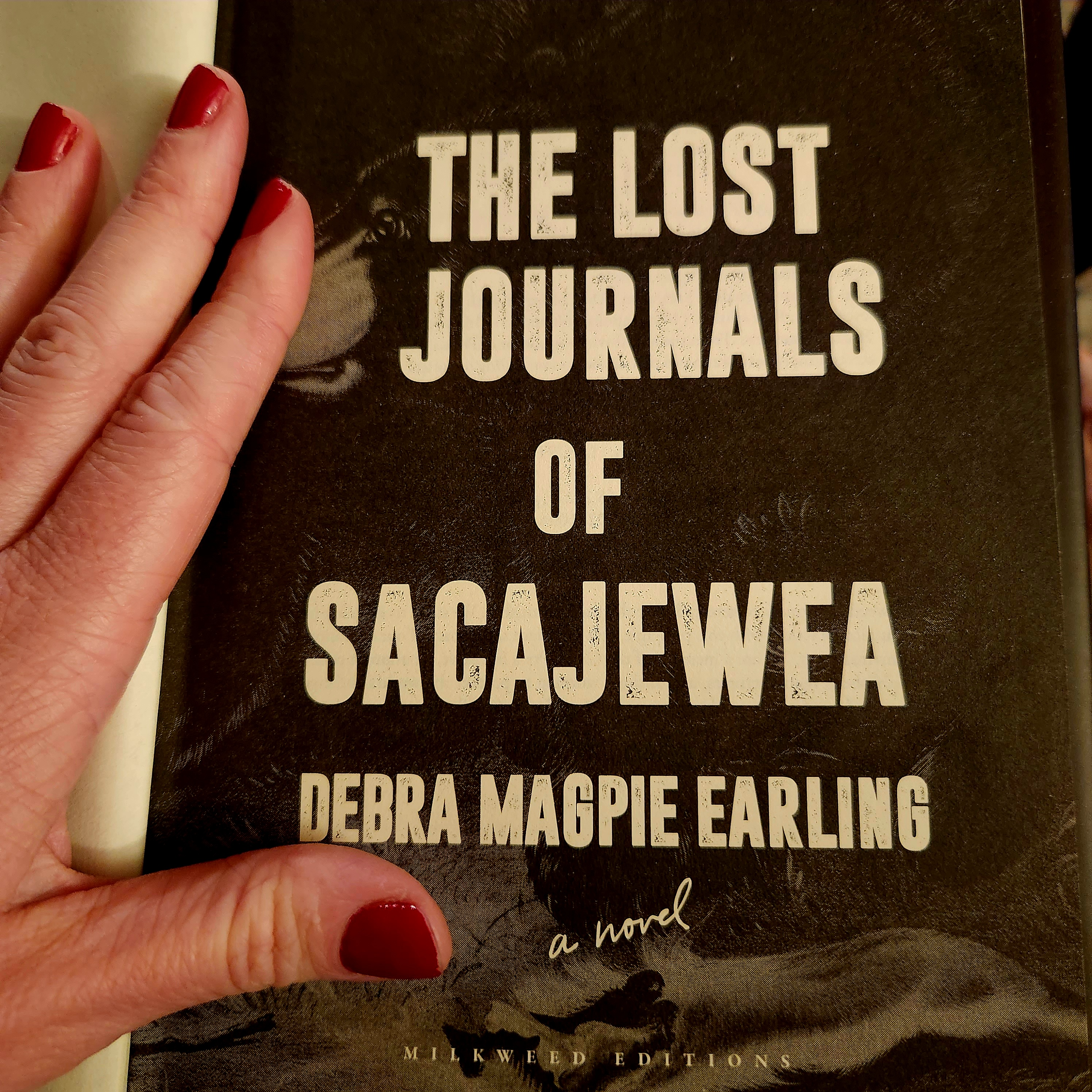
The Lost Journals of Sacajewea by Debra Magpie Earling

The Lost Journals of Sacajewea by Debra Magpie Earling is one of the best, most unique, intriguing, and important books I have read. This book depicts the story of Sacajewea, and it is so well-researched and contemporary, that it truly seems it must be the more accurate account. Most are familiar with the fact that Sacajewea is heroically and positively depicted in U.S. historical accounts, but it is less well-known that she was a child captive and sold into servitude as a child bride before and while serving on the trek with Louis and Clark. Through rigorous research, Debra Magpie Earling blends the historical accounts with a creative imagining of what this world and this experience must have been like, and the outcome is absolutely genius.

I also loved the prose, which was a mix of prose poetry, which worked well to depict a child’s experience, a culture, religion, and a way of being that is wholly unique, and mind-expanding for the reader, and also captures enough of the physical and visceral reactions that a child might have, in a way that is protected from a Western literacy, or logic. In that way, the book is precious gift of perspective that is otherwise difficult to impossible for the typical reader to ever experience. This must be Debra Magpie Earling’s magnum opus , and it is an epic literary work of staggering genius.

Florida by Lauren Groff

While awaiting the arrival of the highly praised The Vaster Wilds, I came across Lauren Groff’s collection of short stories entitled Florida, and what a delight.

First thing I’ll say is that this is a book of short stories that really deserves to be a book. The stories speak to each other so well that it’s almost like this is a way of making a “novel,” less linear, less plot driven, but still so very meaningful.

Next, I’ll say that, without subheadings or even making much mention of it in the blurb, this book captures motherhood is such a real and raw and genuine way. There are so many books on the market about motherhood, but many of them don’t capture my experience. However, the depictions of it in this book were so good.

That’s what I have to say about the book. I was on the fence about The Vaster Wilds, but now my curiosity is definitely piqued!