Where the Crawdads Sing by Delia Owens

Where the Crawdads Sing by Delia Owens was (is!) a bestseller, very popular, and was made into a movie. It is also not the kind of book I typically read. However, more than one person recommended I read it based on a project I’ve been working on, and so I did. While I used to listen to books on CD (and even tape!) when I had long commutes, this is the first book I’ve listened to via an app, and, for the most part, I really liked the experience. Unfortunately, much of what I read is not available on audio, and I usually need to mark stuff up for my own writing and scholarship. So, I’m not sure how much literature I’ll actually be able to consume in this way, but it feels good to have the option. Sometimes.

As for this book, the first quarter is really quite good, gripping, some lovely imagery, and some complicated ideas that go beyond what’s portrayed in a lot of popular fiction. Usually by the first line or two, I get a sense of plot-based genre fiction, but this one kept up to muster well beyond the first few lines. In fact, some of the insights were truly profound and beautifully written (as far as I could tell via audio).

However, near the end, there is a lengthy trial, and, let me just say that I find trials to be about as interesting as football games, which is to say: usually, not very. Using the lawyers and police people to work through the ideas and the drama of the crime was just not my cup of tea. Of course I still listened through to the end and with interest.

There’s a lot of plot and tension built around who will sleep with the beautiful “marsh girl” and then later, whodunit, and I found myself wishing that the book could go beyond these relatively common tension points. In some ways it does, but it also doesn’t break with plot form. If it had in the last quarter of the book, like if Owens had really done the unexpected, I think it could have elevated this book to capital “g” great literature. As it stands, the author made something that would be a bestseller and would make a lot of money, and with writing that she could be proud of, and that’s very nice too. And entertaining!

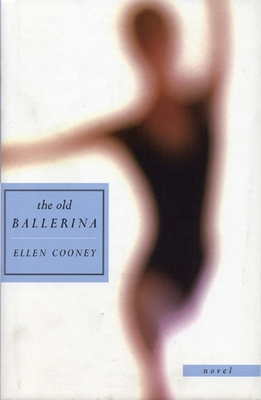
The Old Ballerina by Ellen Cooney

If you’re looking for a book that’s going to make you go “wtf” at the end, in a way that is neither particularly good, nor bad, well then The Old Ballerina by Ellen Cooney is the book for you.

I picked this book up for its compelling title, and the book does live up to the title. The book is compelling. It is experimental in form; it deals with plot in ways that are both typical and unusual, which is why I had a certain expectation for the denouement that were not met, which led to the muttering of “wft” as I closed the book.

I’m glad I read it because it is informative on what’s possible, on something to aspire toward, and, yes, this book does seem possible, and, also, necessary.

Horse, Flower, Bird by Kate Bernheimer

I recently read the short and delightful Coffee House Press book, Horse, Flower, Bird, by Kate Bernheimer. This is a delightful book of poetic prose pieces that are connected through haunting, sometimes confused, but always strangely familiar imagery of childhood, girlhood.

While reading this, I felt reconnected with the strangeness of being young and not yet fully understanding the world around me and the social expectations and information that would eventually become themes. Bernheimer is able to capture that world for me, which was stranger and more magical.

Reading it, I just found myself grateful that this quirky little book exists. Sometimes the world, and the literary world, starts to feel very similar to me, and this wasn’t that.

Jane: A Murder by Maggie Nelson

I followed up Maggie Nelson with more Maggie Nelson. This time it was her 2016 book, Jane: A Murder, which explores the 1969 murder of Nelson’s aunt Jane. Obviously, I’ve just been mesmerized by everything Nelson touches lately. This book is thoughtful, creative, but also frightening in the true crime kind of way. I don’t have much more to say about this piece–just that I think Nelson’s work is so novel and important and a way forward for us literary types.

The Argonauts by Maggie Nelson

The Argonauts by Maggie Nelson wasn’t on my reading list, but I dropped everything when I remembered I hadn’t read it. What a great book! First, it should be taught in graduate-level theory courses. (It probably is, but nothing like this was taught in mine.) We need more feminist theory like this that truly integrates the (deeply) personal with the philosophical. I can’t be the only one who gobbled this up, and I suppose I can do my part by quoting it and integrating it into my scholarship myself.

The blurbs about this book say it’s about art and philosophy, but, I don’t know, somehow those descriptions fail to capture what Nelson is doing, which is, admittedly, unparalleled and difficult to describe.

The book helped me understand some philosophy and culture more deeply through her insights and critique. Unsurprisingly, I clung to her thoughts on motherhood, joy, femininity, womanhood, and culture. Perhaps especially as a mother, I appreciated the spare, yet complex prose. What can I say–The Argonauts is yet another important book by Nelson.

Heaven by Mieko Kawakami

I decided to go ahead and read Heaven by Mieko Kawakami this summer while I was at it, and, wow, this is a heavy, but, of course, excellent book. It is such a departure from the much more distanced and gentler narrative in Breasts and Eggs, which I also read and wrote about a few weeks ago.

I’m not sure how I missed this, but there is a heavy portrayal of bullying in Heaven, and I don’t think that’s a spoiler, but I do think it actually does need kind of a big “trigger warning” splashed across the front of this book because it.is.intense.

However difficult this book may be, it is excellent, as Kawakami is proving herself (to me) to be an excellent writer–excellent pacing, character development, and a deep emotional landscape.

As an aside, this book is also much shorter than Breasts and Eggs, but my copy also included an excerpt of Breasts and Eggs at the end, and I’m not quite sure why this choice is being made because the current version available of Breasts and Eggs is also an elongated version of the original, but I just wanted to add here that this length of book–just Heaven–is a great length, and I think Kawakami works really well within this frame.

Deep Creek: Finding Hope in the High Country by Pam Houston

I could have sworn it’s been 20 years since I read Cowboys Are My Weakness by Pam Houston in a beautiful little old home near Durango, Colorado (can you imagine a better location?!), but a quick search reveals that it was actually published in 2005!

What I remember is that Cowboys Are My Weakness was a transformational book for me. It was so real and so unlike anything I’d ever read before. Remembering this book is saying something because I started this blog to keep track of my reading!

When I realized Houston had written her most recent book, Deep Creek: Finding Hope in the High Country, I was anxious to read it. The book is a collection of short stories, and the most pervasive thread is probably her own growth in adulthood and her increasing appreciation for, and rootedness to her animals and to the land–in this case, a 120-acre farmstead in the Colorado mountains.

As a woman who has also spent a good deal of time solo and who has also acquired her own little “slice of heaven” and sheep (even some Icelandic!) and other animal friends, while also working as a writer, teacher, and scholar, I was drawn to her story and her insights, like maybe she could lend a little guiding light. And she did. Somehow reading her writing feels to me like taking a refresher grad class in creative writing. What a gift!

Charlotte’s Web by E.B. White

E.B. White is obviously untouchable as a writer, and that was my sense this time through Charlotte’s Web too. I read this as a child (or had it read to me). I also have vague memories of struggling to get through it while reading it on my own as a child. I probably tried too young.

Here’s the well-worn copy that we read.

This book works on a fairly pleasant surface level, but of course it’s dealing with more challenging questions of life and death too. Death is mentioned, but for my very young children, these details seemed to be glossed over.

Between this and Stuart Little, I have to say that I prefer Stuart Little, which goes a bit deeper into the subtleties of human nature. Still, Charlotte’s Web is a must read in childhood, and older readers might like returning to this as well, as it offers one of the most poignant and well-paced denouements of all time.

Sea of Tranquility by Emily St. John Mandel

What a great book! As you know, I normally do not read in this genre, but Sea of Tranquility by Emily St. John Mandel was exceptional. I even found myself slowing down at the end to savor the final events.

Too often I find that “sci-fi,” if you can call this “sci-fi,” lacks emotional depth, is too self aware, too clever, too focused on an overt plot. (I know sci-fi lovers will argue about this with me all day long.) But, I’ll always be impressed when an author can bring it all together in the writing–emotional depth, development, and beauty.

This is a book that examines the “simulation theory,” and the meaning in life, by jumping through eras of time. Each era is described with sparse, but powerful language. I recommend it!

Breasts and Eggs by Mieko Kawakami

Breasts and Eggs by Mieko Kawakami delves into a modern, urban female experience. The main character navigates the big questions women must face and the relationships they must navigate. Kawakami leads the reader through these issues without defaulting to any oversimplifications. The opposite, actually. Each question and relationship is as complex as real life. This book feels almost memoiristic, as I imagined Kawakami as the main character. (I’m prone to doing this though.)

The main character, Natsu, comes from poverty and brings herself out of that slowly as a novelist (the most unlikely of stories!). This character’s life leads her away from her family roots (in a sense) and complicates her relationships with her now very small extended family, not that these relationships are ever uncomplicated.

Her past (experiences with poverty and loss) also complicate her relationships and her abilities to be in a romantic relationship and to create a family of her own.

The book is strange. Natsu is confused. There is tragedy and there is triumph. It is nuanced, and that is true of the human experience, and in this case, it’s focused especially on the female experience.

I read that Breasts and Eggs was once published as a novella and then was expanded into a longer novel, which is the version I read. Through most of the book, I found myself wishing that this was two separate books, but then again, I love a good, short, digestible read. However, now that I’ve reached the conclusion, I do think extending it into one long book is defensible.