A friend gave me this book, and, as you know, I like a comedian’s memoir. Dear Girls by Ali Wong is that great blend of comedy and memoir, with some important social commentary about race and gender sprinkled in throughout.
Some readers may think it doesn’t age well since the author and her husband divorced shortly after the release of this book, and the book covers their relationship extensively, but this book is still worthwhile and captures a moment and a sentiment worth capturing.
I don’t often read books that I think will appeal to a wide range of readers–those romancey, thriller, and beach readers. However, Demon Copperhead by Barbara Kingsolver was that book: great, accessible to a broad audience, and also…read by me.
The Bean Trees was the first Kingsolver book I ever read, and I remember absolutely loving it. That was probably over years ago! I am continually impressed by Kingsolver’s ability to put herself into other worlds and characters with such conviction. She also layers in social issues in a way that is compelling, but without disrupting the narrative flow.
Overall, this is a compelling book, a great narrative, a great main character, important, perhaps a bit too long (although by now you know how I like a pithy book) and one that will, I think, have a lasting impact in literature. Oh, and Kingsolver also gardens and raises sheep, which you can see on her social media, so you know she’s good!
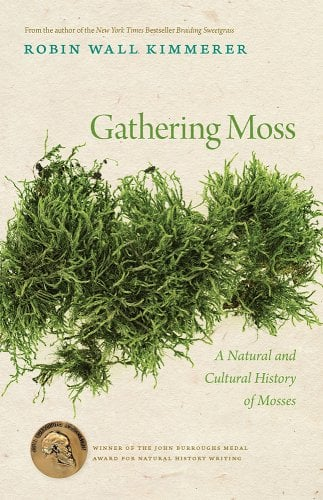
As predicted, this little book piqued my interest in mosses, offering both an education, appreciation, and lovely little connections and narratives to guide the process.
I could also see myself returning to this book for guidance on organizational structure in my own future written works.
On principle, I love these slow, detailed meditations. And on the topic of moss? Something that is tiny, unassuming, and often slow to grow? Even better. That said, I mean, it is moss, and so I did find certain points of the book to be a bit boring. Somehow the book gains momentum in the last half, though, and was easy to finish.
This author also has a newer book on serviceberries, and I’m looking forward to reading that book as well.
As you know, I love a good celebrity memoir, and Paris: A Memoir by Paris Hilton did not disappoint. I’m actually surprised this book hasn’t been more widely advertised or talked about in my media streams because the book is quite interesting, and I think everyone who has watched the Paris juggernaut over past decades will find this book to be of interest.
Most interestingly, Paris relays the horrifying treatment facilities she was put in as a child (in great detail) and her tumultuous teen (and adult) years. She contextualizes it all with her ADHD/neurodiversity, and honestly, as a reader, this context made it all make sense for me. It was also interesting to see the focus and vision she’s had for her career from very early on.
In the end, I think this book will truly be a gift to teens with ADHD and to people who aspire toward greatness. I would have liked to see more “how I built this”-style insights and more insights into social class, access, and fame, but she does touch on all of these to some extent.
She is entering a new era now–marriage and motherhood–and in the future I’ll definitely read another memoir from her that goes more into depth on these subjects as well.
The Blue Fox by Sjón is that beautiful, unique, and compelling work of literary prose that we all seek to read. My only critique is that perhaps it could have been just a bit longer, which is saying something coming from me.
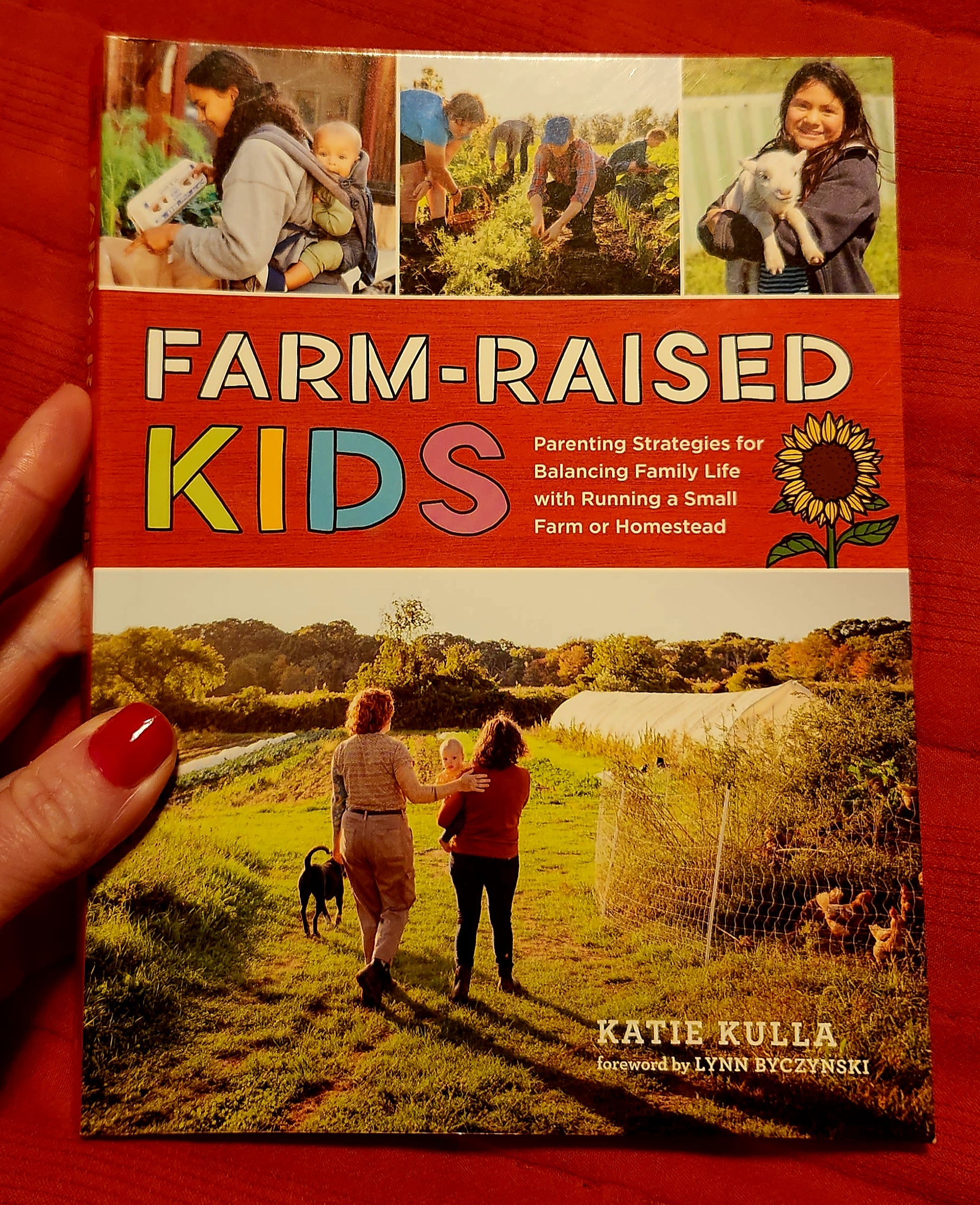
This was a charming little book by a farmer I know from the west side of Oregon, Katie Kulla.
Parenting books can be difficult because parents tend to be exhausted, and advice and ideas are need, but there is no quiet, peaceful time to read! However, this book is easy to read, easy to digest, and it is informative, without making readers feel guilty or overwhelmed. It’s more like, “Hey, it’s good for kids walk go outside and walk on uneven ground.” Then, readers can feel good about letting their kid walk on uneven surfaces, play in dirt, or feel the sun on their skin once in awhile. It’s simple, basic stuff. It’s reaffirming, and I found it to be inspiring and encouraging.
I was also heartened to read that there are many different families, scenarios, and “farms” depicted, so that a broad range of readers might identify with the lives and lifestyles of these people. Go order Farm-Raised Kids by Katie Kulla now!
A few weeks ago, as we approached the end of 2024, I began looking back through old photos, and I was surprised to see just how much I did this year: a winter break in Idaho, a springtime trip to Louisiana, some good summer fun in Idaho; a epic trip to the Oregon coast; and then up to Guemes Island in the San Juans for a beautiful wedding, and then back through the state of Washington; and finally a trip to Palm Springs, before buckling up for the marathon of end-of-year holiday festivities.
In 2023, I started exercising a bit, but in 2024 I actually got strong. I ran two 5ks and one 10k, and even ran a PR (post high school) in one of the 5ks at 26.29 minutes, which is not fast, for the record, but felt good and fast in my body, and I was 5th in my category!
I loved my little farm, I sheared my little sheep, and I watched the northern night sky light up with aurora borealis. I put together a two-story playhouse, made what is becoming an annual pilgrimage to Yellowstone (especially Lake Isa), watched rodeos, and entered my homegrown raspberries in the county fair. I got two new chicks, hatched from my hen’s own fertilized eggs, so now I have three: the original hen and her two black and white-laced daughters. Hopefully I’ll get my first eggs from them in 2025.
Through it all I also worked on several major work-related writing projects and one major creative project, which I hope will soon see the light of day, so that I can share them with everyone! I also read many lovely books.
As this year comes to an end, I also find myself at the end of a nine year in numerology. I can see some obvious themes and projects wrapping up in my life, but if the upcoming one year is anything like my last one year, it will be full of big, transformative life changes that I can’t yet fully see now. There’s a lot to like about life right now, but I’m trying to work on embracing the inevitable changes and growth that come my way.
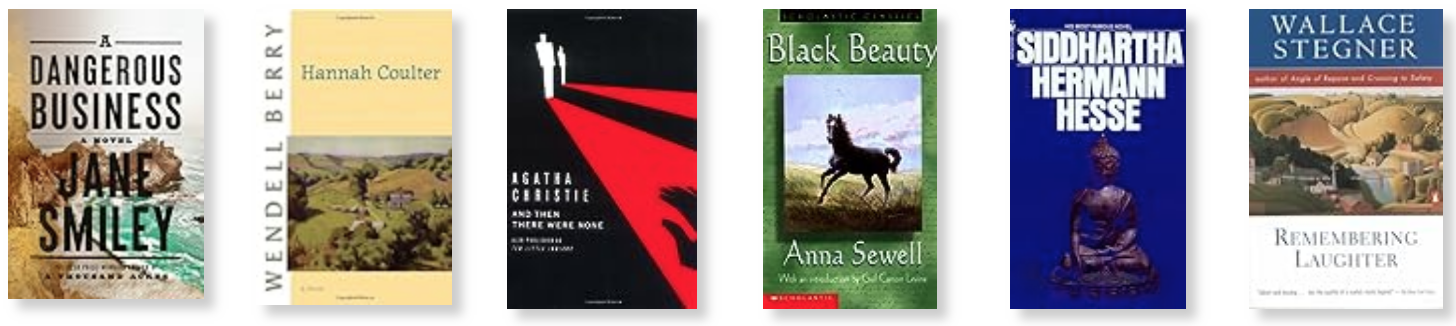
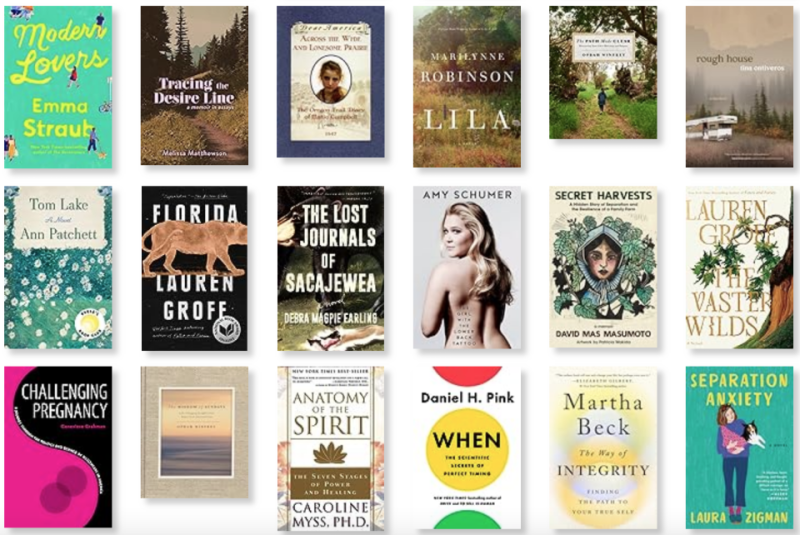
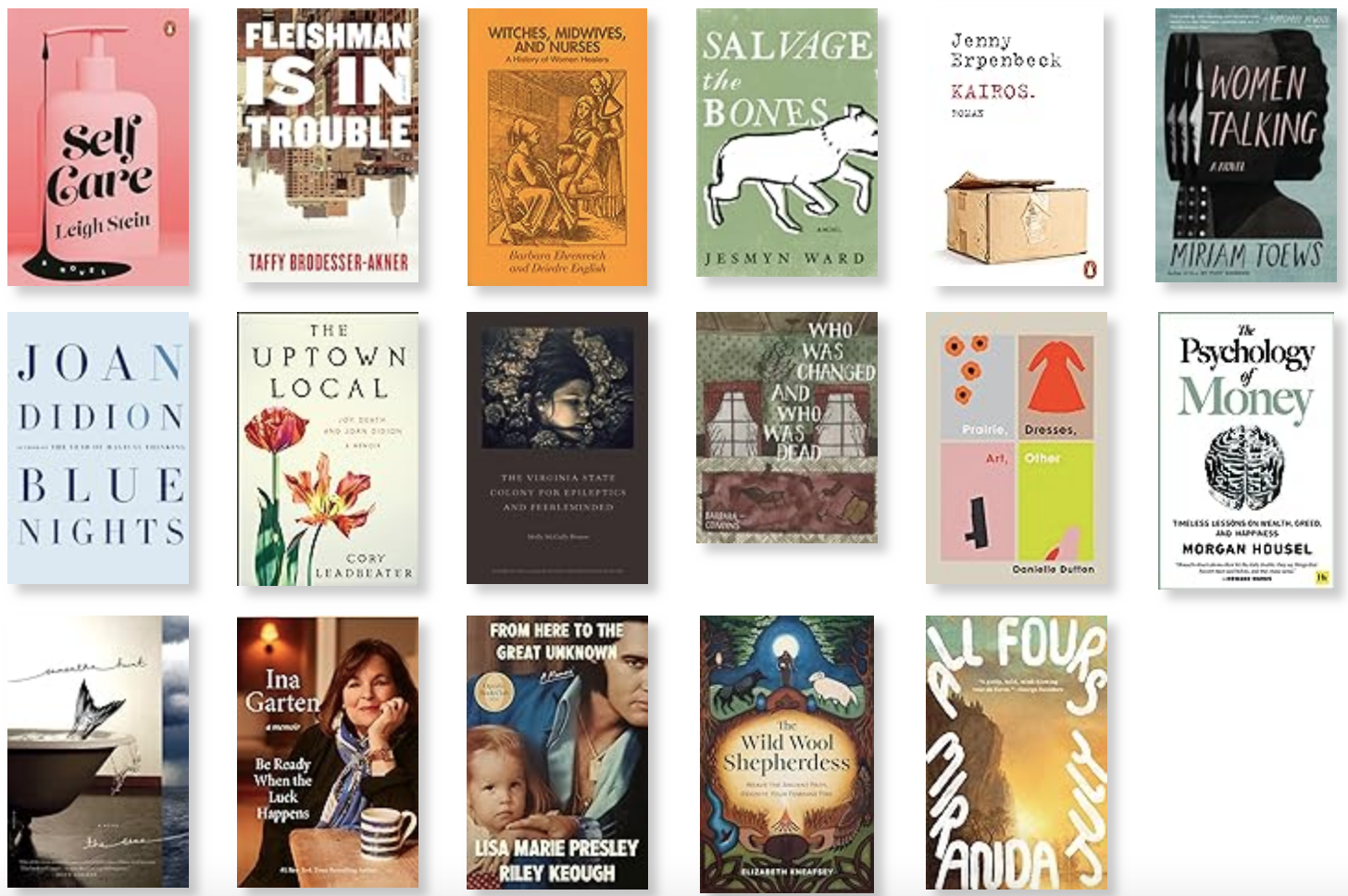
Here’s my 2024 reading list! I cannot believe that I read over 40 books! I felt like I read much more last year, and yet somehow I came out ahead. This year there were also several months in a row when I did not read anything (except for work). Despite this year’s quantity, I still count the previous year, 2023, as one of the best reading years of my life. That’s the year I discovered Elena Ferrante! Still, I read some delightful books this year. Siddhartha was excellent. The Lost Journals of Sacajawea was mind-altering. Who Was Changed and Who Was Dead was a quirky delight.
I have been following @wildwoolshepherdess online for a few years now. Unsurprisingly, I am drawn to other women who are also been raising sheep and have found a sense camaraderie from that online community. So, when she wrote a book, The Wild Wool Shepherdess: Weave the Ancient Path, Reignite Your Feminine Fire, I definitely preordered it, both to support her and also to spend more time reading and thinking about sheep, of course!
The book is about her background and her transformation into her current beliefs and way of life. The last part of the book offers more specific guidance for bringing ancient wisdom back into one’s own life. I am always happy to read a memoir, and so I happily read through that part of the book, even though I didn’t identify closely with many of her experiences.
I really enjoyed the last part of the book. Many of her practices struck me as brave of her to share, and some things I cannot imagine integrating for myself. However, many practices did resonate with me. Spending time alone. Meditating next to a tree (try doing it without the distraction of people for three days!) Making and drinking teas. Honoring the subtle monthly shifts and going more easily during that time. Allowing others to care for you (opposed to self-care–don’t get me started on that…).
There are aspects of her thinking that do not resonate with me. For example, I am not a wolf person. Sheep are the animal that I resonate with much more, and wolves are the natural enemy to sheep! She addresses this, but it is clear that wolves are her animal, and sheep seem more about what the represent: the wool, the positive impact on the land, etc. However, she does also love the sheep and appreciate their emotional intelligence. In fact her book made me reflect on how much longer the memories seem to be in my northern short-tailed sheep. For example, a few months back, I had to give my ewe Opal two doses of antibiotics in a painful shot. She still seems to be remember and has been irritated with me ever since. I am trying to win back her favor.
I’m not sure there’s anything left for me to say that hasn’t already been said about Miranda July’s new book, All Fours, but I read it and so I’ll try to say something here. First, I always really appreciate July’s work and read it when I get the chance. She offers some great insights on the human condition and pairs it with lots of absurd, disgusting, and confusing action. Furthermore, for a bestseller, I can guarantee the writing will not be bad, and that’s more than I can say for a lot of bestsellers.
What I think it so important about the book, and what has given it all of this #allfoursgroupchat energy is that the the book tackles aging; emotional labor, especially in heterosexual relationships; and some of the physical changes and hormonal shifts women experience in their 40s and 50s. There are so many unique and terrible aspects of this reality that July captured accurately for me. I really appreciated that she gave it voice.
There are also many details seemingly based on some real events from her own life. This makes the book all the more engaging and compelling. The conclusion of the book does even more to mirror real life as the main character goes on book tour, except you know July hasn’t gone on tour yet before she’s done writing. It’s just a very unique way to end a book.
Overall, I know some readers won’t be able to handle this book because it is a lot. July’s work usually is. But, some of us will, and I hope that those of us who do like this book will be able to find that group chat.





 SHEREWIN