Tag Archives: art

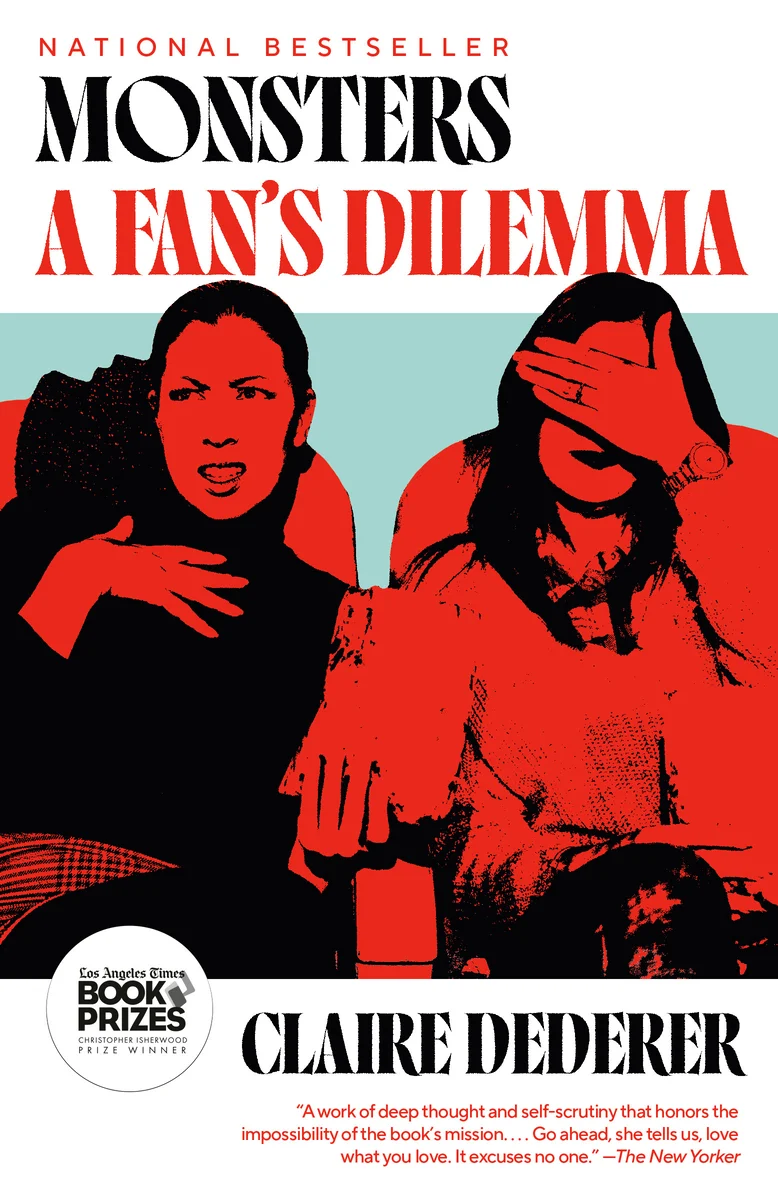
Monsters: A Fan’s Dilemma by Claire Dederer

Now this was a fascinating book! In Monsters: A Fan’s Dilemma by Claire Dederer, Dederer offers monstrous male artists (in every form) and analyzes their audience. As an avid reader, and citizen of the world, I am somewhat interested in the question, especially in the wake of the “me too” movement and subsequent “cancel culture.” Dederer wrestles with the question and avoids simple soundbites and quick solutions.

As a reader, I was interested in our similarities and differences. We both love Woody Allen movies, but she loves Polanski and I can take or leave his work. She has a distaste for Hemingway, and I still think his work is extraordinary. We both love Carver.

However, what was most interesting to me was in the last half of the book, when she turns her lens toward herself: “Am I a Monster?” and “Abandoning Mothers.” As a mother and an intellectual and an author, and, maybe above all else, someone who delights in deep focus, the questions Dederer asks are those that I share.

A question arises, “Do my children matter as much as my writing?” Dederer seems to have a good relationship with her children, seems to have balanced it all in some kind of positive way, but it was not without struggle.

However, for me, this is not the question, but rather an adjacent statement, which is that I matter too. Contemporary motherhood culture has women give of themselves so completely that there is no space for exploration, creation, for the self of the mother/person. To me this is intolerable, and I find myself needing to claw out a space for myself within the rigid expectations of motherhood within my culture, also still while the other thing is true: I love my children and feel deeply grateful for them. Plus, they inspire a greater depth of work in me that I otherwise could have created. And, amid all of these realities, I matter too.

How Should a Person Be? by Sheila Heti

I have a quick follow up after yesterday’s post because I just also recently finished How Should a Person Be? by Sheila Heti.

Lately, I’ve had a hard time telling if some main characters are intentionally or unintentionally insufferable, and this is one of those instances where I couldn’t always tell. The main character is supposed to be insufferable to a degree, sure, but to this degree? I’m not so sure.

That said, with books like these, I’m always glad they get published. I’m glad this was published. For most, this is worth the read. However, if you are feeling a bit on the sensitive side, maybe skip this one (for now). There is a wandering, an aimlessness, and unknowing that may be comforting, but there is also deep friendship and closeness, which I could imagine may feel alienating to some. There is also some short sections of depravity that may be better left unread by some.

For the average reader, acquainted with and able to stomach what I’ve mentioned above, do read this unique book.

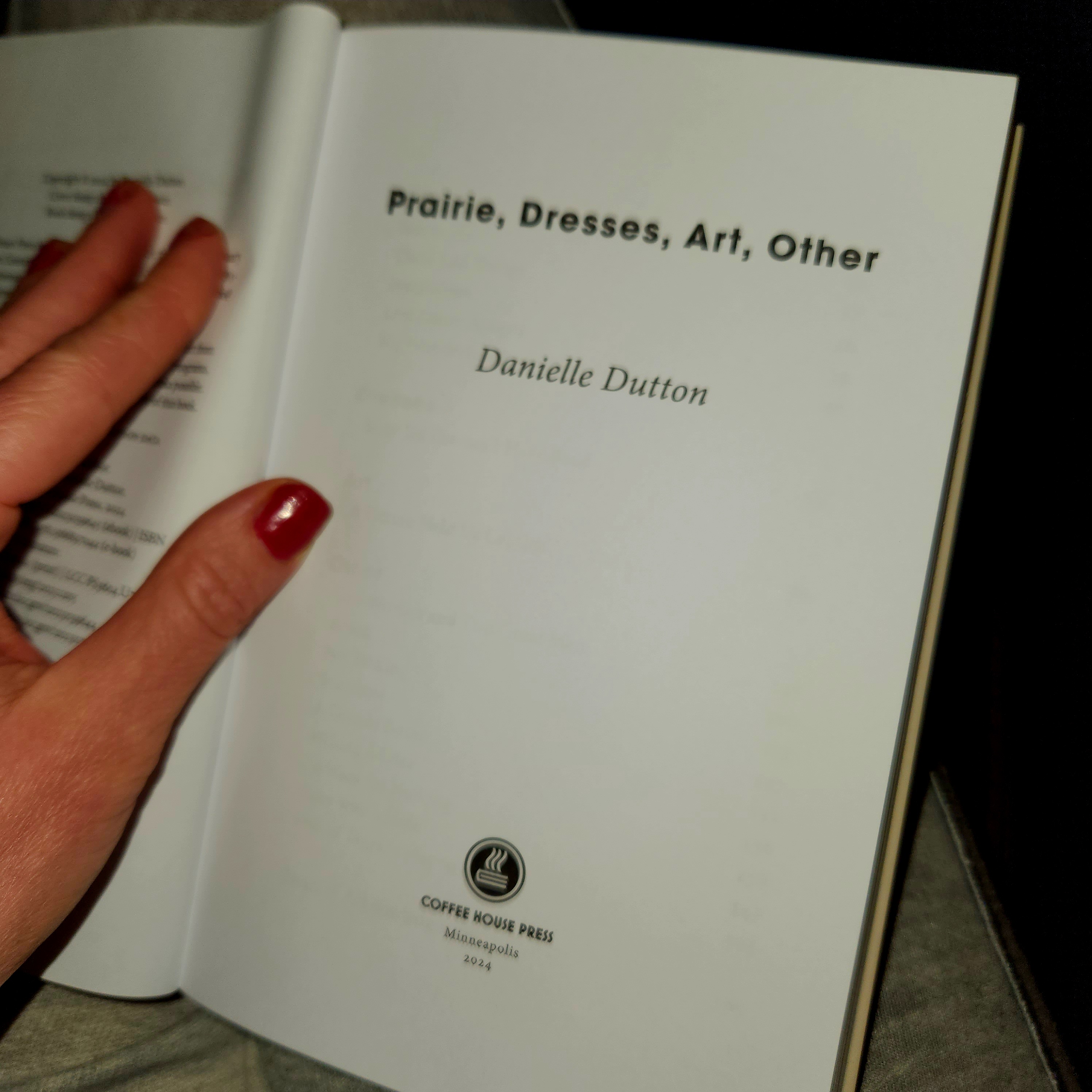
Prairie, Dresses, Art, Other by Danielle Dutton

The beginning of this book was not what I expected. The middle part, however, was. I expected Prairie, Dresses, Art, Other by Danielle Dutton to be much more theoretical (and it was!), but the first few chapters threw me. In a good way. The first few chapters were even scary!

This book reminds me of some of Maggie Nelson’s recent stuff, but this book of Dutton’s has more imagery, perhaps even more narrative, throughout than Nelson’s most recent, On Freedom, for example. Both are from Coffee House Press, which continues to publish all of the best stuff that the mainstream publishers are afraid of.

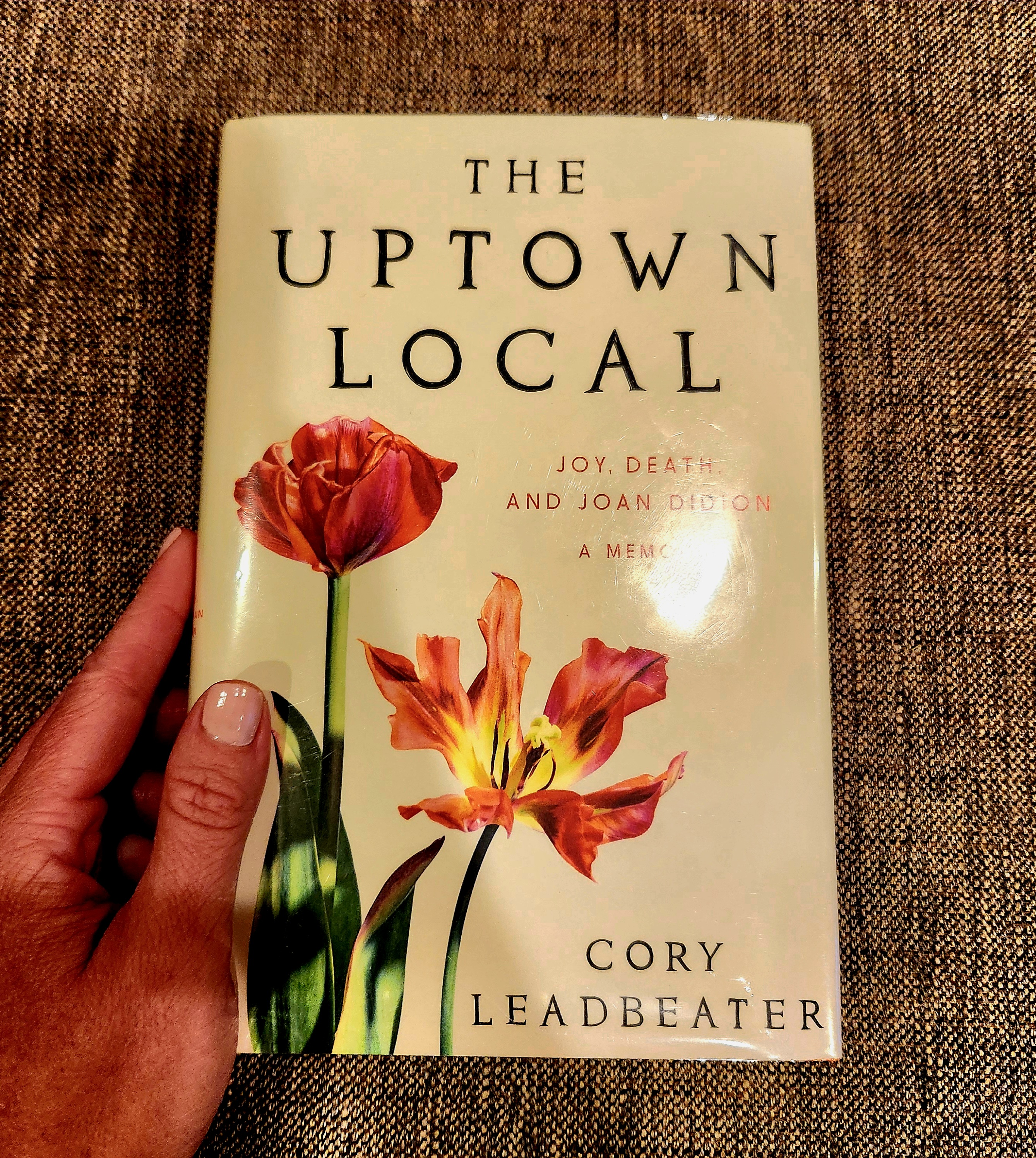
The Uptown Local by Cory Leadbeater

After reading Joan Didion’s Blue Nights, I picked up Cory Leadbeater’s The Uptown Local at the library because it is about his life working as Didion’s assistant, and my interest in Didion had been renewed. This is a memoir, and Leadbeater has quite a lot to share about his own life and creative process, as well as what it meant to him to work so closely with Didion.

This book is honest and insightful, and very self aware. Readers will get some Didion fixes, but more than that, it offers insight into what it might’ve been like to be her assistant in her final years. And, I’m sure many readers and writers probably have fantasized about just such a job. I have.

Leadbeater portrays their dynamic as a kind of mother son relationship. In fact, Didion refers to herself a “mommy” in her book inscription to him. Leadbeater seems to wear his troubles on his sleeve, and Didion seems to not shy away from them. She seems to fully embrace and welcome him, even despite (or because?) of his challenges. Even when her more aristocratic friends disregard him, Didion is stalwart. I wonder if she saw her own daughter in Leadbeater. Some of their troubles seemed the same, from what I can gather, which is very little.

In the end, both Didion and Leadbeater both offer insights on relationships, art appreciation, poetry, and how to live a meaningful life–something we could all probably use.

Walk Through Walls by Marina Abramović

Walk Through Walls: A Memoir is Marina Abramović’s extraordinary story. I mean, of course it’s extraordinary–it warranted a book. And it did. Abramović gives the account of her tumultuous and abusive (my word, not hers) upbringing, replete with political upheaval and familial strife–inexcusable even given the PTSD and OCD that pervades the family dynamic.

I continue to be interested in reading about powerful women, women who live lives that are very different than the ones they grew up in, women who were able to imagine and create a way for themselves with the degree of freedom and autonomy that their art requires.

Recently, in an interview, I heard Patti Smith say that the artists path is a spiritual path, that pursuing it and making art is a spiritual experience. In that the making of art puts me in a meditative state, which is a spiritual experience, I agree.

Abramović writes honestly, even self critically, about the spiritual and emotional experiences of her life, and the relationships in which she engaged, and even contributed analysis on her painful patterns and what they might suggest. It was all very honest and real and shed some light into my own painful patterns and what can be done about them (hint: probably not a lot).

So many of the artists I’ve been reading about have traveled extensively and have sought esoteric (at least to a Westerners view) spiritual rituals for self growth and healing, engaging in shamanic treatments in Brazil, learning telepathy from Aboriginals in Australia, and completing months-long meditations in India.

Lately, I’ve wanted to have more meaningful interactions in my work. Abramović’s work empowers me to do so. Her art is really weird, and many might view it as sensationalistic, existing only for the sake of shock and awe, but in reading the book, I was quickly and easily persuaded that performance art is very much art. It’s complex and provocative and does all of the important things that more traditional art does.

For as much as her most intimate relationships brought her pain and betrayal, Abramović heals these wounds for herself and others (her audience and her students), time and time again. Perhaps I can find ways to do more of the same in the work that I do. At least I can try.

After reading the book and being inspired by her story, I felt more emboldened to live my life in a way that was more fully authentic to who I am. So currently I am working hard to change a few things about my life, bringing it more into accord with my essential self, trying to set things up in ways that are more conducive to my well being, and wearing these big sunglasses that fully protect my eyes on the top bottom and the sides. (I wore them yesterday while browsing a plant nursery, and it felt great, and zeros effs were given.)

I thought I marked more passages (I know it did!), but in the end, this is all I could find:

“Because in the end you are really alone, whatever you do” (182).

“If animals live a long time together, they start loving each other. But people start hating each other” (290).
a typical day (in art)

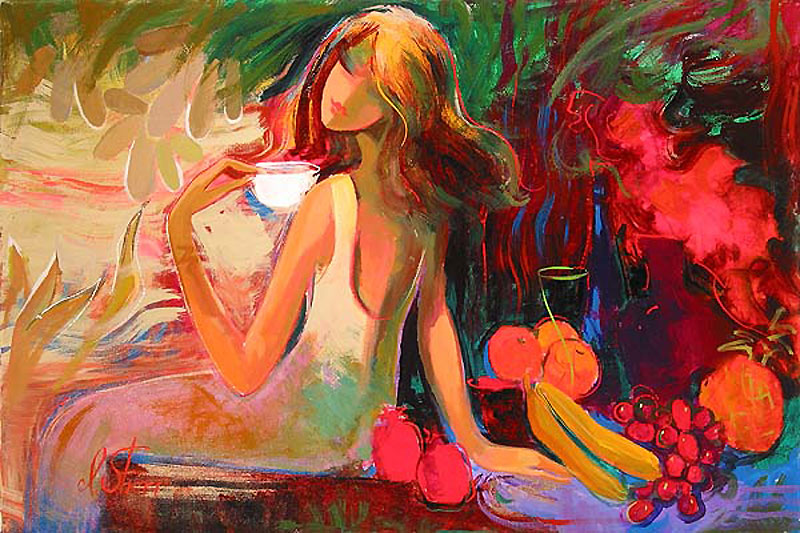
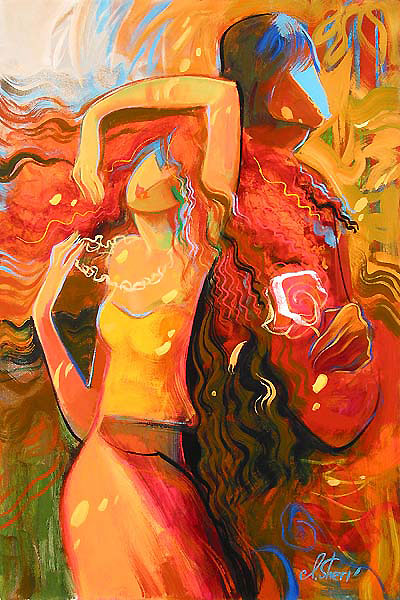
Recently, someone asked me what my typical day looks like, and while I did my best to answer the question, I felt that my response did not do justice to my life.

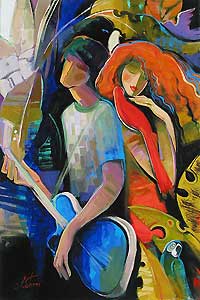
More recently, I found that an artist by the name of Irene Sheri* had actually captured a typical day in my life, and so I present it to you here now–an accurate portrayal of my typical day:

red 1

red 3 red 4 red 5 red 6 red 7 red 8 red 9 red 10 red 11
red 12

red 13  *Images from www.galleryone.com and www.world-wide-art.com

Silver Linings Playbook by David O. Russell

I know I’m a few years behind with this one, but Silver Linings Playbook is on Netflix, so I finally watched it. All stars are brilliant in the film, but Jennifer Lawrence was a bad casting choice. She is still too young to bring the necessary complexity to this character. She needed to be world-weary, but soft, broken. With her husky voice and masculine (beautiful!) characteristics, I had a hard time believing her in this role. The topper is that we are supposed to believe that, in her spare time, this woman enjoys somewhat serious, competitive dancing. Dear Jennifer Lawrence provides a one-two punch of beauty and real acting ability, but she is not graceful by any stretch of the imagination. Based on what I’ve read of her in interviews, she embraces a boyish sense of humor and boyish way of moving through the world. I think even she would agree that being cast as a dancer is a bit of a stretch.

First, the beginning: what’s really innovative about this film is the role of bipolar disorder and Bradley Cooper’s portrayal of that mental illness as it evolves throughout the film. As the movie progresses, it becomes clear that other characters, the father, the long-suffering mother, the leading lady, and even the best friend, are all really struggling with their own, very real, mental distress. The main character, Pat, has a troubled relationship with his father, which is increasingly revealed as very controlling and made a significant contribution to the main character’s distress.

***spoiler alert***Ok, here’s where the real spoilers begin because I’m going to talk about the ending. In the end, Pat (Bradley Cooper) ends up falling in love with Tiffany (Jennifer Lawrence), and I’m not sure what to make of it. On one hand, it is a “happily ever after” ending that does not do justice to the complexity that is established earlier in the movie. It also comes as somewhat of a surprise. While it is clear that Pat is beginning to lust after Tiffany (as does the audience), a more substantive connection between the two is less clear. Still, okay, they fell in love, Pat and Tiffany live happily ever after while mom continues to make snacks for the big game and dad continues to recklessly gamble away the family’s financial security on football. Somehow, these two mentally ill people manage to heal each other and all is well and saved forever the end.

The second reading is much darker, it’s my own, and I highly doubt it was the intended interpretation. It is that Pat is a vulnerable person, still suffering deeply from a bipolar breakdown. Because of long-term manipulation and mental illness from his own father, Pat is used to unhealthy intimate relationships. When Tiffany comes along and lies and manipulates her way into his life, he recognizes it as the dysfunction to which he is accustomed, and he is unhealthy enough to get caught up in the troubled relationship. Tiffany will continue to exploit the relationship to its inevitably volatile end, and Pat will repeat his bipolar breakdown cycle because no evidence of new learning, growth, or healing ever really occurred. If you ask me, it’s a dark, messed-up film ending indeed.

Birdman by Alejandro González Iñárritu

I watched Birdman over the break, and it’s a spectacular film worth seeing, especially if you haven’t already watch Aronofky’s The Wrestler or Black Swan—all portrayals of big celebrity personalities who have lost touch, or are losing touch, with reality. While Aronofsky is probably wondering how Alejandro González Iñárritu got ahold of his script, viewers are growing weary of the possibility of seeing suicide and self-harm, as emotionally unstable characters linger closer and closer to dangerous edges.

Michael Keaton is wonderful and nuanced and vulnerable, as are Edward Norton, Naomi Watts, Andrea Riseborough, and Amy Ryan. Emma Stone, who I love in over-the-top comedic and big blockbuster performances, seemed less capable of a performance en par with the work of her colleagues. It can’t be fun to be the novice among acting giants.

In part, the movie provides a delightful and smashing critique of…well, critique. And so, I am aware of the complexity of my own participation in the writing of a critique of the film. Bottom line, it was a pretty good film, with great actors, who did their best to bring new light to material and subject matter that has already been done to perfection by Darren Aronofsky.