Tag Archives: feminism

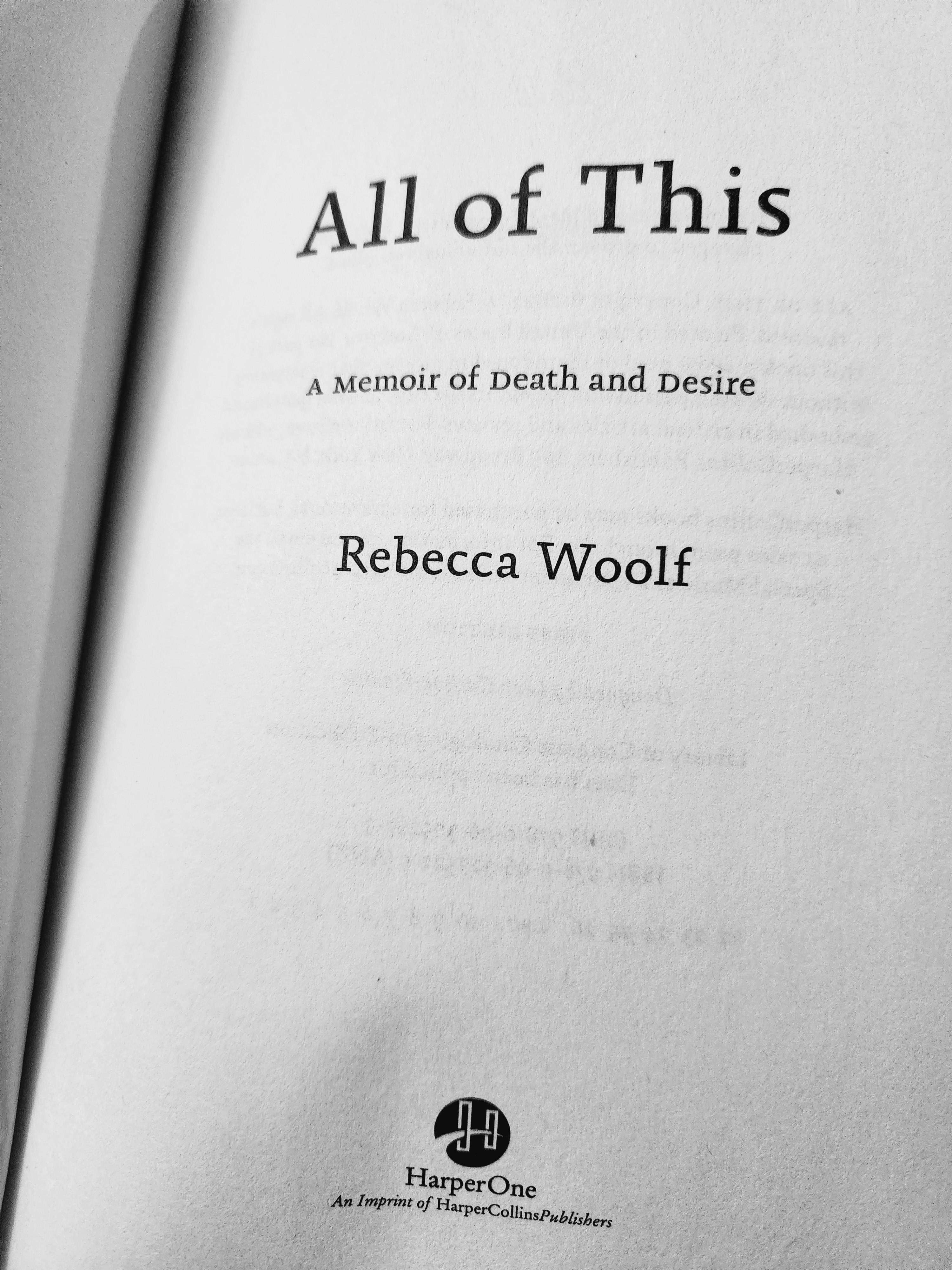
All of This: A Memoir of Death and Desire by Rebecca Woolf

First, here are my unsolicited blurbs for this book:
“Please option this for a film asap.”
“Woolf is a modern day Nora Ephron.” (Possibly influenced by the fact that I just finished Heartburn, but still!)
“This book is the true LA Story.”

After following her work online for years (as one of the thousands of people whose fingers hold her up in this cosmic game of light as a feather, stiff as a board), I have been eagerly awaiting my chance to read All of This: A Memoir of Death and Desire by Rebecca Woolf.

The first half+ of this book is a gripping narrative. Later, the book becomes less plot driven and slows, and I think that’s because the “after” is not/could not be a linear trajectory.

Woolf wrestles with what it means to be a feminist, or to become a feminist, and puts a magnifying glass to some of the common dynamics of life, relationships, particularly heterosexual relationships that are, to say the least, problematic. I was with her for these points because I also wrestle with many of the same questions. I differ though. Unlike Woolf, I was less tied down in my early adult life, and more so now, even though still not very “tied down” by comparison, and that is by design. I had my children later, but a decade ago, I was also reading about her life online. To be reading this book now, as I have little ones of my own feels very full circle, which she would enjoy.

Here are some lines I loved or identified with and/or that gave me pause:

First, as a fan of her writing, I loved seeing her include her numbered lists with numbers that get longer and insaner each time.

“I will not shrink myself nor prioritize people’s pleasure over my own.” Simple, true. It can be hard to recognize when it’s happening.

“Then the 2016 election happened.” This changed me forever too, and I am still not over it.

“WHAT IF IT DID NOT TURN OUT TO BE CHILL?” Just, lol, yes, this is what it is like to be a parent, mother, woman in life.

“I soon realize that it’s a lot faster for me to pack four lunches on my own.” This is just simply true and a lot of people don’t know it.

“My daughters. They are only mine now.”

“The bravest women I know are not widows. They are divorced.”

“And there is nothing I can do but let it go and drive him home. This is the moment I became a single mother.”

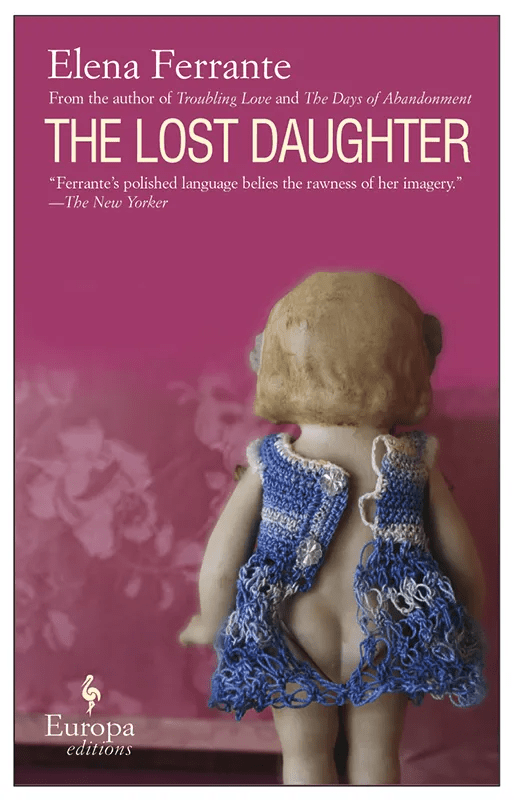
The Lost Daughter by Elena Ferrante

I read Elena Ferrante’s The Lost Daughter immediately after finishing My Brilliant Friend. This is another excellent, although perhaps more literary, piece than the first book of the Neopalitan Quartet series.

The Lost Daughter, also referenced in the Mother’s book, is about the darker side of motherhood, in a way that I found entirely relatable. Too often, critical books on motherhood are too critical, too negative–children are too exhausting, it’s not worth it, end of story. However, I truly appreciate Ferrante’s more nuanced approach. In The Lost Daughter, she turns a magnifying glass on the difficulties, violences, and burden of motherhood, the complete selfless turning over of the self that is required of the job, an ask that is far too demanding and made worse by societal constructs around motherhood and a general lack of support.

However, instead of dismissing the mothering journey altogether, as too exhausting, too violent, Ferrante acknowledges the duality of the role, the positive life changing aspects of it–the more complicated relationship it can foster in the self in regards to love, compassion, nurturance, service, and ambition. The little girl in The Lost Daughter is depicted as both angelic and beautiful from a distance, but up close is whiny, snot-nosed, crusty-eyed, and clawing, swatting, and pinching at adults around her. This is the reality of living with and loving a child. They are, each and every one of them all at once both transcendently perfect and also demanding, selfish, and incidentally cruel. To be a mother is to live within this duality constantly throughout the day. It’s complicated and beautiful and ugly too.

Ladies Lazarus by Piper J. Daniels

I was late in ordering Ladies Lazarus by Piper J. Daniels, so I started reading quickly when it arrived. Then, I slowed way down because it was so good, and I wanted it to last. The book is that rare blend of beautiful language, poetry, insight, feeling, and social commentary. Blending the latter with the former requires a talent that few possess. Daniels does it deftly throughout the book.

ladies-lazarus-cover-web

Ladies Lazarus by Piper J. Daniels

Her explanation, experience, and insights into mental illness are unprecedented, and as I read, I thought frequently that this book should be required reading in the academic fields that deal with mental health. Her writing provides insights essential (and seemingly currently lacking) to the field.

The book adds feminist insights to the larger conversation. Her insights on being a woman, coping with assault, shaping one’s entire being around the threat and reality of violence are, again, unprecedented. Acute, accurate, informative.

The book is poetic, emotional, and beautiful. I especially found her depiction of love to be beautiful and true. Society forces an awareness, obsession even, with male to female violence from a young age, and, perhaps as a consequence, the author falls in love with the women who have been harmed, who have been murdered, and who have been taken their own lives. As a result, the reader feels the author’s love for all women–a love that functions authentically, but also as a life philosophy, a social commitment.

The reader does not get a tidy ending. The writer leaves Washington State for the dry, hot climes of Arizona. The last two chapters return more to love and poetry. The last two chapters seem like the next book. But instead, as a reader, I wanted a reconciliation with the dead souls who the reader has been holding in her heart. I also want the next book. I hope she’s doing us all a favor and writing it now.

Why I Am Not a Feminist by Jessa Crispin

I read Why I Am Not A Feminist: A Feminist Manifesto by Jessa Crispin when it was recommended by a colleague and when just hearing the title made my blood boil as I recalled countless bad Jezebel articles and dead end arguments on social media about feminism over the past few years. So, I read it.
As expected, Crispin makes some good points, but also made my blood boil. It reads like being in an argument with the most gaslighting, narcissistic lover or family member you can’t escape. You bring up a problem. They put words in your mouth. They turn it around and accuse you of doing the thing that they were doing. Everything gets spun around. They deny saying the thing they just said. You feel like you’re taking crazy pills. Actually, that’s exactly what it’s like to read this book if you are me–a college-educated woman who has identified as a feminist since the halcyon days of undergraduate school.

The good aspects are that there are some smart and critical observations about social justice, and embracing an ideology like feminism, and life in general. She brings up important points and social events that we could probably all benefit from thinking about more critically and understanding in new ways. The bad points are that it is full of soundbites that lack real depth, and in that way it is also not very literary. It reads more like a Ted Talk, and she is constantly essentializing–to the degree that her insights are often inaccurate and/or misleading. There are straw man arguments throughout.

If you think the Crispin has miscategorized the term, and that feminism is still useful, then Crispin’s book will fall short as a manifesto.

Here are some lines that stood out to me (and a response):

  • “In order to make feminism palatable to everyone, they have to make sure no one is made uncomfortable by feminism’s goals” (8). I agree that this is a problem. Not all feminisms will be “palatable” to the masses and that’s ok/inevitable.
  • “If the goal is universality, then these feminists need to simplify the message to such a degree that the only people who would disagree with their pitch are religious freaks and hardcore misogynists” (10). This seemed to be the case with the Women’s March. The voices were so varied that everyone could easily feel good about participating. I didn’t (and don’t) think that’s a bad thing. There will be easy things and there will be hard things. The Women’s March was an easy thing.
  • “If you are surrounded by people who agree with you, you do not have to do much thinking…you do not have to work at constructing a unique identity. If you are surrounded by people who behave the same way you do, you do not have to question your own choices” (15). This is just a great reminder.
  • “What needs to be restored, and can be restored, is a feminist philosophy” (22). There never was a central “feminist philosophy.” Crispin does this throughout–essentializes or argues for or against things that were never “things” to begin with.
  • “There is a way a woman can deflect the worst effects of patriarchal control, and that is through money” (55). As a “Marxian feminist” this just stood out to me. This is a thing.
  • “Outrage culture” (106). I liked this phrasing. Social media and an “easy share” culture facilitates outrages culture, and there’s really no evidence that any of it is helpful.
  • “If you want to create a better world and a better existence for your people, you must participate in the imperfect world that exists now” (143). The whole “better world” narrative isn’t very convincing to me, but the participating part? That’s something with which I can agree. 

My Life on the Road by Gloria Steinem

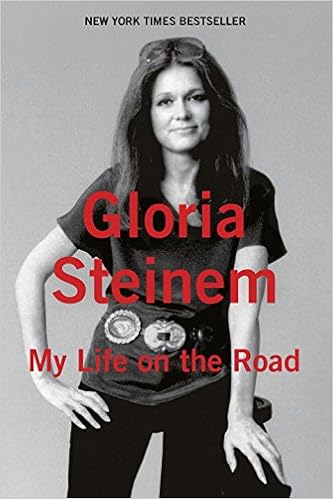
Gloria Steinem has been in my peripheral for years now. She’s lovely. She’s a feminist journalist. We both have a penchant for large sunglasses. She did waitressed for Playboy to write an exposé. She’s an iconic feminist figure. Sometimes her politics and approach seemed too bland for me to really deeply identify with her. Other times she seemed too out there.

I read her latest book, My Life on the Road, and here’s what stood out to me. Because of her known beauty and brains, she could have chosen a conventional path: marrying for love and money, children, soccer games, and charities–all meaningful work, but too often requires the sacrificing of the self for the good of the others (family). That she chose not to pursue a more conventional path, one that so many women value and judge themselves against, is powerful. Steinem had a choice, and she chose feminism. (I’m fully aware the this observation might seem less than feminist, but I think her beauty is part of her particular feminism, and I’m treating it as such.)

image from amazon.com

The book itself if full of important feminist history. I tend to be exposed to more “high theory,” academic feminism. Steinem’s history is a political one, a public one. She’s a journalist after all, with a wide readership.

First–and this blew my mind–she began the book by dedicating it to her abortionist. Her abortionist. I found this to be completely provocative and outrageous and wonderful and true. And for that I loved it.

Here are some quotes from the book that I thought were of interest (with page number):

On violence against women and a healthy society: “We might have known sooner that the most reliable predictor of whether a country is violent within itself—or will use military violence against another country—is not poverty, natural resources, religion, or even degree of democracy; it’s violence against females. It normalizes all other violence” 43.

On the economy and the environment: “pressuring women to have too many children is the biggest cause of environmental distress, and economic courses should start with reproduction, not just production” 100.

On our Democratic nominee Hillary Clinton: “she was potentially, as one said, “a great girlfriend” who had their backs” 160.

Cultural problems: “Women are always better liked if we sacrifice ourselves for something bigger—and something bigger always means including men, even though something bigger for men doesn’t usually mean including women” 165.

This one’s just a good line: “Laughter is an orgasm of the mind” 181.

These song lyrics:

It’s a rainy night in Georgia
and it looks like
it’s rainin’
all over the world

Just another great line: “Surrealism is the triumph of form over content” 189.

This is going to take forever: “According to the wisdom of Indian Country on my own continent, it takes four generations to heal one act of violence” 202.

Here’s why it’s so important to me that Hillary Clinton received the presidential nomination: “…when God is depicted only as a white man, only white men seem godly” 205.

A great chapter title that has me thinking about my relationship to Truth: “What Was Once Can be Again” 211.

Truth: “YOU CANNOT THINK YOURSELF INTO RIGHT LIVING. YOU LIVE YOURSELF INTO RIGHT THINKING. –Native  Elders 234.

On women: “Women elders were keeping the rhythm of life” 241.

Something to remember in regards to politics: “Anybody who is experiencing something is more expert in it than the experts” 245.

Parting wisdom to remember: “My father did not have to trade dying alone for the jobs of the road. My mother did not have to give up a journey of her own to have a home.

Neither do I. Neither do you” 251.

Be well, my loves.

Maybe Mad Max: Fury Road Is Not So Feminist After All

As I mentioned in the previous post, I’ve been absolutely blown away by the response to the new Mad Max: Fury Road film. The critics absolutely adore this film, and early on started claiming that the film is feminist. Social media has been blowing up with articles about the film. Mostly, I’ve been surprised and pleased that everyone else is noticing what, for a long time, felt like my own little secret.
Beyond that, I’ve been a little uncertain about the most pervasive argument. which is that the film is feminist. While there are many forms of feminism, and this film might encompass some of those interpretations, I’m not entirely convinced that this is a feminist film. In my view, simply adding female characters, and even a female lead, is not enough to make it feminist.

According to the Bechdel test, a movie has to have A) at least two women, who B) talk to each other, about C) something besides a man. Of course it’s shocking that so few films can pass the Bechdel test, but, in my opinion, just passing the Bechdel test is not enough to make it a feminist film. It’s just enough to make it not “problematic” and maybe not sexist. Sadly, however, with so few women represented in film, maybe this is all it takes to earn the “feminist” label. I, however, want a little more.

Yes, Fury Road has female characters, and yes they talked to each other, but did they ever talk about anything besides men—their captors who kept them in chains? Maybe a little bit. Not really. Their entire raison dêtre is a reaction to the men in power. The film is about reacting to a corrupt and toxic system of power, so maybe that could be construed as feminist, but a better reaction to the corrupt political system was never clearly defined (though perhaps implied here and there). We see women acting out of desperation. In my view, the film is mostly about a strong female lead with an action/reaction that may not be clearly feminist, but is (at least) not incredibly sexist.

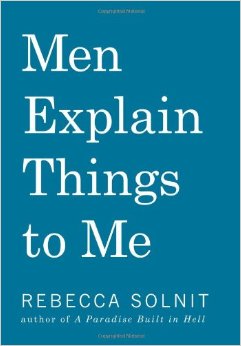
Men Explain Things to Me by Rebecca Solnit

I just finished Men Explain Things to Me by Rebecca Solnit over the course of a few evenings. It’s a *heavy* read, but it’s composed of short, manageable essays. The first most noticeable thing about this book is that it is not funny. There is absolutely nothing funny or lighthearted about it, and that was a surprise. The title is sort of funny, and alludes to “mansplaining,” which is terrible and indicative of larger social issues surrounding gender, but it’s also sort of funny. The title is not a good indication of the book.

image from amazon.com

image from amazon.com

Solnit is unrelenting in her depiction of the “longest war,” a war on women. Reading it was overwhelming—a reminder of the violence and disdain lobbed at women by our society. The statistics were staggering. Having heterosexual relationships with men seemed increasingly fraught for both genders. I was left wondering how we navigate these weird power dynamics in our most personal relationships. I felt overwhelmed by the violence. I felt overwhelmed by the reminders of the constraints I face each day as a woman.

For example, each day before dark, I try to accomplish all tasks that require me to walk any distance alone or through a parking lot. Every day, I, mostly subconsciously at this point, plan my day with safety in mind. When I overtly think about these habits, it makes me sad that I live in such a violent world, and it makes me sad that safety has to be such an underlying factor in my daily decisions. Surely this has unknown negative effects. Solnit writes, “My feminism waxed and waned, but the lack of freedom to move through the city for women hit me hard and personally at the end of my teens, when I came under constant attack in my urban environment and hardly anyway seemed to think that is was a civil rights issue” (128). Solnit argues for an emphasis on turning the lens on men and why they are so frequently the perpetrators of violence, opposed to giving women the sole responsibility of preventing violence. This “Top 10 Tip to Avoid Rape” meme has made the rounds and points out the profound role that men (obviously) play in “rape culture.”

image found here

image found here.

Like Solnit, I wonder why these problems are not viewed as a deeper crisis and as a civil rights issue. In recent years, I have felt a real personal fear as politicians have made absolutely horrifying, and often scientifically inaccurate, claims about women’s bodies. As the Hobby Lobbys and various right wingers argue about what I can and cannot do with my own body, for the first time, it has felt very personal and very stifling.

Of course, the reaction to these issues is often, yes, but “not all men.” And, Solnit carefully dedicates sections of each chapter, writing “not all men, but…” This is unfortunate. We can’t just talk about this issue without spending a lot of time reassuring men and women that not all men are bad. In so many ways it seems like this reassurance is also indicative of the problem. It’s a problem that we literally can’t even talk about women’s issues without spending a good deal of time reassuring men and talking about men and turning the focus, even just briefly, back to men. On the other hand, they’re half the population, and they’re our partners, fathers, brothers, and friends, and so it makes sense that we can’t talk about women without spending some time also talking about men.

The book isn’t entirely matched thematically, and she delves into some literacy criticism, as a way to address the larger social problems that she unpacks earlier in the book. She wrote of a criticism that “does not put the critic against the text” (101). In her exchange with Susan Sontag, Solnit writes that “you don’t know if your actions are futile; that you don’t have the memory of the future” (93). This is in response to Sontag’s assertion that resistance is required, even if it is futile, and maybe it is always futile.

On Woolf, Solnit writes of a botanist that had “a knack for finding new species by getting lost in the jungle, by going beyond what he knew and how he know it, by letting experience be larger than his knowledge, by choosing reality rather than the plan” (96), and I love this idea so much. For living life, for finding new ideas, for creating art. I am such a planner and a researcher, and I love the idea of this kind of purposeful method (which, yes, requires planning and research). I love the idea of using this method as a means of discovery, rather than following what is known: “a compass by which to get lost” (106).

Of measurement and discovery, Solnit also writes about “the tyranny of the quantifiable,” which is “the way what can be measured almost always takes precedence over what cannot” (104-105). This has been a frustration for me lately. Working in bureaucracies, and within high education, too often means a singular focus on the quantifiable, on the assessable. When other ways of being or knowing are scoffed at as being dangerous, even life-threatening, we are limited by what we can do as dreamers, thinkers, creators, and teachers.

This book reads up so quickly and so powerfully that there’s really no reason not to read it. Afterward, you can spend some time thinking through what it all means for gender, relationships, and the way men and women exist in the world. I think I’ll even pick up her other book, Wanderlust because it is about walking and maybe other things too.