Tag Archives: feminist

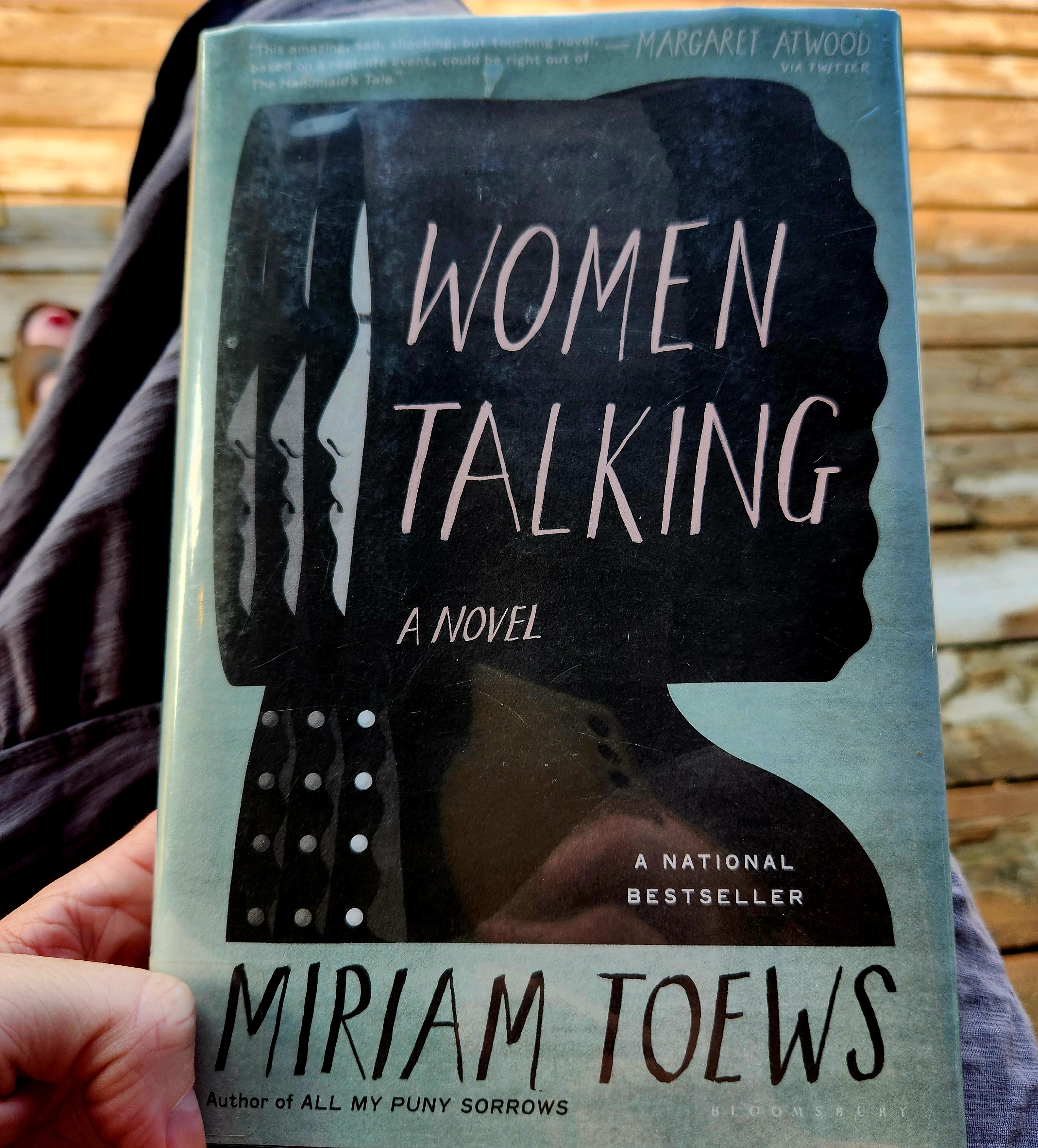
Women Talking by Miriam Toews

My latest read was Women Talking by Miriam Toews. I did not see the film, but heard about the horrifying real-life premise, and it really stuck with me. This book was excellent yes, but I do have more to say about it.

This is a dialogue-heavy book. And those are tough, imho. It actually is mostly “women talking.” Most of the book struck me as a kind of feminist 12 Angry Men, and that was exciting to me. Toews pulls off the heavy dialogue, though it must have been no easy task. Toews was also able to draw out the unique qualities of the characters in a fairly limited space. Furthermore, Toews is particularly well-positioned to write this book, based on her own Mennonite background. She is able to draw on the kinds of religious philosophy in a way that felt very real to me as a reader.

[Spoiler] (though I still think the book would be worth reading): The book is narrated by a male character, August, who is a troubled young man and village teacher of the local young men. He is also a victim of the same oppressive culture of men that has also preyed upon these women. He takes notes during the women’s meetings. (The women are not allowed to learn to read and write, so they cannot take notes themselves.) At first, it seems powerful that the women cannot take their own notes, and August’s presence serves as a reminder of that. He also helps add some drama and intrigue.

However, by the end of the book, the emotional landscape really shifts to August entirely. On one hand, this is the reality for so many women’s lives: their story is not told, except maybe through the perspective of men. I was cheering this book on, as one that was still able to center women’s voices and dialogue throughout. In the end, though, I felt that the story became August’s story, and I am willing to entertain the notion that this is just the framing, and this is just how it is, and this can still be a feminist account, but as a reader, I wanted it to end differently. I wanted it to end through the lenses and perspectives of the women.

If you read it, tell me if you loved the ending, or if you wanted something different.

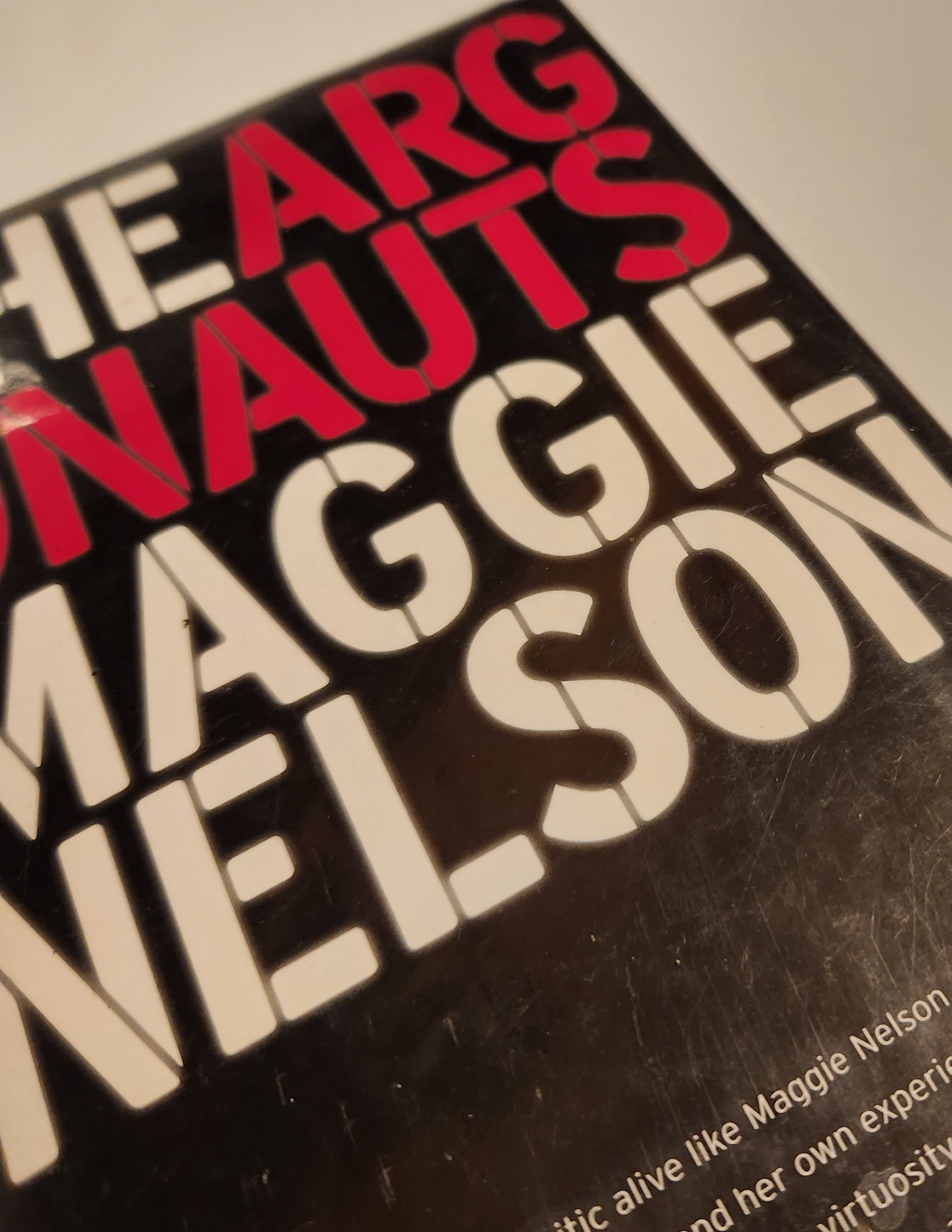
The Argonauts by Maggie Nelson

The Argonauts by Maggie Nelson wasn’t on my reading list, but I dropped everything when I remembered I hadn’t read it. What a great book! First, it should be taught in graduate-level theory courses. (It probably is, but nothing like this was taught in mine.) We need more feminist theory like this that truly integrates the (deeply) personal with the philosophical. I can’t be the only one who gobbled this up, and I suppose I can do my part by quoting it and integrating it into my scholarship myself.

The blurbs about this book say it’s about art and philosophy, but, I don’t know, somehow those descriptions fail to capture what Nelson is doing, which is, admittedly, unparalleled and difficult to describe.

The book helped me understand some philosophy and culture more deeply through her insights and critique. Unsurprisingly, I clung to her thoughts on motherhood, joy, femininity, womanhood, and culture. Perhaps especially as a mother, I appreciated the spare, yet complex prose. What can I say–The Argonauts is yet another important book by Nelson.

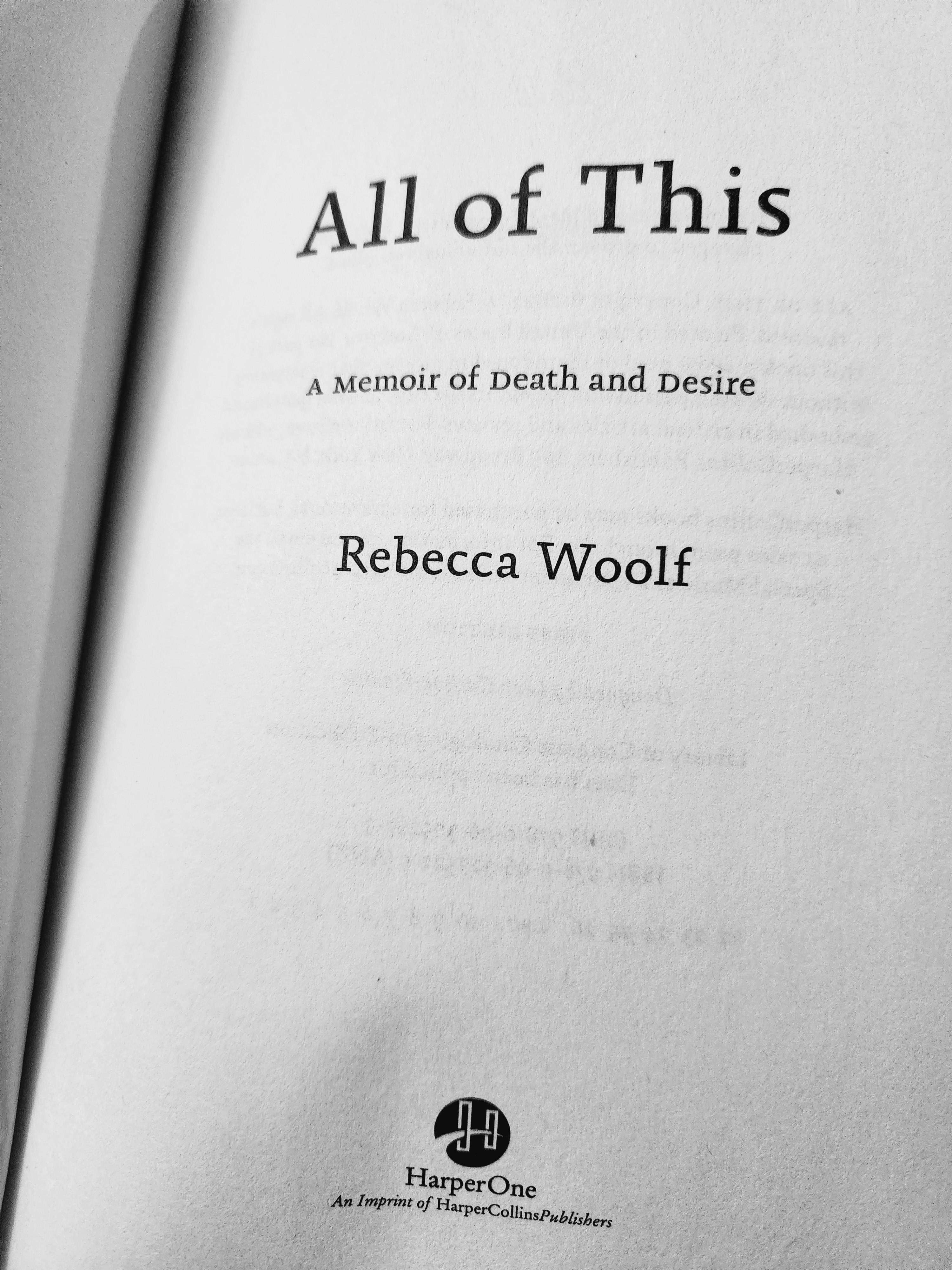
All of This: A Memoir of Death and Desire by Rebecca Woolf

First, here are my unsolicited blurbs for this book:
“Please option this for a film asap.”
“Woolf is a modern day Nora Ephron.” (Possibly influenced by the fact that I just finished Heartburn, but still!)
“This book is the true LA Story.”

After following her work online for years (as one of the thousands of people whose fingers hold her up in this cosmic game of light as a feather, stiff as a board), I have been eagerly awaiting my chance to read All of This: A Memoir of Death and Desire by Rebecca Woolf.

The first half+ of this book is a gripping narrative. Later, the book becomes less plot driven and slows, and I think that’s because the “after” is not/could not be a linear trajectory.

Woolf wrestles with what it means to be a feminist, or to become a feminist, and puts a magnifying glass to some of the common dynamics of life, relationships, particularly heterosexual relationships that are, to say the least, problematic. I was with her for these points because I also wrestle with many of the same questions. I differ though. Unlike Woolf, I was less tied down in my early adult life, and more so now, even though still not very “tied down” by comparison, and that is by design. I had my children later, but a decade ago, I was also reading about her life online. To be reading this book now, as I have little ones of my own feels very full circle, which she would enjoy.

Here are some lines I loved or identified with and/or that gave me pause:

First, as a fan of her writing, I loved seeing her include her numbered lists with numbers that get longer and insaner each time.

“I will not shrink myself nor prioritize people’s pleasure over my own.” Simple, true. It can be hard to recognize when it’s happening.

“Then the 2016 election happened.” This changed me forever too, and I am still not over it.

“WHAT IF IT DID NOT TURN OUT TO BE CHILL?” Just, lol, yes, this is what it is like to be a parent, mother, woman in life.

“I soon realize that it’s a lot faster for me to pack four lunches on my own.” This is just simply true and a lot of people don’t know it.

“My daughters. They are only mine now.”

“The bravest women I know are not widows. They are divorced.”

“And there is nothing I can do but let it go and drive him home. This is the moment I became a single mother.”

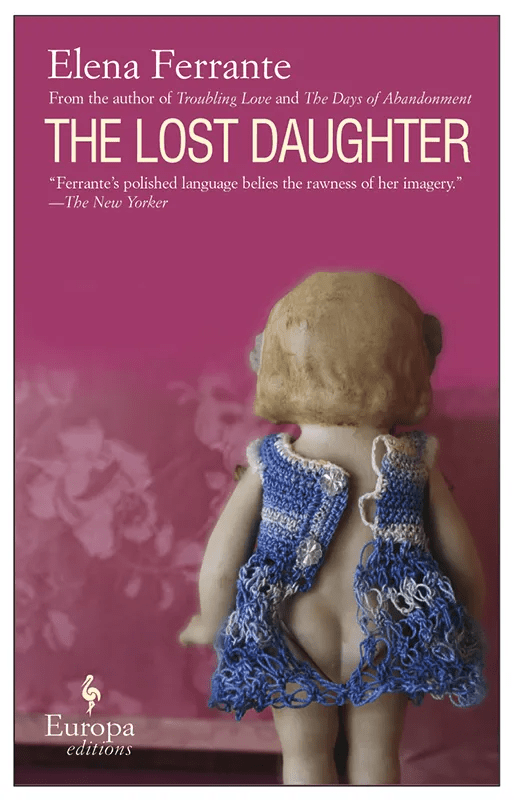
The Lost Daughter by Elena Ferrante

I read Elena Ferrante’s The Lost Daughter immediately after finishing My Brilliant Friend. This is another excellent, although perhaps more literary, piece than the first book of the Neopalitan Quartet series.

The Lost Daughter, also referenced in the Mother’s book, is about the darker side of motherhood, in a way that I found entirely relatable. Too often, critical books on motherhood are too critical, too negative–children are too exhausting, it’s not worth it, end of story. However, I truly appreciate Ferrante’s more nuanced approach. In The Lost Daughter, she turns a magnifying glass on the difficulties, violences, and burden of motherhood, the complete selfless turning over of the self that is required of the job, an ask that is far too demanding and made worse by societal constructs around motherhood and a general lack of support.

However, instead of dismissing the mothering journey altogether, as too exhausting, too violent, Ferrante acknowledges the duality of the role, the positive life changing aspects of it–the more complicated relationship it can foster in the self in regards to love, compassion, nurturance, service, and ambition. The little girl in The Lost Daughter is depicted as both angelic and beautiful from a distance, but up close is whiny, snot-nosed, crusty-eyed, and clawing, swatting, and pinching at adults around her. This is the reality of living with and loving a child. They are, each and every one of them all at once both transcendently perfect and also demanding, selfish, and incidentally cruel. To be a mother is to live within this duality constantly throughout the day. It’s complicated and beautiful and ugly too.

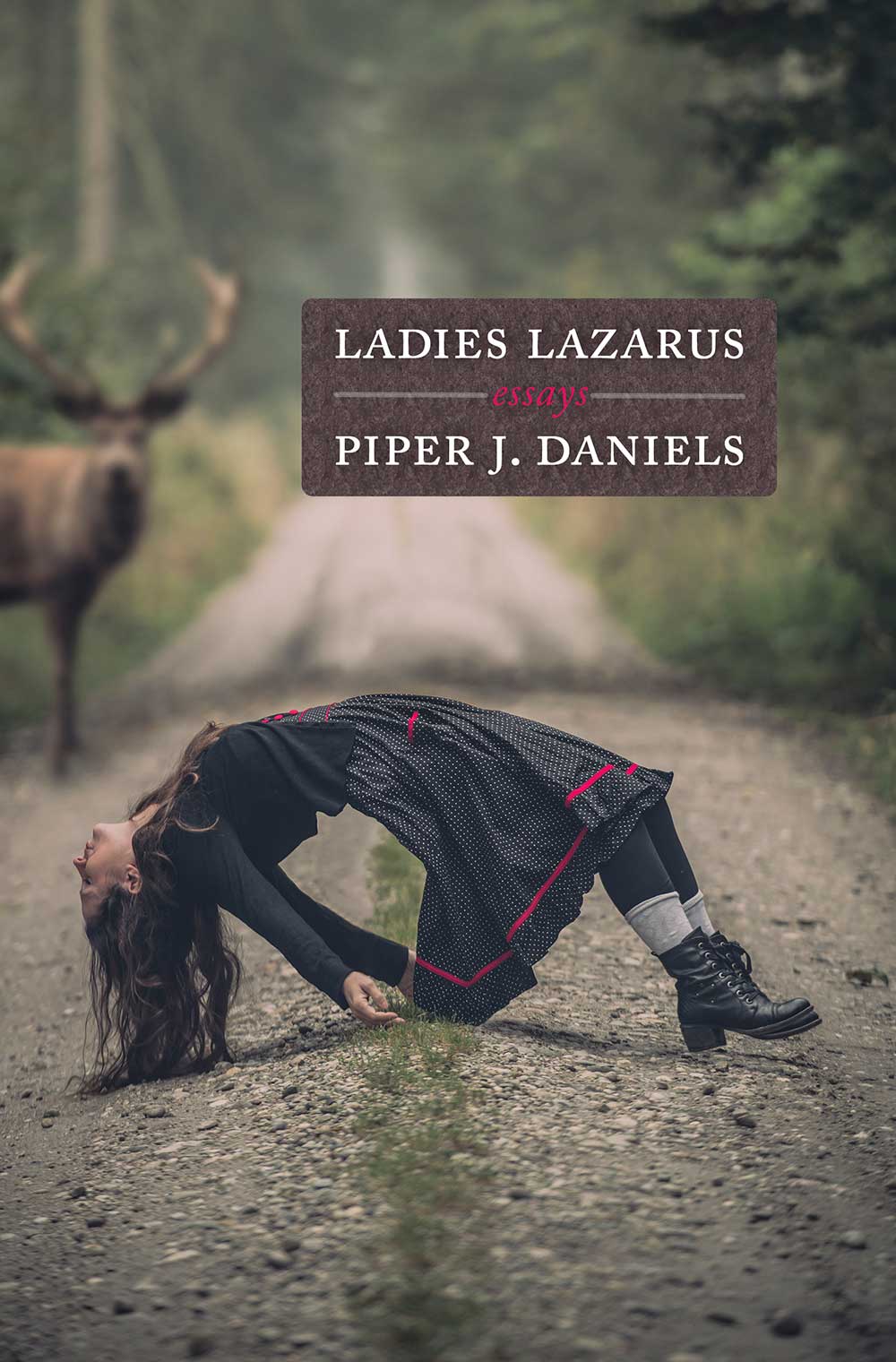
Ladies Lazarus by Piper J. Daniels

I was late in ordering Ladies Lazarus by Piper J. Daniels, so I started reading quickly when it arrived. Then, I slowed way down because it was so good, and I wanted it to last. The book is that rare blend of beautiful language, poetry, insight, feeling, and social commentary. Blending the latter with the former requires a talent that few possess. Daniels does it deftly throughout the book.

ladies-lazarus-cover-web

Ladies Lazarus by Piper J. Daniels

Her explanation, experience, and insights into mental illness are unprecedented, and as I read, I thought frequently that this book should be required reading in the academic fields that deal with mental health. Her writing provides insights essential (and seemingly currently lacking) to the field.

The book adds feminist insights to the larger conversation. Her insights on being a woman, coping with assault, shaping one’s entire being around the threat and reality of violence are, again, unprecedented. Acute, accurate, informative.

The book is poetic, emotional, and beautiful. I especially found her depiction of love to be beautiful and true. Society forces an awareness, obsession even, with male to female violence from a young age, and, perhaps as a consequence, the author falls in love with the women who have been harmed, who have been murdered, and who have been taken their own lives. As a result, the reader feels the author’s love for all women–a love that functions authentically, but also as a life philosophy, a social commitment.

The reader does not get a tidy ending. The writer leaves Washington State for the dry, hot climes of Arizona. The last two chapters return more to love and poetry. The last two chapters seem like the next book. But instead, as a reader, I wanted a reconciliation with the dead souls who the reader has been holding in her heart. I also want the next book. I hope she’s doing us all a favor and writing it now.

Why I Am Not a Feminist by Jessa Crispin

I read Why I Am Not A Feminist: A Feminist Manifesto by Jessa Crispin when it was recommended by a colleague and when just hearing the title made my blood boil as I recalled countless bad Jezebel articles and dead end arguments on social media about feminism over the past few years. So, I read it.

As expected, Crispin makes some good points, but also made my blood boil. It reads like being in an argument with the most gaslighting, narcissistic lover or family member you can’t escape. You bring up a problem. They put words in your mouth. They turn it around and accuse you of doing the thing that they were doing. Everything gets spun around. They deny saying the thing they just said. You feel like you’re taking crazy pills. Actually, that’s exactly what it’s like to read this book if you are me–a college-educated woman who has identified as a feminist since the halcyon days of undergraduate school.

The good aspects are that there are some smart and critical observations about social justice, and embracing an ideology like feminism, and life in general. She brings up important points and social events that we could probably all benefit from thinking about more critically and understanding in new ways. The bad points are that it is full of soundbites that lack real depth, and in that way it is also not very literary. It reads more like a Ted Talk, and she is constantly essentializing–to the degree that her insights are often inaccurate and/or misleading. There are straw man arguments throughout.

If you think the Crispin has miscategorized the term, and that feminism is still useful, then Crispin’s book will fall short as a manifesto.

Here are some lines that stood out to me (and a response):

  • “In order to make feminism palatable to everyone, they have to make sure no one is made uncomfortable by feminism’s goals” (8). I agree that this is a problem. Not all feminisms will be “palatable” to the masses and that’s ok/inevitable.
  • “If the goal is universality, then these feminists need to simplify the message to such a degree that the only people who would disagree with their pitch are religious freaks and hardcore misogynists” (10). This seemed to be the case with the Women’s March. The voices were so varied that everyone could easily feel good about participating. I didn’t (and don’t) think that’s a bad thing. There will be easy things and there will be hard things. The Women’s March was an easy thing.
  • “If you are surrounded by people who agree with you, you do not have to do much thinking…you do not have to work at constructing a unique identity. If you are surrounded by people who behave the same way you do, you do not have to question your own choices” (15). This is just a great reminder.
  • “What needs to be restored, and can be restored, is a feminist philosophy” (22). There never was a central “feminist philosophy.” Crispin does this throughout–essentializes or argues for or against things that were never “things” to begin with.
  • “There is a way a woman can deflect the worst effects of patriarchal control, and that is through money” (55). As a “Marxian feminist” this just stood out to me. This is a thing.
  • “Outrage culture” (106). I liked this phrasing. Social media and an “easy share” culture facilitates outrages culture, and there’s really no evidence that any of it is helpful.
  • “If you want to create a better world and a better existence for your people, you must participate in the imperfect world that exists now” (143). The whole “better world” narrative isn’t very convincing to me, but the participating part? That’s something with which I can agree. 

The Doulas: Radical Care for Pregnant People by Mary Mahoney and Lauren Mitchell

Awhile back, a colleague in the field of feminist medical rhetorics recommended The Doulas: Radical Care for Pregnant People by Mary Mahoney and Lauren Mitchell (though it must not’ve been too long ago because this book was just published in 2016). I finally got around to read it in preparation for a presentation I am giving on rhetorics of consent and advocacy in childbirth at a conference in March.

First, notice that the title is “pregnant people,” not “pregnant *women*.” We know now that it isn’t just women who get pregnant and/or give birth. I emphasize pregnant and/or give birth because this books also acknowledges that pregnancy ends in many different ways–some more socially acceptable than others.

For the most part, this book is politically sensitive to  the wide range of experiences people have as it relates to pregnancy and caring for the pregnancy and/or childbirth experience (aka doula work). Doulas provide people with support, especially in situations that are less socially acceptable. Of course, there are also doulas who hold intense, open biases. Some won’t work with gay couples (the legalities of which I question), and some are vehemently pro-life. It’s been my experience, though, that, in general, the doula community tends to be quite open to, and advocates for, variations of the pregnancy experience. (Still, the doula interview is crucial because pregnancy and birth work is incredibly political and contentious.) Unfortunately, the current cultural climate is one that is still obsessed with policing women’s bodies. Anything from choosing abortion to opting out of an epidural can be, and is, met with resistance.

Another approach I liked from this book is one of narrative medicine. Ina May Gaskin is notorious for writing childbirth guides that are full of childbirth stories. These stories work to help teach the reader about the many different healthy and normal experiences people can have in childbirth. This is important because when there is a very narrow definition of “normal,” and variations are treated as “abnormal,” interventions become the norm, and interventions too often mean trauma, surgery, injury, delayed bonding–the list goes on.

Back to the book: for my own purposes, I didn’t need or want to read most of the content. I wanted this to be a more theoretical work, but it mostly wasn’t. I also had a hard time understanding the relevance of some of the content.

Here are a few lines I liked (from the intro and forward because that’s where the book was most theoretical):

-“These doulas call it “story-based care” because they hear many stories of people for whom some choices are straightforward, while others offer extreme complexity” (x).

Since becoming a doula, I have been shocked by the number of *high stakes* choices that people have during pregnancy and childbirth. Navigating those choices and feeling empowered in through the process has been one of the most important aspects of my job as a doula.

-“Racism can distort a birthing or adoption experience. Transphobia can lead to the denial of vital healthcare. Prejudice against immigrants can divide families through deportation. Misogyny can reduce pregnant women to walking wombs without rights” (xv).

-“[Doulas] don’t sky away from naming oppressions–white supremacy, colonialism, xenophobia, homophobia, transphobia–yet they are not there to preach, but to serve” (xv).

Sure, some doulas might preach, but one unique aspect of this type of work is that, for doulas, activism is in the work–making political statements through actions, through work within the institutions and with the people most affected.

-“While much feminist and social justice activism was taking place online, the doula movement allowed activists to connect face-to-face with people confronting the realities of what the “spectrum of choice” really means” (xxi).

-On people during pregnancy and childbirth: “Worse still, they suffer the loss of personal agency as decisions that should be private become politically and bureaucratically charged” (xxi).

-On doulas: “People frequently refer to us as “advocates.” While we would not argue that point, we hope this book will show you how advocacy as a doula looks different from advocacy in other realms. Often it simply means this: we are “holders.” We hold space by creating safe, comfortable environments where our clients can be heard” (xxii).

-“Our practice as doulas is a daily expression of the union between compassion and advocacy” (xxii).

-“Though understanding systemic oppression is crucial to the way we approach doula care, we believe that individual stories have the ability to pierce the veil covering systems that affect millions of people; they are unique but universal” (xxiv).

-“So much of doula work is that transference of story and the transference of emotional burden that goes with it” (xxvi).
Maybe Mad Max: Fury Road Is Not So Feminist After All

As I mentioned in the previous post, I’ve been absolutely blown away by the response to the new Mad Max: Fury Road film. The critics absolutely adore this film, and early on started claiming that the film is feminist. Social media has been blowing up with articles about the film. Mostly, I’ve been surprised and pleased that everyone else is noticing what, for a long time, felt like my own little secret.

Beyond that, I’ve been a little uncertain about the most pervasive argument. which is that the film is feminist. While there are many forms of feminism, and this film might encompass some of those interpretations, I’m not entirely convinced that this is a feminist film. In my view, simply adding female characters, and even a female lead, is not enough to make it feminist.

According to the Bechdel test, a movie has to have A) at least two women, who B) talk to each other, about C) something besides a man. Of course it’s shocking that so few films can pass the Bechdel test, but, in my opinion, just passing the Bechdel test is not enough to make it a feminist film. It’s just enough to make it not “problematic” and maybe not sexist. Sadly, however, with so few women represented in film, maybe this is all it takes to earn the “feminist” label. I, however, want a little more.

Yes, Fury Road has female characters, and yes they talked to each other, but did they ever talk about anything besides men—their captors who kept them in chains? Maybe a little bit. Not really. Their entire raison dêtre is a reaction to the men in power. The film is about reacting to a corrupt and toxic system of power, so maybe that could be construed as feminist, but a better reaction to the corrupt political system was never clearly defined (though perhaps implied here and there). We see women acting out of desperation. In my view, the film is mostly about a strong female lead with an action/reaction that may not be clearly feminist, but is (at least) not incredibly sexist.