Tag Archives: fiction

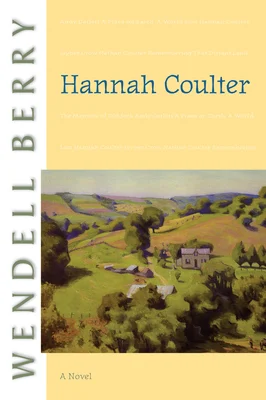
Hannah Coulter by Wendell Berry

My second book of the year is Hannah Coulter by Wendell Berry. I’ve heard of Wendell Berry before, as a respected author of natural and rural places, but this is the first book from Berry that I have read. I guess maybe I thought he was a poet, but this work, and his other books, are very much prose!

After reading, I can say that Berry walked a fine line between uncomplicated narrative, nostalgia, and truly solid writing. Normally, excellent prose is not deeply nostalgic (even cheesy?), but Berry goes there and (mostly) pulls it off.

Hannah Coulter is the narrator, and in the book she is simply retelling her life story. Her life story is one of an impoverished farm kid, then a farmer’s wife, living in rural Kentucky, born around 100 hears ago. Her story lasts through the turn of the 21st century, and the book was published in 2004.

In the book, through Hannah’s narrative, Berry captures a unique culture, experience, and perspective. Through Hannah’s eyes, readers follow a changing farmscape, a changing sense of community, and a changing (and probably worsening) world.

Coming from a small, rural community myself, I thought Berry’s depiction of small-town life was deeply accurate, and he captures the best, most wonderful aspects of a strong community–one that many people never experience.

Of course, there are also downfalls to rural, small-town living, and many are desperate to escape the confines. (The same is true, in reverse, of urban living too though.) Berry captures none of the contrary argument and focuses only on the benefits of rural living. In my mind, there is a place for this narrative in the world, and Berry gets to tell it.

Readers may marvel at the seeming poverty, the scrimping, and the hard work involved in Hannah’s life, the lack of technology, the close sense of a very large and dependable community. It’s an experience that many no longer have, as they are removed from extended families and generations-long relationships.

I’m never quite sure what to think when an author’s main character is opposite gender of the author, and I do think something is usually lost, and that may be the case in Hannah Coulter as well. This book and this content isn’t for everyone. But what is? It’s a slow, intentional read, uniquely structured, beautifully written, and appreciated by readers like me.
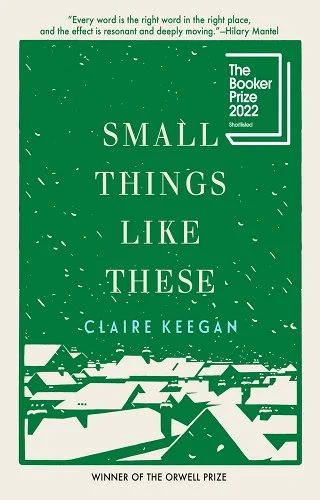
Small Things Like These by Claire Keegan

The pacing of Small Things Like These by Claire Keegan is more like that of a short story than a novel. This is nothing against the story–I love shorter works! I would classify this piece as a novella.

This book was a pleasant Christmas read, which was perfect because I finished it on Christmas Eve this year! This is a plot driven book with decent writing. It won the Orwell Prize for fiction that tackles a social issue, and it does that, and does a fine job of it.

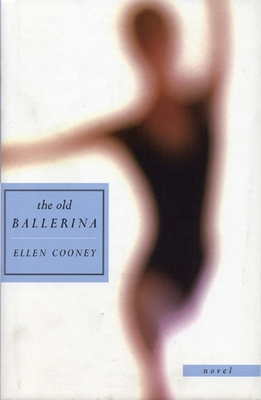
The Old Ballerina by Ellen Cooney

If you’re looking for a book that’s going to make you go “wtf” at the end, in a way that is neither particularly good, nor bad, well then The Old Ballerina by Ellen Cooney is the book for you.

I picked this book up for its compelling title, and the book does live up to the title. The book is compelling. It is experimental in form; it deals with plot in ways that are both typical and unusual, which is why I had a certain expectation for the denouement that were not met, which led to the muttering of “wft” as I closed the book.

I’m glad I read it because it is informative on what’s possible, on something to aspire toward, and, yes, this book does seem possible, and, also, necessary.

A Thousand Acres by Jane Smiley

Ok, wow, this book might be a little too on the nose. I definitely identified with certain aspects of it. Overall, A Thousand Acres by Jane Smiley is a good book, written by a objectively talented writer.

I read some short stories by Smiley in undergrad, but I hadn’t ever returned, until now. This book is about a farming family and the challenges they face as they try to navigate what to do with the land as the patriarch ages, an incredibly complicated and tough challenge. Smiley does an amazing job of navigating people’s natural fears, jealousies, ambitions, trauma, heartache, and more, with nuance. In fact, I found myself reading her bio, wondering if she had a rural background. Her understanding of, for example, how women cook food just felt so very rural midwestern and real. However, it appears that she grew up in the suburbs, which is baffling because she knows this world so well. According to her bibliography, she’s written other rural texts too. Maybe she has grandparents who were farmers.

I do have a critique of the book, and it’s one I would like to ask her about. [Spoiler ahead] In the book, a pretty shocking level of abuse is revealed. While I think this is valid subject matter, the abuse is so stunning that it reaches the point of distraction, from the narrative, from some other purposes, etc. I believe it was Hemingway who advised that an author should start the story after the beloved character dies, and I wondered what this book might be like, better perhaps, if this abuse remained an undercurrent that the author never fully revealed. The sexism and mind games alone were enough to warrant the characters’ complex emotional landscape. I just think it might’ve been more interesting to leave out the more overt stories of abuse, letting it subtly infuse the scene, without letting it completely taking over, and letting the more nuanced, but no less interesting dramas, have more emphasis throughout.