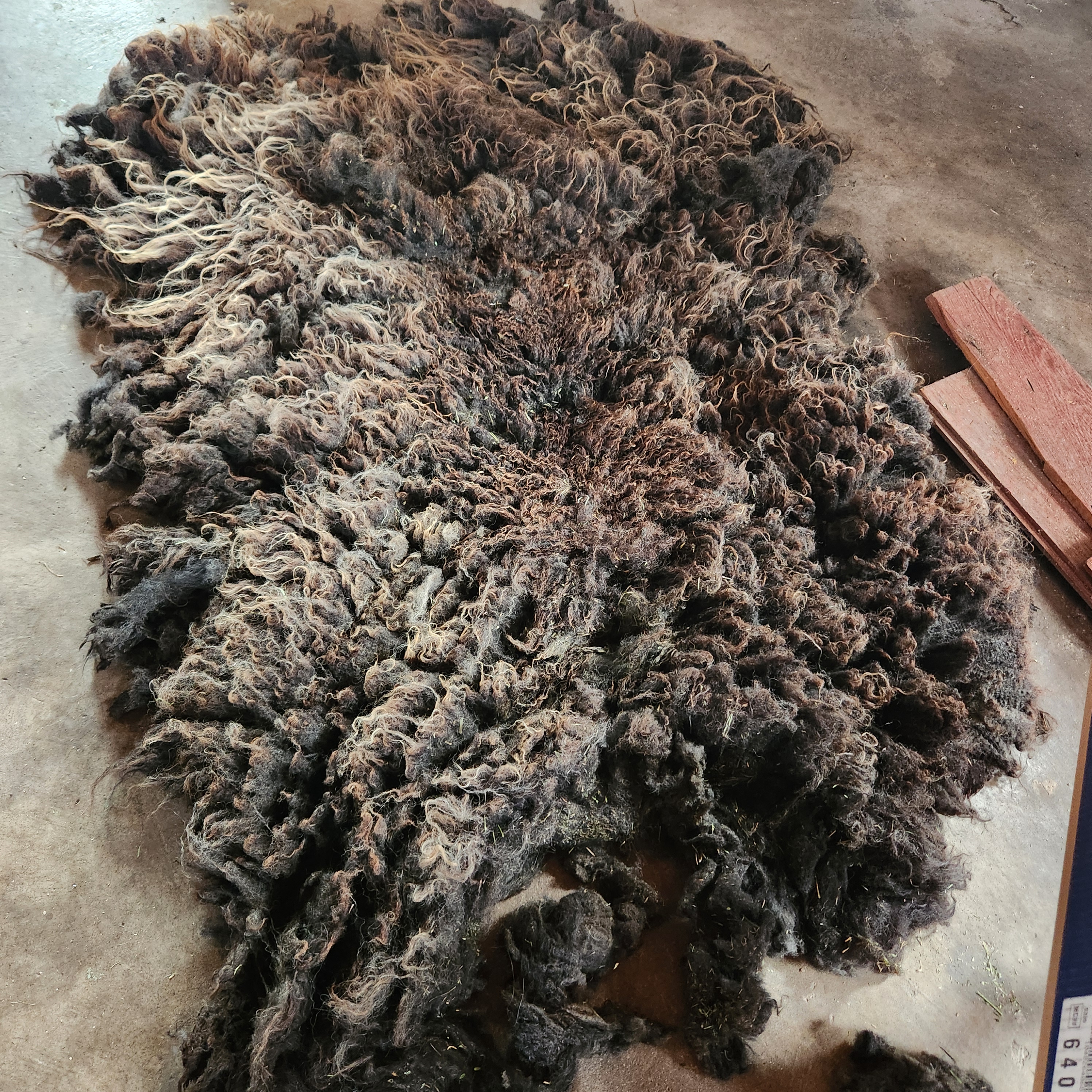
I raise fine fleeced Shetland sheep, which is a breed of primitive short-tailed sheep from the Shetland Isles. My ewes are colorful and (mostly) friendly. I shear them each spring, and occasionally I shear lambs in early fall.
Each spring this breed of sheep starts to “rise,” which is a natural release of their fleece. However, the fleeces do not actually release, and the process leaves a layer of wool close to the skin that is tough to shear through. So, I’ve been experimenting with shearing earlier in the year. I see that farmers in Montana routinely shear in mid-late February, and their climate is much colder than mine.
This year I sheared earlier than ever, and I could tell that some of the fleeces were just starting to rise, but mostly they were easy to shear, and I think I caught it in time. The other option is to wait until late spring and after the rise, which I like, and tried last year, but it can cause some confusion between lambs and ewes, and that’s a risk that I’d rather not take. So, I prefer to shear earlier if possible, before the ewes have lambed.
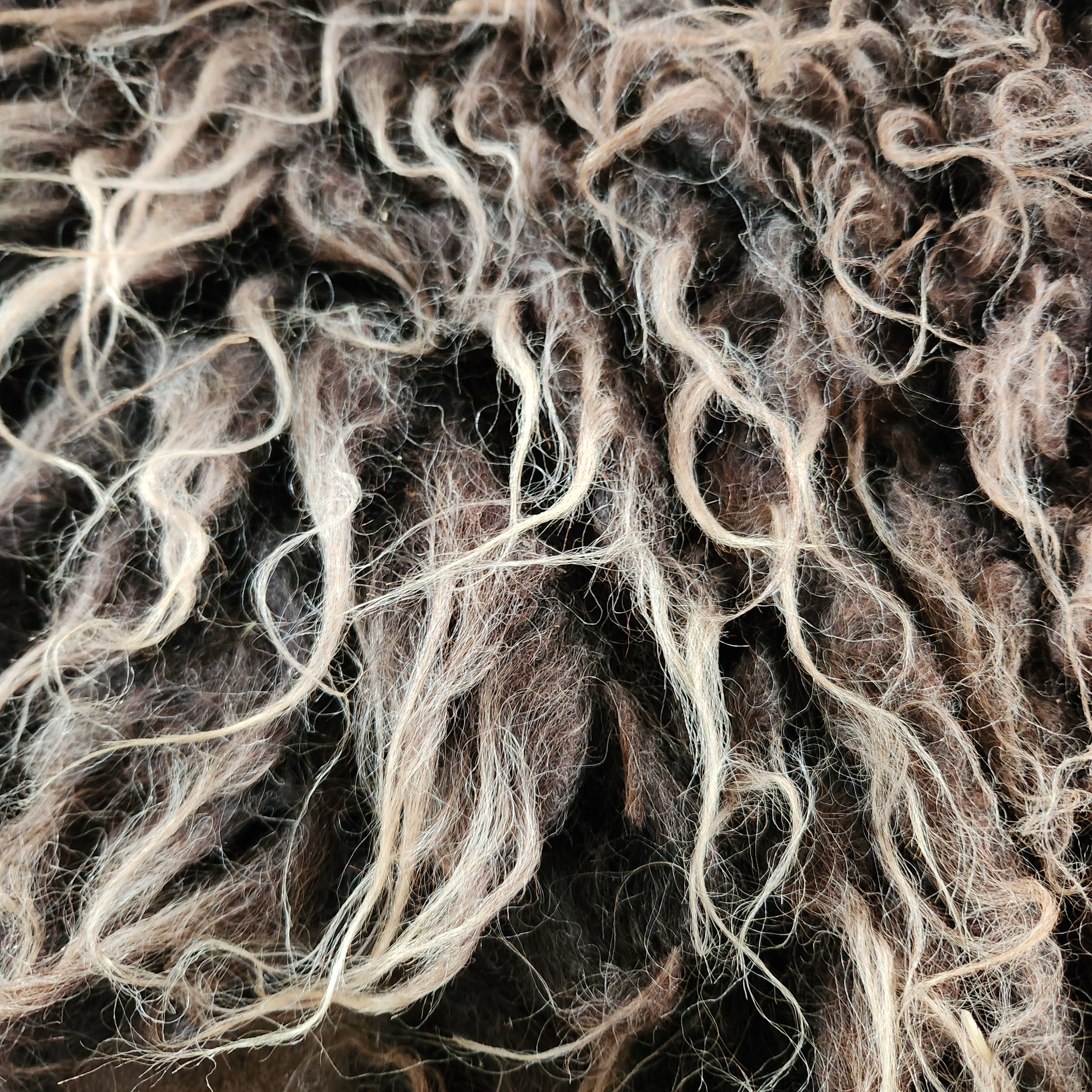
I was happy with this year’s fleeces. I loved the dark coming from Blackberry’s lambs, but also found it to be a little tough to shear. The light fleeces were mostly really light soft and easy to shear, and I might move more in that direction in years to come.
Someday I’d love to learn to weave, but until then, I love seeing what others create with these lovely fleeces!
I have been following @wildwoolshepherdess online for a few years now. Unsurprisingly, I am drawn to other women who are also been raising sheep and have found a sense camaraderie from that online community. So, when she wrote a book, The Wild Wool Shepherdess: Weave the Ancient Path, Reignite Your Feminine Fire, I definitely preordered it, both to support her and also to spend more time reading and thinking about sheep, of course!
The book is about her background and her transformation into her current beliefs and way of life. The last part of the book offers more specific guidance for bringing ancient wisdom back into one’s own life. I am always happy to read a memoir, and so I happily read through that part of the book, even though I didn’t identify closely with many of her experiences.
I really enjoyed the last part of the book. Many of her practices struck me as brave of her to share, and some things I cannot imagine integrating for myself. However, many practices did resonate with me. Spending time alone. Meditating next to a tree (try doing it without the distraction of people for three days!) Making and drinking teas. Honoring the subtle monthly shifts and going more easily during that time. Allowing others to care for you (opposed to self-care–don’t get me started on that…).
There are aspects of her thinking that do not resonate with me. For example, I am not a wolf person. Sheep are the animal that I resonate with much more, and wolves are the natural enemy to sheep! She addresses this, but it is clear that wolves are her animal, and sheep seem more about what the represent: the wool, the positive impact on the land, etc. However, she does also love the sheep and appreciate their emotional intelligence. In fact her book made me reflect on how much longer the memories seem to be in my northern short-tailed sheep. For example, a few months back, I had to give my ewe Opal two doses of antibiotics in a painful shot. She still seems to be remember and has been irritated with me ever since. I am trying to win back her favor.
My first book of 2022 is A Short History of the World According to Sheep by Sally Coulthard. This isn’t necessarily my genre, but it’s about sheep, and it was recommended somewhere online, and so I read it.
my copy of A Short History of the World According to Sheep
It’s an interesting book, and it did increase my appreciation for sheep and my understanding of the history of sheep and just how closely they lived and evolved with humans. The closer I am to livestock, I continue to be at peace with the omnivore diet. The relationship feels symbiotic, like we evolved together for this sacred purpose. Domestic animals changed significantly living alongside humans and vice versa.
The human relationship to wool was particularly fascinating. Understanding just how much wool has been produced over the years, and how that wool very much helped the evolution of the human species, and the rise of empires, was shocking. It was also difficult to read about the child labor that was used to produce so much of the woolen fabric that was used very nearly every purpose, especially 150 years ago.
Thinking about the domestication process of sheep, and other livestock, was also interesting to me. I had never thought that centuries ago, humans caught newborn wild animals, women may have breastfed them to imprint on them, and that is likely how the domestication process began. It’s shocking to think about.
I found Coulthard’s writing to be somewhat challenging. I would have appreciated a more linear organization. The chapter and subject titles are creative, but don’t add much to the understanding of the content. It’s a work of nonfiction, and those titles didn’t quite seem to fit. Additionally there were many missing transitions throughout, and so I sometimes had a hard time following. By the end, either because I was trained to it, or because the linearity improved, I started to enjoy the organization of the book.
It’s a book worth reading, but this is only especially true for us who really appreciate sheep in the first place.
When I was a little girl, I was given a bummer lamb (a lamb that needs to be bottle fed) and the 1976 copy of Raising Sheep the Modern Way by Paula Simmons. I named the lamb “Sweet Pea” and loved taking care of my little pet. Growing up on a cattle ranch, I found the size of the cattle to be a little intimidating. I’ve never been a huge horse or dog person (although I’ve met many lovely individuals). Sheep, on the other hand, were just the right size!
I used my birthday money savings and bought two purebred Montadale ewes and started my little sheep herd. I did 4-H and FFA and quickly transitioned to Suffolk and Suffolk cross sheep, since that was primarily the breed used for market lambs in my area. Over the years, I read Raising Sheep the Modern Way many times as a reference book.
I enjoyed every minute of my time raising sheep and always hoped that I would be able to raise them again some day, although, with the price of land and so many other factors, I had a hard time imagining how that would ever happen. My mom kept a little herd after I graduated, but sold them nearly a decade ago. As for me, it’s been over 20 years since I personally owned sheep. Now, so many years later, I am finally at a place where I can raise sheep again. I have a little farm of my own, and this year I began the process of building sheep-tight fences, researching the breed of sheep that would best suit my situation, finding breeders, and, yes, purchasing sheep!
I decided on two polled Icelandic ewes, Frida and Freya, an Icelandic ram, Duncan, two Shetland ewes, Lavender and Melody, and a Shetland ram, Hugh. I wanted a multipurpose breed of sheep, and I wanted to keep the numbers small. The two breeds of sheep, Shetland and Icelandic, are quite similar, both have great wool for spinning in a variety of colors. I will also be doing all of my own shearing, so I also need a smaller breed that is manageable.
Since I have sheep again, I dusted off my old copy of Raising Sheep the Modern Way and read it front to back. This time, I was much more interested in reading about fleeces, recipes, and other sheep-related products that I was less involved with the first time around. It’s a great reference book with an author who is clearly knowledgeable about sheep and loves the species. Over the years, I have read several other sheep reference books, and they are not as good. Frequently, the author has much less experience with sheep, raising them for only a few years before attempting a book, or raising hair sheep, which are far less common, with much different management needs, or they aren’t specializing in sheep, but raising a small flock, alongside many other species of livestock. Meanwhile, the author of this book, is deeply specialized in sheep, with decades of experience.
This book obviously isn’t for everyone, but if you’re raising sheep, or interested in raising sheep, this is the book I recommend.
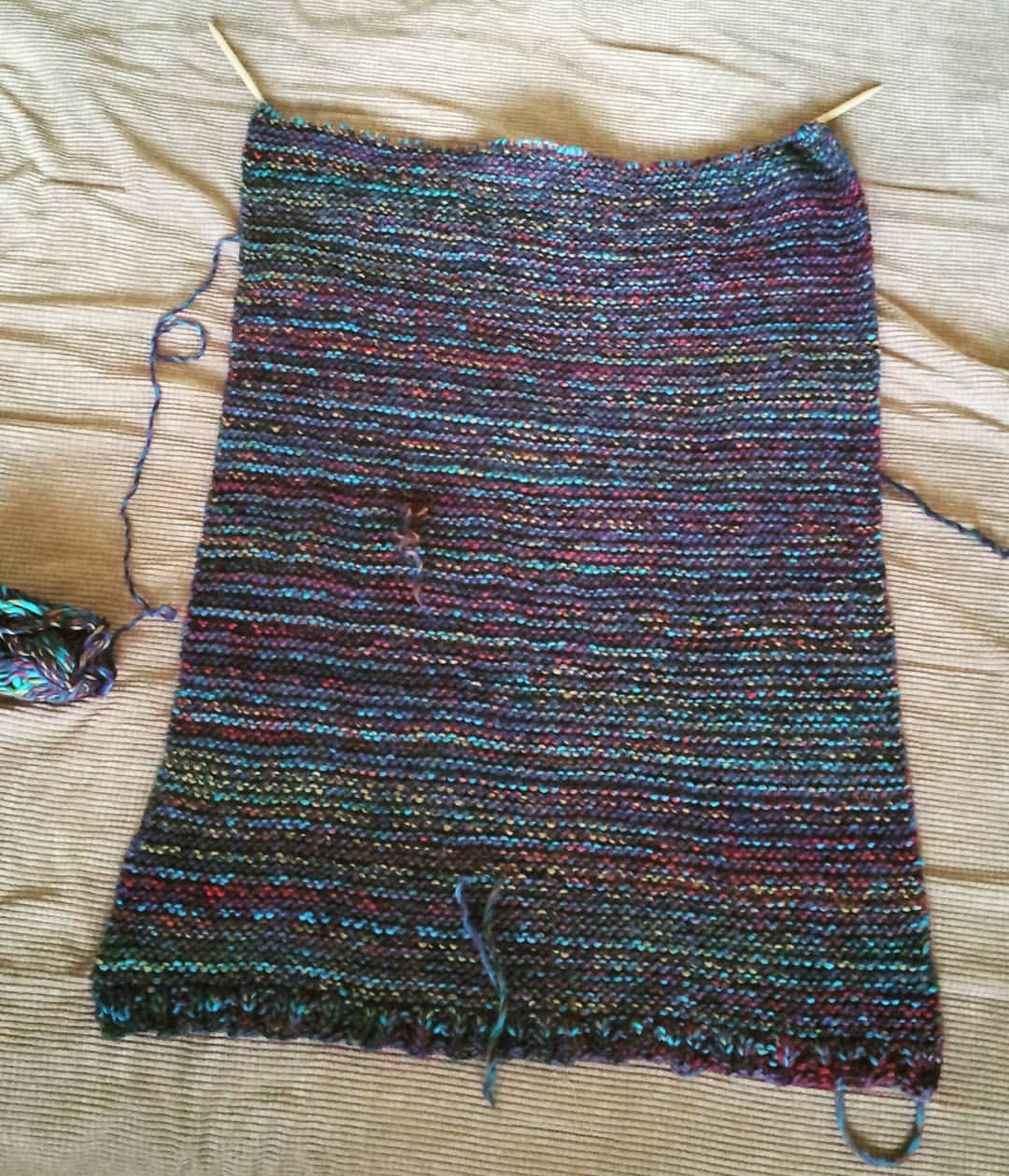
Through the winter months, on road trips from Utah to Louisiana and sitting on couches in Oregon with family, I knitted this baby blanket. It’s one of my favorite blankets to date (and I know I keep saying that), but I’m getting better at the knit stitch, and this time the yarn also made a huge difference. I used “Ocean” by Paton Colorwul, which is 100% wool, and I absolutely loved it. Wool yarn is expensive, and it can be scratchy, but when it’s done right, no other yarn compares. As I am wont to do, I ran out of skeins and had to frantically track down the last one from a Michaels across the valley. I’ve been trying to be more careful about buying skeins with matching lot numbers, but when you run out of yarn, you aren’t left with many choices.
close up of knit stitch in “Ocean” by Paton Colorwul
The blanket was finished just in time to serve as a gift to a friend who gave birth to her son last month. I have identified somewhat with her journey to motherhood (i.e., she’s had love, life, travel, education, and a career before she very actively chose motherhood), and so I liked giving her an extra special gift.
The Materials:
-6 skeins of “Ocean” by Paton Colorwul
-Knitting needles, US 10.5
The Pattern:
-Cast on 76 stitches.
-Knit purl, knit purl, purl knit, purl knit until the row is finished.
-Then reverse it: purl knit, purl knit, knit purl, knit purl until the row is complete.
-Continue this pattern until you’ve got a few inches of a ribbed border.
-Then, knit the rest of the blanket until the last few inches or so.
-Finally, repeat the pattern from the beginning (knit purl, knit purl, purl knit, purl knit; then reverse it on the next row) to create a ribbed border again at the other end.
nearly finished baby blanket
The finished product should be rectangular, with a ribbed border at each end. I’m getting better at making even stitches, and so the wobbly edges of my previous blankets are starting to disappear (though not entirely).
My idea for the ribbed border on the ends was actually difficult to keep track of. There is an easier way to do ribbing, but I wanted the ribs on this border to be a little thicker. Normally, I like very absent minded knitting (for which baby blankets are perfect). But, these borders were knitted and torn out a few times before it was all said and done. It still ended up a little uneven in places. The take away: if you’re looking for an easier border, there are easier patterns out there. If you’re looking for the perfect yarn for a baby blanket, look at the Paton Colorwul selection.


 SHEREWIN