Category Archives: life

2017: year in review

2017 started as one of, if not the, worst years of my life, but it got a whole lot better by the end. I got sick (for the first time in my life, really). Weirdly sick, and doctors couldn’t figure it out, until finally some fringe health workers said maybe stress, maybe anxiety, maybe adrenal fatigue, but still nothing certain. So, after all of the scans and doctors appointments that showed nothing, I took lots of supplements, and ate green salads, and was very still and gentle with myself for several months. It was isolating. I was fearful. I laid on the couch a lot. I read books. In fact, I read a lot of books last winter to pass the time, which ultimately helped me heal, I think. (My 2017 reading list is posted here.) Slowly, my strength returned. Slowly I began to exercise again. Slowly, slowly.

Despite that cloud hanging over my head in the first half of the year, lots of good, and beautiful, and life changing things happened in 2017 as well. Just as I was regaining my strength, I traveled to Portland, Oregon in March, to present at an academic conference. Then I took a trip to Spokane, Washington (I love that city), then a trip to Tri-Cities, Washington, then Moab to hike through Arches, then lots of time in Idaho, gardening and working and writing, then back to Oregon for my cousin’s wedding and good time spent with the kiddos, the Stampede, more gardening with my mom, riding lessons (I hadn’t been on a horse in years), a few trips around the pond on a paddle boat with my dad and nephew, a tiny raspberry harvest from my tiny new raspberry patch, and a conversation that had my heart pounding in my throat and ended with him saying, “Ok,” ejc’s visit (twice), along with Piper, a trip to Teton National Park, and the Table Rock hike, despite horrible smoke from forest fires last summer, a tiny huckleberry harvest (that actually took forever because—huckleberries), a road trip through Wyoming, Nebraska, and Kansas to Missouri, for some art, a train depot, and wandering through Kansas City, MO, and a return to Little Sweden, then the total solar eclipse viewed from an overlook in the Idaho mountains, an experience that completely exceeded my expectations and changed my perspective on what the world was capable of, then on to Mom’s fall visit, and I loved having her here, and then back to Oregon for another cousin’s wedding (where I was maid of honor for the first time!), a little more time with my family in Oregon, and then back to work, and then back to Spokane (I love that city! (even though it was unseasonably cold this time)) to present at another conference, and then teaching my last class of yoga for the foreseeable future, and then on to Florida, where I walked in the warm Atlantic surf in December, and napped my way through a road trip in Alabama and on to Louisiana, where I spent some time with people I will probably know forever, and then back to Oregon for a really charming, idyllic Christmas week, with lots of baking, just the right amount of snow, and good visits with my family, and lots of good news and good cheer to share.

Cheers to a happy new year, everyone.

sherewin

my 2017 “best nine” from Instagram

Idaho by Emily Ruskovich

Idaho: A Novel by Emily Ruskovich is an absolutely fantastic novel. And that’s coming from someone who’s had a hard time reading fiction for several years now. I’ve been the most critical reader, scouring the first 10, 15, 20 pages for a piece of dialogue to fall flat, for text that tries too hard, or for a lie. Normally, I’ll find a reason to set the book aside within the first few pages. Often in the first paragraph. (I hope my own readers are more generous.) I’ll admit that the first 50 pages of this book were slow for me, but I love Idaho, and I found myself wanting to spend more time in the state and, therefore, more time with the book. Every line, every description, every detail served a purpose. Nothing was wasted. There were endless revelations about the human spirit.

My struggled with fiction has had to do with plots lines that are too predictable (or intentionally unpredictable for no good reason), common tropes are overused, and characters are flat. As a result, if I do read fiction, it tends to be stuff with no discernible plot line. Idaho has a plot line. Very much so. But it is as artful as the text.

If you grew up in the Inland Northwest, if there are old pictures of you as a child standing in the back of a old Ford, a photo taken when you are covered in tamarack dust, stuck to you from the can of Coke you drank, while you are waiting while your parents stacked firewood into the back of the pickup, and smell of honeysuckle and chainsaw oil thick in the air, and then if you went to school in the Palouse, and spent summers high up in the Idaho mountains, a little worried about getting lost among the old Forest Service road, but thankful from the break of intellectual work, while you marked and hauled old logs to the truck to burn through the winter in a fireplace that would melt and permanently scar the skin on your forearm, and if you take every opportunity, every summer and spring break, to drive back to those empty Blue Mountains, and if you knew the boredom and insight of an isolated childhood in the rural Northwest, and if you think you’ve actually met Emily Ruskovich, been introduced in passing by a friend, an acquaintance, in Moscow, Idaho, while you were practicing yoga across the state line, or at the farmer’s market, or in the little shop, where you ate a coffee and bagel after having ridden your bike eight miles along the Chipman Trail. Perhaps she was a student, or maybe you two were alone in a used bookstore and shared a knowing glance, seeing that you are the same, both with freckles, red hair, and dark eyes, but you think you are different, but you are not so different, and you should read this beautiful, beautiful book that she has written.

Transit by Rachel Cusk

I continue to enjoy Rachel Cusk’s work–a constant good amid chaos. I read Outline a few years ago and The Last Supper just this winter. Transit: A Novel makes sense of The Last Supper.  Her observations on the human condition are unique and accurate. Her characters are honest, and sometimes they tell the truth.

Here are some lines I liked:

  • “[S]he was too obviously based on a human type to be, herself, human” (3).
  • “It was an interesting thought, that stability might be seen as the product of risk; it was perhaps when people tried to keep things the same that the process of decline began” (27).
  • “[S]omeone who cared about him once wrote that it was impossible not to reject him, that the friend himself has rejected him, that something about him just made people do it” (138).
  • “Fate, he said, is only truth in its natural state” (256).
  • “I felt something change far beneath me, moving deep beneath the surface of things, like plates of the earth blindly moving in their black traces” (260).

I’ve felt these subtle moments, sometimes after years, and it’s such a relief.

Walk Through Walls by Marina Abramović

Walk Through Walls: A Memoir is Marina Abramović’s extraordinary story. I mean, of course it’s extraordinary–it warranted a book. And it did. Abramović gives the account of her tumultuous and abusive (my word, not hers) upbringing, replete with political upheaval and familial strife–inexcusable even given the PTSD and OCD that pervades the family dynamic.

I continue to be interested in reading about powerful women, women who live lives that are very different than the ones they grew up in, women who were able to imagine and create a way for themselves with the degree of freedom and autonomy that their art requires.

Recently, in an interview, I heard Patti Smith say that the artists path is a spiritual path, that pursuing it and making art is a spiritual experience. In that the making of art puts me in a meditative state, which is a spiritual experience, I agree.

Abramović writes honestly, even self critically, about the spiritual and emotional experiences of her life, and the relationships in which she engaged, and even contributed analysis on her painful patterns and what they might suggest. It was all very honest and real and shed some light into my own painful patterns and what can be done about them (hint: probably not a lot).

So many of the artists I’ve been reading about have traveled extensively and have sought esoteric (at least to a Westerners view) spiritual rituals for self growth and healing, engaging in shamanic treatments in Brazil, learning telepathy from Aboriginals in Australia, and completing months-long meditations in India.

Lately, I’ve wanted to have more meaningful interactions in my work. Abramović’s work empowers me to do so. Her art is really weird, and many might view it as sensationalistic, existing only for the sake of shock and awe, but in reading the book, I was quickly and easily persuaded that performance art is very much art. It’s complex and provocative and does all of the important things that more traditional art does.

For as much as her most intimate relationships brought her pain and betrayal, Abramović heals these wounds for herself and others (her audience and her students), time and time again. Perhaps I can find ways to do more of the same in the work that I do. At least I can try.

After reading the book and being inspired by her story, I felt more emboldened to live my life in a way that was more fully authentic to who I am. So currently I am working hard to change a few things about my life, bringing it more into accord with my essential self, trying to set things up in ways that are more conducive to my well being, and wearing these big sunglasses that fully protect my eyes on the top bottom and the sides. (I wore them yesterday while browsing a plant nursery, and it felt great, and zeros effs were given.)

I thought I marked more passages (I know it did!), but in the end, this is all I could find:

“Because in the end you are really alone, whatever you do” (182).

“If animals live a long time together, they start loving each other. But people start hating each other” (290).

reflect, learn, grow

I’ve had the strangest, most vivid insights to memories for the past week or so. I take my down time very seriously, but my normal breaks and long weekends have been thwarted by events, activities, business. Despite the lack of breaks, my psyche has very much wanted to reflect, learn, and grow, and so I’ve found myself doing that between long car rides, and grading, and presentations, and deadlines.

I remember spring of 2012. I remember the color of the grass, the park, the feeling of the sun on my skin. I remember feeling completely balanced and warm and hopeful about the future. I remember walking. I have a picture of myself in a tie dyed t-shirt, very little make up, rounder cheeks, and I look so fully and completely myself.

I remember summer of 2015. I’d finally started to turn a corner, thanks to the companionship of my mom’s long stay that spring. I began to drive. I drove to the Oregon coast for my cousin’s wedding. I then made a solo road trip up the Oregon coast, to Seattle, for a really good visit with friends, then over Snoqualmie Pass, which I hadn’t traversed in years, through south eastern Washington, driving without navigation, getting lost, listening to this old Reba CD that’d been gifted to me by some circuitous means, and feeling fully and completely myself.

I am on the precipice of change. I’ve felt it coming for months, and the momentum has been building, the pace has become staggering, but, oddly, here at the edge, I still don’t know what the change will be, or what it will look like. For the past month, I’ve been plagued by nonspecific anxiety. However, in the past week, much of the anxiety has faded away and been replaced with these memories of better, stronger times. It’s as though, with change on the horizon, I am reminded of my best self, perhaps so that I can do a better job of creating it more consistently moving forward.

13131562_10209711691215481_2871470259410292350_o

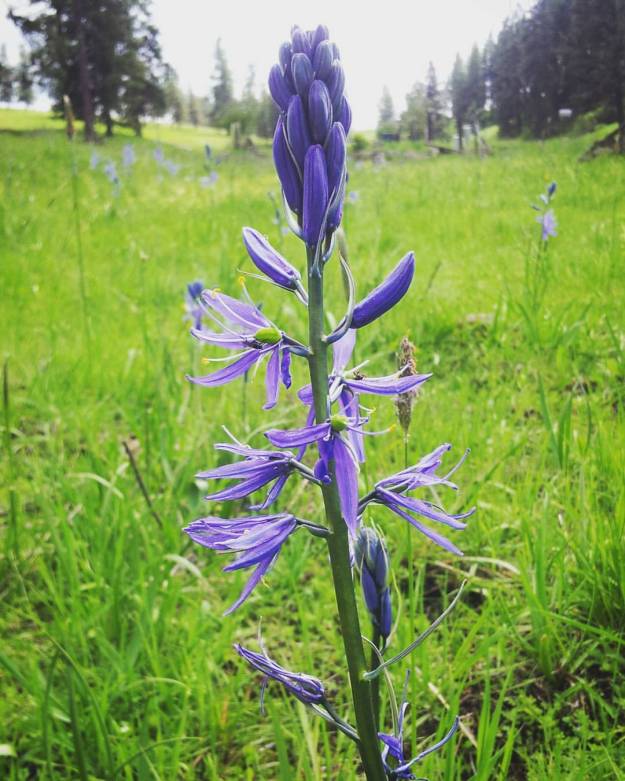
purple camas flower in Oregon

Why I Am Not a Feminist by Jessa Crispin

I read Why I Am Not A Feminist: A Feminist Manifesto by Jessa Crispin when it was recommended by a colleague and when just hearing the title made my blood boil as I recalled countless bad Jezebel articles and dead end arguments on social media about feminism over the past few years. So, I read it.

As expected, Crispin makes some good points, but also made my blood boil. It reads like being in an argument with the most gaslighting, narcissistic lover or family member you can’t escape. You bring up a problem. They put words in your mouth. They turn it around and accuse you of doing the thing that they were doing. Everything gets spun around. They deny saying the thing they just said. You feel like you’re taking crazy pills. Actually, that’s exactly what it’s like to read this book if you are me–a college-educated woman who has identified as a feminist since the halcyon days of undergraduate school.

The good aspects are that there are some smart and critical observations about social justice, and embracing an ideology like feminism, and life in general. She brings up important points and social events that we could probably all benefit from thinking about more critically and understanding in new ways. The bad points are that it is full of soundbites that lack real depth, and in that way it is also not very literary. It reads more like a Ted Talk, and she is constantly essentializing–to the degree that her insights are often inaccurate and/or misleading. There are straw man arguments throughout.

If you think the Crispin has miscategorized the term, and that feminism is still useful, then Crispin’s book will fall short as a manifesto.

Here are some lines that stood out to me (and a response):

  • “In order to make feminism palatable to everyone, they have to make sure no one is made uncomfortable by feminism’s goals” (8). I agree that this is a problem. Not all feminisms will be “palatable” to the masses and that’s ok/inevitable.
  • “If the goal is universality, then these feminists need to simplify the message to such a degree that the only people who would disagree with their pitch are religious freaks and hardcore misogynists” (10). This seemed to be the case with the Women’s March. The voices were so varied that everyone could easily feel good about participating. I didn’t (and don’t) think that’s a bad thing. There will be easy things and there will be hard things. The Women’s March was an easy thing.
  • “If you are surrounded by people who agree with you, you do not have to do much thinking…you do not have to work at constructing a unique identity. If you are surrounded by people who behave the same way you do, you do not have to question your own choices” (15). This is just a great reminder.
  • “What needs to be restored, and can be restored, is a feminist philosophy” (22). There never was a central “feminist philosophy.” Crispin does this throughout–essentializes or argues for or against things that were never “things” to begin with.
  • “There is a way a woman can deflect the worst effects of patriarchal control, and that is through money” (55). As a “Marxian feminist” this just stood out to me. This is a thing.
  • “Outrage culture” (106). I liked this phrasing. Social media and an “easy share” culture facilitates outrages culture, and there’s really no evidence that any of it is helpful.
  • “If you want to create a better world and a better existence for your people, you must participate in the imperfect world that exists now” (143). The whole “better world” narrative isn’t very convincing to me, but the participating part? That’s something with which I can agree. 

A Lotus Grows in the Mud by Goldie Hawn

I can’t remember where exactly, but Goldie Hawn’s book, A Lotus Grows in the Mud was recommended to me while I was reading some respectable piece of literature, and so I ordered it and set it aside for a month or so. I finally got the chance to read it over spring break, and it was surprisingly delightful–thanks in no small part, I’m sure, to “co-author” Wendy Holden.

Lotus Grows In The Mud

image from powells.com

Hawn has led a fascinating life, and her book really tries to get at some of the wisdom she’s gained in this life. And, you know what? Some of that wisdom was pretty darn inspiring and insightful.

Here’s what impressed me–Hawn follows her purpose, even when it is not obvious, even when she has doubt, even when others criticize her and roadblocks threaten her faith.

When I think about my purpose in life, I often have doubt and uncertainty. However, the predominant narrative one hears about one’s path is that it is easy and clear. But, that hasn’t been the case for me. I was an English major because I liked reading, but that seemed incidental. Now, I’ve made an entire career out this. I love practicing yoga because it is good for me, but a lot of times I phone it in, or have to talk myself into going, and sometimes I don’t go at all. I’m never the most flexible, most enlightened, or coolest person in the class. Still, I trained to teach yoga, and I’ve been teaching it since 2008. Most days when I enter into that classroom to teach, it feels really, really *right*. Same goes for the garden, for writing, for my friendships, for My Love.

So, I loved the message of her book. She was brave. She did hard things. It made me feel like I could be brave. I could do hard things–all while making a living and having Kurt Russell unexpectedly waltz in and save me in the final hour and then stay for the remainder of my decades. Yeah, I’ll have what she’s having.

In perfect timing, just as I finish this book, I see that Hawn is teaming up with Amy Schumer in a new film called Snatched. It looks lovely and hilarious, and I can’t wait to see it. I love seeing mother/daughter duos (that’s in the book too).

The Doulas: Radical Care for Pregnant People by Mary Mahoney and Lauren Mitchell

Awhile back, a colleague in the field of feminist medical rhetorics recommended The Doulas: Radical Care for Pregnant People by Mary Mahoney and Lauren Mitchell (though it must not’ve been too long ago because this book was just published in 2016). I finally got around to read it in preparation for a presentation I am giving on rhetorics of consent and advocacy in childbirth at a conference in March.

First, notice that the title is “pregnant people,” not “pregnant *women*.” We know now that it isn’t just women who get pregnant and/or give birth. I emphasize pregnant and/or give birth because this books also acknowledges that pregnancy ends in many different ways–some more socially acceptable than others.

For the most part, this book is politically sensitive to  the wide range of experiences people have as it relates to pregnancy and caring for the pregnancy and/or childbirth experience (aka doula work). Doulas provide people with support, especially in situations that are less socially acceptable. Of course, there are also doulas who hold intense, open biases. Some won’t work with gay couples (the legalities of which I question), and some are vehemently pro-life. It’s been my experience, though, that, in general, the doula community tends to be quite open to, and advocates for, variations of the pregnancy experience. (Still, the doula interview is crucial because pregnancy and birth work is incredibly political and contentious.) Unfortunately, the current cultural climate is one that is still obsessed with policing women’s bodies. Anything from choosing abortion to opting out of an epidural can be, and is, met with resistance.

Another approach I liked from this book is one of narrative medicine. Ina May Gaskin is notorious for writing childbirth guides that are full of childbirth stories. These stories work to help teach the reader about the many different healthy and normal experiences people can have in childbirth. This is important because when there is a very narrow definition of “normal,” and variations are treated as “abnormal,” interventions become the norm, and interventions too often mean trauma, surgery, injury, delayed bonding–the list goes on.

Back to the book: for my own purposes, I didn’t need or want to read most of the content. I wanted this to be a more theoretical work, but it mostly wasn’t. I also had a hard time understanding the relevance of some of the content.

Here are a few lines I liked (from the intro and forward because that’s where the book was most theoretical):

-“These doulas call it “story-based care” because they hear many stories of people for whom some choices are straightforward, while others offer extreme complexity” (x).

Since becoming a doula, I have been shocked by the number of *high stakes* choices that people have during pregnancy and childbirth. Navigating those choices and feeling empowered in through the process has been one of the most important aspects of my job as a doula.

-“Racism can distort a birthing or adoption experience. Transphobia can lead to the denial of vital healthcare. Prejudice against immigrants can divide families through deportation. Misogyny can reduce pregnant women to walking wombs without rights” (xv).

-“[Doulas] don’t sky away from naming oppressions–white supremacy, colonialism, xenophobia, homophobia, transphobia–yet they are not there to preach, but to serve” (xv).

Sure, some doulas might preach, but one unique aspect of this type of work is that, for doulas, activism is in the work–making political statements through actions, through work within the institutions and with the people most affected.

-“While much feminist and social justice activism was taking place online, the doula movement allowed activists to connect face-to-face with people confronting the realities of what the “spectrum of choice” really means” (xxi).

-On people during pregnancy and childbirth: “Worse still, they suffer the loss of personal agency as decisions that should be private become politically and bureaucratically charged” (xxi).

-On doulas: “People frequently refer to us as “advocates.” While we would not argue that point, we hope this book will show you how advocacy as a doula looks different from advocacy in other realms. Often it simply means this: we are “holders.” We hold space by creating safe, comfortable environments where our clients can be heard” (xxii).

-“Our practice as doulas is a daily expression of the union between compassion and advocacy” (xxii).

-“Though understanding systemic oppression is crucial to the way we approach doula care, we believe that individual stories have the ability to pierce the veil covering systems that affect millions of people; they are unique but universal” (xxiv).

-“So much of doula work is that transference of story and the transference of emotional burden that goes with it” (xxvi).

The Last Supper: A Summer in Italy by Rachel Cusk

Since I read Outline by Rachel Cusk, I’ve wanted to read her earlier book The Last Supper: A Summer in Italy. I finally got the chance to finish it this winter. Cusk’s genius is in her observations. She has some of the most shockingly astute and artfully articulated insights on the human condition that I have ever read. She also has a vast vocabulary, which she integrates beautifully into her writing: inchoate, lachrymose, acolyte, obeisance, balustrades.

Image result for The Last Supper: A Summer in Italy by Rachel Cusk

image from goodreads.com

The book comments on foreign travel, staying, getting sick of a place, hating and loving a place, connecting, awkwardness, presence, living in the experience, and art, and an eye, and the moments between people that capture the feeling or meaning in art.

Two thirds of the way through, I’ll admit that I wanted a bit less description of some of the art (though I can see that it was necessary). I wanted more of the human interactions, the mistakes, the moving, the descriptions of the land, the houses, the people. This wasn’t a joyful read, but it was quiet and thoughtful, which is what I needed.

Just a few lines:
“In this it is the artist who is God. And it is a strange kind of proof we seek from him, we who are so troubled by our own morality, who know we will all eat a last supper of our own” (53).

“Now our violence is diffuse, generalized: it has been broken down until it covers everything in a fine film, like dust” (148).

The Long Loneliness by Dorothy Day

As usual, I’ve had a hard time finding the right thing to read lately. I want something that’s light and easy–a break from difficult scholarship. But, I also want it to be substantive. The Long Loneliness by Dorothy Day was the perfect solution during the holiday break. First of all, I had to read it with a title like that. (When I saw her face on the cover, I also knew I had to read it.) Secondly, I am always fascinated with and inspired by women who are doing things a little differently than the status quo, and Dorothy Day certainly has. The book is about her experience with community and the sacrifices she’s made in pursuit of her beliefs about the best way to live.

image from amazon.com

The first two-thirds of the book was of the most interest to me personally. In the first third of the book, she writes extensively about her childhood, about her friendships, her family life, and the reader can see the subtle ways these experiences influenced the choices she made later. Her descriptions of various little girls she befriended seemed tedious at times, but I think it helped make her larger point–that these connections and interactions we have with people are the stuff of life and far from inconsequential.

Next, she wrote about being a young women, her unconventional “marriage,” the birth and joy of her daughter, and the decisions she made to convert to Catholicism. In this section, I was deeply interested in her relationship with her partner and her response to her baby. I identified much with those very human experiences, even though I haven’t had them myself exactly.

The last third dragged on and I had to force myself to finish. I didn’t identify quite as strongly with her decision to convert to Catholicism. Like much of her thinking and decision making, as a reader, I sometimes had a hard time understanding her motivations. She’s very matter of fact about everything, and I found myself responding, “Yes, but…” That said, I love her unapologetic descriptions of joy and love earlier on, and I don’t need her to explain “why.” Still, the social activism, the writing, and the experiences with various people are a part of her story, but I was less interested, in part, because it was less about her and more about them.

Here are some insights I gained from reading the book. Day is unfaltering convinced that we must live together. After living alone for the bulk of my adult life, I am feeling ready to not live alone. I have felt loneliness and fear–something that was quite rare for me throughout my twenties. That’s fine. I was pursuing other things. Now I’m in a new stage, and I want to live in meaningful relationships. I have a much stronger urge to connect to other people and invest in them. In this way, Day’s message really resonated with me at this time.

Here are a few lines and ideas worth further consideration:

  • One hundred years ago, there were free medical clinics. If you were not poor, there was also affordable medical clinics that were a little nicer.–I can’t imagine how freeing it would be to go through life knowing that, should a major medical event occur, you could go on living without being forever indebted to a financial institution. We are living in fear or modern slavery.
  • Much of Day’s life’s work is in writing and writing for The Catholic Worker, and she understood what I am only being forced to understand now, which is just how crucial freedom of the press is and how important it is to communicate with the masses in this way.
  • “We cannot love God unless we love each other, and to love we must know each other. We know him in the breaking of bread, and we know each other in the breaking of bread, and we are not alone anymore” (285).
  • “We have all known the long loneliness and we have learned that that only solution is love and that love comes with community” (286).

By the end, I sort of just wanted to rise with the sun, and garden and bake bread, and pray and read and meditate, and wake the next morning to do it all over again.