Category Archives: life

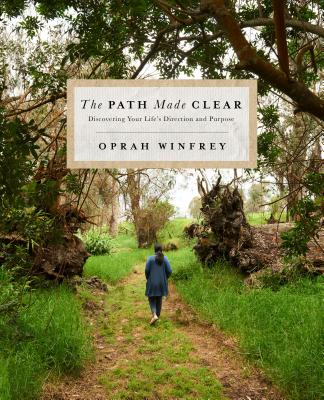
The Path Made Clear by Oprah Winfrey

For years, my yoga practice and author’s like Eckhart Tolle helped me to connect to my spiritual self. For whatever reason, these practices and readings have felt like necessary touchstones, reminders to help me stay on track with my authentic self and my unique spiritual path, reminders I have a hard time remembering on my own.

For whatever reason, these spiritual feelings, and my interest and curiosity in them, completely left me once I had children (although it seems like the opposite would be true). The only sense I can make of it now is that I was so deeply in my spiritual self as I transformed into a mother that I was unable to stand outside and observe, analyze, or even connect to the experience in a thinking way. I could not think it. I could only feel it, and I did feel it deeply! I have felt so profoundly grounded and assured since the transformation. Since becoming a mother, I am undeniable a new version of myself.

As the years pass, and I gain some distance from the initial experience of becoming a mother, and as I have more time for thinking and reflect than I did in the early days, I find myself having capacity for and appreciating the small *thinking* spiritual reminders that come my way.

Oprah Winfrey’s The Path Made Clear is just such a book, carefully curated with some of the great spiritual insights available to us. It is not too deep or too complicated, and it is not too long, but the insights shared from many of Oprah’s friends and peers are worth reading, even if they are just serving as familiar reminders.

Lila by Marilynne Robinson

Robinson’s reputation precedes her. I first read Marilynne Robinson book Housekeeping, which I thought was extraordinary. Robinson is one of the authors that my grandpa used to read out loud, his gravely voice adding even more significance to each word. I frequently thought of him during this book.

Robinson’s Lila, which I have read out of order from the other books in this series (Gilead and Home), is a quiet, thoughtful book. I wondered at the repetition of some of the ideas the repeated detail of laughing with Doll. The repetition of imagining geraniums at the window. Was this intention. These details certainly make the point, but why were they repeated? At the end, I do not know and cannot tell if it was intentional.

After reading this book, I can confirm that I will also look to read Gilead and Home at some point in the future, though somehow I doubt that any will be as good as Housekeeping. Still, it’s nice to know I have them to turn to when I need a guarantee of a good book.

Across the Wide and Lonesome Prairie by Kristiana Gregory

Recently, I’ve found a renewed interest in the history of the Oregon trail. My ancestors actually came across on the Oregon trail about a 170 years ago, and it is because of them that I still live in this region today! Someone recommended Across the Wide and Lonesome Prairie: The Oregon Trail Diary of Hattie Campbell by Kristiana Gregory, and so I got it from the library and read it with the boys.

The book is a fictional account of a young girl’s journal with her family from Missouri to Oregon City. The book is a real treasure trove of historically accurate details! It was also fascinating to read as the characters traveled over familiar land where I live and travel now (mostly by freeway) all the time.

This book came from the library’s “juvenile” collection. It was interesting for me to read, but also fairly engaging for my little ones as well. They were interested to learn about their ancestors and interested as the travelers in the book crossed territory that my kids are familiar with.

Some accounts were too brutal, and I glossed over them as best I could for my very young readers. Some estimates say that traveling the Oregon trail had a 10% fatality rate, and it seemed this book held to that number pretty closely. This is probably a great book for independent readers, who are a little older than my little ones.

Tracing the Desire Line by Melissa Matthewson

I read Tracing the Desire Line by Melissa Matthewson over the course of a few months. I started the first half before the holidays and the last half after. The book is beautifully written on the level of the line. I mean, it has a lovely structure overall as well, but the line really stands out.

The content of the book was personally challenging for me to read. The author navigates desire, FOMO, long term relationships, and does so through a lot of pain, and also some pleasure, though even that pleasure often seems anything but pleasurable (I often imaged the smells of old cigarettes, sour alcohol sweat oozing through pores, and someone else’s odor that just does not smell right).

I guess because of my age, and the relationships that are all around me. So many are navigating similar relationships, reactions, etc., and so it felt true and also frustrating. I admired the author’s ability to be the “bad guy” in the book. I think it’s so much easier to write from a sense of false victimhood, but the author doggedly avoids that and stays firmly in a place of truth telling, even when it is not flattering, even when it is something readers might imagine she’d rather forget, and even when this mistakes are out there for everyone to see.

I am reminded just how vulnerable one has to be in order to write good books. As for this one–it is worth reading for the line, but also because of the honesty, even when it is ugly and difficult.

Modern Lovers by Emma Straub

Modern Lovers by Emma Straub is not my usual genre, and so I’m not quite sure how it got on my reading list other than someone probably recommended it, and then it was there, and available, and so I got it.

This novel felt very cinematic to me. I could easily imagine it as a movie, and I feel like authors are increasingly approaching scenes in books like scenes in movies, and then, I suppose, if it gets picked up as movie, even better!

I was not obsessed with these characters, and felt that I did not know them, or only knew a caricature of them, but I appreciated the consistent pacing and organization of the book. By the time the last 1/3-1/4 of the book came around, I was curious to see how it would end and finished it with great interest.

I think this is a beach read, and it was one I could easily pick up and set down amid the many distractions of my life. There is a time and place for these types of books, and for me, that time and place was in the dark of January, amid cold, flu, and covid season, with many other distractions. Honestly, I applaud Straub for getting it done.

Remembering Laughter by Wallace Stegner

Remembering Laughter by Wallace Stegner is a classic novel that reveals why people are the way they are. Or, more specifically, why this one family is the way they are.

In his book, Stegner reveals himself to be a master author, demonstrating artful craft on the sentence level, accompanied by deep insights into the human condition. None of this is news though. Stegner is obviously a renowned author–though I don’t think I’ve read his work before.

I found myself wondering why this novel isn’t taught more often. It’s a short, manageable size and one that students could easily get through in a short timeframe, leaving plenty of time for discussion, analysis, and response.

Stegner’s more famous work is Angle of Repose, which evidently has some criticisms on it surrounding plagiarism, which then calls into question his methods and all of his work. Remembering Laughter is worth the read though and won’t take up much of your time.

Siddhartha by Hermann Hesse

I have wanted to read more Hermann Hesse since reading his novel Demian some years back. A friend recommended Siddhartha a few years back, so here we are. This is a very short, manageable novel, and indeed, it is full of some of the great spiritual insights and teachings that have come out of the Indian tradition.

As someone who has studied and taught yoga for many years, much of the teachings in this novel resonated or sounded familiar to me. While these basic teachings have been distilled and distributed in many ways, by many people, over the years, I think Hesse’s novel must have been incredibly revolutionary for the time.

In fact, while reading, I frequently thought to myself that Hesse was brazen to even attempt such a novel, taking up such an important figure, such important and difficult teachings, and novelizing it. In the end, it seems that Hesse was a success, but what an incredible undertaking! As a writer, I would be worried of getting it wrong. I guess that’s be main difference between me and Hesse 😉

According to his bio, Hesse spent a good deal of time in India throughout his life. His family members were missionaries there for years. Maybe these are stories and teachings that became intimate and familiar to him. It certainly seems that way from the book.

I have to admit that Siddhartha did not blow me away like Hesse’s Demian did, but I think that was more about me than about the book itself. If this had been the first book I had from Hesse, maybe I would have had a bigger reaction. In the end, this is a carefully written book, worthy of its praise and longevity.

Black Beauty by Anna Sewell

Over the winter break, I read the 1877 book, Black Beauty, by Anna Sewell with my children. I believe this was the first time I’d read the book, and, although it is a “children’s book,” as you know, I like to include children’s books here if they have literary merit, and this one does!

Black Beauty is said to be the first book to anthropomorphize an animal. This seemed impossible to me when I read it, and it must be with the exception of fables and what not. I double checked The Jungle Book, and indeed it was published 17 years later.

The book follows the life of the horse, Black Beauty–from his youth as a colt running through the fields, to very many different owners and jobs across his life, and finally through to his retirement.

I frequently wonder what animals are thinking, feeling, and experiencing. I’m sure most people do. However, maybe unlike most people (perhaps?), I don’t assume animals are having a similar experience to humans. For example, I often perceive some dogs to be very nervous when their owner states that they’re actually being playful. However, in Black Beauty, the horse is depicted as experiencing life much like a human might assume. He appreciates gentle petting, and he grows to love his (good) owners and other horses he knows. He suffers in circumstances where when humans might also suffer. In fact, the horse even seems to suffer in situations sooner than I might imagine a horse would suffer.

Speaking of suffering, for a children’s book, this is an emotionally heavy book, with open depictions of abuse, suffering, tragedy, and death. My children were too young to pick up everything that was happening in the book, but I frequently found myself cringing as I read over some of the tougher scenes. I think this book would be much better read for older children, who are able to read well on their own. By then, maybe they will be ready for some of these heavier themes.

I am not a horse person myself. I appreciate horses, but I am not “horse crazy” like some people I know. (I do really love sheep though!) Anyway, Black Beauty is an excellent, classic book. Everyone, old or young, who loves horses, should read this book. It’s also worth reading for those who want a glimpse of what life was like 150 years ago, when horses were still the source of power for most people.

And Then There Were None by Agatha Christie

For my third book of the year, I read Agatha Christie’s And Then There Were None. Murder/mystery is not my genre, but when this book came across my radar, I decided to read it. I’d never read Christie before, and she is supposed to be one of the greatest writers of all time!

It was fun to read a book that provided the foundation for the dinner party murder mysteries that are still so interesting to this day. The plot and the set up were meticulous, amusing, and layered. In fact, I took great interest in the plot, which was more clearly constructed to my view than most other books I read. I notoriously have a difficult time seeing the plot structure after I’m done reading, and especially not while I’m reading–at least not beyond the most basic structures.

I can say that the book was not very frightening. (I no longer have any tolerance for being frightened.) The book could have been made more frightening had Christie spend more time in character development. The characters sometimes seemed like flat caricatures (though not always!), and it can be hard to take caricatures seriously. But, it was still a fun page turner, and I wondered whodunnit until the very end.

One warning–I did a quick internet search on Christie before reading the book and was warned of some offensive and outdated language, which I did find in the book and might’ve even unknowingly glossed over if it wasn’t for the reminder.

I could see this novel being a wild success in film format, and it looks like films were made in 1945 and again in 2015. Maybe I’ll try to find the 2015 miniseries! I’d love to know if you’ve read the book or seen it on film or in theater. Let me know!

continued…Hannah Coulter by Wendell Berry

I wanted to add more to my thoughts on Hannah Coulter by Wendell Berry. In this post, I want to address farming, and generational farming. Having grown up on a ranch myself, I have more complicated thoughts about some of the portrayals in Berry’s book.

[spoilers ahead; not that this book has a dramatic plot]

In the book, after growing up on what is described as a beautiful, but hard-earned farm, all of Hannah’s children “choose” not to return to the farm/farming. This is perceived somewhat as a moral failing on the part of the children and their parents. One child is not really interested in farming and goes on to make big money in California. The other boy is very interested in farming. However, after studying agriculture in college, he stays in academia, becoming a well-respected professor and scholar. The daughter goes on to be a school teacher, something she seems to be passionate about from a young age.

However, even if Margaret wanted to stay on the farm, given the sexism and cultural expectations of the time and place, it is difficult to see how a young woman might make a life for herself on a farm, especially not without a husband. She inherits her grandparents’ place, but even if she were to live there at some point, it might have created a difficult power dynamic with a husband, since she would likely be landowner and therefore the more powerful of the two. Opportunities for women, especially single women, are rare in rural settings. Likewise, opportunities for dating and relationships are much fewer in rural settings as well.

The son Mattie found great success away from the farm, both personally and financially. Hannah doubts his happiness, but can’t argue that he was ever deeply interested or suited in farming. That’s okay. Not everyone will be. Though his life is very different, even unrecognizable to Hannah, he might be happy.

To me, Caleb represents the biggest heartbreak. His parents are deeply disappointed that he decides not to return to the farm after college. However, at that point, it would have meant taking on a life of near poverty, a life that would make affording a family incredibly difficult. Caleb is likely heartbroken by this realization too. Small-scale farming would not provide him financial stability. Meanwhile, increased financial stability might give him the greatest chance of eventually keeping the farm for generations to come, maybe returning to it to live and to farm during his own lifetime. That possibility is not out of the question by the end of the novel, though Hannah never seems to think of it. She has this typical, well, I guess they’re just gone, type of attitude. I know some old farmers who are like that too, and it’s like they cannot even see the financial side of things.

At the end, and here is the real spoiler, Virgie returns, Virgie who has rebelled and disappeared for years. When he is at rock bottom, he finally comes back to his grandma and her farm, and she allows him to stay and start farming, with their older extended family and friends serving as mentors to him. Hannah feeds him and houses him and pays him an hourly wage for work he does on her farm, and the others pay him an hourly wage for work he does for them. This would have been around the turn of the last century, and I find it hard to believe that these small-time farmers are able to pay someone, especially someone who lacks much skill, an hourly wage. Hannah probably could in her older age, but not as a long term solution.

Hannah is not naive and does not assume that Virgie will stay and take over the farm, but maybe he will. In the end, the kid who demonstrates the least amount of responsibility and follow through may end up with the farm? More complicated still is the fact that Mattie’s children may have taken an interest in farming too, but having not grown up in the area, it’s unlikely they would ever gain the knowledge required to run the place.

Yes, there was a huge exodus from small farming in rural America in the latter half of the last decade, but I’d argue that the shift did not have to do with disinterest, or pursuing seemingly easier lives. It had everything to do with the monopolization of farming in the US and the lack of profits in small-scale farming. There were significant cultural and especially economic factors at play that Hannah (Berry?) seemed to overlook.

This all resonates so much with me because I also grew up on a ranch, as I stated earlier. I’m one of the kids who really loved farming–the cycles of the season, the fresh air, working with the animals, the constant scheming and figuring out hay supplies and breeding seasons, and lambing seasons, and on. This still is deep within me, and I love it. However, as a child, I quickly saw that it would be nearly impossible to be able to afford land of my own. “Working out” would always be a necessity, which is fine now since so much mechanization is available. Still, the landscape and reality is changing and worsening for farming. It’s not a matter of choice, or who is willing to work harder. For many–it’s a reality.

Amid such a challenging landscape, I’ve considered myself lucky that I was eventually able to get a little place of my own, and raise animals, and live in this way. I definitely can’t (and wouldn’t want to) quit my day job! Farming is not for everyone. However, it is for me. But, it’s complicated.