Category Archives: love

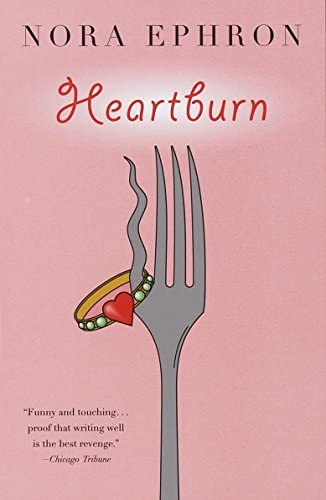
Heartburn by Nora Ephron

I had to set aside Heartburn by Nora Ephron shortly after I started because, after reading some of the other seemingly deeper, more “artful” books, I found the content to be a little too silly or irreverent. When I returned to it though, I was ready, and it is an excellent book.

Published in 1983, it really captures an interesting period of time (aren’t they all?) for women. The book is simultaneously feminist and sexist. There is truly some insightful feminist though. There’s also some internalized, unselfconscious sexism too though. There are definitely some dated jokes that would not fly today. The book perfectly captures the culture of the 1980s, especially When Harry Met Sally, which I should watch again (have I ever seen it in it’s entirety?), which is a film that was also written by Ephron. For example, I could easily image Diane Keaton playing the read role.

I loved the portrayal of motherhood in this novel. Probably due in no small part to the amount of wealth and therefore help that these characters have, motherhood in the early ’80s seems lovely, enriching, rewarding, sometimes hard. These women have time to also be themselves and explore their interests (frivolous though they may seem). I think this is next to impossible in motherhood today, where women are expected to/have few other options than to do so much, everything, constantly, every second, for their children.

Still, though it may at times seem frivolous, Ephron packs a surprising amount of insights about the human condition into every single sentence. It’s a good book. There is some really good humor in it too, and I don’t say that lightly.

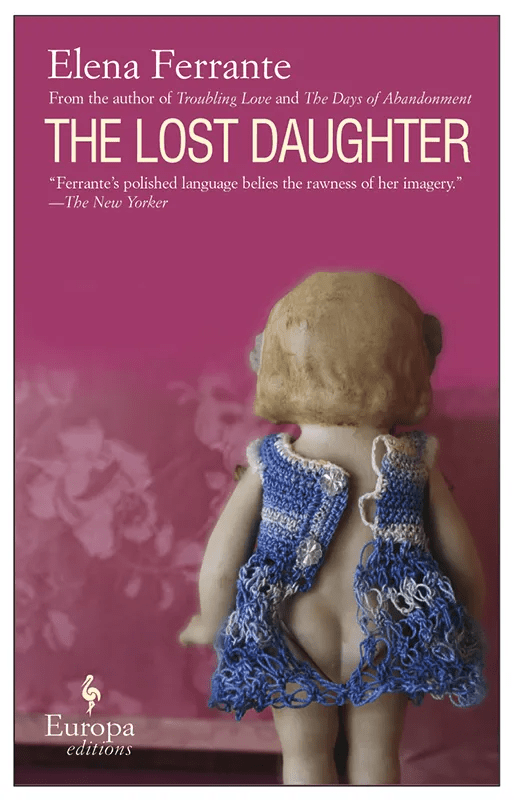
The Lost Daughter by Elena Ferrante

I read Elena Ferrante’s The Lost Daughter immediately after finishing My Brilliant Friend. This is another excellent, although perhaps more literary, piece than the first book of the Neopalitan Quartet series.

The Lost Daughter, also referenced in the Mother’s book, is about the darker side of motherhood, in a way that I found entirely relatable. Too often, critical books on motherhood are too critical, too negative–children are too exhausting, it’s not worth it, end of story. However, I truly appreciate Ferrante’s more nuanced approach. In The Lost Daughter, she turns a magnifying glass on the difficulties, violences, and burden of motherhood, the complete selfless turning over of the self that is required of the job, an ask that is far too demanding and made worse by societal constructs around motherhood and a general lack of support.

However, instead of dismissing the mothering journey altogether, as too exhausting, too violent, Ferrante acknowledges the duality of the role, the positive life changing aspects of it–the more complicated relationship it can foster in the self in regards to love, compassion, nurturance, service, and ambition. The little girl in The Lost Daughter is depicted as both angelic and beautiful from a distance, but up close is whiny, snot-nosed, crusty-eyed, and clawing, swatting, and pinching at adults around her. This is the reality of living with and loving a child. They are, each and every one of them all at once both transcendently perfect and also demanding, selfish, and incidentally cruel. To be a mother is to live within this duality constantly throughout the day. It’s complicated and beautiful and ugly too.

My Brilliant Friend by Elena Ferrante

I discovered Elena Ferrante from Mothers by Jacqueline Rose, which I read recently. I started with Ferrante’s My Brilliant Friend, the first in a long series, and I loved it! The writing is excellent. The content is thought-provoking, and it also has the long sense of story found in easier, longer reads–not a common combination. Although it is long, I flew through it.

While I highly recommend the book, I will warn that I found the conclusion to be somewhat disappointing. I wanted a strong wrap up for this particular book, but instead found myself needing to read more of the series in order to get that. It will probably require reading all four books.

I ended the book somewhat exhausted and unwilling to continue with the series. Maybe I’ll return to them someday. They’re certainly worth it, but, and I can’t believe I’m writing this, I really don’t have the energy to give them at this point in my life.

I’m glad these books are out there. Sometimes I just need a good book, a good story, and I now know I can turn to Ferrante to get that.

I am also inexplicably obsessed with the cover art:

2022 year in review

My 2022 year in review, I want to summon the poet and philosopher Snoop Dogg, who said, “I want to thank me. I want to thank me for believing in me. I want to thank me for doing all this hard work. I want to thank me for having no days off.” In 2022, there were no days off. Part of this is just the nature of being a mom. I am constantly on call and often in active service of someone else’s needs. Part of this is my job. There is no end in sight. There is always scholarship to do. During the term, there is always more grading to do after the regular work day is over. Part of it is just my unique circumstance regarding my support network.

In 2022, I lost my aunt. We had tried to stay away from her for the previous few years to protect her fragile health during the pandemic. I anticipated being able to spend more normal time with her since moving back to the area, but that was not to be.

Perhaps that was a catalyst, but there were several otherworldly connections throughout the year. I had a few interesting experiences with a spirit medium. She charges an hourly rate, and maybe I should schedule something. I saw huge droves of yellow butterflies while driving, I wore my lipstick daily, and I felt a professional push like never before. I was able to see possible pathways that were previously out of view. It’s possible that nothing will change. In many ways, that would be fine because there are many things to love about my current situation. However, it’s nice to not feel limited.

Maybe it was just the stunning inflation, but I also found myself more interested in material things and motivated by money. I’m not sure what I believe, but this year it felt like my ancestors were there and pushing me, encouraging me, and giving me signs along the way.

In spring of 2022, my first lambs were born on the farm! They were born in April, and lambing in milder months was by far more convenient than December or January lambs. It’s less conventional and means a lower weight at weaning, and while I would like the sheep to be profitable, that margin will be narrow either way.

I was able to read more than in previous years since having children. Most of that reading happened in winter and in summer, with months on end passing without any reading for fun.

When I look back at my many photos, it looks like we did a lot. I’m glad for the photographic reminders because in many ways, it felt like most days were similar, full of meal prep, diaper changes, and caring for my children.

2022 Top Nine

Mothers: An Essay on Love and Cruelty by Jacqueline Rose

I started reading this book after a friend challenged me to mini book club. I thought it would be an interesting take on motherhood, perhaps essays, although the title calls itself an essay, singular, which reads, in hindsight, as pretentious as it is by no means an essay, and is, at the very least, essaysss. This books is basically theory, with some fairly dense analysis and criticism, but also some accessible hot takes and also slow burning takes mixed in.

The perks of this book are in some of the one liners, which I’ll share below. Her literary knowledge of mothers is vast and deep and fascinating. I found myself wanting to read all of the literary works she mentions, something that would take me years. I always (and will continue to) return to de Beauvoir and Rich.

The drawback of the book is only that it was more academic than I was hoping, something that might be reconciled by a more accurate title. I did not always understand the connection between mothering and immigration, although that connection is made frequently throughout the book. This was especially true for me in the first chapter. I found myself arguing—aren’t immigrant mothers the most sympathetic of all immigrants? This point felt underdeveloped to me throughout the book. Also, I felt that, based on my own experience, the dogged connection between breastfeeding and eroticism was a stretch and over-developed.

Even still, I appreciated the vulnerability and honesty throughout the entire book. It’s really like no other and tells a story of matrescence that is important, but rarely told. For me, motherhood has required me to be an almost entirely different person. Giving up such a huge sense of self is the sacrifice that seems too great and also unnecessary. Nothing could prepare me for how much I would change, would be forced to change in order to survive, and how that change felt inevitable, and necessary, and okay, and part of my life’s path and development, but also, in many ways, a jarring loss.

Overall, if you’re doing scholarship in motherhood, this is a must read. I may even be able to use some gems in my own scholarship, which is often, just adjacent, although I haven’t isolated any yet.

Here are a few lines/questions worth returning to:

“[W]hat are mothers being asked to carry, what forms of failure and injustice are they made accountable for, above all, in the modern Western world?” (37).

(Indeed, I have found the motherhood to be too demanding, asking too much, and unnecessarily so. With a better social network, motherhood could be vastly improved for (most) women.)

“We talk of a mother’s suffocating love. But the one in danger of being smothered by love might not be the infant but, under the weight of such a demand, the mother” (81).

(See above.)

“For several yars she has tried in vain to adapt to his point of view, to her mother-in-law’s exacting standards and ‘to all the unintelligible ritual with which they barricaded themselves against the alarming business of living’” (99).
(I just thought this was a profoundly accurate description of how I perceive some people to be doing life. (I have been wrong in my interpretations of this though.))

“[T]he child’s demands drive the mother to insane perfection; the inconsiderate child underscores the radical neglect of her own life” (187).
(I don’t think it can be helped.)

“‘[H]is implanting himself inside me; unreasonably and totally destroying the me I was’” (206).

What Remains by Carole Radziwill

What a beautiful book! What Remains by Carole Radziwill is a completely unique book, taking the reader locations you’ve never been—could never go—but also to fully human and universally recognizable places.

It’s no secret that the Real Housewives series are a guilty pleasure, and I always found Carole to be a fun, tell-it-like-it-is, type of “character,” so I thought this book might be decent, but it’s better than that!

A Memoir of Fate, Friendship, and Love

The book takes the reader to the poor gravel roads and streams of New York state, to the haphazard suburbs, to a chaotic, but close family life, to the rush of a bold new career in a city, to war zones, to falling in love (without cliché), and forging deep friendships with “America’s royalty.” Readers see that we all ache, love, suffer, and feel the joy of the sun on our skin and the wind in our hair universally. The life she lives once she’s seriously dating and married to her husband Anthony is (emotionally) much like other everyday relationships, except with better food, clothing, apartments, travel, and lovely places to stay. The reader might be surprised to find that this group of “elites” are thoughtful, frugal, playful, stressed, sometimes uncertain. Aren’t we all?

Radziwill has lived an extraordinary life, and so while this is a memoir, and a genre with which readers might be familiar, it’s is so completely unique in the extraordinary events and circumstances she’s survived. She loses her three closest people in the span of three weeks. Maybe she has survivor’s guilt, but I hope she doesn’t. I hope she is exploring what to do with this big, bold, beautiful life she gets to live. While there is a tight and lovely metaphor about fortune threaded throughout, which works on several levels, the reader leaves the book thinking, “Anything is possible. Anything can happen. Now, what am I going to do with this big bold, beautiful life?”

I read every word and, almost to prove a point, she thanks her bff and sister-in-law, Teresa, who–get this–is from my very own La Grande, Oregon! I am reminded that it truly is a very teeny tiny microscopic world, and anything is possible.

A Lover’s Discourse by Xiaolu Guo

I am blown away by the slow burn called A Lover’s Discourse by Xiaolu Guo. The first and majority of the book is a quiet, steady dialogue between the main character and her “lover.” As you know, I am not a theory hound, but this book was one of few that has made me want to turn steadily back to some of the theories presented in this book, and in grad programs across the world, including my own, and see if I can now find a different way in to them, more my own, perhaps feminine, a more first gen, working-class, creative, put two ideas next to each other to see the new, true, and also beautifully enigmatic knowing that emerges.

I love some of her snarky responses to the rote theories her partner espouses. I found the book to be an incredibly bold and feminist and completely empowering that she takes on subjects that are often, almost always (always?), interpreted through a male lens. She even uses Barthes’ exact same title. So bold! How might I do more of this myself? The book ends with both the theory and physicality of reproduction.

Often I find modern literature to be too cold and unemotional. This book had some of those qualities, but I still felt deeply and identified with many of the main character’s experiences. New motherhood is depicted in almost entirely negative terms, but much of the book is.

In new motherhood, I, too, started to think of mothers in response to every act of killing I heard on the news. These mothers have worked so hard to raise of their children, up until the very moment that their lives are taken. Guo has this exact same insight. We are all one, I suppose.

Finally, the relationship–I’ve felt nearly every one of the feelings or loneliness, isolation, desire, and confusion. I have yelled for him to “Bring wipes” as the baby’s mess grows, only to have him emerge too late, confused and groggy. “When have you had time to listen to music?” The changing home, the changing dynamic, described so uniquely and so true, perhaps especially for the creative woman.

Through it we are two people, changed, and in discourse with each other—lovers.

Dog Flowers by Danielle Geller

For whatever reason, I’ve been reading a disproportionate number of memoirs by Native American women. I’ve also been loving them. The most recent is Dog Flowers by Danielle Geller. The book is troubling and straightforward. It seemed to be divided into two distinct sections, although it’s not formatted as such. I found myself wanting to read two separate books: one about childhood through the death of her mother and another about life after that death. (I don’t think it’s a spoiler to mention the death here because the reader knows about it from early on.)

Most children with parents who are addicts and homeless don’t go on to write beautiful books, so in that regard this novel is unique and offers a perspective that’s rarely told.

One of the main takeaways for me is the way that dysfunctional families impact their members constantly. The always immediate need for housing, medical help, mental health support, food, emotional support, and on and on, just never seems to end, and it impacts every aspect of one’s life. It’s something I’ll understand in a new way in my interactions with others who may be experiencing this same constant and continual drain from their own dysfunctional families.

This book is heavy and hard, but important. Oh, and there’s weaving! I hope the next book has more weaving.

Burnt Sugar by Avni Doshi

In the precious time between when the term begins and when the grading comes flooding in, I read Burnt Sugar by Avni Doshi. It’s an interesting and heavy book. I was really interested in the unique relationship that is depicted between daughter and mother. The lines of reality are blurred throughout, making the point that reality is fragile and based on a corroborated story shared by people.

I was interested in the setting, which felt foreign to me, but also familiar as so much of the daily tasks of living, eating, and interacting with others are shared across borders.

This book was heavier than what I need right now, but the reading was good, and I need that even more.

Here are some lines that I liked:

“My mother knew marriages were generally unhappy, but she was young and had not fully metabolized the idea that this would be her reality. She still believed she was special, exceptional and had thoughts that no one else did” (44).

“I tell her I am not sure what to do, that maybe I’ve lost my imagination./ She says she never thought my work required much imagination, that it was copying an image over and over again./ I explain that I mean another kind of imagination, the kind that invents a world where my work matters” (174).

“Is the sensation of receiving a kiss less pleasurable than that of giving it?” (212).

Wintering: The Power of Rest and Retreat in Difficult Times by Katherine May

Wintering: The Power of Rest and Retreat in Difficult Times by Katherine May was recommended by some well-read and well respected people, so perhaps my expectations were a bit too high. Still, I love the premise, which is about enduring difficult times, even leaning into them, moving through them, and eventually coming back to the light. So much of grief, sorrow, and depression is about stopping it, fixing it, and getting over it. This book is really the antithesis of that, which I find intriguing.

The intro is quite gripping, and this is where the strength of the book lies–when May is sharing her own personal story and experiences. However, there were also so many questions left unanswered. Like, did her husband’s health fully return? Why did she dislike her job? How did her husband and child feel about the author’s “wintering”? How did it impact her closest relationships?

There is also a trend in this kind of journalistic genre, where the author flip flops back and forth between personal writing and inquiry and an informative, lecture style. I am fully engaged by the personal story, but the lecture is always less interesting. First of all, while reading these sections, I often have an overwhelming reaction of “I already know this already.” It seems as though the insights in the lecture are not very insightful after all. Secondly, the transitions between the sections often seem awkward or unconvincing. Lastly, the lectures often feel forced. I can imaging an editor insisting that the author make the reader “eat their vegetables,” instead of just eating the cheesecake (cheesecake being the insights and personal journey).

There were even moments that rang false within the more journalistic sections. The section on wolves seemed particularly fraught. She claims that wolves don’t kill people. (They do.) That they kill more than they need and that’s reasonable. (How is that more reasonable than wasteful? murderous?). Finally, she claims that wolves are irrationally trapped, poisoned, shot, *beaten*, and killed, and that’s when I knew she was going a little overboard. I just highly doubt that these wild animals are tortured (beaten), though I’m not disputing that they are killed regularly by people. Also, I wanted to hear more about the bees.

Despite my complaints, this is a good book worth reading. I myself love restful times for quiet, recovery, reading, and introspection, and this book is really a celebration of that. While how the depression (she avoids this word) started is very developed, I would have loved to see that same development in the middle and then again at the end of her wintering. As I write in the beginning, this is a novel approach to sorrow and difficult times, and I think it’s a healthy approach, one that would be/will be helpful for me to return to in my own difficult times.