Category Archives: motherhood

The Path Made Clear by Oprah Winfrey

For years, my yoga practice and author’s like Eckhart Tolle helped me to connect to my spiritual self. For whatever reason, these practices and readings have felt like necessary touchstones, reminders to help me stay on track with my authentic self and my unique spiritual path, reminders I have a hard time remembering on my own.

For whatever reason, these spiritual feelings, and my interest and curiosity in them, completely left me once I had children (although it seems like the opposite would be true). The only sense I can make of it now is that I was so deeply in my spiritual self as I transformed into a mother that I was unable to stand outside and observe, analyze, or even connect to the experience in a thinking way. I could not think it. I could only feel it, and I did feel it deeply! I have felt so profoundly grounded and assured since the transformation. Since becoming a mother, I am undeniable a new version of myself.

As the years pass, and I gain some distance from the initial experience of becoming a mother, and as I have more time for thinking and reflect than I did in the early days, I find myself having capacity for and appreciating the small *thinking* spiritual reminders that come my way.

Oprah Winfrey’s The Path Made Clear is just such a book, carefully curated with some of the great spiritual insights available to us. It is not too deep or too complicated, and it is not too long, but the insights shared from many of Oprah’s friends and peers are worth reading, even if they are just serving as familiar reminders.

Lila by Marilynne Robinson

Robinson’s reputation precedes her. I first read Marilynne Robinson book Housekeeping, which I thought was extraordinary. Robinson is one of the authors that my grandpa used to read out loud, his gravely voice adding even more significance to each word. I frequently thought of him during this book.

Robinson’s Lila, which I have read out of order from the other books in this series (Gilead and Home), is a quiet, thoughtful book. I wondered at the repetition of some of the ideas the repeated detail of laughing with Doll. The repetition of imagining geraniums at the window. Was this intention. These details certainly make the point, but why were they repeated? At the end, I do not know and cannot tell if it was intentional.

After reading this book, I can confirm that I will also look to read Gilead and Home at some point in the future, though somehow I doubt that any will be as good as Housekeeping. Still, it’s nice to know I have them to turn to when I need a guarantee of a good book.

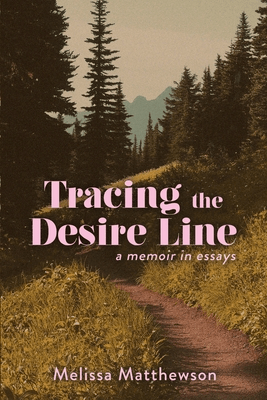
Tracing the Desire Line by Melissa Matthewson

I read Tracing the Desire Line by Melissa Matthewson over the course of a few months. I started the first half before the holidays and the last half after. The book is beautifully written on the level of the line. I mean, it has a lovely structure overall as well, but the line really stands out.

The content of the book was personally challenging for me to read. The author navigates desire, FOMO, long term relationships, and does so through a lot of pain, and also some pleasure, though even that pleasure often seems anything but pleasurable (I often imaged the smells of old cigarettes, sour alcohol sweat oozing through pores, and someone else’s odor that just does not smell right).

I guess because of my age, and the relationships that are all around me. So many are navigating similar relationships, reactions, etc., and so it felt true and also frustrating. I admired the author’s ability to be the “bad guy” in the book. I think it’s so much easier to write from a sense of false victimhood, but the author doggedly avoids that and stays firmly in a place of truth telling, even when it is not flattering, even when it is something readers might imagine she’d rather forget, and even when this mistakes are out there for everyone to see.

I am reminded just how vulnerable one has to be in order to write good books. As for this one–it is worth reading for the line, but also because of the honesty, even when it is ugly and difficult.

2023 year in review

Each year during this time of year, I love to reflect back on the previous year. I love to scroll through my old pictures. I like to look through all the books I’ve read. I like to reflect on the big, memorable moments. If I don’t stop to do this periodically, to look at it all, my life starts to feel like one big blur. I have come to cherish this annual reflection, which helps me stop time and appreciate where I’m at in my life, what I have accomplished, and all of the wonderful people who have inspired me and buoyed me up along the way—many of whom are you!  

This year I watched my children grow, and try new things, and learned more about who they are. I read more books than I have in years and found solace and regulation in all of my time spend in a good books. I traveled to Chicago, where I got to stay in a fancy hotel room with big, sweeping views of the city and Lake Michigan. Friends visited me in Oregon and Idaho, and they offered their wisdom, inspiration, and encouragement. A professional fire was lit in me this past year, from many embers that had been quietly burning, and I signed not one, but two book contracts and also completed another manuscript for an unrelated project that was a pure joy to create. I also enjoyed many much needed coffee dates and dinner dates with loved ones. All of this was made possible because, for the first time since having children, I have had sufficient childcare this past year. Each moment spent in my office was a cherished gift, and I worked (out of necessity) with a laser focus that I never had before becoming a mother.

Not all of my eras have been so good or so certain, and there has also been heartache, fear, and illness this year too. However, this era is a rich one for me. I awake to beautiful views, and wonderful people, and inspiring work, and I have felt grateful every single day. 

portrait of the author

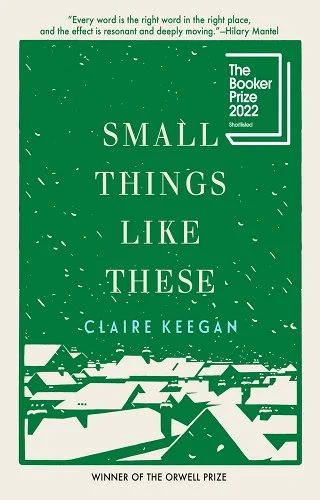
Small Things Like These by Claire Keegan

The pacing of Small Things Like These by Claire Keegan is more like that of a short story than a novel. This is nothing against the story–I love shorter works! I would classify this piece as a novella.

This book was a pleasant Christmas read, which was perfect because I finished it on Christmas Eve this year! This is a plot driven book with decent writing. It won the Orwell Prize for fiction that tackles a social issue, and it does that, and does a fine job of it.

The Argonauts by Maggie Nelson

The Argonauts by Maggie Nelson wasn’t on my reading list, but I dropped everything when I remembered I hadn’t read it. What a great book! First, it should be taught in graduate-level theory courses. (It probably is, but nothing like this was taught in mine.) We need more feminist theory like this that truly integrates the (deeply) personal with the philosophical. I can’t be the only one who gobbled this up, and I suppose I can do my part by quoting it and integrating it into my scholarship myself.

The blurbs about this book say it’s about art and philosophy, but, I don’t know, somehow those descriptions fail to capture what Nelson is doing, which is, admittedly, unparalleled and difficult to describe.

The book helped me understand some philosophy and culture more deeply through her insights and critique. Unsurprisingly, I clung to her thoughts on motherhood, joy, femininity, womanhood, and culture. Perhaps especially as a mother, I appreciated the spare, yet complex prose. What can I say–The Argonauts is yet another important book by Nelson.

Breasts and Eggs by Mieko Kawakami

Breasts and Eggs by Mieko Kawakami delves into a modern, urban female experience. The main character navigates the big questions women must face and the relationships they must navigate. Kawakami leads the reader through these issues without defaulting to any oversimplifications. The opposite, actually. Each question and relationship is as complex as real life. This book feels almost memoiristic, as I imagined Kawakami as the main character. (I’m prone to doing this though.)

The main character, Natsu, comes from poverty and brings herself out of that slowly as a novelist (the most unlikely of stories!). This character’s life leads her away from her family roots (in a sense) and complicates her relationships with her now very small extended family, not that these relationships are ever uncomplicated.

Her past (experiences with poverty and loss) also complicate her relationships and her abilities to be in a romantic relationship and to create a family of her own.

The book is strange. Natsu is confused. There is tragedy and there is triumph. It is nuanced, and that is true of the human experience, and in this case, it’s focused especially on the female experience.

I read that Breasts and Eggs was once published as a novella and then was expanded into a longer novel, which is the version I read. Through most of the book, I found myself wishing that this was two separate books, but then again, I love a good, short, digestible read. However, now that I’ve reached the conclusion, I do think extending it into one long book is defensible.

Lucy by the Sea by Elizabeth Strout

For the first half of this book, I felt myself impatient with the main character, Lucy. I am so hungry for a female lead who is not so passive, who knows her own mind. However, the writing was good enough that I suspected this all too common characterization of female leads was going somewhere meaningful, and I was right. I also grew to appreciate the spare writing style and the diary-entry style that she uses to develop a consistent sense of voice and theme throughout.

Elizabeth Strout’s Lucy by the Sea is a great book worth reading. Although this history seems so very recent, Strout’s book helps me recall just what the early days of the pandemic were like and the politics surrounding that time.

Even more interesting to me were her characters and the subtle insights she develops through the book to help the reader see just how they came to think and act like they do. None of this life gets wrapped up in a pretty bow, and Strout’s work reflects that not uncomplicated reality.

The Sun in a Compass by Caroline Van Hemert

What a gorgeous book. Caroline is a friend from grad school, and so this book has been on my radar since it came out. However, it’s publication coincided with the birth of my son, and so I’ve been delayed in reading it. I’m so glad the time has finally arrived!

This story is undeniably epic. Reading it will reacquaint you with your adventuresome spirit, no matter how modest. At the very least, you will want to get outside and go for a hike. Information about birds and migration is artfully interspersed throughout. The uniqueness of the land and animals is overlaid with insights about climate change, and it’s impact.

Caroline’s book is the antidote to the seemingly cool, unemotional adventure teams that appear to work solely from complex datasets. And mostly male. She is fully human, full of life’s most pressing questions, full of fears and doubts, and also gumption and bravery. She brings readers intimately into the complex experience of a 4,000 mile human powered trek. We learn that just like the choices we make in life, sometimes there isn’t a well established path forward, and the answer is found in weighing options, wrestling with the odds, and searching one’s own preferences.

My Body by Emily Ratajkowski

My Body by Emily Ratajkowski is a unique book–part expose on the seedy world of modeling, fashion, Hollywood, and fame, and part memoir, with deep personal introspection. In the book, Ratajkowski, whom I was vaguely aware of as a model, but now a fan and follower on Instagram, shares the story of her rise to fame, known for her perfect body. But, she’s also critic of the abuse she suffers at the hands of both the industry and the larger culture. She’s a critic of herself too, acknowledging stories when she was too naive, too confused, too scared, or too complacent to do better. It’s a complicated book that sends readers on a trajectory of introspection about women’s bodies, while also offering a look into an elite (and also surprisingly not glamorous in so many ways) world that few get to experience. I hope she’ll write more, especially about motherhood. This book is worth the read!