Category Archives: motherhood

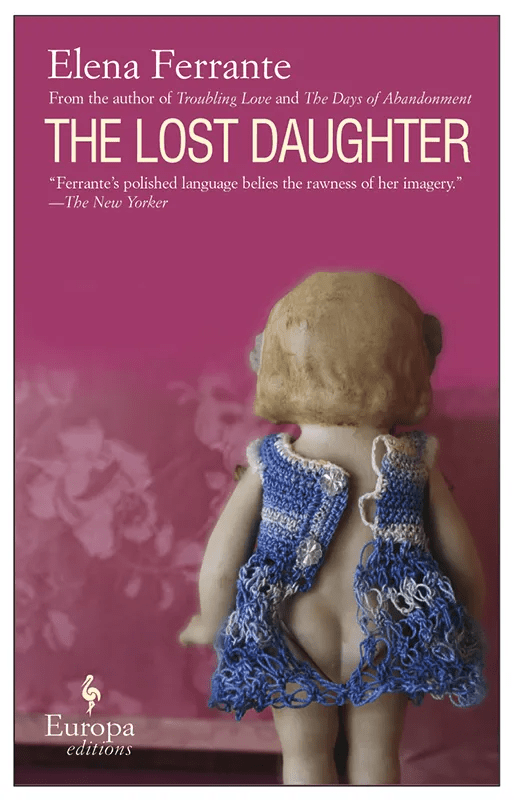
The Lost Daughter by Elena Ferrante

I read Elena Ferrante’s The Lost Daughter immediately after finishing My Brilliant Friend. This is another excellent, although perhaps more literary, piece than the first book of the Neopalitan Quartet series.

The Lost Daughter, also referenced in the Mother’s book, is about the darker side of motherhood, in a way that I found entirely relatable. Too often, critical books on motherhood are too critical, too negative–children are too exhausting, it’s not worth it, end of story. However, I truly appreciate Ferrante’s more nuanced approach. In The Lost Daughter, she turns a magnifying glass on the difficulties, violences, and burden of motherhood, the complete selfless turning over of the self that is required of the job, an ask that is far too demanding and made worse by societal constructs around motherhood and a general lack of support.

However, instead of dismissing the mothering journey altogether, as too exhausting, too violent, Ferrante acknowledges the duality of the role, the positive life changing aspects of it–the more complicated relationship it can foster in the self in regards to love, compassion, nurturance, service, and ambition. The little girl in The Lost Daughter is depicted as both angelic and beautiful from a distance, but up close is whiny, snot-nosed, crusty-eyed, and clawing, swatting, and pinching at adults around her. This is the reality of living with and loving a child. They are, each and every one of them all at once both transcendently perfect and also demanding, selfish, and incidentally cruel. To be a mother is to live within this duality constantly throughout the day. It’s complicated and beautiful and ugly too.

My Brilliant Friend by Elena Ferrante

I discovered Elena Ferrante from Mothers by Jacqueline Rose, which I read recently. I started with Ferrante’s My Brilliant Friend, the first in a long series, and I loved it! The writing is excellent. The content is thought-provoking, and it also has the long sense of story found in easier, longer reads–not a common combination. Although it is long, I flew through it.

While I highly recommend the book, I will warn that I found the conclusion to be somewhat disappointing. I wanted a strong wrap up for this particular book, but instead found myself needing to read more of the series in order to get that. It will probably require reading all four books.

I ended the book somewhat exhausted and unwilling to continue with the series. Maybe I’ll return to them someday. They’re certainly worth it, but, and I can’t believe I’m writing this, I really don’t have the energy to give them at this point in my life.

I’m glad these books are out there. Sometimes I just need a good book, a good story, and I now know I can turn to Ferrante to get that.

I am also inexplicably obsessed with the cover art:

2022 year in review

My 2022 year in review, I want to summon the poet and philosopher Snoop Dogg, who said, “I want to thank me. I want to thank me for believing in me. I want to thank me for doing all this hard work. I want to thank me for having no days off.” In 2022, there were no days off. Part of this is just the nature of being a mom. I am constantly on call and often in active service of someone else’s needs. Part of this is my job. There is no end in sight. There is always scholarship to do. During the term, there is always more grading to do after the regular work day is over. Part of it is just my unique circumstance regarding my support network.

In 2022, I lost my aunt. We had tried to stay away from her for the previous few years to protect her fragile health during the pandemic. I anticipated being able to spend more normal time with her since moving back to the area, but that was not to be.

Perhaps that was a catalyst, but there were several otherworldly connections throughout the year. I had a few interesting experiences with a spirit medium. She charges an hourly rate, and maybe I should schedule something. I saw huge droves of yellow butterflies while driving, I wore my lipstick daily, and I felt a professional push like never before. I was able to see possible pathways that were previously out of view. It’s possible that nothing will change. In many ways, that would be fine because there are many things to love about my current situation. However, it’s nice to not feel limited.

Maybe it was just the stunning inflation, but I also found myself more interested in material things and motivated by money. I’m not sure what I believe, but this year it felt like my ancestors were there and pushing me, encouraging me, and giving me signs along the way.

In spring of 2022, my first lambs were born on the farm! They were born in April, and lambing in milder months was by far more convenient than December or January lambs. It’s less conventional and means a lower weight at weaning, and while I would like the sheep to be profitable, that margin will be narrow either way.

I was able to read more than in previous years since having children. Most of that reading happened in winter and in summer, with months on end passing without any reading for fun.

When I look back at my many photos, it looks like we did a lot. I’m glad for the photographic reminders because in many ways, it felt like most days were similar, full of meal prep, diaper changes, and caring for my children.

2022 Top Nine

2022 Reading List!

Once again, I read over twice as many books as I read last year. Most of this happened hurriedly during rare breaks. My absolute favorite was A Lover’s Discourse. As usual, I also read several books for work, but only included the few that were really meaningful or entertaining to me. Mom jeans are back in fashion (or at least I am still embracing them), and so I’ve also been reading and enjoying scholarship from the early 1980s as well. I’ve also included a few children’s books that I thought had literary merit, although I also read well over 2,000 children’s books this year, many of which were repeats.

A Short History of the World According to Sheep by Sally Coulthard

The Lais of Marie de France

Tales the Textiles Tell in the Lais of Marie De France: Weaving As a Signifying System by Gloria Thomas Gilmore-Hunt

The House on Mango Street by Sandra Cisneros

Turns of Thought: Teaching Composition as Reflexive Inquiry by Donna Qualley

Wintering: The Power of Rest and Retreat in Difficult Times by Katherine May

Burnt Sugar by Avni Doshi

Dog Flowers by Danielle Geller

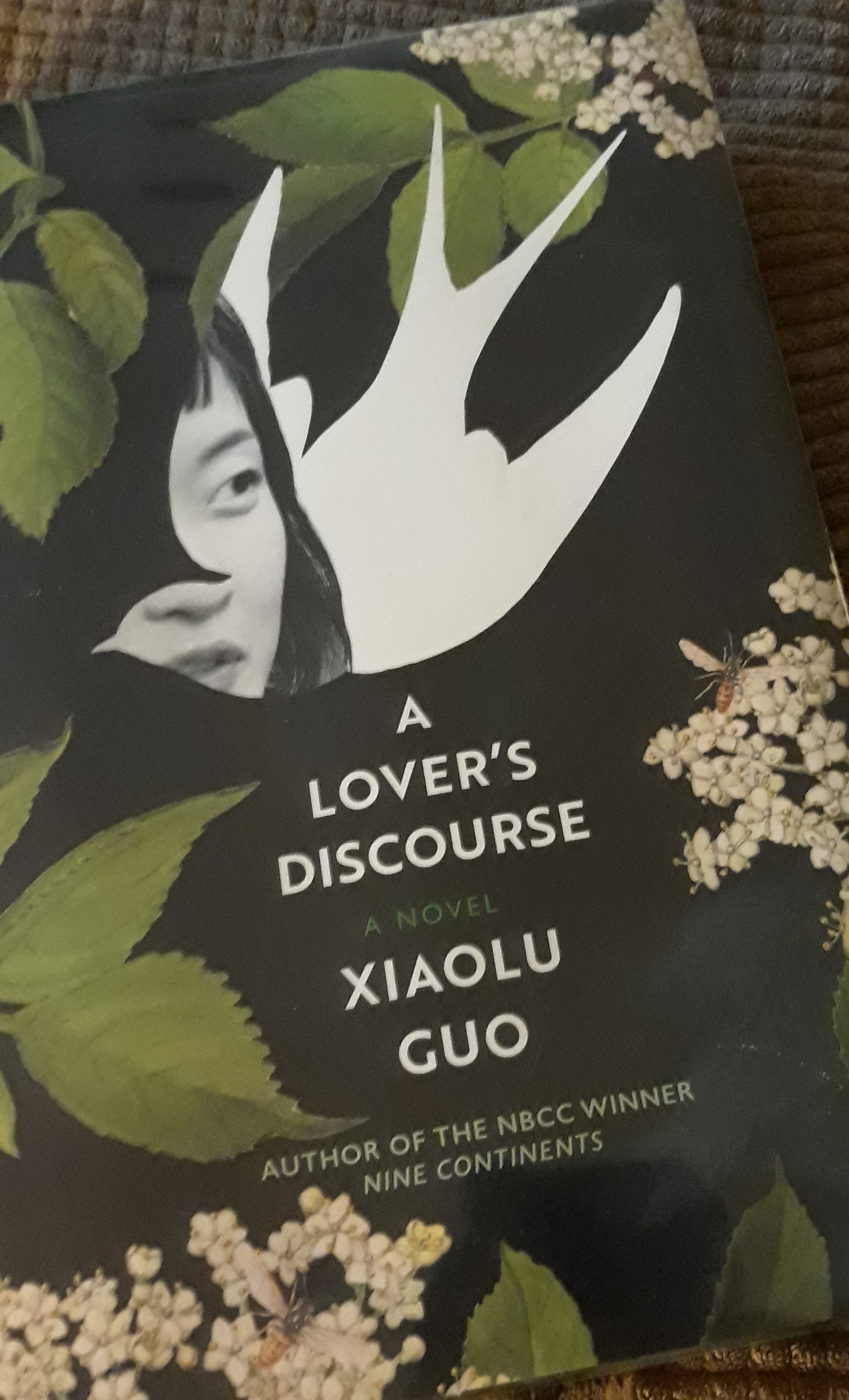
A Lover’s Discourse by Xiaolu Guo

What Remains by Carole Radziwill

James and the Giant Peach by Roald Dahl

Worms Eat My Garbage by Mary Appelhof

Orwell’s Roses by Rebecca Solnit

Journey to the Center of the Earth by Jules Verne

Walking: One Step at a Time by Erling Kagge

The Peaceable Classroom by Mary Rose O’Reilley

Mothers: An Essay on Love and Cruelty by Jacqueline Rose And others…

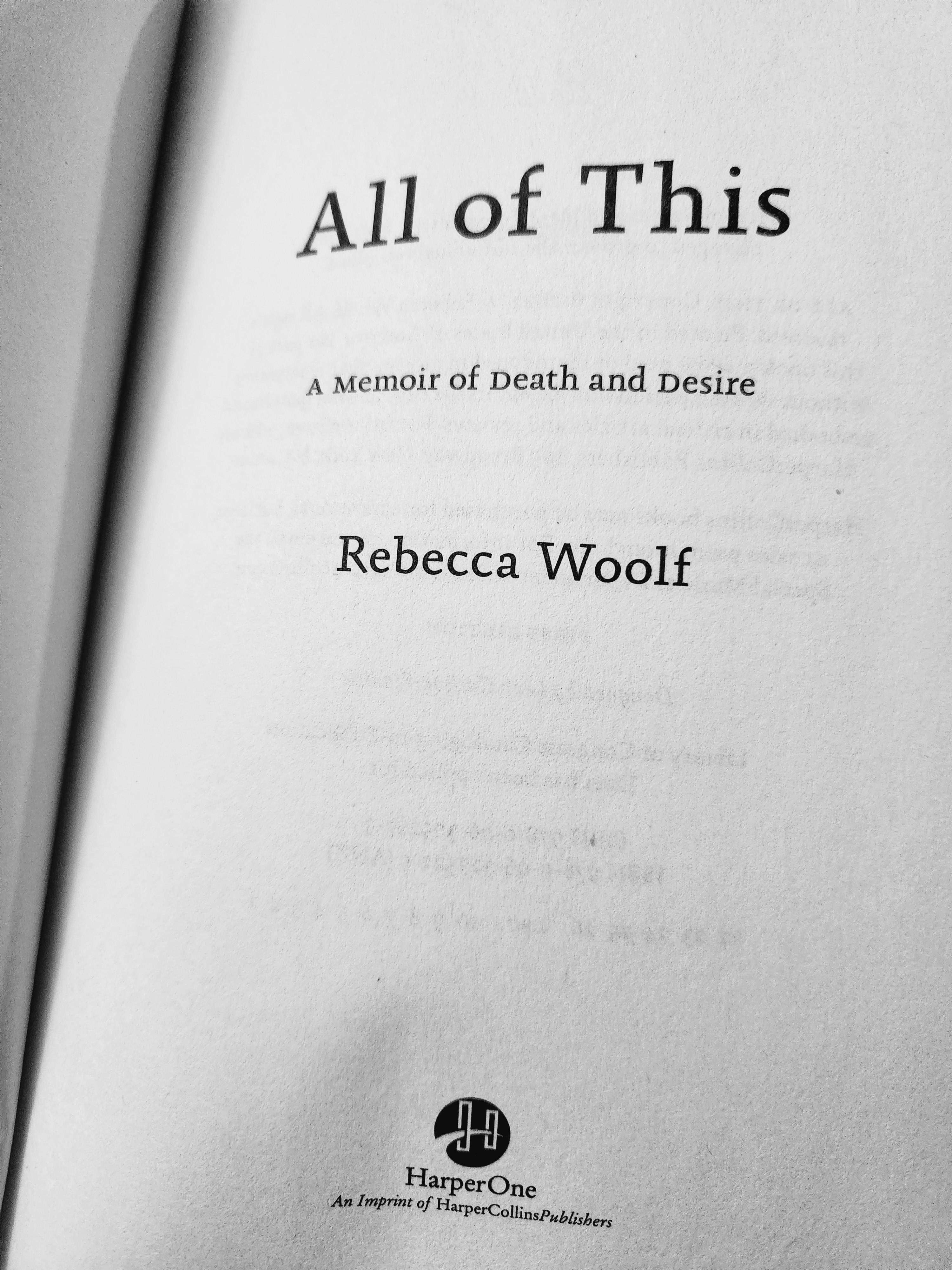
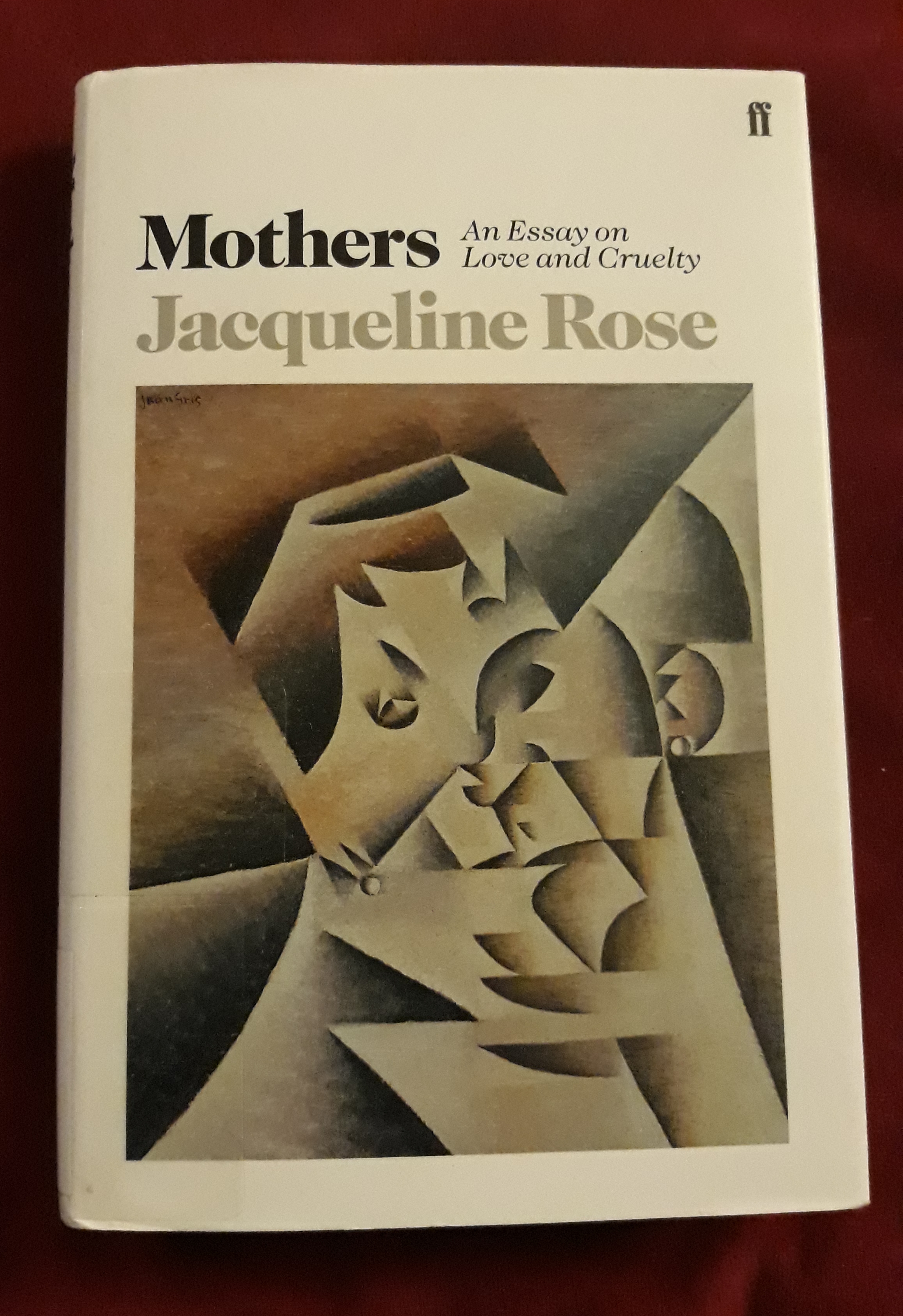
Mothers: An Essay on Love and Cruelty by Jacqueline Rose

I started reading this book after a friend challenged me to mini book club. I thought it would be an interesting take on motherhood, perhaps essays, although the title calls itself an essay, singular, which reads, in hindsight, as pretentious as it is by no means an essay, and is, at the very least, essaysss. This books is basically theory, with some fairly dense analysis and criticism, but also some accessible hot takes and also slow burning takes mixed in.

The perks of this book are in some of the one liners, which I’ll share below. Her literary knowledge of mothers is vast and deep and fascinating. I found myself wanting to read all of the literary works she mentions, something that would take me years. I always (and will continue to) return to de Beauvoir and Rich.

The drawback of the book is only that it was more academic than I was hoping, something that might be reconciled by a more accurate title. I did not always understand the connection between mothering and immigration, although that connection is made frequently throughout the book. This was especially true for me in the first chapter. I found myself arguing—aren’t immigrant mothers the most sympathetic of all immigrants? This point felt underdeveloped to me throughout the book. Also, I felt that, based on my own experience, the dogged connection between breastfeeding and eroticism was a stretch and over-developed.

Even still, I appreciated the vulnerability and honesty throughout the entire book. It’s really like no other and tells a story of matrescence that is important, but rarely told. For me, motherhood has required me to be an almost entirely different person. Giving up such a huge sense of self is the sacrifice that seems too great and also unnecessary. Nothing could prepare me for how much I would change, would be forced to change in order to survive, and how that change felt inevitable, and necessary, and okay, and part of my life’s path and development, but also, in many ways, a jarring loss.

Overall, if you’re doing scholarship in motherhood, this is a must read. I may even be able to use some gems in my own scholarship, which is often, just adjacent, although I haven’t isolated any yet.

Here are a few lines/questions worth returning to:

“[W]hat are mothers being asked to carry, what forms of failure and injustice are they made accountable for, above all, in the modern Western world?” (37).

(Indeed, I have found the motherhood to be too demanding, asking too much, and unnecessarily so. With a better social network, motherhood could be vastly improved for (most) women.)

“We talk of a mother’s suffocating love. But the one in danger of being smothered by love might not be the infant but, under the weight of such a demand, the mother” (81).

(See above.)

“For several yars she has tried in vain to adapt to his point of view, to her mother-in-law’s exacting standards and ‘to all the unintelligible ritual with which they barricaded themselves against the alarming business of living’” (99).
(I just thought this was a profoundly accurate description of how I perceive some people to be doing life. (I have been wrong in my interpretations of this though.))

“[T]he child’s demands drive the mother to insane perfection; the inconsiderate child underscores the radical neglect of her own life” (187).
(I don’t think it can be helped.)

“‘[H]is implanting himself inside me; unreasonably and totally destroying the me I was’” (206).

A Lover’s Discourse by Xiaolu Guo

I am blown away by the slow burn called A Lover’s Discourse by Xiaolu Guo. The first and majority of the book is a quiet, steady dialogue between the main character and her “lover.” As you know, I am not a theory hound, but this book was one of few that has made me want to turn steadily back to some of the theories presented in this book, and in grad programs across the world, including my own, and see if I can now find a different way in to them, more my own, perhaps feminine, a more first gen, working-class, creative, put two ideas next to each other to see the new, true, and also beautifully enigmatic knowing that emerges.

I love some of her snarky responses to the rote theories her partner espouses. I found the book to be an incredibly bold and feminist and completely empowering that she takes on subjects that are often, almost always (always?), interpreted through a male lens. She even uses Barthes’ exact same title. So bold! How might I do more of this myself? The book ends with both the theory and physicality of reproduction.

Often I find modern literature to be too cold and unemotional. This book had some of those qualities, but I still felt deeply and identified with many of the main character’s experiences. New motherhood is depicted in almost entirely negative terms, but much of the book is.

In new motherhood, I, too, started to think of mothers in response to every act of killing I heard on the news. These mothers have worked so hard to raise of their children, up until the very moment that their lives are taken. Guo has this exact same insight. We are all one, I suppose.

Finally, the relationship–I’ve felt nearly every one of the feelings or loneliness, isolation, desire, and confusion. I have yelled for him to “Bring wipes” as the baby’s mess grows, only to have him emerge too late, confused and groggy. “When have you had time to listen to music?” The changing home, the changing dynamic, described so uniquely and so true, perhaps especially for the creative woman.

Through it we are two people, changed, and in discourse with each other—lovers.

Burnt Sugar by Avni Doshi

In the precious time between when the term begins and when the grading comes flooding in, I read Burnt Sugar by Avni Doshi. It’s an interesting and heavy book. I was really interested in the unique relationship that is depicted between daughter and mother. The lines of reality are blurred throughout, making the point that reality is fragile and based on a corroborated story shared by people.

I was interested in the setting, which felt foreign to me, but also familiar as so much of the daily tasks of living, eating, and interacting with others are shared across borders.

This book was heavier than what I need right now, but the reading was good, and I need that even more.

Here are some lines that I liked:

“My mother knew marriages were generally unhappy, but she was young and had not fully metabolized the idea that this would be her reality. She still believed she was special, exceptional and had thoughts that no one else did” (44).

“I tell her I am not sure what to do, that maybe I’ve lost my imagination./ She says she never thought my work required much imagination, that it was copying an image over and over again./ I explain that I mean another kind of imagination, the kind that invents a world where my work matters” (174).

“Is the sensation of receiving a kiss less pleasurable than that of giving it?” (212).

Iep Jāltok: Poems from a Marshallese Daughter by Kathy Jetñil-Kijiner

Iep Jāltok: Poems from a Marshallese Daughter is a beautiful book of poetry by Kathy Jetñil-Kijiner. I don’t usually read a lot of poetry, but this one drew me in and held me there.

The place where I work has a relatively large population of Micronesian students. In fact, a summer program for work put this book on my radar, and I’m so glad it did. I find myself wanting to learn more about this population. From the book I read about the indigenous connection to place, language, racism, climate change, climate refugees, refugees from US nuclear testing, food, love, religion, womanhood, family, and more.

I found myself searching for plane tickets. Just how far away are the Marshall Islands?

The Beadworkers by Beth Piatote

The Beadworkers by Beth Piatote brought back memories of gingham table clothes and picnics near Clark Creek with Grandma, trips to Omak, where I learned about suicide races, and the smell of tender beef stew from the crock pot, sliding in Grandma’s passenger seat as she accelerated over the railroad tracks, the proper way to make a flowerbed, the importance of reading, assimilation because your life depended on it, adoption.

Piatote knows the inland northwest well, and reading her work is like learning that someone else has the same secret you do. I have a similar feeling when reading authors like Sherman Alexie and Raymond Carver. They know these places and these people too, and it’s so nice to feel seen by them.

Reading is one thing that renews me and gives me a stronger sense of who I am. That sense of who I am has changed in wonderful ways in the past few years as I’ve become a mother, but also in worrisome ways. There is a daily grind, a constant sense of work to be done, no rest for the weary. Reading Piatote’s bio, I saw that she is also a mother, and I felt even more reaffirmed. She is able to remember. So can I.

The book made me feel creative and curious and revitalized, and in reading it, I am overwhelmed with gratitude for my job, my colleagues, and my students and the life I get to live that puts me in the way of this literature.

The Nez Percé language throughout
the book was powerful to see and sound out.

planting the placenta

Today I finally planted the placentas that I saved from both of my hospital births. I kept them in case I was struggling postpartum and wanted to have them encapsulated. Fortunately, I never ended up needing to use them postpartum. So, I stored them in the freezer with a plan to bury them. I learned that once you have them, there’s no turning back. I moved across two states with a placenta in a cooler on ice. I started to have my doubts about keeping them, but what else could I do?

Finally, it is springtime, and I am settled, and I am planting my first orchard: apples, pears, apricot, and peach. It is time.

appleblossom

a new fruit tree for the orchard

To begin, it felt like a chore. Get trees. Remember to get the placentas out of the deep freeze so that I can plant trees tomorrow. Dig holes. Do it all quickly before the babies wake up from their naps.

I’m so glad I did it though. It was a beautiful and surprisingly introspective process. When I opened the containers, they were so fresh, like I had just given birth. Everything slowed down. The memories of my pregnancy, of growing and birthing these beautiful babies came flooding back as I prepared the placentas that connected us in every way. It was bittersweet to let them go. To put them in the earth felt like letting go of the most physical connection I have with my boys. It’s something I’ll never get back.

I hope I’ll remember. I hope sometimes when I am in the orchard, I’ll slow down, and I’ll remember the absolute miracle of life and the life changing gift this experience of motherhood has been to me.

How fitting that today is also Earth Day. Happy Day!