Category Archives: relationships

Tom Lake by Ann Patchett

The only other book I’ve read by Ann Patchett was This is the Story of a Happy Marriage, which I read last year. My thinking is that Patchett has had a long and illustrious career and has earned the time and patience it takes the readers to complete her books. Tom Lake is no exception. It might even be her crowing achievement in time and patience, which is not to say that it isn’t worth it.

Perhaps what strikes me most about Patchett, and that generation of woman writer, is the way they interact with men. Men seem to hold a higher interest than in contemporary literature. The women, even the author, seems to defer to them for knowledge and guidance.

I know of one woman of the same generation who is this way too. I’m not even sure if it’s a bad thing, but it strikes me as a bygone way being and thinking. Yeah, that little thing is probably what struck me most.

Second, I was struck by how much attention the people in the book gave the narrator, who is an aging mother and former actress. Her daughters were mostly riveted by her stories, and her husband was patient with her as well. Near the end, the reason for this interest becomes clearer, but throughout the bulk of the book, the narrator seems tedious and detailed, even delighting in her story and drawing it out for emphasis in a way that felt somewhat irritating to both the daughter and the readers.

In the end, I think it is a good book, calculating, safe, comfortable, and revealing a unique story not often told. It’s worth reading, but with patience.

Rough House by Tina Ontiveros

Rough House by Tina Ontiveros is excellent. Excellent. I don’t say it lightly when I say that I think she is like a female Raymond Carver–Carver, a magnificent writer, who, in my mind, so perfectly captured the unique culture of the Northwest, the logging, the mill towns, and the landscapes (portrayed unromantically, but true). In fact, Ontiveros has lived in some of the exact same towns as Carver!

Carver died decades ago, and the Northwest of the ’80s, ’90s, and today deserve their own new depictions. Ontiveros does just that. The author writes about her troubled childhood and geniusly pairs the horrific abuse with the love in that unique way that it is so often packaged together in families.

Because I am so deeply rooted in the Northwest, having grown up here myself, being a part of a larger family that has lived here since the time of the Oregon trail, and living in a family whose income came from logging, mill work and the like, Ontiveros’s novel was so very familiar to me. I loved how she captured the culture, the strong sense of place, even the language.

I am stunned by this work.

The Path Made Clear by Oprah Winfrey

For years, my yoga practice and author’s like Eckhart Tolle helped me to connect to my spiritual self. For whatever reason, these practices and readings have felt like necessary touchstones, reminders to help me stay on track with my authentic self and my unique spiritual path, reminders I have a hard time remembering on my own.

For whatever reason, these spiritual feelings, and my interest and curiosity in them, completely left me once I had children (although it seems like the opposite would be true). The only sense I can make of it now is that I was so deeply in my spiritual self as I transformed into a mother that I was unable to stand outside and observe, analyze, or even connect to the experience in a thinking way. I could not think it. I could only feel it, and I did feel it deeply! I have felt so profoundly grounded and assured since the transformation. Since becoming a mother, I am undeniable a new version of myself.

As the years pass, and I gain some distance from the initial experience of becoming a mother, and as I have more time for thinking and reflect than I did in the early days, I find myself having capacity for and appreciating the small *thinking* spiritual reminders that come my way.

Oprah Winfrey’s The Path Made Clear is just such a book, carefully curated with some of the great spiritual insights available to us. It is not too deep or too complicated, and it is not too long, but the insights shared from many of Oprah’s friends and peers are worth reading, even if they are just serving as familiar reminders.

Lila by Marilynne Robinson

Robinson’s reputation precedes her. I first read Marilynne Robinson book Housekeeping, which I thought was extraordinary. Robinson is one of the authors that my grandpa used to read out loud, his gravely voice adding even more significance to each word. I frequently thought of him during this book.

Robinson’s Lila, which I have read out of order from the other books in this series (Gilead and Home), is a quiet, thoughtful book. I wondered at the repetition of some of the ideas the repeated detail of laughing with Doll. The repetition of imagining geraniums at the window. Was this intention. These details certainly make the point, but why were they repeated? At the end, I do not know and cannot tell if it was intentional.

After reading this book, I can confirm that I will also look to read Gilead and Home at some point in the future, though somehow I doubt that any will be as good as Housekeeping. Still, it’s nice to know I have them to turn to when I need a guarantee of a good book.

Remembering Laughter by Wallace Stegner

Remembering Laughter by Wallace Stegner is a classic novel that reveals why people are the way they are. Or, more specifically, why this one family is the way they are.

In his book, Stegner reveals himself to be a master author, demonstrating artful craft on the sentence level, accompanied by deep insights into the human condition. None of this is news though. Stegner is obviously a renowned author–though I don’t think I’ve read his work before.

I found myself wondering why this novel isn’t taught more often. It’s a short, manageable size and one that students could easily get through in a short timeframe, leaving plenty of time for discussion, analysis, and response.

Stegner’s more famous work is Angle of Repose, which evidently has some criticisms on it surrounding plagiarism, which then calls into question his methods and all of his work. Remembering Laughter is worth the read though and won’t take up much of your time.

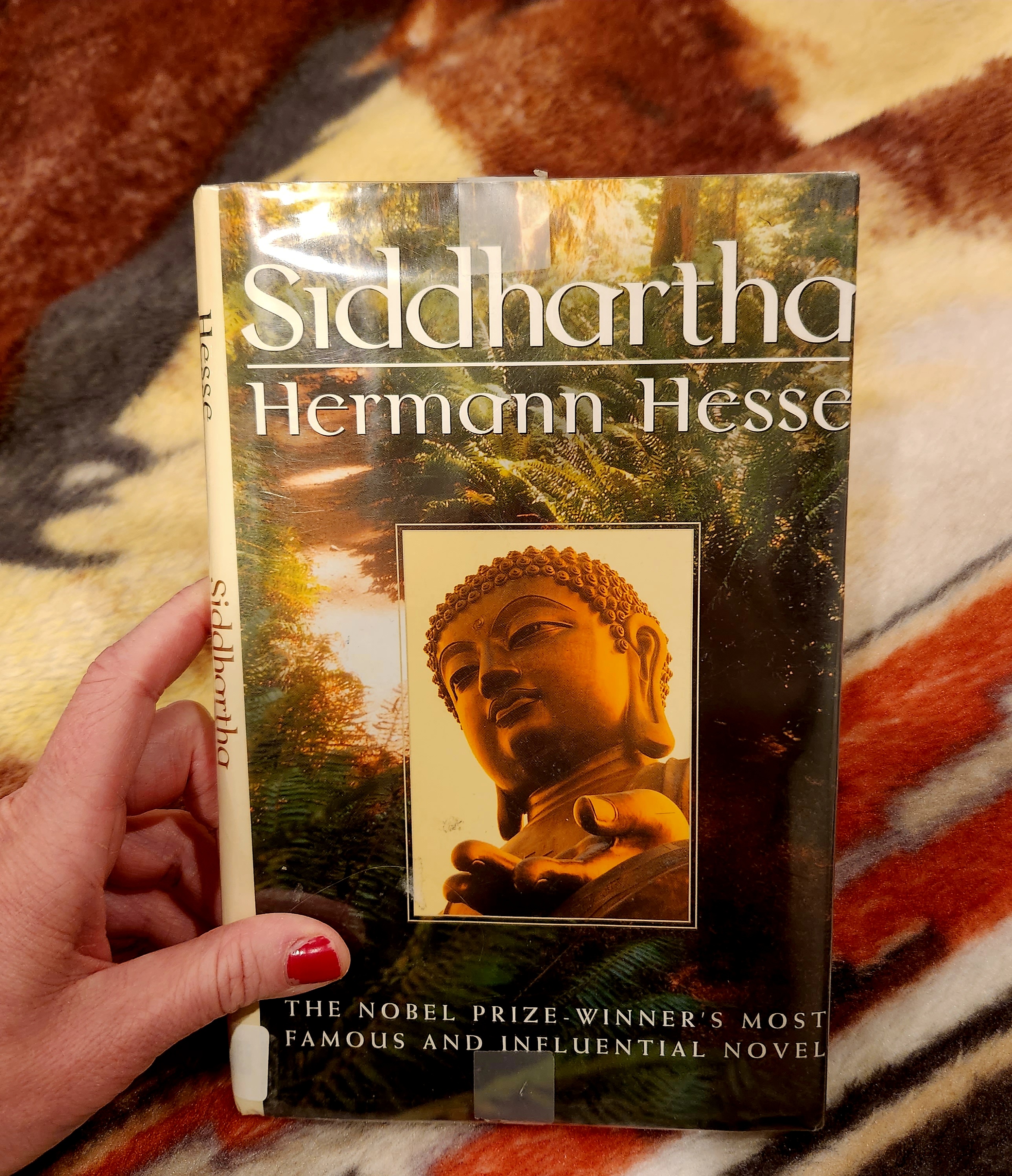
Siddhartha by Hermann Hesse

I have wanted to read more Hermann Hesse since reading his novel Demian some years back. A friend recommended Siddhartha a few years back, so here we are. This is a very short, manageable novel, and indeed, it is full of some of the great spiritual insights and teachings that have come out of the Indian tradition.

As someone who has studied and taught yoga for many years, much of the teachings in this novel resonated or sounded familiar to me. While these basic teachings have been distilled and distributed in many ways, by many people, over the years, I think Hesse’s novel must have been incredibly revolutionary for the time.

In fact, while reading, I frequently thought to myself that Hesse was brazen to even attempt such a novel, taking up such an important figure, such important and difficult teachings, and novelizing it. In the end, it seems that Hesse was a success, but what an incredible undertaking! As a writer, I would be worried of getting it wrong. I guess that’s be main difference between me and Hesse 😉

According to his bio, Hesse spent a good deal of time in India throughout his life. His family members were missionaries there for years. Maybe these are stories and teachings that became intimate and familiar to him. It certainly seems that way from the book.

I have to admit that Siddhartha did not blow me away like Hesse’s Demian did, but I think that was more about me than about the book itself. If this had been the first book I had from Hesse, maybe I would have had a bigger reaction. In the end, this is a carefully written book, worthy of its praise and longevity.

Hannah Coulter by Wendell Berry

My second book of the year is Hannah Coulter by Wendell Berry. I’ve heard of Wendell Berry before, as a respected author of natural and rural places, but this is the first book from Berry that I have read. I guess maybe I thought he was a poet, but this work, and his other books, are very much prose!

After reading, I can say that Berry walked a fine line between uncomplicated narrative, nostalgia, and truly solid writing. Normally, excellent prose is not deeply nostalgic (even cheesy?), but Berry goes there and (mostly) pulls it off.

Hannah Coulter is the narrator, and in the book she is simply retelling her life story. Her life story is one of an impoverished farm kid, then a farmer’s wife, living in rural Kentucky, born around 100 hears ago. Her story lasts through the turn of the 21st century, and the book was published in 2004.

In the book, through Hannah’s narrative, Berry captures a unique culture, experience, and perspective. Through Hannah’s eyes, readers follow a changing farmscape, a changing sense of community, and a changing (and probably worsening) world.

Coming from a small, rural community myself, I thought Berry’s depiction of small-town life was deeply accurate, and he captures the best, most wonderful aspects of a strong community–one that many people never experience.

Of course, there are also downfalls to rural, small-town living, and many are desperate to escape the confines. (The same is true, in reverse, of urban living too though.) Berry captures none of the contrary argument and focuses only on the benefits of rural living. In my mind, there is a place for this narrative in the world, and Berry gets to tell it.

Readers may marvel at the seeming poverty, the scrimping, and the hard work involved in Hannah’s life, the lack of technology, the close sense of a very large and dependable community. It’s an experience that many no longer have, as they are removed from extended families and generations-long relationships.

I’m never quite sure what to think when an author’s main character is opposite gender of the author, and I do think something is usually lost, and that may be the case in Hannah Coulter as well. This book and this content isn’t for everyone. But what is? It’s a slow, intentional read, uniquely structured, beautifully written, and appreciated by readers like me.

A Dangerous Business by Jane Smiley

A Dangerous Business by Jane Smiley is the first book I’ve read in 2024! I have so much writing due this year, that my expectations for reading are very low. However, I’m off to a good start!

This was an engaging book. I was curious to see what was going to happen and eager to turn the pages. Sometimes the plot felt too obvious. Sometimes the tone felt off–too hokey, too slap stick, too unbelievable. While there is some fine storytelling, lovers of literary fiction might feel indifferent toward this one. Also, this was a book that seemed to have a film in mind. I could easily see this book made into a film, and I would probably watch it.

The following are some of the things that I thought were best about the novel. I appreciated the somewhat mundane portrayal of prostitution. I liked the intricate details of a real city: Monterey, California. I liked the portrayal of sexuality without labels. I appreciated the handling of the historical aspect of the book. I appreciated the layering in of social issues. I appreciated the references to contemporary literature of the time.

All in all, this book is very Jane Smiley.

2023 year in review

Each year during this time of year, I love to reflect back on the previous year. I love to scroll through my old pictures. I like to look through all the books I’ve read. I like to reflect on the big, memorable moments. If I don’t stop to do this periodically, to look at it all, my life starts to feel like one big blur. I have come to cherish this annual reflection, which helps me stop time and appreciate where I’m at in my life, what I have accomplished, and all of the wonderful people who have inspired me and buoyed me up along the way—many of whom are you!  

This year I watched my children grow, and try new things, and learned more about who they are. I read more books than I have in years and found solace and regulation in all of my time spend in a good books. I traveled to Chicago, where I got to stay in a fancy hotel room with big, sweeping views of the city and Lake Michigan. Friends visited me in Oregon and Idaho, and they offered their wisdom, inspiration, and encouragement. A professional fire was lit in me this past year, from many embers that had been quietly burning, and I signed not one, but two book contracts and also completed another manuscript for an unrelated project that was a pure joy to create. I also enjoyed many much needed coffee dates and dinner dates with loved ones. All of this was made possible because, for the first time since having children, I have had sufficient childcare this past year. Each moment spent in my office was a cherished gift, and I worked (out of necessity) with a laser focus that I never had before becoming a mother.

Not all of my eras have been so good or so certain, and there has also been heartache, fear, and illness this year too. However, this era is a rich one for me. I awake to beautiful views, and wonderful people, and inspiring work, and I have felt grateful every single day. 

portrait of the author

Small Things Like These by Claire Keegan

The pacing of Small Things Like These by Claire Keegan is more like that of a short story than a novel. This is nothing against the story–I love shorter works! I would classify this piece as a novella.

This book was a pleasant Christmas read, which was perfect because I finished it on Christmas Eve this year! This is a plot driven book with decent writing. It won the Orwell Prize for fiction that tackles a social issue, and it does that, and does a fine job of it.