Author Archives: sherewin

M Train by Patti Smith

It’s so hard to find a good new book these days. So when I find one, I tend to spend as much time in it as possible. That’s what happened with Patti Smith’s new book, M Train.

image from amazon.com

I read Just Kids a few years ago and loved it. In her rock and roll heyday (which is still now for many of us), Smith was known for brilliantly blending poetry with rock and roll. So it makes sense that she is a writer and also a fan of writing, which, in part, is what this book is about. It’s also about coffee. It’s about strange rituals and missions dreamed up by an amalgamation of literature, dreams, conversations and her own notions, which has her leaving stones at gravesites of people she knew or didn’t know, caring deeply about a small idea, about a small token, a small memory, a spirit.

I’ve always identified deeply with Smith. Her dreamy, creative way of moving through the world is similar to me at my best self. On some existential level, I know the deep love she knew with Fred, and the deep loss, and the new existing in this strange world, but hers is deeper, more, and a guidepost for us all.

I don’t know that I would like her. The day in/day out of her life seems sometimes boring, and dusty, and littered with cat hair, but there’s something about what she produces as an artist that opens me up, reminds me, shows me something new. So I stay in her books for as long as I can, and then hold on to them again afterward.

gardening

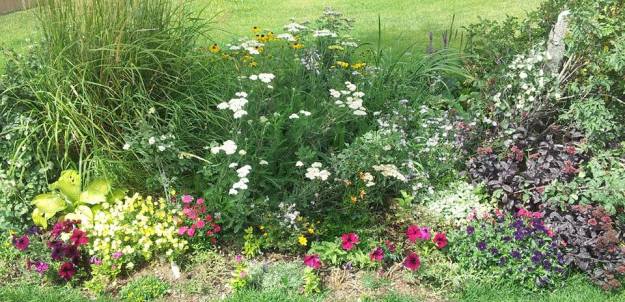
This year my garden is planted with
emerald blue rock cress
creeping phlox
mules hybrid doctor
early sunrise tickseed
coreopsis grandiflora
lemon yellow sun soft pink coleus
orange symphony potentilla
horned violet rose mum
black-eyed susan rudbeckia
purple dragon viola
portulaca sundial
moonshine x
butterfly daisies
snow on the mountain or bishop’s weed
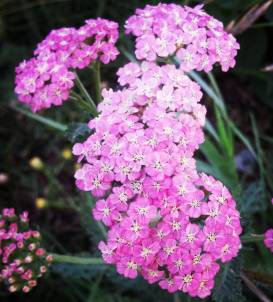
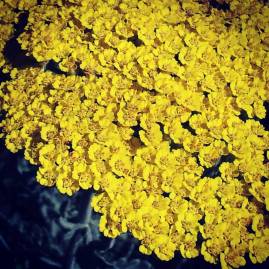
lupine columbine yarrow
american halo
hosta
elegans
and hope.

13443208_10209982683110109_6364634086596821399_o

columbine

13433258_10209982724671148_8726775559814112129_o

lupine

20160612_160910-1.jpg

coreopsis


Girl in a Band by Kim Gordon

I read Girl in a Band by Kim Gordon on the heals of reading Carrie Brownstein’s Hunger Makes Me a Modern Girl and Patti Smith’s Just Kids a few years earlier. Gordon’s book pales in comparison to Brownstein, who is a genius–capable of exposing those real and unflattering (and flattering!) human emotions and experiences by showing instead of telling, and to Smith, who’s skill with language has always been a huge part of her success as a musician and artist. It makes sense that Smith and Brownstein would both write books that are both informative to fans, but that also hold up as literary works as well. Gordon’s book doesn’t do that.

Gordon portrays herself as a frustrated artist, and she accurately conveys that frustration in her lifelong relationship with visual art and music. At many times, she says she felt vulnerable, but the reader doesn’t see or feel the vulnerability. Sometimes Gordon seems to confuse vulnerability with victimhood, which also comes off as somewhat confused.

Here’s what I think: I think she is tough, and numb, and this is part of her personality, but it’s also exacerbated by her heartbreak and divorce from Thurston Moore. The pain is still too fresh for her to have any useful insight. One imagines that her heartache still weighs her every day, and without the clarity of some of that pain having lifted, she is not yet in a position to write about her experience in a useful way. She comes off as guarded–the opposite of vulnerable. She pulls back, and the reader pulls back too.

If you are a fan of Sonic Youth, it’s worth reading for the history. If you are a fan of that musical movement, it serves up a fine history. Otherwise, this is one you can skip. If she does this again in about a decade, I’d give the new one a read. Perhaps by then she’ll have deeper insight and also remind us what any of this had to do with being human in the first place.

Crazy Brave by Joy Harjo

I read this book almost entirely while lying in bed, while falling in love. Joy Harjo’s a fixture in poetry and literature. Before now, I’d only ever read a poem or two here and there, but I’d never really gotten into her work…that is until I read her memoir, Crazy Brave. It was one of those books that I started reading in a bookstore, and then read a chapter or two from the library, and then finally bought my own damn copy and finished it at home…while lying in bed. I love this book.

image from amazon.com

Harjo is mostly known for her poetry. I don’t enjoy reading a lot of poetry, and so that’s why I haven’t been very familiar with her work. After reading and loving Crazy Brave, I read She Had Some Horses, which is also beautiful, and I love it, and it’s poetry. It’s a collection I see myself returning to.

As for Crazy Brave, what I love about the book is how she captures a creative, feminine life experience that I (mostly) really relate to. It’s soulful. It captures pain, and specifically women’s pain, in a profound way. It shows us another way. It does so in poetic prose–she’s a poet after all.

This is from the back cover of She Had Some Horses, but I think it pertains to all Harjo’s work: “If you want to remember what you never listened to & what you didn’t know you knew, or wanted to know, open this sound & forget to fear. A woman is appearing in the horizon light.” ~ Meridel Le Sueur.

And then I saw her picture and remembered that maybe I met her. Or maybe I heard her read once. She is familiar to me. Her name. Her face. Her work. And yet I only really found her work now, when of course I needed it most.

I was captured throughout the entire book, but  by the end, I was a little lost: WHAT DOES IT ALL MEAN?! I wondered about the title: crazy brave. Now I think I can say that the larger message was, for me personally, a message to women to be brave, an admonition that it will be crazy, and you will be crazy, and you will be brave, and that is life.

Part of this is about surrendering to the flow of the river, instead of fighting against it, using the strength of the current to pursue yourself, but also acknowledge or accept that the river will be violent, and it will wound you deeply, and it might kill you, and it might lull you to sleep, and part of this we can control, and part of it we cannot control, and this is the wisdom we gain from being in the river. I am reminded of the time I went underwater in the Colorado River, the immense crushing noise turned warm and quiet and then I emerged. Part of this book is about acknowledging fear, working around it, using it, but not being controlled by it. I left the book thinking I should do what I must do before the river does it for me, even as the river does it for me.

Some of the words I loved:

“Yet everyone wanted the same thing: land, peace, a place to make a home, cook, fall in love, make children and music” (19).

“Because music is a language that live sin the spiritual realms, we can hear it, we can notate it and create it, but we cannot hold it in our hands” (19).

“In the end, we must each tend to our own gulfs of sadness, though others can assist us with kindness, food, good words, and music. Our human tendency is to fill these holes with distractions like shopping and fast romance, or with drugs and alcohol” (23).

“Water people can easily get lost. And they may not comprehend that they are lost. They succumb easily to the spirits of alcohol and drugs. They will always search for a vision that cannot be found on earth” (25).

“They continue to live as if the story never happened” (43).

“Our  heartbeats are numbered. We have only so many allotted. When we use them up, we die (52).

“All of these plant medicines, like whiskey, tequila, and tobacco, are potent healers. There’s a reason they’re called spirits. You must use them very carefully. They open you up. If you abuse them, they can tear holes in your protective, spiritual covering” (77).

“I noticed a marked change in the quality of light when we made it to New Mexico” (83).

“Each scar was evidence that we wanted to live” (90).

“I told Lupita I wanted to paint, to be an artist. She told me that what she wanted was someone to love her” (102).

“I was given the option of being sterilized” (121).

“I believe that if you do not answer the noise and urgency of your gifts, they will turn on you” (135).

“We were in that amazed state of awe at finding each other in all the millions and billions of people in the world” (143).

“Her intent made a fine unwavering line that connected my heart to hers” (146).

Hunger Makes Me A Modern Girl by Carrie Brownstein

First, Hunger Makes Me a Modern Girl by Carrie Brownstein made me incredibly nostalgic for my graduate school in creative writing at Bellingham, Washington. It made me grateful for my best friend, whom I met there. It made me grateful for the training I received there. It made me grateful to be part of the contagious creative energy of that place.

image from nytimes.com

Sleater-Kinney is a group composed of women. With some privilege. Who were highly intellectual. And well-educated. They understood the conversation, their conversation, the conversation that was happened around them, the way everyone was getting it wrong, or right. Beyond all that, they were a band making good music, and I think that’s an important takeaway from the book, which is worth owning, by the way (and I don’t say this lightly as someone who hates “things” and loves the library).

There are some lovely lines, some deeply insightful lines. I loved the descriptions of fanzines and the embarrassingly long letter writing of yesteryear–something that generations with access to the internet will never understand.  And there were great vocab words (metonym, diffidence, jocose, internecine, lugubrious, interstices, peripatetic)! The book was informational. It was moody. The end is triumphant, while simultaneously sucking the air out of the room because that is life no matter now stupidly depressed or optimistic we are in our tender little human brains.

I can’t tell you how important it is for me to look to female artists, who aren’t trying to be particularly female, nor artist, nor political, but are all of these things and end up providing a path, an option, an expression that is contrary to the rest of it–the blinding, crushing, deafening roaring messages. The dominant voice is so overpowering that you feel all alone thinking it’s wrong, they’re wrong. You search desperately for some whispered message, some quiet, lovely beat, an undertow more powerful than the surface waves, a person across the way who is looking at you and nodding her head to the same lovely beat.

Carrie Brownstein and Sleater-Kinney–they’re looking back and me and they’re nodding.

Here are a few lines from the book that I loved:

  • “[T]o be a fan is to know that loving trumps being beloved” (3).
  • “It is difficult to express how profound it is to have your experience broadcast back to you for the first time, how shocking it feels to be acknowledged, as if your own sense of realness had only existed before as a concept” (55).
  • “Books grounded me, helped me feel less alone” (115).
  • “A nomadic life fosters inconsistencies and contradictions within you, a vacillation between loneliness and needing desperately to be left alone” (150).
  • On the difficulty of relationships: “When do you ever get to be alone? To think, to read, to reflect, to not have to be “on,” to do nothing to just…be” (152).
  • I feel this in regards to teaching: “An audience doesn’t want female distance, they want female openness and accessibility, familiarity that validates femaleness” (166).
  • “In the end, all I could manage was the kind of shoulder dance moms do when they make shrimp scampi in the kitchen while drinking white wine and listening to Bruce Hornsby” (175).
  • “If you’re ever wondering how sad I was…you would know by the fact that I won the Oregon Humane Society Volunteer Award in 2006” (226). – I have my own similar life markers that look like success, but are mostly a reflection of a deeply sad time in my life.
  • “If the fake crow were looking down on us, he would see a woman in her thirties, living alone, jobless and aimless, with animals to fill the space and to patch the holes” (228). – It’s taken herculean strength for me not to patch the holes with innocent mammals.

Why Not Me? by Mindy Kaling

As you know, one of my favorite genres is a memoir from a female comedy writer. It’s like hanging out with a really funny best girlfriend all weekend. Is it weird that I artificially fabricate this experience through reading? Maybe. I don’t care. I read Mindy Kaling’s first book, Is Everyone Hanging Out Without Me? during a frantic “pleasure reading” phase I went through between the time I submitted my dissertation and the time I graduated.

This time, I am realizing (perhaps late) that Kaling writes, plays, (and maybe is?) just one character. But, like Jack Nicholson and James Franco (maybe I’ve only seen his stoner films?), nobody cares because it’s such a good character. The Office’s Kelly Kapoor, The Mindy Project’s Mindy Lahiri, and the identity Kaling develops in both of her books are all basically the same person. She’s a myopic, worst/best basic bitch kind of person, and it’s hilarious. She’s always simultaneously doing great commentary on gender and femininity. She describes the persona best: “Mindy is…a combination of Carrie Bradshaw and Eric Cartman” (75).

image from books.google.com

Here’s the take away of Why Not Me: First, you will want to eat McDonalds. And yes, there is some filler content. All of these books have filler. Like, okay, I’ll read a script that’s not going anywhere and a commencement speech that you gave. And, yes, the book was probably written by a ghost writer (but that ghost writer does a great job maintaining Kaling’s voice throughout!) And regardless, Kaling writes some grade-A jokes for these books, and even inspires her reader a bit toward the end. I was thinking, “Hey, yeah, why not me?!” Then, laced up my running shoes and achieved my dreams.

Here are some of the lines I loved:

Real Talk

  • “I’m skrilla flush with that dollah-dollah-bill-y’all” (4). This is the single best description of me on payday.
  • “[T]he gulf between a friend and a best friend is enormous and profound” (27).
  • On breakups: “So, the only decent way for him to have broken up with you is to not break up with you and stay with you forever” (39).
  • “As someone who enjoys secrets, exclusivity, and elitism…” (40).
  • People don’t say “Give me your honest opinion” because they want an honest opinion. They say it because it’s rude to say “Please tell me I’m amazing” (125).
  • “[R]ecycling makes America look poor” (139).
  • “[H]ard work must be rewarded with soul-replenishing gossip” (139).
  • “I have a terrible habit of impulsively sending text messages that reveal my true feelings” (140-41).

On Body Image

  • “One of the great things about women’s magazines is that they accept that drinking water and sitting quietly will make your breasts huge and lips plump up to the size of two bratwursts” (10).
  • “I cannot imagine a life more boring and a more time-consuming obsession than being preoccupied with watching what I eat” (194).
  • “But my secret is: even though I wish I could be thin, I don’t wish for it I don’t wish for it with all my heart. with all my heart. Because my is reserved for way more important things” (202).

I want to say some more about the body image stuff. So, I can work to get the sick body, the one with that weird vein between your lower ab and hipbone, but it does require me to think about what I’m eating and get regular exercise. It takes time and mental energy–time and mental energy I’m not always willing to give. Take graduate school, for example. I knew I would take four years and focus my energy on learning. And, so I didn’t think much about what I ate, and I taught and practiced yoga several times a week. I gained weight. I felt fine. This lasted four years.

Now, I can focus more time and energy on my body. Most people I know who pour 100% into looking good look great, but aren’t very interesting to talk to. Additionally, I simply have the kind of brain that requires me to spend time thinking about the meaninglessness of life and experiencing existential angst. I simply can’t/don’t want to transfer that energy into diet and exercise. I liked when Kaling wrote, “I don’t wish for it I don’t wish for it with all my heart. with all my heart” (202), and I think that’s a healthy approach. Anyway, I certainly haven’t found a balance, and I sort of don’t think a balance is possible (for women), and that sucks…is the way I’m going to end this post.

pumpkin, flax & walnut muffins

For the past few months, I’ve been throwing away and donating clothes and household items that I no longer use. I’m beginning a new era of my life, and so suddenly a lot of things feel like garbage. While this is a normal process to go through every year or two, there was a certain frantic emotional energy to my process—like a “Hey, shit that I don’t want, get the fuck out of my life” kind of energy. And I’m not done yet either.

In this process, I also reorganized this kitchen cupboards. Which is where I found an enormous can of pumpkin puree. Bygone plans for making a pumpkin pie a few years back, I guess. The can was nearly expired (sounds delicious, doesn’t it?!), and so I decided to make pumpkin muffins, which I’d never done before. And, I’m not going to lie. I don’t love pumpkin. Or squash or sweet potatoes, but I took one look at that can of pumpkin puree, and my body said yes. Maybe it was just saying yes to the Vitamin A. Warning: these muffins turn out sort of…sticky. I used a lot of pumpkin puree (for the Vitamin A). Maybe you want to use less. Maybe you don’t want to make these at all.

I have to make my own recipes because, in a breakfast muffin, I pretty much just want palatable high fat, high fiber, and high protein, with enough gluten (or equivalent) to hold it all together. Other recipes use way too much of sugar and only dollop of the good stuff (walnuts, flax seeds, pumpkin, etc.), and so I have to make my own goddamn recipes my own goddamn self.

IMG_20160123_171000

pile of decent pumpkin muffins

Here’s what I did:

Pumpkin, Flax & Walnut Muffins
Preheat oven at 350. Mix together dryish ingredients. Mix wet ingredients separately. Then, combine the two. Lastly, fold in walnuts ingredients. Spoon dough into muffin tin. Bake at 350 for about 25+ minutes or until done. (Insert and remove toothpick. Muffins are done when the toothpick comes out clean.) Let cool for 15 min. This recipe made about 16 large muffins, weighing in at something like 212 calories apiece.

Dry ingredients:
1½  cup gluten-free flour blend
1½  cup oats
1 cup shredded flax
¼ cup flax seeds
1 teaspoon of baking soda
½ teaspoon cinnamon
½ teaspoon of fine sea salt
Lightly sprinkle in ground ginger and ground cloves, cardamom, ginger, and nutmeg to taste.

Wet ingredients:
2 cups pumpkin puree
1 large egg
½ cup sugar
½ cup of brown sugar
½ cup vegetable oil or butter
1 teaspoon vanilla extract

Chunky ingredients:
1½ cups walnuts

Enjoy!

Wild Fermentation by Sandor Ellix Katz

I recently became re-inspired to ferment something. This happened once, a few years ago, when I tried and failed to make a crock of sauerkraut. I love homemade sauerkraut (my Mom can make it effortlessly). It’s supposed to be the easiest thing to ferment in the history of fermentation (maybe with the exception of fruit ciders). This time around, as I was reading about sauerkraut, I realized what I did wrong the first time: I kept the crock too cold. Last time, I put it directly into the basement to forget about for a few months. My basement isn’t freezing cold, but I guess it stays pretty cool–too cool for adequate fermentation. Months later, it was just a salty muck, and I threw it out.

This time around, as I was studying fermentation, I read accounts of Germans keeping crocks of sauerkraut by the stove. People said they kept crocks in their kitchens, etc., where it was warmer, and then placed them in a cooler location once the sauerkraut reached it’s idea flavor. So, I tried again.

This time, I kept the container (I’m using a glass jar) in the kitchen, and within a day, it was a frothy and bubbly. Recipes said it could be ready in as few as three days, and it’s true! Within three days, I had sauerkraut. I fully intend to keep it in the kitchen until the flavor it just right. When it’s good, I’ll refrigerate it for easy access.

12466332_10208708906706495_6203632713933855765_o

second attempt at sauerkraut

While researching fermentation, one book kept reappearing and that was Wild Fermentation by Sandor Ellix Katz. So, I got a (very well used loved) copy from the library and read it in one day. The author’s enthusiasm for fermentation is contagious. I like fermentation as much as the next guy, but this book pumped me up even more. The first few chapters provide some good history and context for fermentation. There’s also some nice philosophical musing throughout regarding the divine and omnipresent nature of microscopic organisms like yeast.

The recipes in the book are artfully crafted. I intended to skim through the recipe section (which is the body of the book), but I ended up reading most of the recipes anyway. The book sold me on the value of regularly consuming fermented food and the value of fermenting that food myself. (I didn’t really have to be persuaded.) Here are a few foods with recipes from the book that seem good and completely doable: sauerkraut, honey wine, yogurt, cheese, kefir, buttermilk (and it’s pancakes), sourdough bread, rye bread, cider, apple cider vinegar, horseradish sauce, and yes, even kombucha.

I’m from Oregon, and I know it’s a cliché that everyone in the Pacific Northwest is always fermenting everything, but it’s true! I grew up with a mother who pickled and fermented foods regularly. It’s the way of my people.

The Revenant by Alejandro González Iñárritu

I got to see The Revenant, directed by Alejandro González Iñárritu, over the weekend because Leonardo DiCaprio and Iñárritu. I started seeing previews for it last fall and knew immediately that I wanted to see it…because Leonardo DiCaprio and Iñárritu. I’ll watch DiCaprio do anything. He gets a hard time from my male peers because the women in their lives made them watch Titanic (which is a great film, by the way), and they targeted their anger at DiCaprio. He became their nemesis, and they’ve overlooked all his work since then. However, while DiCaprio is beautiful, his work as an actor absolutely stands the test of time.

The Revenant (2015) Poster

image from imdb.com

DiCaprio does depth in The Revenant, but the role doesn’t particularly call for range or complexity. He might finally get the Oscar for this one, but it will be one of those that *are on behalf of his entire body of work* because he’s done plenty of roles that were absolutely Oscar-worthy. (From DiCaprio, you can always expect a shriek (his are singularly evocative), and they don’t make you wait for it in this film.)

The Revenant is beautiful. It’s shot only with natural light. The landscapes are breathtaking. Iñárritu frequently includes long clips of running water, scan birds flying through the sky, or unset through the black silouette of a forest–the kind of stuff I would Instagram. In that way, he has a tendency toward over romanticization and daydream and, in this case, it didn’t always fit the grittiness and realness of the film.

I thought Iñárritu’s Birdman was really interesting in that it broke convention, but still felt like an Aronofky film to me. Similarly, The Revenant does not break convention. If you know and love great mountain man films, like Jeremiah Johnson, you’ll notice pretty typical “mountain man tropes” from start to end. The film follows a pretty typical “mountain man movie” trope.

Here’s somewhat of a

***spoiler alert***

In the film, you get a stoic man, completely competent in hunting, fire building, and surviving for months on end in high mountain blizzards. His only drive is to avenge the death of his Indian wife and children–all senselessly murdered in cold blood, of course. He eats buffalo. He contents with wolves and a grizzly. He navigates seemlessly between the friendly and the hostile Natives. He speaks several Native languages. He survives a blizzard inside the carcass of a large dead animal. He stumbles through cold mountain streams. Audiences can’t believe he’s still alive. Audiences marvel at how quickly they themselves would be dead in similar circumstances. In the beginning, the man is stripped bare, by the end it goes unimaginably further. In the end we are all wondering, what now? What was it all for?

The Revenant is relentless. Some of it’s most difficult scenes are seem to never end. Despite it’s length, the film held my attention. I wasn’t dying for it to end. I was engaged throughout. This one’s worth seeing in the theater if just for the magnificent and enormous shots of landscape.

Modern Romance by Aziz Ansari

Oddly (or appropriately) enough, an ex-boyfriend recommended Modern Romance by Aziz Ansari. I like his work from Parks and Recreation, so I finally got around to reading it over the Christmas break. This is probably a useful read for anyone who didn’t settle down in their early twenties–which, at this point, is most of us. In my early twenties, I was getting all the degrees, forging deep friendships, and yes, “dating,” as well as staying in a few serious relationships. Mostly, I was writing and making art. I was not pursuing marriage.

image from amazon.com

I do not look back on the dating eras with any fondness. So, it was validating to read Ansari’s take on modern dating. In his book, he uses a very soft social science approach and couples it with his good humor. Pairing stand up with social science and commentary is actually pretty amusing, if not hard hitting. Oh, and when you’re reading it, feel free to skim through large swatches of some of the repetitive stuff through the middle.

Ansari’s parents are Indian and, like most Indian couples, have an arranged marriage. Like many people in arranged marriages, they report being very happy. Of course, on the contrary, in the US, we’re all looking for soul mates and have relatively low levels of happiness in marriage. Ansari’s exposure to both US and Indian cultural attitudes toward marriage gives him an interesting perspective.

Here are some of the main take aways from the book: technology has expanded our options for coupling, which means we have the potential to find a better match, but it also means we’re paralyzed by options; we’re not great at intellectualizing what we actually want in a partner (i.e. we think we know what we want, but we’re often wrong); the vast majority of men and women pretty much dislike dating and just want the relationship.

This last one was a surprise to me. I mean, I hate dating, sure. But, I would hate dating. I’m an introvert, which means I don’t love going out all the time. I don’t *love* people, which means I don’t particularly love meeting new people. I’m very sensitive, which means the sizing up, and the texting, and the strangers, and the whole process tends to be a bit too soul-violating for my constitution. And so in the end, when it comes to dating, I’m very much just like, “Forget it. Everyone please fuck off.”

But then, eventually, you find your person who gets it and gets you, and it’s all worth it. Until then, it sucks, and it surprised me that most other people also think it sucks. Before reading this book, I thought most people were out there playing the field, meeting new people, and having a great time doing the things I typically don’t enjoy doing. Evidently, most other people don’t enjoy it either.

Here are a few gems from the book:

On previous generations: “People were marrying neighbors who lived on the same street, in the same neighborhood, and even in the same building” (14).

Things have changed: “Until they got married…women were pretty much stuck at home under fairly strict adult supervision and lacked basic adult autonomy…For women in this era, it seemed that marriage was the easiest way of acquiring the basic freedoms of adulthood” (18).

On the prevalence of FOMI (fear of missing out): “…what I see at bars today, which is usually a bunch of people staring at their phones trying to find someone or something more exciting than where they are” (27).

On the influence of technology: “That’s the thing about the internet: It doesn’t simply help us find the best thing out there; it has helped to produce the idea [emphasis mine] that there is a best thing and, if we search hard enough, we can find it” (125).

This and most other social interactions: “I started to despise the bar scene. I had experienced every single version of these nights. I knew all the possible outcomes, and I knew the probabilities of those outcomes” (210).

On passionate vs. companionate love: “Passionate love always spikes early, then fades away, while companionate love is less intense but grows over time…It is love, just less intense and more stable. There is still passion, but it’s balanced with trust, stability, and an understanding of each other’s flaws” (215).

This basically sums it up: “We want a lifelong wingman/wingwoman who completes us and can handle the truth, to mix metaphors from three different Tom Cruise movies” (239).