Category Archives: life

gardening

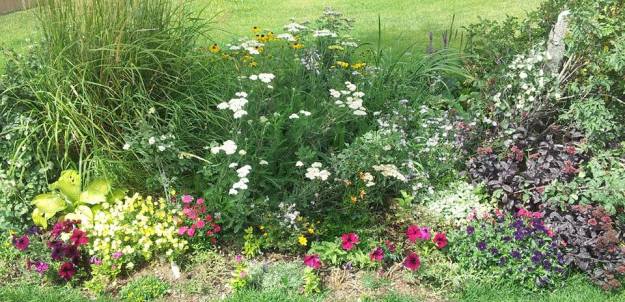
This year my garden is planted with
emerald blue rock cress
creeping phlox
mules hybrid doctor
early sunrise tickseed
coreopsis grandiflora
lemon yellow sun soft pink coleus
orange symphony potentilla
horned violet rose mum
black-eyed susan rudbeckia
purple dragon viola
portulaca sundial
moonshine x
butterfly daisies
snow on the mountain or bishop’s weed
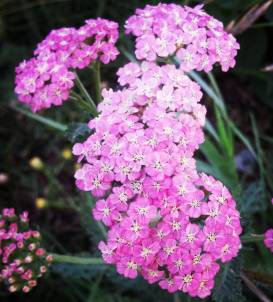
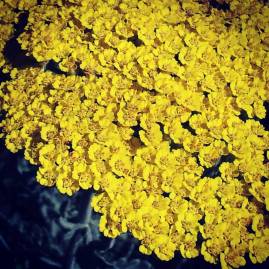
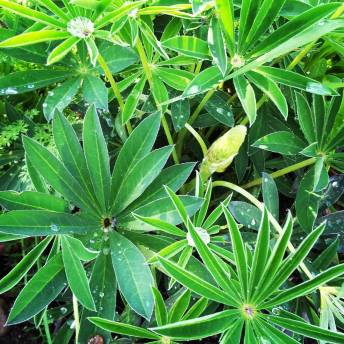
lupine columbine yarrow
american halo
hosta
elegans
and hope.

13443208_10209982683110109_6364634086596821399_o

columbine

13433258_10209982724671148_8726775559814112129_o

lupine

20160612_160910-1.jpg

coreopsis


Crazy Brave by Joy Harjo

I read this book almost entirely while lying in bed, while falling in love. Joy Harjo’s a fixture in poetry and literature. Before now, I’d only ever read a poem or two here and there, but I’d never really gotten into her work…that is until I read her memoir, Crazy Brave. It was one of those books that I started reading in a bookstore, and then read a chapter or two from the library, and then finally bought my own damn copy and finished it at home…while lying in bed. I love this book.

image from amazon.com

Harjo is mostly known for her poetry. I don’t enjoy reading a lot of poetry, and so that’s why I haven’t been very familiar with her work. After reading and loving Crazy Brave, I read She Had Some Horses, which is also beautiful, and I love it, and it’s poetry. It’s a collection I see myself returning to.

As for Crazy Brave, what I love about the book is how she captures a creative, feminine life experience that I (mostly) really relate to. It’s soulful. It captures pain, and specifically women’s pain, in a profound way. It shows us another way. It does so in poetic prose–she’s a poet after all.

This is from the back cover of She Had Some Horses, but I think it pertains to all Harjo’s work: “If you want to remember what you never listened to & what you didn’t know you knew, or wanted to know, open this sound & forget to fear. A woman is appearing in the horizon light.” ~ Meridel Le Sueur.

And then I saw her picture and remembered that maybe I met her. Or maybe I heard her read once. She is familiar to me. Her name. Her face. Her work. And yet I only really found her work now, when of course I needed it most.

I was captured throughout the entire book, but  by the end, I was a little lost: WHAT DOES IT ALL MEAN?! I wondered about the title: crazy brave. Now I think I can say that the larger message was, for me personally, a message to women to be brave, an admonition that it will be crazy, and you will be crazy, and you will be brave, and that is life.

Part of this is about surrendering to the flow of the river, instead of fighting against it, using the strength of the current to pursue yourself, but also acknowledge or accept that the river will be violent, and it will wound you deeply, and it might kill you, and it might lull you to sleep, and part of this we can control, and part of it we cannot control, and this is the wisdom we gain from being in the river. I am reminded of the time I went underwater in the Colorado River, the immense crushing noise turned warm and quiet and then I emerged. Part of this book is about acknowledging fear, working around it, using it, but not being controlled by it. I left the book thinking I should do what I must do before the river does it for me, even as the river does it for me.

Some of the words I loved:

“Yet everyone wanted the same thing: land, peace, a place to make a home, cook, fall in love, make children and music” (19).

“Because music is a language that live sin the spiritual realms, we can hear it, we can notate it and create it, but we cannot hold it in our hands” (19).

“In the end, we must each tend to our own gulfs of sadness, though others can assist us with kindness, food, good words, and music. Our human tendency is to fill these holes with distractions like shopping and fast romance, or with drugs and alcohol” (23).

“Water people can easily get lost. And they may not comprehend that they are lost. They succumb easily to the spirits of alcohol and drugs. They will always search for a vision that cannot be found on earth” (25).

“They continue to live as if the story never happened” (43).

“Our  heartbeats are numbered. We have only so many allotted. When we use them up, we die (52).

“All of these plant medicines, like whiskey, tequila, and tobacco, are potent healers. There’s a reason they’re called spirits. You must use them very carefully. They open you up. If you abuse them, they can tear holes in your protective, spiritual covering” (77).

“I noticed a marked change in the quality of light when we made it to New Mexico” (83).

“Each scar was evidence that we wanted to live” (90).

“I told Lupita I wanted to paint, to be an artist. She told me that what she wanted was someone to love her” (102).

“I was given the option of being sterilized” (121).

“I believe that if you do not answer the noise and urgency of your gifts, they will turn on you” (135).

“We were in that amazed state of awe at finding each other in all the millions and billions of people in the world” (143).

“Her intent made a fine unwavering line that connected my heart to hers” (146).

Hunger Makes Me A Modern Girl by Carrie Brownstein

First, Hunger Makes Me a Modern Girl by Carrie Brownstein made me incredibly nostalgic for my graduate school in creative writing at Bellingham, Washington. It made me grateful for my best friend, whom I met there. It made me grateful for the training I received there. It made me grateful to be part of the contagious creative energy of that place.

image from nytimes.com

Sleater-Kinney is a group composed of women. With some privilege. Who were highly intellectual. And well-educated. They understood the conversation, their conversation, the conversation that was happened around them, the way everyone was getting it wrong, or right. Beyond all that, they were a band making good music, and I think that’s an important takeaway from the book, which is worth owning, by the way (and I don’t say this lightly as someone who hates “things” and loves the library).

There are some lovely lines, some deeply insightful lines. I loved the descriptions of fanzines and the embarrassingly long letter writing of yesteryear–something that generations with access to the internet will never understand.  And there were great vocab words (metonym, diffidence, jocose, internecine, lugubrious, interstices, peripatetic)! The book was informational. It was moody. The end is triumphant, while simultaneously sucking the air out of the room because that is life no matter now stupidly depressed or optimistic we are in our tender little human brains.

I can’t tell you how important it is for me to look to female artists, who aren’t trying to be particularly female, nor artist, nor political, but are all of these things and end up providing a path, an option, an expression that is contrary to the rest of it–the blinding, crushing, deafening roaring messages. The dominant voice is so overpowering that you feel all alone thinking it’s wrong, they’re wrong. You search desperately for some whispered message, some quiet, lovely beat, an undertow more powerful than the surface waves, a person across the way who is looking at you and nodding her head to the same lovely beat.

Carrie Brownstein and Sleater-Kinney–they’re looking back and me and they’re nodding.

Here are a few lines from the book that I loved:

  • “[T]o be a fan is to know that loving trumps being beloved” (3).
  • “It is difficult to express how profound it is to have your experience broadcast back to you for the first time, how shocking it feels to be acknowledged, as if your own sense of realness had only existed before as a concept” (55).
  • “Books grounded me, helped me feel less alone” (115).
  • “A nomadic life fosters inconsistencies and contradictions within you, a vacillation between loneliness and needing desperately to be left alone” (150).
  • On the difficulty of relationships: “When do you ever get to be alone? To think, to read, to reflect, to not have to be “on,” to do nothing to just…be” (152).
  • I feel this in regards to teaching: “An audience doesn’t want female distance, they want female openness and accessibility, familiarity that validates femaleness” (166).
  • “In the end, all I could manage was the kind of shoulder dance moms do when they make shrimp scampi in the kitchen while drinking white wine and listening to Bruce Hornsby” (175).
  • “If you’re ever wondering how sad I was…you would know by the fact that I won the Oregon Humane Society Volunteer Award in 2006” (226). – I have my own similar life markers that look like success, but are mostly a reflection of a deeply sad time in my life.
  • “If the fake crow were looking down on us, he would see a woman in her thirties, living alone, jobless and aimless, with animals to fill the space and to patch the holes” (228). – It’s taken herculean strength for me not to patch the holes with innocent mammals.

Modern Romance by Aziz Ansari

Oddly (or appropriately) enough, an ex-boyfriend recommended Modern Romance by Aziz Ansari. I like his work from Parks and Recreation, so I finally got around to reading it over the Christmas break. This is probably a useful read for anyone who didn’t settle down in their early twenties–which, at this point, is most of us. In my early twenties, I was getting all the degrees, forging deep friendships, and yes, “dating,” as well as staying in a few serious relationships. Mostly, I was writing and making art. I was not pursuing marriage.

image from amazon.com

I do not look back on the dating eras with any fondness. So, it was validating to read Ansari’s take on modern dating. In his book, he uses a very soft social science approach and couples it with his good humor. Pairing stand up with social science and commentary is actually pretty amusing, if not hard hitting. Oh, and when you’re reading it, feel free to skim through large swatches of some of the repetitive stuff through the middle.

Ansari’s parents are Indian and, like most Indian couples, have an arranged marriage. Like many people in arranged marriages, they report being very happy. Of course, on the contrary, in the US, we’re all looking for soul mates and have relatively low levels of happiness in marriage. Ansari’s exposure to both US and Indian cultural attitudes toward marriage gives him an interesting perspective.

Here are some of the main take aways from the book: technology has expanded our options for coupling, which means we have the potential to find a better match, but it also means we’re paralyzed by options; we’re not great at intellectualizing what we actually want in a partner (i.e. we think we know what we want, but we’re often wrong); the vast majority of men and women pretty much dislike dating and just want the relationship.

This last one was a surprise to me. I mean, I hate dating, sure. But, I would hate dating. I’m an introvert, which means I don’t love going out all the time. I don’t *love* people, which means I don’t particularly love meeting new people. I’m very sensitive, which means the sizing up, and the texting, and the strangers, and the whole process tends to be a bit too soul-violating for my constitution. And so in the end, when it comes to dating, I’m very much just like, “Forget it. Everyone please fuck off.”

But then, eventually, you find your person who gets it and gets you, and it’s all worth it. Until then, it sucks, and it surprised me that most other people also think it sucks. Before reading this book, I thought most people were out there playing the field, meeting new people, and having a great time doing the things I typically don’t enjoy doing. Evidently, most other people don’t enjoy it either.

Here are a few gems from the book:

On previous generations: “People were marrying neighbors who lived on the same street, in the same neighborhood, and even in the same building” (14).

Things have changed: “Until they got married…women were pretty much stuck at home under fairly strict adult supervision and lacked basic adult autonomy…For women in this era, it seemed that marriage was the easiest way of acquiring the basic freedoms of adulthood” (18).

On the prevalence of FOMI (fear of missing out): “…what I see at bars today, which is usually a bunch of people staring at their phones trying to find someone or something more exciting than where they are” (27).

On the influence of technology: “That’s the thing about the internet: It doesn’t simply help us find the best thing out there; it has helped to produce the idea [emphasis mine] that there is a best thing and, if we search hard enough, we can find it” (125).

This and most other social interactions: “I started to despise the bar scene. I had experienced every single version of these nights. I knew all the possible outcomes, and I knew the probabilities of those outcomes” (210).

On passionate vs. companionate love: “Passionate love always spikes early, then fades away, while companionate love is less intense but grows over time…It is love, just less intense and more stable. There is still passion, but it’s balanced with trust, stability, and an understanding of each other’s flaws” (215).

This basically sums it up: “We want a lifelong wingman/wingwoman who completes us and can handle the truth, to mix metaphors from three different Tom Cruise movies” (239).

a typical day (in art)

Recently, someone asked me what my typical day looks like, and while I did my best to answer the question, I felt that my response did not do justice to my life.

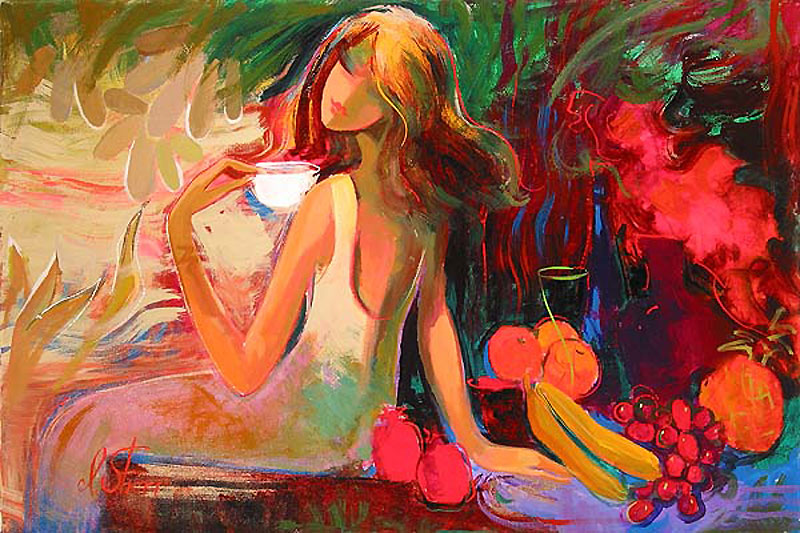
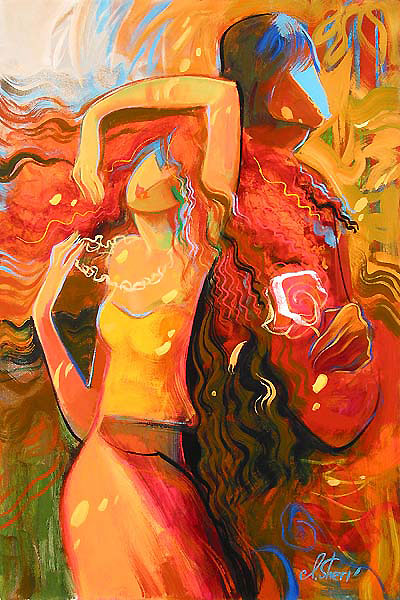
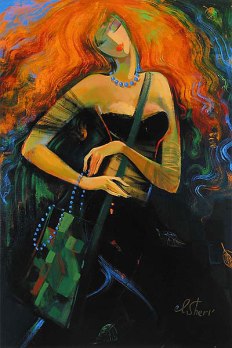
More recently, I found that an artist by the name of Irene Sheri* had actually captured a typical day in my life, and so I present it to you here now–an accurate portrayal of my typical day:

red 1

red 3 red 4 red 5 red 6 red 7 red 8 red 9 red 10 red 11
red 12

red 13  *Images from www.galleryone.com and www.world-wide-art.com

The Skeleton Twins by Craig Johnson

Kristen Wiig and Bill Hader are amazing in this film. They have a ton of chemistry and that probably goes back to their days together at Saturday Night Live. If you’re me, and you’re a fan of SNL, and you’re a fan of Bill Hader and Kristen Wiig, you’ll love watching these two together on screen. Comedy actors can really excel at drama, and you see that in The Skeleton Twins.

image from wikipedia.org

image from wikipedia.org

Before I saw the film, I was told by a trusted person that it was “good, but dark.” And, that’s true. My mind goes in a million directions when someone says “dark,” and it really wasn’t so dark as all that, but it is a heavy film. It’s about twins who are desperately struggling in their lives. They are estranged, but the reasons are unclear throughout most of the film. Toward the end, catalyst for their decade-long estrangement slowly unfolds.

The acting is great. The characters are unique and real. (Luke Wilson is really good in this too!) The plot, writing, and direction are all unique and nuanced and good. However (HOWEVER!), I don’t think the film addresses a universal truth, and that’s something I think good film should do. I left the film thinking, “Yeah, it’d be nice to have a twin that is tuned in to me in my times of suffering, a twin who holds the key to cheering me up when I am down, but I don’t have a twin, and most of us don’t have a twin.” Life is long and hard—we see that in the film. Unlike the Wiig and Hader’s struggling characters, the rest of us have to schlog through this life alone. Maybe if we’re lucky we have some parents, a sibling or two, a few close friends. But very few of us have a twin.

Somehow this film reminded me of Broken Flowers—also critically acclaimed and good in so many ways (and Jarmusch!)—but lacking, in my view, of a universal truth or experience. The films look very closely a unusual circumstances. Now, this isn’t to write the film(s) off entirely. For some people, this story (and fabulous acting) is enough. I’m finding, though, that I want my films to get at something more universal—something that is moving me and something I know is moving my fellow audience members as well.

Me and Earl and the Dying Girl by Alfonso Gomez-Rejon

Me and Earl and the Dying Girl is a very Sundance-y Sundance movie, but it’s good! Sundance loves some great films, and this is one of them. First, this is indeed a movie about a dying girl. Because the title is so straightforward, I somehow thought it wouldn’t be so dark, but it was.

image from imdb.com

image from imdb.com

I also rewatched Mad Max: Fury Road this week (stay with me, it’s relevant!) and have continued to find meaning in the war boys’ concept of a “witness”—this idea of being witnessed in our acts of bravery, our acts of love, our acts of dying—all of it. It’s meaningful to me because I’ve always been so independent and only in the last few years have begun to understand the value of an invested witness.

I mention it because an important aspect of M&E&DG is that a very young man is witness to a dying girl. It’s something they stumble into, they resist, but, of course, it becomes meaningful in ways they couldn’t’ve anticipated or even previously comprehended. That kind of character growth and insight was lovely to watch, but it was also sophisticated enough that I think most audience members come away with deeper insights about what it means to connect more to “their people,” moving beyond assumptions and into really knowing another person.

One of the best moments in the film is when the cool history professor talks about how he lost his father at a young age. He said that even after his father’s death, he’s continues to learn about him. His father’s life continues to reveal itself. It started when his dad’s friends started sharing stories after his death. It continues all the time, in unimaginable ways, even decades later. I think the point here is that learning about our dead loved ones is part of what it means to be alive and self-aware.

As for me, I continue to learn about my own grandmothers. Both my great grandmother and her daughter (my mom’s mom) were a huge part of my early childhood. My great grandma even lived with us sometimes during the winter. She just stayed. She was Swedish. She was very quiet, and she loved me.  My grandma and great grandma died within two years of each other. They were a big part of my childhood, and then, in a relatively short period of time, they were both gone.

For awhile, it was sad, but okay, and this is the natural cycle of life. And then, I got really curious about them and asked my mom and aunties lots of questions about who my grandmothers were. I began to piece together my memories with their stories.  Over time, I can see how much the course of my life has been shaped by their influence. Decades later, I’ll remember idioms and wisdom about how to grow a garden, how to love one man. They suffered and loved for decades, and don’t we all? I am a witness to it all. There is meaning where meaninglessness wants to creep in. It reminds me that I am part of something bigger, family, culture, blood, brains. They are with me in memory and in my story, and that’s what I took away from M&E&DG.

Outline: A Novel by Rachel Cusk

image from amazon.com

image from amazon.com

Outline by Rachel Cusk was something different. I haven’t read popular fiction in quite a long time, and I was worried when, in the beginning, the main character becomes engaged in a conversation with her “neighbor” on a flight to Athens. Through his line of questioning, we learn a little about the protagonist, which felt like a plot point contrived solely for the purpose of giving the reader information about the main character.

However, I liked the book and found the brilliance in that, as the protagonist meets several different characters, there are interesting and universal insights to be gained about human nature. For the most part, the characters themselves are very self-aware and analytical, sharing meaningful insights with the protagonist. Though, like all people, their assessment is not always accurate. Cusk presents these quirks and character flaws in entirely novel ways, but they resonate as true and important glimpses into the human psyche.

Interestingly, as the protagonist meets the various characters, Cusk’s voice or tone remains consistent throughout. So, there is little sense of the individuality of these characters. In many ways, the novel reads like an outline, a sketch, of the characters and ideas that Cusk is presenting.

The last character to enter the novel speaks about a troubling condition she’s gained, which she calls “summing up.” It prohibits her writing because just as she really gets in to writing a play, she finds the meaning creeping into her brain, words like “tension,” “mother-in-law,” or “meaninglessness.” Once she finds the significance of her work, she loses interest. In the summing up concept, the reader sees the ways in which Cusk has both avoided and indulged a summing up of the various characters and meanings in her own novel.

This section was also meaning to me because I’ve been stricken by the same sense of summing up since my early 20s. I was probably 21 when I realized, with a start, that every story is the same with few uninteresting variations. This is why I have a hard time with popular fiction. I have a longstanding joke, which is likely only amusing to me, that is called “I saw it the first time when it was called…,” wherein I liken every new book or movie to a book or movie that came before and grumpily deduce that it will offer nothing new.

Furthermore, I see the same patterns play out not just in movies, but in real people in real lives. I rarely think anyone is ever having a unique experience, and the result of that is, I suppose, a somewhat jaded view of the world. I’ve never known anyone else to sum things up quite like I do, and so to see it portrayed in a novel was strangely validating.

Here are a few ideas from the novel that I think render further discussion:

  • “The bump in the road hadn’t only upset his marriage; it caused him to veer off on to a different road altogether, a road that was but a long, directionless detour, a road he had no real business being on and that sometimes he still felt himself to be travelling even to this day” (15).
  • “The memory of suffering had no effect whatever on what they elected to do: on the contrary, it compelled them to repeat it” (18).
  • “We are all addicted to it, he said…the story of improvement, to the extent that it has commandeered our deepest sense of reality” (99).
  • “I had friends in Athens I could have called. But I didn’t call them: the feeling of invisibility was too powerful” (248).

an update on the hosta

For the past month, each morning, I have opened the backdoor, walked down the steps with a cup of coffee and carefully the examined the blank space of dirt where the hosta should be. The ground is somewhat covered in leaves. I thought I remembered that strange spear coming up out of the ground earlier in the year last year. It was a mild winter, but I always worry about my outdoor plants regardless.

Hostas are such weird things. Mine is a “sum and substance,” which is the biggest of the hosta varieties. This one is fragrant too. Most hosta blooms are not. Hostas are spooky. I literally jump when I see the spear for the first time each spring.

Last year, it looked like a horned monster rising up from the earth. This year, I was sure it was dead, that is until this weekend when I spotted some horrific looking spikes coming up out of the earth. It looked like a stegosaurus. There were three spikes this time, which means that not only did the hosta survive the winter, it propagated. I can’t wait to watch it grow. Here’s a picture of it looking as terrifying as ever.

hosta spears April 2015

hosta spears April 2015

Tiny Beautiful Things: Advice on Love and Life From Dear Sugar by Cheryl Strayed

I ordered Tiny Beautiful Things and my mom was visiting when I got it. So, she read it first and kept saying out loud, “You need to read this.” She even marked a few passages for me. I watched the movie adaptation of Wild about a month earlier, but could never get into the book. Tiny Beautiful Things was not hard to get into. It takes right off.

I started reading it after my mom went home. I’m not sure if there was one catalyst, or just all the things, but I was an emotional wreck during the few weeks it took me to read the book. I sent frantic texts to my long-suffering bff, and I droned on and on to my dear, long-suffering mother, and I even sobbed a little on the phone with Z, who either suffers most or least of all.

I read and quietly sobbed the duration of a long, cross-country flight. People on either side of my armrests humanely ignored me. The flight attendant retrieved a fistful of tissues for me. Clearly, I’m going through some stuff, and I think it was the potent cocktail of heartache, family, fear, love, effort, HUMANITY!, and Tiny Beautiful Things that created a big emotional purge.

Here are two quotes that meant something to me:

  • On partnering: “This is called intimacy. This is called fuck yes. When people do this with us, it’s an honor” (197).
  • On doing crazy things for love: “Love is our essential nutrient. Without it, life has little meaning. It’s the best thing we have to give and the most valuable thing we receive. Its’ worthy of all the hulabaloo” (219).

Is the book any good? I think it is good. It might be good like wine and ice cream are good: indulgent. I think there’s some useful stuff there. Cheryl Strayed turns herself inside out, revealing her most intimate and painful stories, and in doing so, we readers see the universality of our most painful and humiliating experiences, but also the universality of love, passion, of falling in love. In this book of advice, Strayed convinced me again that the heady passion between two people is rare and real and beautiful and possible and sacred, and I so, so need to believe that right now.