Category Archives: family

Remembering Laughter by Wallace Stegner

Remembering Laughter by Wallace Stegner is a classic novel that reveals why people are the way they are. Or, more specifically, why this one family is the way they are.

In his book, Stegner reveals himself to be a master author, demonstrating artful craft on the sentence level, accompanied by deep insights into the human condition. None of this is news though. Stegner is obviously a renowned author–though I don’t think I’ve read his work before.

I found myself wondering why this novel isn’t taught more often. It’s a short, manageable size and one that students could easily get through in a short timeframe, leaving plenty of time for discussion, analysis, and response.

Stegner’s more famous work is Angle of Repose, which evidently has some criticisms on it surrounding plagiarism, which then calls into question his methods and all of his work. Remembering Laughter is worth the read though and won’t take up much of your time.

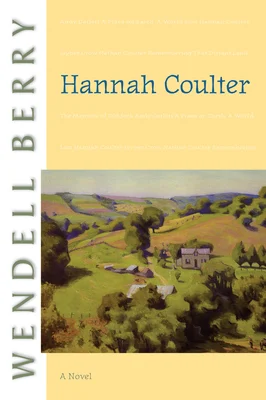
continued…Hannah Coulter by Wendell Berry

I wanted to add more to my thoughts on Hannah Coulter by Wendell Berry. In this post, I want to address farming, and generational farming. Having grown up on a ranch myself, I have more complicated thoughts about some of the portrayals in Berry’s book.

[spoilers ahead; not that this book has a dramatic plot]

In the book, after growing up on what is described as a beautiful, but hard-earned farm, all of Hannah’s children “choose” not to return to the farm/farming. This is perceived somewhat as a moral failing on the part of the children and their parents. One child is not really interested in farming and goes on to make big money in California. The other boy is very interested in farming. However, after studying agriculture in college, he stays in academia, becoming a well-respected professor and scholar. The daughter goes on to be a school teacher, something she seems to be passionate about from a young age.

However, even if Margaret wanted to stay on the farm, given the sexism and cultural expectations of the time and place, it is difficult to see how a young woman might make a life for herself on a farm, especially not without a husband. She inherits her grandparents’ place, but even if she were to live there at some point, it might have created a difficult power dynamic with a husband, since she would likely be landowner and therefore the more powerful of the two. Opportunities for women, especially single women, are rare in rural settings. Likewise, opportunities for dating and relationships are much fewer in rural settings as well.

The son Mattie found great success away from the farm, both personally and financially. Hannah doubts his happiness, but can’t argue that he was ever deeply interested or suited in farming. That’s okay. Not everyone will be. Though his life is very different, even unrecognizable to Hannah, he might be happy.

To me, Caleb represents the biggest heartbreak. His parents are deeply disappointed that he decides not to return to the farm after college. However, at that point, it would have meant taking on a life of near poverty, a life that would make affording a family incredibly difficult. Caleb is likely heartbroken by this realization too. Small-scale farming would not provide him financial stability. Meanwhile, increased financial stability might give him the greatest chance of eventually keeping the farm for generations to come, maybe returning to it to live and to farm during his own lifetime. That possibility is not out of the question by the end of the novel, though Hannah never seems to think of it. She has this typical, well, I guess they’re just gone, type of attitude. I know some old farmers who are like that too, and it’s like they cannot even see the financial side of things.

At the end, and here is the real spoiler, Virgie returns, Virgie who has rebelled and disappeared for years. When he is at rock bottom, he finally comes back to his grandma and her farm, and she allows him to stay and start farming, with their older extended family and friends serving as mentors to him. Hannah feeds him and houses him and pays him an hourly wage for work he does on her farm, and the others pay him an hourly wage for work he does for them. This would have been around the turn of the last century, and I find it hard to believe that these small-time farmers are able to pay someone, especially someone who lacks much skill, an hourly wage. Hannah probably could in her older age, but not as a long term solution.

Hannah is not naive and does not assume that Virgie will stay and take over the farm, but maybe he will. In the end, the kid who demonstrates the least amount of responsibility and follow through may end up with the farm? More complicated still is the fact that Mattie’s children may have taken an interest in farming too, but having not grown up in the area, it’s unlikely they would ever gain the knowledge required to run the place.

Yes, there was a huge exodus from small farming in rural America in the latter half of the last decade, but I’d argue that the shift did not have to do with disinterest, or pursuing seemingly easier lives. It had everything to do with the monopolization of farming in the US and the lack of profits in small-scale farming. There were significant cultural and especially economic factors at play that Hannah (Berry?) seemed to overlook.

This all resonates so much with me because I also grew up on a ranch, as I stated earlier. I’m one of the kids who really loved farming–the cycles of the season, the fresh air, working with the animals, the constant scheming and figuring out hay supplies and breeding seasons, and lambing seasons, and on. This still is deep within me, and I love it. However, as a child, I quickly saw that it would be nearly impossible to be able to afford land of my own. “Working out” would always be a necessity, which is fine now since so much mechanization is available. Still, the landscape and reality is changing and worsening for farming. It’s not a matter of choice, or who is willing to work harder. For many–it’s a reality.

Amid such a challenging landscape, I’ve considered myself lucky that I was eventually able to get a little place of my own, and raise animals, and live in this way. I definitely can’t (and wouldn’t want to) quit my day job! Farming is not for everyone. However, it is for me. But, it’s complicated.

Hannah Coulter by Wendell Berry

My second book of the year is Hannah Coulter by Wendell Berry. I’ve heard of Wendell Berry before, as a respected author of natural and rural places, but this is the first book from Berry that I have read. I guess maybe I thought he was a poet, but this work, and his other books, are very much prose!

After reading, I can say that Berry walked a fine line between uncomplicated narrative, nostalgia, and truly solid writing. Normally, excellent prose is not deeply nostalgic (even cheesy?), but Berry goes there and (mostly) pulls it off.

Hannah Coulter is the narrator, and in the book she is simply retelling her life story. Her life story is one of an impoverished farm kid, then a farmer’s wife, living in rural Kentucky, born around 100 hears ago. Her story lasts through the turn of the 21st century, and the book was published in 2004.

In the book, through Hannah’s narrative, Berry captures a unique culture, experience, and perspective. Through Hannah’s eyes, readers follow a changing farmscape, a changing sense of community, and a changing (and probably worsening) world.

Coming from a small, rural community myself, I thought Berry’s depiction of small-town life was deeply accurate, and he captures the best, most wonderful aspects of a strong community–one that many people never experience.

Of course, there are also downfalls to rural, small-town living, and many are desperate to escape the confines. (The same is true, in reverse, of urban living too though.) Berry captures none of the contrary argument and focuses only on the benefits of rural living. In my mind, there is a place for this narrative in the world, and Berry gets to tell it.

Readers may marvel at the seeming poverty, the scrimping, and the hard work involved in Hannah’s life, the lack of technology, the close sense of a very large and dependable community. It’s an experience that many no longer have, as they are removed from extended families and generations-long relationships.

I’m never quite sure what to think when an author’s main character is opposite gender of the author, and I do think something is usually lost, and that may be the case in Hannah Coulter as well. This book and this content isn’t for everyone. But what is? It’s a slow, intentional read, uniquely structured, beautifully written, and appreciated by readers like me.

2023 year in review

Each year during this time of year, I love to reflect back on the previous year. I love to scroll through my old pictures. I like to look through all the books I’ve read. I like to reflect on the big, memorable moments. If I don’t stop to do this periodically, to look at it all, my life starts to feel like one big blur. I have come to cherish this annual reflection, which helps me stop time and appreciate where I’m at in my life, what I have accomplished, and all of the wonderful people who have inspired me and buoyed me up along the way—many of whom are you!  

This year I watched my children grow, and try new things, and learned more about who they are. I read more books than I have in years and found solace and regulation in all of my time spend in a good books. I traveled to Chicago, where I got to stay in a fancy hotel room with big, sweeping views of the city and Lake Michigan. Friends visited me in Oregon and Idaho, and they offered their wisdom, inspiration, and encouragement. A professional fire was lit in me this past year, from many embers that had been quietly burning, and I signed not one, but two book contracts and also completed another manuscript for an unrelated project that was a pure joy to create. I also enjoyed many much needed coffee dates and dinner dates with loved ones. All of this was made possible because, for the first time since having children, I have had sufficient childcare this past year. Each moment spent in my office was a cherished gift, and I worked (out of necessity) with a laser focus that I never had before becoming a mother.

Not all of my eras have been so good or so certain, and there has also been heartache, fear, and illness this year too. However, this era is a rich one for me. I awake to beautiful views, and wonderful people, and inspiring work, and I have felt grateful every single day. 

portrait of the author

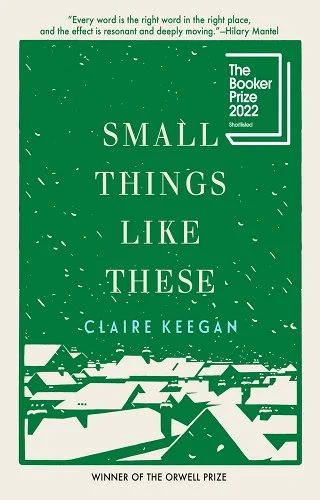
Small Things Like These by Claire Keegan

The pacing of Small Things Like These by Claire Keegan is more like that of a short story than a novel. This is nothing against the story–I love shorter works! I would classify this piece as a novella.

This book was a pleasant Christmas read, which was perfect because I finished it on Christmas Eve this year! This is a plot driven book with decent writing. It won the Orwell Prize for fiction that tackles a social issue, and it does that, and does a fine job of it.

Charlotte’s Web by E.B. White

E.B. White is obviously untouchable as a writer, and that was my sense this time through Charlotte’s Web too. I read this as a child (or had it read to me). I also have vague memories of struggling to get through it while reading it on my own as a child. I probably tried too young.

Here’s the well-worn copy that we read.

This book works on a fairly pleasant surface level, but of course it’s dealing with more challenging questions of life and death too. Death is mentioned, but for my very young children, these details seemed to be glossed over.

Between this and Stuart Little, I have to say that I prefer Stuart Little, which goes a bit deeper into the subtleties of human nature. Still, Charlotte’s Web is a must read in childhood, and older readers might like returning to this as well, as it offers one of the most poignant and well-paced denouements of all time.

Breasts and Eggs by Mieko Kawakami

Breasts and Eggs by Mieko Kawakami delves into a modern, urban female experience. The main character navigates the big questions women must face and the relationships they must navigate. Kawakami leads the reader through these issues without defaulting to any oversimplifications. The opposite, actually. Each question and relationship is as complex as real life. This book feels almost memoiristic, as I imagined Kawakami as the main character. (I’m prone to doing this though.)

The main character, Natsu, comes from poverty and brings herself out of that slowly as a novelist (the most unlikely of stories!). This character’s life leads her away from her family roots (in a sense) and complicates her relationships with her now very small extended family, not that these relationships are ever uncomplicated.

Her past (experiences with poverty and loss) also complicate her relationships and her abilities to be in a romantic relationship and to create a family of her own.

The book is strange. Natsu is confused. There is tragedy and there is triumph. It is nuanced, and that is true of the human experience, and in this case, it’s focused especially on the female experience.

I read that Breasts and Eggs was once published as a novella and then was expanded into a longer novel, which is the version I read. Through most of the book, I found myself wishing that this was two separate books, but then again, I love a good, short, digestible read. However, now that I’ve reached the conclusion, I do think extending it into one long book is defensible.

Spare by Prince Harry

After watching some of the recent interviews with Harry and Meghan, my curiosity was piqued to read Spare by Prince Harry. For those who have been following along, this is a great book. Fans of Princess Diana will appreciate it too. The book effectively captures his tone. It offers the kind of inside look that audiences never get access to. Prince Harry bravely takes up vulnerable and taboo topics in the book. He openly admits to his bad behavior. He openly admits to his anxiety and depression.

Where this book is a triumph is in its ability to show the royals as real, fallible, human people. Of course logically we know this, but due to tabloids, celebrities often get distilled down to products for consumption rather than treated as real people. I appreciated that about the book.

Strangely, I sort of identified with some aspects of Prince Harry’s experience. He writes about visiting the site of his mother’s death years later and mentions that its the first time he’d been to Paris, but I assumed he would have traveled to all of the world’s major cities frequently. His visit was in close proximity to my own first visit to Paris. But for me, it was more understandable. I was raised in a rural location without a lot of firsthand experience with the outside world. I could read about it, but I’d never actually, for example, walked the streets of Paris. It’s great, but it’s also a somewhat isolated experience. Prince Harry’s experience seems somewhat similar. While school and studies take up a big part of his life, another big part of his life seems to have been safely sitting alone in castles.

It’s clear that Prince Harry is traumatized by the loss of his mother at the hands of paparazzi. It’s clear that the trauma informs his own reaction to the paparazzi today, and that’s made even more evident in his drive to protect his new family. While others may say that he should ignore it, or that by recounting these baseless stories in his book, he’s just giving them more air time. There’s no accounting for a broken heart and how it will make you feel and what it will make you do.

I am sympathetic to Prince Harry, but I don’t see eye to eye with him on everything. I don’t need to. In fact, challenging the audience in these areas is probably part of what makes him so compelling. I am more sympathetic to the circumstances of the other members of the royal family. I think they’re in both a really privileged situation and a really limiting one as well. As is made clear in Spare, the royals are, again, real people with all of their own strengths and challenges, living within a limited, but also very privileged world.

All of This: A Memoir of Death and Desire by Rebecca Woolf

First, here are my unsolicited blurbs for this book:
“Please option this for a film asap.”
“Woolf is a modern day Nora Ephron.” (Possibly influenced by the fact that I just finished Heartburn, but still!)
“This book is the true LA Story.”

After following her work online for years (as one of the thousands of people whose fingers hold her up in this cosmic game of light as a feather, stiff as a board), I have been eagerly awaiting my chance to read All of This: A Memoir of Death and Desire by Rebecca Woolf.

The first half+ of this book is a gripping narrative. Later, the book becomes less plot driven and slows, and I think that’s because the “after” is not/could not be a linear trajectory.

Woolf wrestles with what it means to be a feminist, or to become a feminist, and puts a magnifying glass to some of the common dynamics of life, relationships, particularly heterosexual relationships that are, to say the least, problematic. I was with her for these points because I also wrestle with many of the same questions. I differ though. Unlike Woolf, I was less tied down in my early adult life, and more so now, even though still not very “tied down” by comparison, and that is by design. I had my children later, but a decade ago, I was also reading about her life online. To be reading this book now, as I have little ones of my own feels very full circle, which she would enjoy.

Here are some lines I loved or identified with and/or that gave me pause:

First, as a fan of her writing, I loved seeing her include her numbered lists with numbers that get longer and insaner each time.

“I will not shrink myself nor prioritize people’s pleasure over my own.” Simple, true. It can be hard to recognize when it’s happening.

“Then the 2016 election happened.” This changed me forever too, and I am still not over it.

“WHAT IF IT DID NOT TURN OUT TO BE CHILL?” Just, lol, yes, this is what it is like to be a parent, mother, woman in life.

“I soon realize that it’s a lot faster for me to pack four lunches on my own.” This is just simply true and a lot of people don’t know it.

“My daughters. They are only mine now.”

“The bravest women I know are not widows. They are divorced.”

“And there is nothing I can do but let it go and drive him home. This is the moment I became a single mother.”

My Brilliant Friend by Elena Ferrante

I discovered Elena Ferrante from Mothers by Jacqueline Rose, which I read recently. I started with Ferrante’s My Brilliant Friend, the first in a long series, and I loved it! The writing is excellent. The content is thought-provoking, and it also has the long sense of story found in easier, longer reads–not a common combination. Although it is long, I flew through it.

While I highly recommend the book, I will warn that I found the conclusion to be somewhat disappointing. I wanted a strong wrap up for this particular book, but instead found myself needing to read more of the series in order to get that. It will probably require reading all four books.

I ended the book somewhat exhausted and unwilling to continue with the series. Maybe I’ll return to them someday. They’re certainly worth it, but, and I can’t believe I’m writing this, I really don’t have the energy to give them at this point in my life.

I’m glad these books are out there. Sometimes I just need a good book, a good story, and I now know I can turn to Ferrante to get that.

I am also inexplicably obsessed with the cover art: