Category Archives: garden

We Made a Garden by Margery Fish

I think I first stumbled upon We Made a Garden by Margery Fish when it was mentioned in a podcast. When I did, it opened up an entire catalog of charming old gardening books. This book was first published in the 1950s, and as a reader, I had to take that into consideration when reading Fish’s self-deprecating humor and sexist attitudes between her and her husband. (I think she even refers to her husband as “Lord and Master” at one point.) Still, the love between them is obvious, and their mutual joy of gardening is contagious.

Image result for we made a garden

image from powells.com

Fish begins as an amateur gardener, but quickly grows to love it. I was charmed by her endearing attitude toward her plants, calling them her “babies” and her “children” and referring to certain groupings and cuttings as “cousins,” “nieces,” and “nephews.” I strongly identified with this sentiment. I love my houseplants. I love many animals too, but I find myself reacting to my plants in the same silly, joyful way that people react to their pets in YouTube videos.

We Made a Garden is the perfect book to read in the dead of winter (huge white snowflakes are falling outside as I write this). Fish shares her favorite plants, in a thorough glossary that had me googling late into the night. My outdoor gardening space is limited, and I will probably always been constrained by living in cold zones, but I found myself daydreaming about the possibilities.

Fish works relentlessly at her garden and shares funny and fussy opinions about the proper way of doing things. Last night, on a freezing cold winter’s night, I found my neighbor outside tinkering in her garden, picking up scraps to go out in the yard waste bin the next day. You either get it or you don’t.

Fish’s garden is a kind of wild, informal cottage garden. Clearly years of thought, labor, and love went into it’s making. Today, decades later, visitors can still see the garden. While I don’t know that I’ll ever make the trip, reading the book has inspired me to visit more public gardens and pay even closer attention to the different plants. I’ll also be reading as many of these old gardening books as I can find.

Lines I loved:
“The plants will show their gratitude by giving even better blooms than they did before” (66).
“They come up year after year and I am quite glad to see them” (93).
“[I]t didn’t work out as he had hoped, so gladioli were banished from our garden” (98).
“I often wonder why some zealous gardening relation did not slay me with fork and spade in my unenlightened years” (104).
On Asiatic primulas: “It seem a pity to waste a position so admirably suited to their taste, so I dug out the heavy clay and filled the channel with a good mixture of leaf mould, sand and compost and here the Bartleys, the Postfords, the Millars and their foreign relations enjoy life, with their feet in deep damp earth and their heads in the sun” (118).
“Everyone should have an herb garden–a little oasis of old world plants and delicate fragrance, with clipped hedges of box or lavender, rosemary of santolina” (136).
“Everyone has their own ideas of what they want to grow in a garden” (144).

The Long Loneliness by Dorothy Day

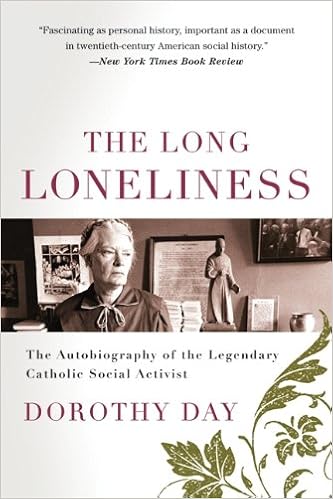
As usual, I’ve had a hard time finding the right thing to read lately. I want something that’s light and easy–a break from difficult scholarship. But, I also want it to be substantive. The Long Loneliness by Dorothy Day was the perfect solution during the holiday break. First of all, I had to read it with a title like that. (When I saw her face on the cover, I also knew I had to read it.) Secondly, I am always fascinated with and inspired by women who are doing things a little differently than the status quo, and Dorothy Day certainly has. The book is about her experience with community and the sacrifices she’s made in pursuit of her beliefs about the best way to live.

image from amazon.com

The first two-thirds of the book was of the most interest to me personally. In the first third of the book, she writes extensively about her childhood, about her friendships, her family life, and the reader can see the subtle ways these experiences influenced the choices she made later. Her descriptions of various little girls she befriended seemed tedious at times, but I think it helped make her larger point–that these connections and interactions we have with people are the stuff of life and far from inconsequential.

Next, she wrote about being a young women, her unconventional “marriage,” the birth and joy of her daughter, and the decisions she made to convert to Catholicism. In this section, I was deeply interested in her relationship with her partner and her response to her baby. I identified much with those very human experiences, even though I haven’t had them myself exactly.

The last third dragged on and I had to force myself to finish. I didn’t identify quite as strongly with her decision to convert to Catholicism. Like much of her thinking and decision making, as a reader, I sometimes had a hard time understanding her motivations. She’s very matter of fact about everything, and I found myself responding, “Yes, but…” That said, I love her unapologetic descriptions of joy and love earlier on, and I don’t need her to explain “why.” Still, the social activism, the writing, and the experiences with various people are a part of her story, but I was less interested, in part, because it was less about her and more about them.

Here are some insights I gained from reading the book. Day is unfaltering convinced that we must live together. After living alone for the bulk of my adult life, I am feeling ready to not live alone. I have felt loneliness and fear–something that was quite rare for me throughout my twenties. That’s fine. I was pursuing other things. Now I’m in a new stage, and I want to live in meaningful relationships. I have a much stronger urge to connect to other people and invest in them. In this way, Day’s message really resonated with me at this time.

Here are a few lines and ideas worth further consideration:

  • One hundred years ago, there were free medical clinics. If you were not poor, there was also affordable medical clinics that were a little nicer.–I can’t imagine how freeing it would be to go through life knowing that, should a major medical event occur, you could go on living without being forever indebted to a financial institution. We are living in fear or modern slavery.
  • Much of Day’s life’s work is in writing and writing for The Catholic Worker, and she understood what I am only being forced to understand now, which is just how crucial freedom of the press is and how important it is to communicate with the masses in this way.
  • “We cannot love God unless we love each other, and to love we must know each other. We know him in the breaking of bread, and we know each other in the breaking of bread, and we are not alone anymore” (285).
  • “We have all known the long loneliness and we have learned that that only solution is love and that love comes with community” (286).

By the end, I sort of just wanted to rise with the sun, and garden and bake bread, and pray and read and meditate, and wake the next morning to do it all over again.

last summer

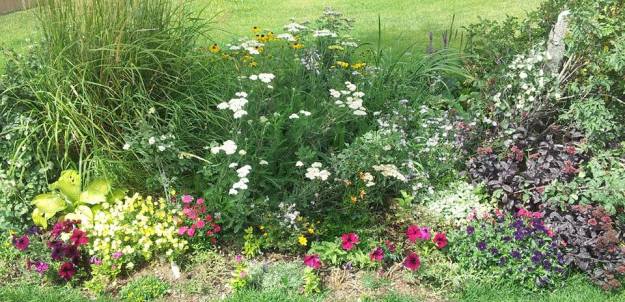
At the end of each year, I update the last of the pictures from my phone that I want to add to the yearly album I keep on Facebook–this year labeled “2016.” Each year, I scroll back through the photos and reminisce about the previous year. This time I came across a few photos of the gardening I did last summer, and I thought I would share here–an update to the “gardening” post I did at the beginning of the summer.

14484652_10210913523020525_8697859291015077322_n

flowerbed near the end of the season

Plants that struggled:
The zucchini. This poor little thing was transplanted at least twice, and it just never succeeded. I also think I crowded it, which didn’t help–that, plus the cool summer and the somewhat shady location meant this little plant tried to bloom, and made a few tiny zucchinis, but nothing much.

The hostas. I’ve had lots of good luck with my “sum and substance” plant, which I’ve written about here, here, and here. When a hailstorm destroyed my big hosta for the season, I was missing those big, beautiful leaves. So, I bought and planted more. Many more. But, they never seemed to flourish. I’m hoping they’ll pop up in the spring for a fresh start.

The honeysuckle. This plant might’ve been crowded, and I’m hoping it will flourish in the coming year, but it promptly lost it’s petals and was nothing more than a few fronds of leaves for the entire summer.

The coleus. I want to like coleus because all of the garden gurus seems to love it, and it’s a splash of color, and yadda yadda yadda, but they don’t really speak to me, and anyway this year’s coleus got leggy, couldn’t stand even the mildest cold, and then died.

Plants that thrived:
The sunsatia lemon nemesia hybrid. I didn’t really want to like this plant because it’s a hybrid, and I tend to like traditional plants that have stood the test of time, but I have to admit that this plant was perfect for last summer’s conditions. It bloomed all summer and offered a bright burst of color to the flowerbed.

The strawberry plants. These hardy little plants had bright green leaves, sent out feelers, and made lovely berries (that the birds and grasshoppers usually got to before I could), despite a rough transplant. The little berries were tasty, and I’m hoping they return next year, even bigger and better than before.

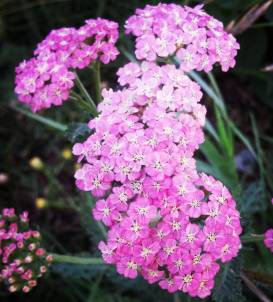
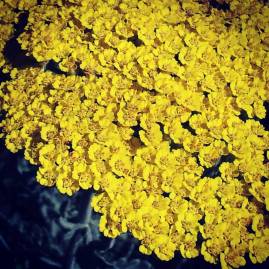
The yarrow. There was already some yarrow in this flowerbed when I began, and so I planted more, and sure enough, this hardy herb did just fine. They also inspired some nice photos!

15895556_10211951436207706_273252119754877794_o

pink yarrow

15895938_10211951434727669_5790255741930784845_o

yellow yarrow

Plants that are doing okay:
The dianthus. This is a hardy plant, and I think it will thrive next year, but this year it was completely average looking.

The pansies. These are cold hardy, and they’re going to thrive here, but they weren’t very inspiring this year. I’m sure I’ll be grateful for them in the spring when they’re the first thing to pop up.

The black-eyed susan. This is another plant that should thrive here. They didn’t do much last year. They plant wasn’t very full. They bloomed. Maybe next year they will do more.

Plants from container gardening:
Thanks to watering help from my Very Generous Neighbors, I also enjoyed several months of delicious zucchinis and tomatoes as seen below:


Right now, it’s the middle of winter. The temperature is -8, and there’s a windchill that’s making it even worse. Meanwhile I am dreaming about sun-warmed soil, and fresh chard, and garden vegetables, and raspberry bushes too, of course.

gardening

This year my garden is planted with
emerald blue rock cress
creeping phlox
mules hybrid doctor
early sunrise tickseed
coreopsis grandiflora
lemon yellow sun soft pink coleus
orange symphony potentilla
horned violet rose mum
black-eyed susan rudbeckia
purple dragon viola
portulaca sundial
moonshine x
butterfly daisies
snow on the mountain or bishop’s weed
lupine columbine yarrow
american halo
hosta
elegans
and hope.

13443208_10209982683110109_6364634086596821399_o

columbine

13433258_10209982724671148_8726775559814112129_o

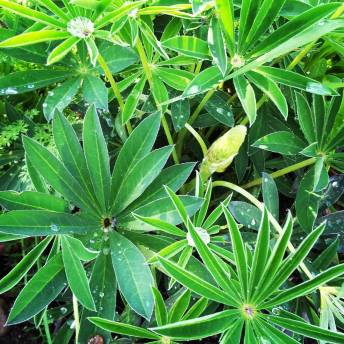
lupine

20160612_160910-1.jpg

coreopsis


Wild Fermentation by Sandor Ellix Katz

I recently became re-inspired to ferment something. This happened once, a few years ago, when I tried and failed to make a crock of sauerkraut. I love homemade sauerkraut (my Mom can make it effortlessly). It’s supposed to be the easiest thing to ferment in the history of fermentation (maybe with the exception of fruit ciders). This time around, as I was reading about sauerkraut, I realized what I did wrong the first time: I kept the crock too cold. Last time, I put it directly into the basement to forget about for a few months. My basement isn’t freezing cold, but I guess it stays pretty cool–too cool for adequate fermentation. Months later, it was just a salty muck, and I threw it out.

This time around, as I was studying fermentation, I read accounts of Germans keeping crocks of sauerkraut by the stove. People said they kept crocks in their kitchens, etc., where it was warmer, and then placed them in a cooler location once the sauerkraut reached it’s idea flavor. So, I tried again.

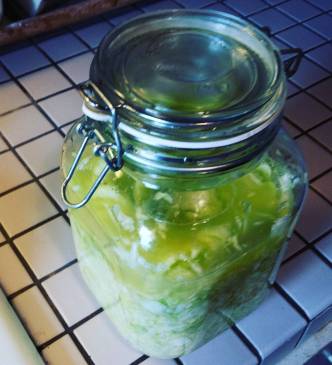
This time, I kept the container (I’m using a glass jar) in the kitchen, and within a day, it was a frothy and bubbly. Recipes said it could be ready in as few as three days, and it’s true! Within three days, I had sauerkraut. I fully intend to keep it in the kitchen until the flavor it just right. When it’s good, I’ll refrigerate it for easy access.

12466332_10208708906706495_6203632713933855765_o

second attempt at sauerkraut

While researching fermentation, one book kept reappearing and that was Wild Fermentation by Sandor Ellix Katz. So, I got a (very well used loved) copy from the library and read it in one day. The author’s enthusiasm for fermentation is contagious. I like fermentation as much as the next guy, but this book pumped me up even more. The first few chapters provide some good history and context for fermentation. There’s also some nice philosophical musing throughout regarding the divine and omnipresent nature of microscopic organisms like yeast.

The recipes in the book are artfully crafted. I intended to skim through the recipe section (which is the body of the book), but I ended up reading most of the recipes anyway. The book sold me on the value of regularly consuming fermented food and the value of fermenting that food myself. (I didn’t really have to be persuaded.) Here are a few foods with recipes from the book that seem good and completely doable: sauerkraut, honey wine, yogurt, cheese, kefir, buttermilk (and it’s pancakes), sourdough bread, rye bread, cider, apple cider vinegar, horseradish sauce, and yes, even kombucha.

I’m from Oregon, and I know it’s a cliché that everyone in the Pacific Northwest is always fermenting everything, but it’s true! I grew up with a mother who pickled and fermented foods regularly. It’s the way of my people.

an update on the hosta

For the past month, each morning, I have opened the backdoor, walked down the steps with a cup of coffee and carefully the examined the blank space of dirt where the hosta should be. The ground is somewhat covered in leaves. I thought I remembered that strange spear coming up out of the ground earlier in the year last year. It was a mild winter, but I always worry about my outdoor plants regardless.

Hostas are such weird things. Mine is a “sum and substance,” which is the biggest of the hosta varieties. This one is fragrant too. Most hosta blooms are not. Hostas are spooky. I literally jump when I see the spear for the first time each spring.

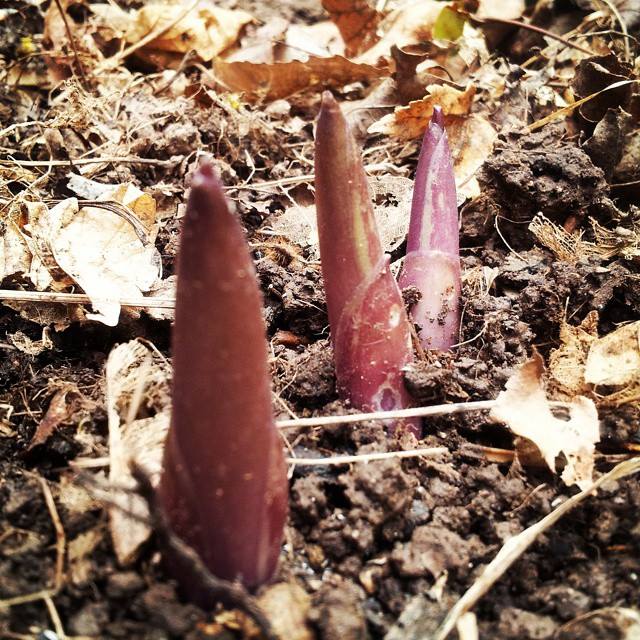
Last year, it looked like a horned monster rising up from the earth. This year, I was sure it was dead, that is until this weekend when I spotted some horrific looking spikes coming up out of the earth. It looked like a stegosaurus. There were three spikes this time, which means that not only did the hosta survive the winter, it propagated. I can’t wait to watch it grow. Here’s a picture of it looking as terrifying as ever.

hosta spears April 2015

hosta spears April 2015

killing frost and the hosta

In the next day or two, we’re supposed to get our first killing frost. I spent some time this weekend winterizing–cleaning and putting away the patio furniture, bringing plants indoors, and refilling the bird feeder with fresh sunflower seeds. I also swept leaves and worried over my new flower beds and new hosta.

20131102_132748

least flattering photo of the hosta

This summer, I planted Shasta Daisies, which may very well take over the entire flowerbed, Delphinium, Black-eyed Susans, and Coreopsis. They are all fairly hardy, and should do well in the flowerbed, even though the soil is poor and the light is not optimal. I also planted a hosta, which I documented here. As you can see from the photo above, the hosta looks really bad. I’m afraid the conditions are just too harsh. So, I covered it with leaves and hoped for the best. We’ll see what happens in the spring.

adventures in pesto

I did not grow up eating pesto. I grew up eating meat and potatoes, and I turned out fine! (Er?) Anyway, since childhood, I have grown to appreciate pesto. As you know, this year my patio garden is doing better than any of my previous attempts at a patio garden and that includes the herbs.

In the past, I’ve grown herbs just because the marketing is so cute. Who wouldn’t want a tiny little lemon balm plant growing in the kitchen window? Well, evidently, me. Turns out, I don’t use a lot of lemon balm…or mint.

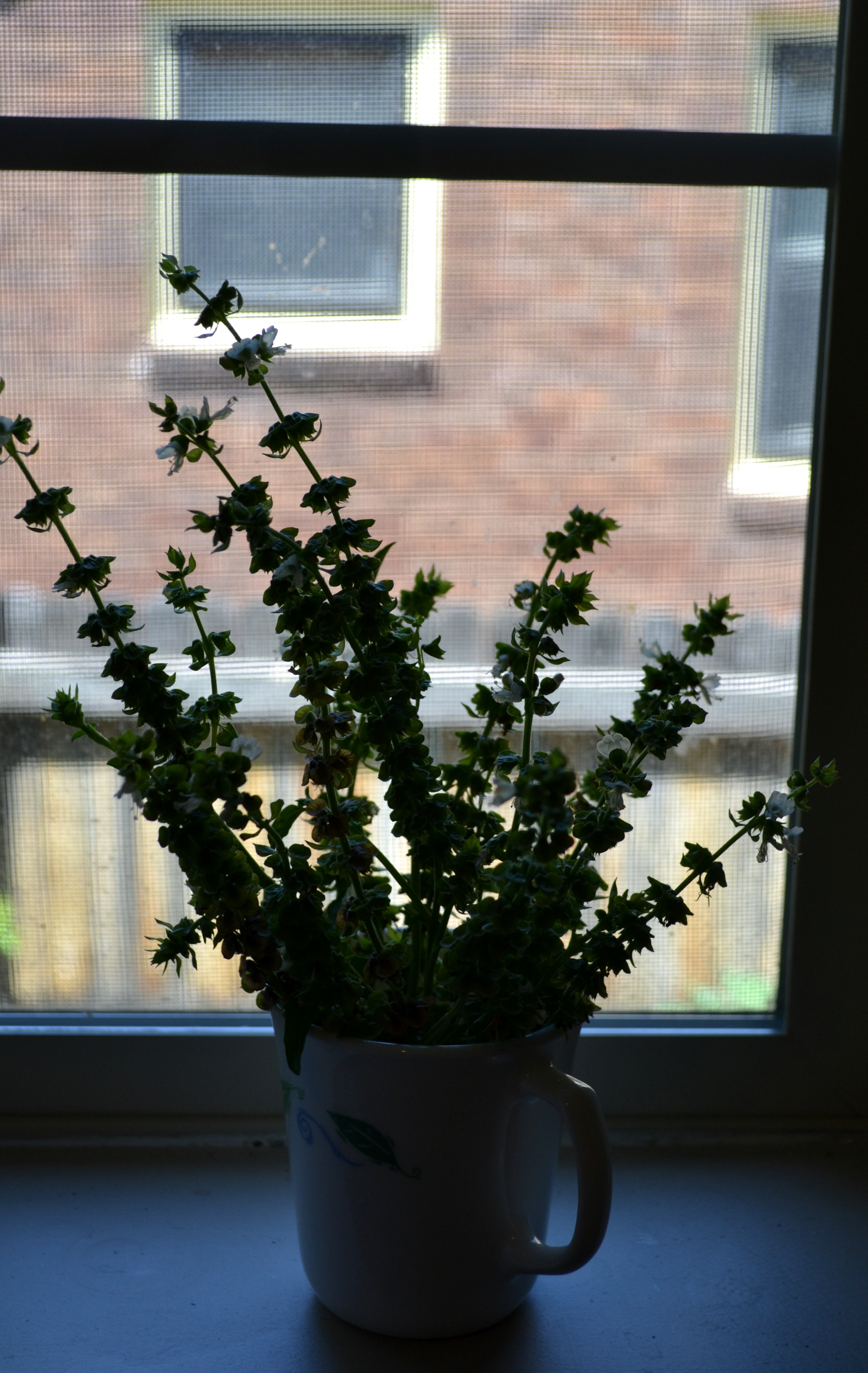
basil bolt bouquet

basil bolt bouquet

This year, I bought rosemary and basil, both are plants I knew I would use in my cooking. And I bought sage and lavender because, even if I didn’t use them as much in my cooking, I still love walking by and covering my hands in their scent.

Part of my success in patio gardening this year has been in growing things I’ll actually use. This year, that included basil. My basil plant has been so spectacular this year. I’ve been using it mostly in fresh salads, but also in some cooked dishes. Because of my surplus, and because it sounded good, I even whipped up my first ever batch of pesto. It was fairly easy and tasty. I followed a basic recipe and used walnuts instead of pine nuts because that’s what I had.

bee on basil (in need of a trim)

bee on basil (in need of a trim)

The outcome was very good, but that’s because it’s hard to go wrong with fresh basil, cheese, and nuts. Next time I make pesto, I’m going to up my basil to nut ratio. It was a little on the dry side, and I think cutting back on the walnuts and adding more fresh basil will do the trick.

tomato blossoms

About a week ago, I wrote that I was worrying about my tomato plants. They had hung in the basement for about four days while I was away on vacation, and they had failed to make any new blossoms ever since. They were still going a good job of ripening what was on the vine, but nothing new was forming.

Well, a few days after that post, I saw the first two new blossoms, and since then quite a few new blossoms have formed on both plants. Tomato season is not over yet!

New tomato blossoms at long last!

New tomato blossoms at long last!

patio gardening: July

I’ve never had much luck with container gardening. This year has been more successful. I’ve got a cherry tomato and some sort of larger, determinate tomato. The cherry tomato is producing a handful of tomatoes every few days and the other tomato has produced only a few ripe tomatoes so far, but there are more on the vines.

July cherry tomatoes

July cherry tomatoes

When I visited Oregon a few weeks ago, I had to hang the tomato plants in the basement. It wasn’t ideal, but they would have dried out and died in the Utah heat. The basement has natural light, but of course it is nowhere near what the tomatoes were used to. In the week or two since I’ve returned to Utah and returned the tomatoes to their south-facing roost, I’ve noticed that there are no new blooms on the tomato plants and the leaves look a little drab. I hope that four+ days in a basement didn’t end their season!

I also planted a zucchini in a container this year. I had the brilliant idea because I love zucchini and I know they’re prolific. Why not try them in a container? Above is a picture of the first zucchini of the summer. The plant is producing one good-sized zucchini every few weeks. This plant’s foliage is not impressive, but it is putting some energy into growing zucchinis too, so I’m happy about that. I fertilize the container (though I could probably do more), and the sprinkler system actually hits this planter, so it is one of the only plants that I don’t have to water by hand.

first zucchini from a container and a few of the determinate tomatoes

first zucchini from a container and a few of the determinate tomatoes

Some people my be frustrated by the low output of these plants, but honestly, they are all doing way better than most container vegetables I’ve tried in the past. I’m thrilled with the outcome. Pro-tips for next year include adding more fertilizer earlier and continuing with fertilizer throughout the growing season. In the Utah heat, the containers need lots of water and as a result lose a lot of nutrients.

zucchini blossom

zucchini blossom

When it comes to gardening, I’m a big fan of growing the kinds of veggies I’ll actually eat and enjoy. Next year I’m going to try to grow kale in a container. I buy and eat a lot of kale, and I frequently see it’s lovely purple foliage in containers. So, that’s my plan for next year–that is unless I happen to live somewhere where I can have the kind of garden that grows in the ground. A girl can dream.

baby zucchini

baby zucchini