Category Archives: life

a typical day (in art)

Recently, someone asked me what my typical day looks like, and while I did my best to answer the question, I felt that my response did not do justice to my life.

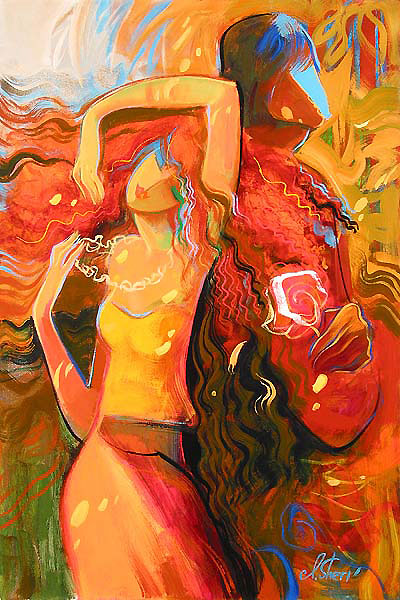
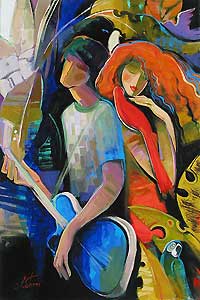
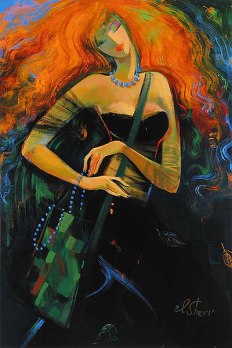
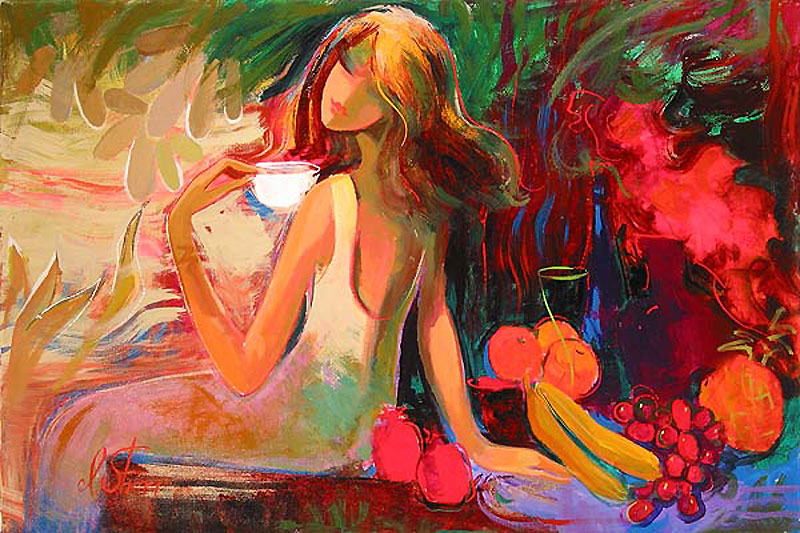
More recently, I found that an artist by the name of Irene Sheri* had actually captured a typical day in my life, and so I present it to you here now–an accurate portrayal of my typical day:

red 1

red 3 red 4 red 5 red 6 red 7 red 8 red 9 red 10 red 11
red 12

red 13  *Images from www.galleryone.com and www.world-wide-art.com. 

The Skeleton Twins by Craig Johnson

Kristen Wiig and Bill Hader are amazing in this film. They have a ton of chemistry and that probably goes back to their days together at Saturday Night Live. If you’re me, and you’re a fan of SNL, and you’re a fan of Bill Hader and Kristen Wiig, you’ll love watching these two together on screen. Comedy actors can really excel at drama, and you see that in The Skeleton Twins.

image from wikipedia.org

image from wikipedia.org

Before I saw the film, I was told by a trusted person that it was “good, but dark.” And, that’s true. My mind goes in a million directions when someone says “dark,” and it really wasn’t so dark as all that, but it is a heavy film. It’s about twins who are desperately struggling in their lives. They are estranged, but the reasons are unclear throughout most of the film. Toward the end, catalyst for their decade-long estrangement slowly unfolds.

The acting is great. The characters are unique and real. (Luke Wilson is really good in this too!) The plot, writing, and direction are all unique and nuanced and good. However (HOWEVER!), I don’t think the film addresses a universal truth, and that’s something I think good film should do. I left the film thinking, “Yeah, it’d be nice to have a twin that is tuned in to me in my times of suffering, a twin who holds the key to cheering me up when I am down, but I don’t have a twin, and most of us don’t have a twin.” Life is long and hard—we see that in the film. Unlike the Wiig and Hader’s struggling characters, the rest of us have to schlog through this life alone. Maybe if we’re lucky we have some parents, a sibling or two, a few close friends. But very few of us have a twin.

Somehow this film reminded me of Broken Flowers—also critically acclaimed and good in so many ways (and Jarmusch!)—but lacking, in my view, of a universal truth or experience. The films look very closely a unusual circumstances. Now, this isn’t to write the film(s) off entirely. For some people, this story (and fabulous acting) is enough. I’m finding, though, that I want my films to get at something more universal—something that is moving me and something I know is moving my fellow audience members as well.

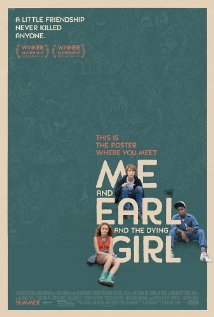
Me and Earl and the Dying Girl by Alfonso Gomez-Rejon

Me and Earl and the Dying Girl is a very Sundance-y Sundance movie, but it’s good! Sundance loves some great films, and this is one of them. First, this is indeed a movie about a dying girl. Because the title is so straightforward, I somehow thought it wouldn’t be so dark, but it was.

image from imdb.com

image from imdb.com

I also rewatched Mad Max: Fury Road this week (stay with me, it’s relevant!) and have continued to find meaning in the war boys’ concept of a “witness”—this idea of being witnessed in our acts of bravery, our acts of love, our acts of dying—all of it. It’s meaningful to me because I’ve always been so independent and only in the last few years have begun to understand the value of an invested witness.

I mention it because an important aspect of M&E&DG is that a very young man is witness to a dying girl. It’s something they stumble into, they resist, but, of course, it becomes meaningful in ways they couldn’t’ve anticipated or even previously comprehended. That kind of character growth and insight was lovely to watch, but it was also sophisticated enough that I think most audience members come away with deeper insights about what it means to connect more to “their people,” moving beyond assumptions and into really knowing another person.

One of the best moments in the film is when the cool history professor talks about how he lost his father at a young age. He said that even after his father’s death, he’s continues to learn about him. His father’s life continues to reveal itself. It started when his dad’s friends started sharing stories after his death. It continues all the time, in unimaginable ways, even decades later. I think the point here is that learning about our dead loved ones is part of what it means to be alive and self-aware.

As for me, I continue to learn about my own grandmothers. Both my great grandmother and her daughter (my mom’s mom) were a huge part of my early childhood. My great grandma even lived with us sometimes during the winter. She just stayed. She was Swedish. She was very quiet, and she loved me.  My grandma and great grandma died within two years of each other. They were a big part of my childhood, and then, in a relatively short period of time, they were both gone.

For awhile, it was sad, but okay, and this is the natural cycle of life. And then, I got really curious about them and asked my mom and aunties lots of questions about who my grandmothers were. I began to piece together my memories with their stories.  Over time, I can see how much the course of my life has been shaped by their influence. Decades later, I’ll remember idioms and wisdom about how to grow a garden, how to love one man. They suffered and loved for decades, and don’t we all? I am a witness to it all. There is meaning where meaninglessness wants to creep in. It reminds me that I am part of something bigger, family, culture, blood, brains. They are with me in memory and in my story, and that’s what I took away from M&E&DG.

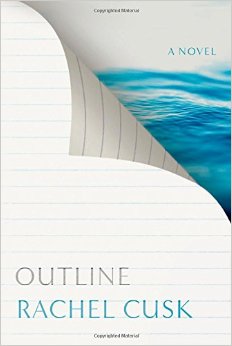
Outline: A Novel by Rachel Cusk

image from amazon.com

image from amazon.com

Outline by Rachel Cusk was something different. I haven’t read popular fiction in quite a long time, and I was worried when, in the beginning, the main character becomes engaged in a conversation with her “neighbor” on a flight to Athens. Through his line of questioning, we learn a little about the protagonist, which felt like a plot point contrived solely for the purpose of giving the reader information about the main character.

However, I liked the book and found the brilliance in that, as the protagonist meets several different characters, there are interesting and universal insights to be gained about human nature. For the most part, the characters themselves are very self-aware and analytical, sharing meaningful insights with the protagonist. Though, like all people, their assessment is not always accurate. Cusk presents these quirks and character flaws in entirely novel ways, but they resonate as true and important glimpses into the human psyche.

Interestingly, as the protagonist meets the various characters, Cusk’s voice or tone remains consistent throughout. So, there is little sense of the individuality of these characters. In many ways, the novel reads like an outline, a sketch, of the characters and ideas that Cusk is presenting.

The last character to enter the novel speaks about a troubling condition she’s gained, which she calls “summing up.” It prohibits her writing because just as she really gets in to writing a play, she finds the meaning creeping into her brain, words like “tension,” “mother-in-law,” or “meaninglessness.” Once she finds the significance of her work, she loses interest. In the summing up concept, the reader sees the ways in which Cusk has both avoided and indulged a summing up of the various characters and meanings in her own novel.

This section was also meaning to me because I’ve been stricken by the same sense of summing up since my early 20s. I was probably 21 when I realized, with a start, that every story is the same with few uninteresting variations. This is why I have a hard time with popular fiction. I have a longstanding joke, which is likely only amusing to me, that is called “I saw it the first time when it was called…,” wherein I liken every new book or movie to a book or movie that came before and grumpily deduce that it will offer nothing new.

Furthermore, I see the same patterns play out not just in movies, but in real people in real lives. I rarely think anyone is ever having a unique experience, and the result of that is, I suppose, a somewhat jaded view of the world. I’ve never known anyone else to sum things up quite like I do, and so to see it portrayed in a novel was strangely validating.

Here are a few ideas from the novel that I think render further discussion:

  • “The bump in the road hadn’t only upset his marriage; it caused him to veer off on to a different road altogether, a road that was but a long, directionless detour, a road he had no real business being on and that sometimes he still felt himself to be travelling even to this day” (15).
  • “The memory of suffering had no effect whatever on what they elected to do: on the contrary, it compelled them to repeat it” (18).
  • “We are all addicted to it, he said…the story of improvement, to the extent that it has commandeered our deepest sense of reality” (99).
  • “I had friends in Athens I could have called. But I didn’t call them: the feeling of invisibility was too powerful” (248).
an update on the hosta

For the past month, each morning, I have opened the backdoor, walked down the steps with a cup of coffee and carefully the examined the blank space of dirt where the hosta should be. The ground is somewhat covered in leaves. I thought I remembered that strange spear coming up out of the ground earlier in the year last year. It was a mild winter, but I always worry about my outdoor plants regardless.

Hostas are such weird things. Mine is a “sum and substance,” which is the biggest of the hosta varieties. This one is fragrant too. Most hosta blooms are not. Hostas are spooky. I literally jump when I see the spear for the first time each spring.

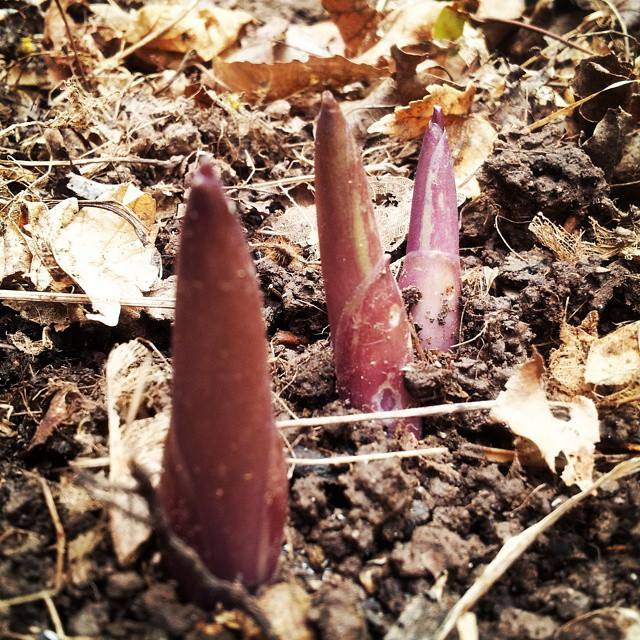
Last year, it looked like a horned monster rising up from the earth. This year, I was sure it was dead, that is until this weekend when I spotted some horrific looking spikes coming up out of the earth. It looked like a stegosaurus. There were three spikes this time, which means that not only did the hosta survive the winter, it propagated. I can’t wait to watch it grow. Here’s a picture of it looking as terrifying as ever.

hosta spears April 2015

hosta spears April 2015

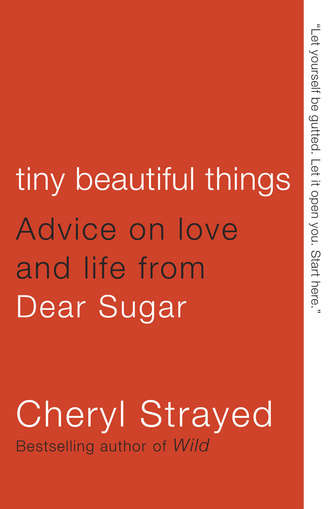
Tiny Beautiful Things: Advice on Love and Life From Dear Sugar by Cheryl Strayed

I ordered Tiny Beautiful Things and my mom was visiting when I got it. So, she read it first and kept saying out loud, “You need to read this.” She even marked a few passages for me. I watched the movie adaptation of Wild about a month earlier, but could never get into the book. Tiny Beautiful Things was not hard to get into. It takes right off.

I started reading it after my mom went home. I’m not sure if there was one catalyst, or just all the things, but I was an emotional wreck during the few weeks it took me to read the book. I sent frantic texts to my long-suffering bff, and I droned on and on to my dear, long-suffering mother, and I even sobbed a little on the phone with Z, who either suffers most or least of all.

I read and quietly sobbed the duration of a long, cross-country flight. People on either side of my armrests humanely ignored me. The flight attendant retrieved a fistful of tissues for me. Clearly, I’m going through some stuff, and I think it was the potent cocktail of heartache, family, fear, love, effort, HUMANITY!, and Tiny Beautiful Things that created a big emotional purge.

Here are two quotes that meant something to me:

  • On partnering: “This is called intimacy. This is called fuck yes. When people do this with us, it’s an honor” (197).
  • On doing crazy things for love: “Love is our essential nutrient. Without it, life has little meaning. It’s the best thing we have to give and the most valuable thing we receive. Its’ worthy of all the hulabaloo” (219).

Is the book any good? I think it is good. It might be good like wine and ice cream are good: indulgent. I think there’s some useful stuff there. Cheryl Strayed turns herself inside out, revealing her most intimate and painful stories, and in doing so, we readers see the universality of our most painful and humiliating experiences, but also the universality of love, passion, of falling in love. In this book of advice, Strayed convinced me again that the heady passion between two people is rare and real and beautiful and possible and sacred, and I so, so need to believe that right now.

Be Free Where You Are by Thich Nhat Hanh

I’m supposed to be gearing up for a spiritual year according to sundry esoteric readings and such. I entertain these mostly for fun, but when the idea reappeared to me in multiple venues, I thought, okay, I’m listening. I’m not particularly excited by the prospect of a spiritual year, but recognize that it’s a part of being. And, there’s no time like the present.

So, the other day on a friend’s table, I saw a copy of Thich Nhat Hanh’s Be Free Where You Are, which is a little pocket-sized book based on a lecture he have to a group of prisoners a few decades ago. “Take it,” she said. So, I slipped it into my purse and read it the other night. It is a very quick read. I read half of it, then decided to read the rest of it, and then read the Q&A after that—all in one sitting. I chose to read and reread a few key sections  slowly to try to really absorb his potential meanings.

Thich Nhat Hanh’s been on my radar after a respected mentor mentioned that his work had valid philosophical and scholarly potential. After reading this short book, I can’t say that I agree. Of course, it’s way too soon to make a definitive statement either way. But, he spoke about things like being in your heart and being positive, and while I can make a lot of assumptions about what that might mean, I’m not sure that means much. Or, maybe it means everything. The book is full of these kinds of assertions, and I can only hope that his longer works offer more depth.

Thich Nhat Hanh said that understanding is crucial for forgiveness.

He said to think about each bite of food and where it came from with gratitude.

He said to meditate always, while walking and washing dishes. While inhaling and exhaling. He encourages his audience to be present. Describing this, he wrote, “Here I am.” I read it a few times:  “Here I am.” I walked over to my full-length bedroom mirror and tore away the tens of sticky notes upon which I had scribbled affirmations in permanent marker, affirmations that I had written months earlier as they occurred to me. I threw the tiny stack of words into the recycling, got out a new sticky note and wrote, “Here I am.” I placed it alone on the mirror. Here I am.

I thought about an eye-gazing meditation I did recently that was either good or meaningless, and I thought, “Here I am. Here I am.”

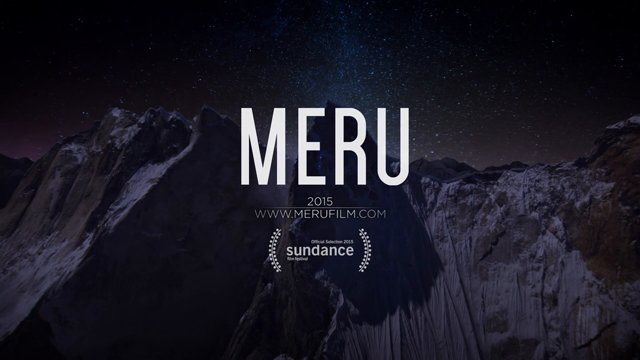
Meru directed by Jimmy Chin, et al

This year at Sundance, I had the opportunity to see Meru, a documentary film about Conrad Anker, Jimmy Chin, and Renan Ozturk’s summit of Mount Meru, or the “Shark Fin” in the Himalayas. I was a little worried that I might spend most of my time averting my gaze from the vertigo-inducing shots of men hanging by a rope over 20,000 foot drops. While there were plenty of those shots, there are also a lot of beautiful scenes that did not invoke a need to cover my eyes. The cinematography is absolutely beautiful and unforgiving throughout.

image from Meru trailer

image from Meru trailer

At about the mid-point, viewers get a lot of backstory on these three climbers. Each of them overcomes absolutely unbelievable obstacles. (Well, maybe not so unbelievable given that they are elite climbers.) I went in worried that this would be one of these films when men (yes, men) do these insane things that make no sense and risk their lives and everyone’s lives, and for what? But I enjoyed and admired these men throughout the film.

They each brought such unique personalities to the screen. Conrad is the hardened old-timer with tons of experience. He’s got a remarkable record for safety, but he’s got a thin exterior might be pushing too hard at this point in his career. There is evidence that Jimmy is aggressive and unstoppable in his pursuit of success, but he’s so quiet and understated about it. Renan has a natural, physical ability, but he’s got a spooked look in his eyes—maybe it’s the fear of being a newcomer or maybe he’s haunted by what’s to come.

Watching the film, I was proud to be in the same species as these guys. It makes me think about the things we’re driven to do. The things we obsess over until we absolutely must do them. Some of us know what we have to do, and it usually means logging countless hours alone with one’s self. This is why, though I recognize my need for relationships, I trust solitude. Important things happen there, and etching out that time and being willing to spend that time alone is key. For some people, that great thing is having a child.

During this film, though it is very masculine, I was reminded of doula work. Like the men climbing Meru, women in labor are inexplicably driven, but they reach their breaking point, they’re brought to the brink, and then beyond to the place where their skin starts to break—just like the climbers. They continue on as the animal body takes over and the higher intelligence and the spirituality are all forced to work together. All three are required, which is one of the lessons, I think. I always say, “What doesn’t kill you makes you stronger, or it weakens you badly.” However, in this film, what doesn’t kill them actually does make them stronger. Cliché as it may sound, the film reminded me of our greatness as human beings. I feel newly inspired to pursue the things I must do in this life, for more quiet focus to better understand what those things are, and a deeper commitment to the solitude they require.

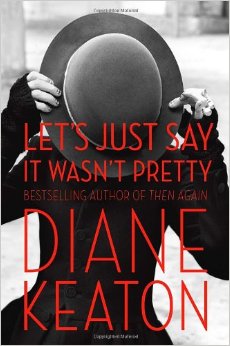
Let’s Just Say It Wasn’t Pretty by Diane Keaton

I read Let’s Just Say It Wasn’t Pretty by Diane Keaton because I remembered liking her Then Again awhile back. Also, more importantly, Diane Keaton has done things a little differently, and I’m always looking to read about women who are doing things a little differently because I do things a little differently too.

image from amazon.com

image from amazon.com

It’s an odd book, and much more stream of consciousness than I remember of Then Again. And, so I was glad to read something entirely different. It was insightful to be privy to Diane Keaton’s mind, which was, just like her, brilliant, annoying, confusing, legendary.

I mean, you can tell that a frenzied editor tried to assemble her bedside journal scribblings, but that’s okay. It never needed to be a perfect to begin with.

She writes about beauty. It’s mostly about beauty. The introduction is so promising, and there are only glimpses (though worth it!) of this promise throughout. She writes about the process of discovering beauty as a young girl, and hearing the opinions of others, she and writes “Don’t tell me what beauty is before I know if for myself.” I think that line is so important. The most honest, provocative moments are when we fall in love with something beautiful before we realize or understand if it meets a shared social standard of beauty: our mothers, the fabric on grandmother’s old chair, a tiny glass figurine weighted just right. Of course, soon enough, we are told what beauty is, and all is lost, and we can never again really know how much we’ve mixed up our own sense of beauty with society’s standards. C’est la vie.

Later, of Picasso’s depiction of Marie- Thérèse, Keaton writes that Picasso paints her, “through loving her, living with her, and seeing her as both ugly and magnificent. Because of his sculptures, Marie- Thérèse emerged as a symbol of unsightly, frightening, even hideous but also, I have to say, complete beauty” (xix). I can think of nothing more romantic than the thought of two people loving each other and timelessly fascinated with the ugly and the magnificent in the other—the unsightly, the frightening, the hideous, and the beauty.

Keaton is a romantic and appears to be unlucky in love, but has also had some luck in love. Her questions of love and beauty were really nice to think through with her, even if just for a couple hundred pages.

i do rush home

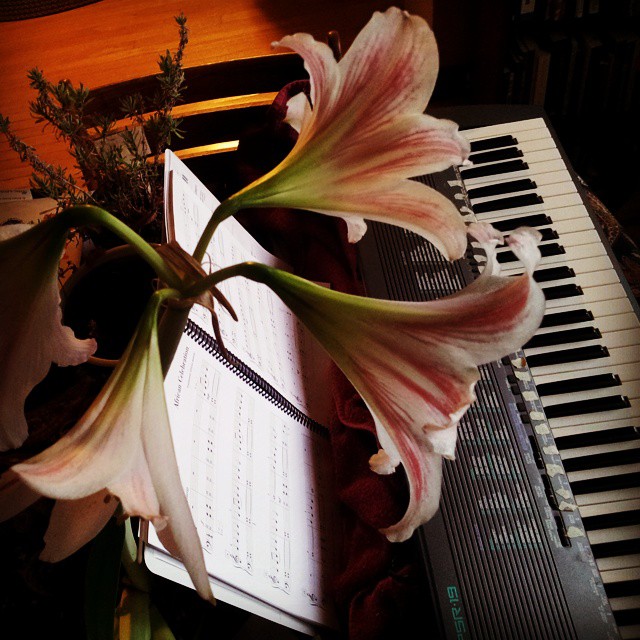
I rush home to play the piano. (Well, keyboard.) I listen to songs on the radio and try to figure them out while driving. I fill out all of the exercises in my lesson book just for the joy of it.

My mom’s pretty competent at the piano, but has always wanted to play the violin. She started taking lessons this summer and absolutely loved it. I, on the other hand, have always wanted to play the piano. I took lessons when I was very young, but they were short-lived.

This summer, my mom inspired me with her violin lessons. She kept saying things like, “I just love it,” and “It’s so great.” It’s probably the English major in me, but I’m always prompting her to explain what she means. “What’s great about it?” She couldn’t quite explain. Now, neither can I.

I found a teacher who lives nearby and signed up for lessons this fall. I immediately loved it and, like my mom, find myself sort of inarticulate about it: “It’s the best thing ever,” and “It’s just so great.” At first I really loved the forced meditation. Music requires your entire brain, and when I’m concentrating, there is no room for chatter. There is no room for anything else, and it is divine.

One of the things I miss from my last relationship is music. I miss singing (though I am shy!) and I miss hearing the new song and the song that’s dedicated to me. So, I’ve tried to create that for myself. I’ve been surprised by how quickly I’ve been able to move through the lesson book and how satisfying it is to play.

I’ve always felt drawn the to piano. I have always wanted to be able to play. I love the sound of the piano. I’m also really fast at typing (and I think that actually helps.)

I don’t know what else to say. See how rambling and incoherent I am about it? Other than just “YES! I am doing it! And it is so great!”

morning scene

morning scene