Be Free Where You Are by Thich Nhat Hanh

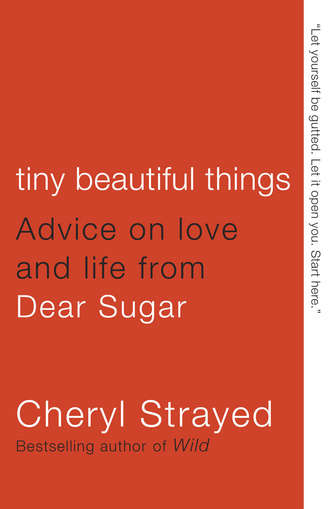
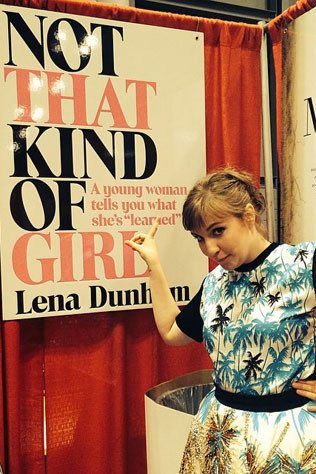
I’m supposed to be gearing up for a spiritual year according to sundry esoteric readings and such. I entertain these mostly for fun, but when the idea reappeared to me in multiple venues, I thought, okay, I’m listening. I’m not particularly excited by the prospect of a spiritual year, but recognize that it’s a part of being. And, there’s no time like the present.

So, the other day on a friend’s table, I saw a copy of Thich Nhat Hanh’s Be Free Where You Are, which is a little pocket-sized book based on a lecture he have to a group of prisoners a few decades ago. “Take it,” she said. So, I slipped it into my purse and read it the other night. It is a very quick read. I read half of it, then decided to read the rest of it, and then read the Q&A after that—all in one sitting. I chose to read and reread a few key sections  slowly to try to really absorb his potential meanings.

Thich Nhat Hanh’s been on my radar after a respected mentor mentioned that his work had valid philosophical and scholarly potential. After reading this short book, I can’t say that I agree. Of course, it’s way too soon to make a definitive statement either way. But, he spoke about things like being in your heart and being positive, and while I can make a lot of assumptions about what that might mean, I’m not sure that means much. Or, maybe it means everything. The book is full of these kinds of assertions, and I can only hope that his longer works offer more depth.

Thich Nhat Hanh said that understanding is crucial for forgiveness.

He said to think about each bite of food and where it came from with gratitude.

He said to meditate always, while walking and washing dishes. While inhaling and exhaling. He encourages his audience to be present. Describing this, he wrote, “Here I am.” I read it a few times:  “Here I am.” I walked over to my full-length bedroom mirror and tore away the tens of sticky notes upon which I had scribbled affirmations in permanent marker, affirmations that I had written months earlier as they occurred to me. I threw the tiny stack of words into the recycling, got out a new sticky note and wrote, “Here I am.” I placed it alone on the mirror. Here I am.

I thought about an eye-gazing meditation I did recently that was either good or meaningless, and I thought, “Here I am. Here I am.”

shelter from the storm

red skies over Utah

red skies over Utah

I go back and forth on whether or not a relationship is right for me. If I look at my adult life, I’ve gone back and forth between being single and coupled in practice too. So, assuming I’m doing what serves me, maybe I need a combination of both worlds.

That said, today is one of those days when I wish I was coupled. You see, I “put myself out there.” Professionally and creatively, I expose myself, I write, I share, I create, I publish, and that opens me up to failure, criticism, and rejection. I’m used to it. It’s par for the course. In many ways, I view failure as an important part of the process—a sign that I am pushing up against my potential.

However, sometimes rejection and pushback is hard to take. Sometimes it hurts my feelings, sometimes it feels bad, and in those moments, I crave a soft place to land, to come home to someone who is close, understands the project, and what’s at stake. I crave to be with someone who is invested, someone who can comfort and offer suggestions on how I might view things differently.

In so many ways, I can see how writers, artists, musicians—people who expose themselves to failure and criticism—would benefit tremendously from an intimate support person, someone to remind us that we are not alone in what sometimes seems like a sea of crushing criticism. I benefit from having close people who can reiterate the story that I’ve been telling myself for years—to get up and try again. If I can, I must. 

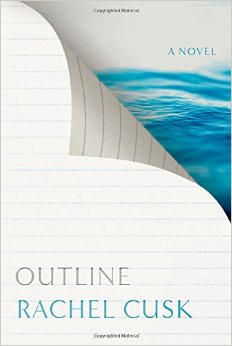
The First Bad Man by Miranda July

An autographed copy of Miranda July’s The First Bad Man arrived in a cardboard box propped against my front door. I did not order it. I was coming back from yoga. It was any old day, and my mind very slowly bended around the idea that someone had bought something for me. I brought it inside and carefully opened it. Inside was a note from Z and the book. I immediately read the first few paragraphs, smiled to myself, and set it aside for later.

I’ve been reading a lot lately and savored this one, reading it slowly over the course of a few weeks. There are so many lines in the first few chapters that made me laugh, or made me reach for a pencil to draw a thin gray line under a phrase or beside a passage. Miranda July is an artist who makes me feel not alone in this world. It is absolutely novel how she can capture all the strange little quips and quirks that brains do.

July also writes about really disgusting, gross-out, putrid sorts of things, and the sheer quantity of that mid-way through The First Bad Man started to get me down. The suffocation the main character creates for herself, her home, her kitchen, her frying pan, her throat condition, the containers of urine, the breast punching—it all got to be too much, and I didn’t want to spend any more time in the book. But, of course, I did and in the last few chapters, I started underlining things again, and smiling as I read, and once again, felt that I was not alone in the world.

When I read a particularly delightful passage, I found myself turning to the title page and running my finger over her indecipherable magic marker signature. Who was this woman? Is she like me? Or, is she commenting on what it’s like to be me?

Forever by Judy Blume

I recently saw Forever by Judy Blume on a list of great books by women for women. I haven’t read young adult literature since…probably since I was a teenager. I was immediately struck by how bad the writing was. The book is a study in telling instead of showing. After deciding early on that it was not worth a close read, I just skipped ahead, read all of the sexy parts, and called it a day.

image from goodreads.com

image from goodreads.com

However, after a few days of reflection, I’ve come to realize that it probably is an important book. Sure, I found most of the writing off-putting, but it was probably pretty good/typical/appropriate/accessible for young adult fiction. Evidently, it’s one of the first books that’s about young people entering into their first sexual relationships. Blume portrays a very white, middle class, private school kind of normal. So, that was limiting, but still useful. It depicts young people being very straightforward with each other. All of the experiences are very consensual and thoughtful. If someone has a feeling or doesn’t want to do something, that’s okay. They talk about it. Blume is modeling a relationship, though perhaps overly simplified, is straightforward and consensual, and sadly, that’s really rare. So, after reading the thing, I’d agree that this is an important book for all women, especially young women, and the people who want to be intimate with them.

Meru directed by Jimmy Chin, et al

This year at Sundance, I had the opportunity to see Meru, a documentary film about Conrad Anker, Jimmy Chin, and Renan Ozturk’s summit of Mount Meru, or the “Shark Fin” in the Himalayas. I was a little worried that I might spend most of my time averting my gaze from the vertigo-inducing shots of men hanging by a rope over 20,000 foot drops. While there were plenty of those shots, there are also a lot of beautiful scenes that did not invoke a need to cover my eyes. The cinematography is absolutely beautiful and unforgiving throughout.

image from Meru trailer

image from Meru trailer

At about the mid-point, viewers get a lot of backstory on these three climbers. Each of them overcomes absolutely unbelievable obstacles. (Well, maybe not so unbelievable given that they are elite climbers.) I went in worried that this would be one of these films when men (yes, men) do these insane things that make no sense and risk their lives and everyone’s lives, and for what? But I enjoyed and admired these men throughout the film.

They each brought such unique personalities to the screen. Conrad is the hardened old-timer with tons of experience. He’s got a remarkable record for safety, but he’s got a thin exterior might be pushing too hard at this point in his career. There is evidence that Jimmy is aggressive and unstoppable in his pursuit of success, but he’s so quiet and understated about it. Renan has a natural, physical ability, but he’s got a spooked look in his eyes—maybe it’s the fear of being a newcomer or maybe he’s haunted by what’s to come.

Watching the film, I was proud to be in the same species as these guys. It makes me think about the things we’re driven to do. The things we obsess over until we absolutely must do them. Some of us know what we have to do, and it usually means logging countless hours alone with one’s self. This is why, though I recognize my need for relationships, I trust solitude. Important things happen there, and etching out that time and being willing to spend that time alone is key. For some people, that great thing is having a child.

During this film, though it is very masculine, I was reminded of doula work. Like the men climbing Meru, women in labor are inexplicably driven, but they reach their breaking point, they’re brought to the brink, and then beyond to the place where their skin starts to break—just like the climbers. They continue on as the animal body takes over and the higher intelligence and the spirituality are all forced to work together. All three are required, which is one of the lessons, I think. I always say, “What doesn’t kill you makes you stronger, or it weakens you badly.” However, in this film, what doesn’t kill them actually does make them stronger. Cliché as it may sound, the film reminded me of our greatness as human beings. I feel newly inspired to pursue the things I must do in this life, for more quiet focus to better understand what those things are, and a deeper commitment to the solitude they require.

Palo Alto: Stories by James Franco

Despite having recently lost my ability to read anything with a discernible plot, I read and enjoyed James Franco’s first selection of shorts stories, entitled, Palo Alto: Stories. And, it was good. I mean, everyone’s reading it and wondering if they’re just reading it because he’s famous, and while that might be the case, the writing holds its own. He tips his hat to his teachers, and I so hope that he workshopped this stuff like the rest of us.

While it’s got a major publisher, it feels independent. Ideally, this is the sort of text that could help bridge the gap between big conglomerate publishers and small independent presses. I don’t really think capitalism or consumerism work that way, but as a reader, I cannot tell you how badly I want to read more of this kind of work.

Anyway, these are small, plot-driven stories. They are careful and conceptually rich. While I’ll admit I wasn’t too eager to spend a lot of time with teenaged-boys or high school, I think some of the territory Franco covers is important, even necessary. The first story, “Halloween,” is really so good. It’s one that has stuck with me for the past few days. It’s one I’ll remember.

I’ve been a fan of Franco’s since his Freaks and Geeks years (or rather, when I watched it on DVD several years after the fact), but even still, I’ve been a fan, and I’m glad to see his genuine success in writing.

As you know, I read George Saunders this summer, and I actually thought Franco’s work could be categorized with Saunders. Franco’s work is much more accessible, mind you, but it is somewhat indicative of the real made strangely dystopic that is happening in contemporary male writing these days, and it’s satisfying to see that aesthetic emerge culturally.

Also, and more importantly, is it just me, or do the pages smell vaguely of cologne?

palo alto

image from amazon.com

Let’s Just Say It Wasn’t Pretty by Diane Keaton

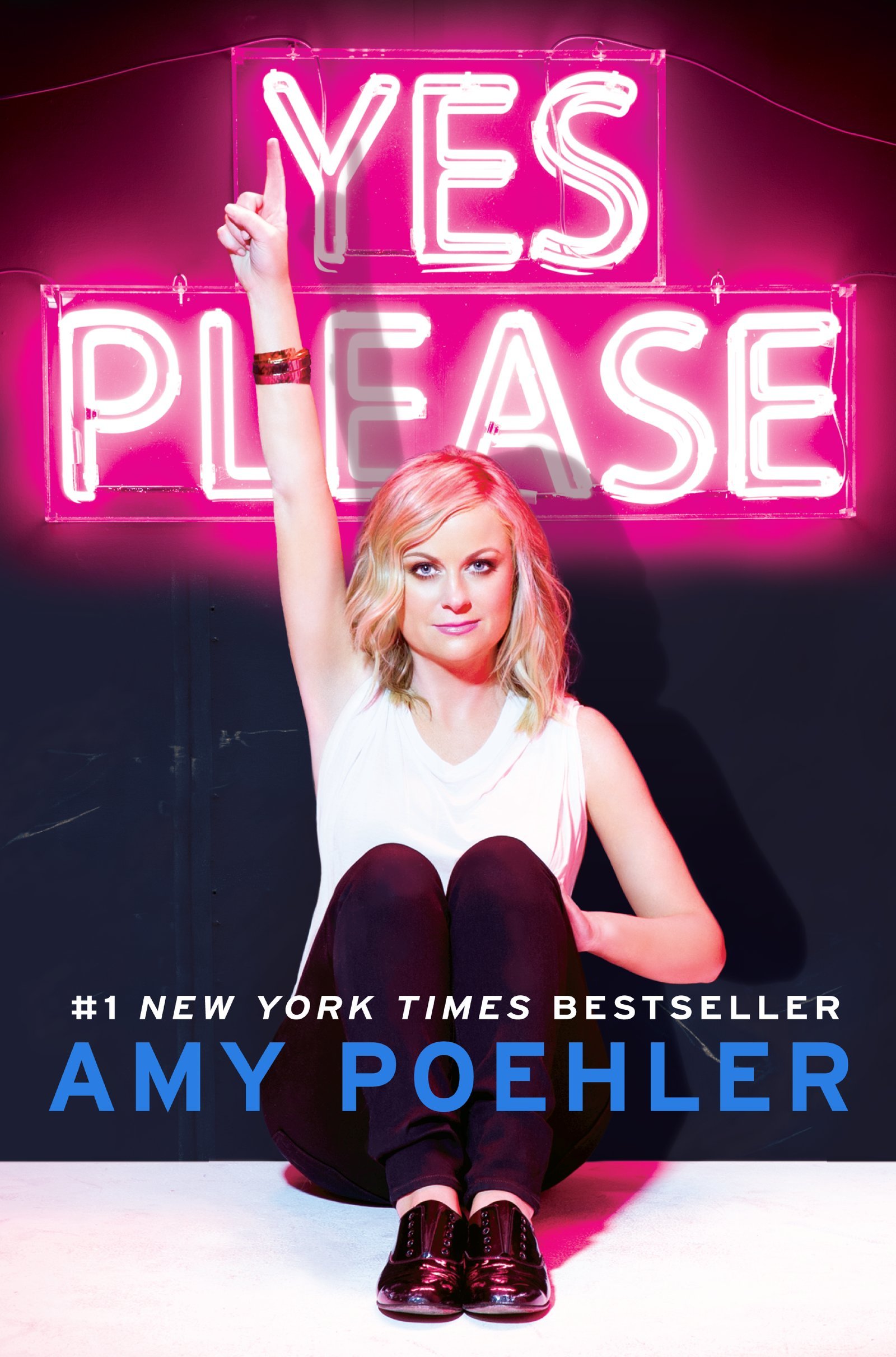
I read Let’s Just Say It Wasn’t Pretty by Diane Keaton because I remembered liking her Then Again awhile back. Also, more importantly, Diane Keaton has done things a little differently, and I’m always looking to read about women who are doing things a little differently because I do things a little differently too.

image from amazon.com

image from amazon.com

It’s an odd book, and much more stream of consciousness than I remember of Then Again. And, so I was glad to read something entirely different. It was insightful to be privy to Diane Keaton’s mind, which was, just like her, brilliant, annoying, confusing, legendary.

I mean, you can tell that a frenzied editor tried to assemble her bedside journal scribblings, but that’s okay. It never needed to be a perfect to begin with.

She writes about beauty. It’s mostly about beauty. The introduction is so promising, and there are only glimpses (though worth it!) of this promise throughout. She writes about the process of discovering beauty as a young girl, and hearing the opinions of others, she and writes “Don’t tell me what beauty is before I know if for myself.” I think that line is so important. The most honest, provocative moments are when we fall in love with something beautiful before we realize or understand if it meets a shared social standard of beauty: our mothers, the fabric on grandmother’s old chair, a tiny glass figurine weighted just right. Of course, soon enough, we are told what beauty is, and all is lost, and we can never again really know how much we’ve mixed up our own sense of beauty with society’s standards. C’est la vie.

Later, of Picasso’s depiction of Marie- Thérèse, Keaton writes that Picasso paints her, “through loving her, living with her, and seeing her as both ugly and magnificent. Because of his sculptures, Marie- Thérèse emerged as a symbol of unsightly, frightening, even hideous but also, I have to say, complete beauty” (xix). I can think of nothing more romantic than the thought of two people loving each other and timelessly fascinated with the ugly and the magnificent in the other—the unsightly, the frightening, the hideous, and the beauty.

Keaton is a romantic and appears to be unlucky in love, but has also had some luck in love. Her questions of love and beauty were really nice to think through with her, even if just for a couple hundred pages.

Whiplash by Damien Chazelle

I enjoyed watching Whiplash over the weekend. This is a movie that will take you up to the edge and over the waterfall, if you know what I mean. While I enjoyed watching it more than I enjoyed Birdman, I think Birdman will have the edge during awards season. Here’s why: Whiplash takes a close look at just a few ideas, whereas (despite my criticisms of the film) Birdman takes a nuanced look at a lot of ideas and characters.

Still, Whiplash is a joy to watch. Some say the movie is about teaching method, but I think the movie is about the music, talent, and art overcoming the process. And, this is evidenced in the way the film ends–paying homage to the music. The audience loses sight of the drama and the personal dynamics as the final performance plays out. And I loved that.

I also really loved the relationship that Miles Teller’s character Andrew had with his father Paul Reiser. It was a minor aspect of the movie, but this was a highlight of the film for me. If the film had followed a more predictable narrative, the relationship between father and son would’ve been strained. The father would have either pushed the son too hard, or would have disapproved of the son’s pursuits all together. Instead, the film portrays a gentle, loving, and supportive relationship between father and son, and it results in a tenderness that I would love to see more of between two men on screen.

There are a few really predictable aspects of the film, the most noteworthy being that Andrew very predictably sabotages his personal relationships for the sake of his success.

There are a few uncharacteristic scenes as well. The character Andrew is a strong combination of deeply insecure, appearing to second guess himself at every turn, coupled with brief explosions of self-assuredness that are usually at the expense of this peers.

There is an amusing scene where Andrew is having dinner with his father and extended family. It is clear that the family does not really understand or value what Andrew is doing, and Andrew broods silently before schooling them all. It’s amusing, but isn’t really indicative of the character throughout the rest of the film.

Overall, I think the film might’ve been more powerful if Andrew was more aggressive, funny, fast-talking, and confident throughout the film, and only the teacher, Fletcher, played by J.K. Simmons, was able to destroy that confidence. Anyway, it would’ve given Fletcher’s character more convincing power throughout.

Despite all that, I enjoyed the film, the music, watching the process. The whole thing inspired me to practice piano. Maybe that’s all.

Silver Linings Playbook by David O. Russell

I know I’m a few years behind with this one, but Silver Linings Playbook is on Netflix, so I finally watched it. All stars are brilliant in the film, but Jennifer Lawrence was a bad casting choice. She is still too young to bring the necessary complexity to this character. She needed to be world-weary, but soft, broken. With her husky voice and masculine (beautiful!) characteristics, I had a hard time believing her in this role. The topper is that we are supposed to believe that, in her spare time, this woman enjoys somewhat serious, competitive dancing. Dear Jennifer Lawrence provides a one-two punch of beauty and real acting ability, but she is not graceful by any stretch of the imagination. Based on what I’ve read of her in interviews, she embraces a boyish sense of humor and boyish way of moving through the world. I think even she would agree that being cast as a dancer is a bit of a stretch.

First, the beginning: what’s really innovative about this film is the role of bipolar disorder and Bradley Cooper’s portrayal of that mental illness as it evolves throughout the film. As the movie progresses, it becomes clear that other characters, the father, the long-suffering mother, the leading lady, and even the best friend, are all really struggling with their own, very real, mental distress. The main character, Pat, has a troubled relationship with his father, which is increasingly revealed as very controlling and made a significant contribution to the main character’s distress.

***spoiler alert***Ok, here’s where the real spoilers begin because I’m going to talk about the ending. In the end, Pat (Bradley Cooper) ends up falling in love with Tiffany (Jennifer Lawrence), and I’m not sure what to make of it. On one hand, it is a “happily ever after” ending that does not do justice to the complexity that is established earlier in the movie. It also comes as somewhat of a surprise. While it is clear that Pat is beginning to lust after Tiffany (as does the audience), a more substantive connection between the two is less clear. Still, okay, they fell in love, Pat and Tiffany live happily ever after while mom continues to make snacks for the big game and dad continues to recklessly gamble away the family’s financial security on football. Somehow, these two mentally ill people manage to heal each other and all is well and saved forever the end.

The second reading is much darker, it’s my own, and I highly doubt it was the intended interpretation. It is that Pat is a vulnerable person, still suffering deeply from a bipolar breakdown. Because of long-term manipulation and mental illness from his own father, Pat is used to unhealthy intimate relationships. When Tiffany comes along and lies and manipulates her way into his life, he recognizes it as the dysfunction to which he is accustomed, and he is unhealthy enough to get caught up in the troubled relationship. Tiffany will continue to exploit the relationship to its inevitably volatile end, and Pat will repeat his bipolar breakdown cycle because no evidence of new learning, growth, or healing ever really occurred. If you ask me, it’s a dark, messed-up film ending indeed.

Birdman by Alejandro González Iñárritu

I watched Birdman over the break, and it’s a spectacular film worth seeing, especially if you haven’t already watch Aronofky’s The Wrestler or Black Swan—all portrayals of big celebrity personalities who have lost touch, or are losing touch, with reality. While Aronofsky is probably wondering how Alejandro González Iñárritu got ahold of his script, viewers are growing weary of the possibility of seeing suicide and self-harm, as emotionally unstable characters linger closer and closer to dangerous edges.

Michael Keaton is wonderful and nuanced and vulnerable, as are Edward Norton, Naomi Watts, Andrea Riseborough, and Amy Ryan. Emma Stone, who I love in over-the-top comedic and big blockbuster performances, seemed less capable of a performance en par with the work of her colleagues. It can’t be fun to be the novice among acting giants.

In part, the movie provides a delightful and smashing critique of…well, critique. And so, I am aware of the complexity of my own participation in the writing of a critique of the film. Bottom line, it was a pretty good film, with great actors, who did their best to bring new light to material and subject matter that has already been done to perfection by Darren Aronofsky.