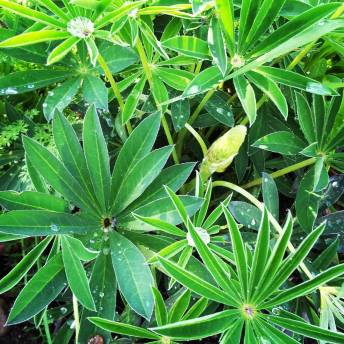
last summer

At the end of each year, I update the last of the pictures from my phone that I want to add to the yearly album I keep on Facebook–this year labeled “2016.” Each year, I scroll back through the photos and reminisce about the previous year. This time I came across a few photos of the gardening I did last summer, and I thought I would share here–an update to the “gardening” post I did at the beginning of the summer.
14484652_10210913523020525_8697859291015077322_n

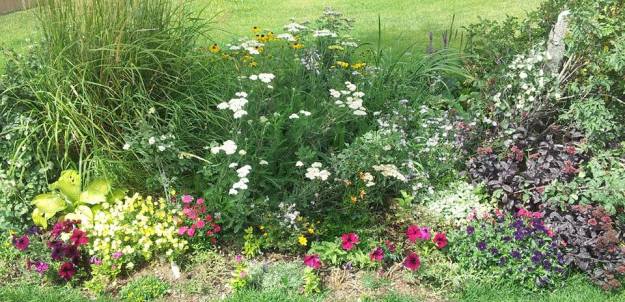
flowerbed near the end of the season

Plants that struggled:
The zucchini. This poor little thing was transplanted at least twice, and it just never succeeded. I also think I crowded it, which didn’t help–that, plus the cool summer and the somewhat shady location meant this little plant tried to bloom, and made a few tiny zucchinis, but nothing much.

The hostas. I’ve had lots of good luck with my “sum and substance” plant, which I’ve written about here, here, and here. When a hailstorm destroyed my big hosta for the season, I was missing those big, beautiful leaves. So, I bought and planted more. Many more. But, they never seemed to flourish. I’m hoping they’ll pop up in the spring for a fresh start.

The honeysuckle. This plant might’ve been crowded, and I’m hoping it will flourish in the coming year, but it promptly lost it’s petals and was nothing more than a few fronds of leaves for the entire summer.

The coleus. I want to like coleus because all of the garden gurus seems to love it, and it’s a splash of color, and yadda yadda yadda, but they don’t really speak to me, and anyway this year’s coleus got leggy, couldn’t stand even the mildest cold, and then died.

Plants that thrived:
The sunsatia lemon nemesia hybrid. I didn’t really want to like this plant because it’s a hybrid, and I tend to like traditional plants that have stood the test of time, but I have to admit that this plant was perfect for last summer’s conditions. It bloomed all summer and offered a bright burst of color to the flowerbed.

The strawberry plants. These hardy little plants had bright green leaves, sent out feelers, and made lovely berries (that the birds and grasshoppers usually got to before I could), despite a rough transplant. The little berries were tasty, and I’m hoping they return next year, even bigger and better than before.

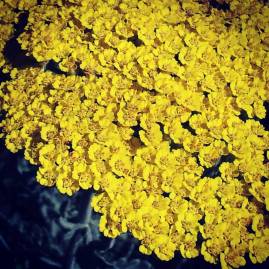
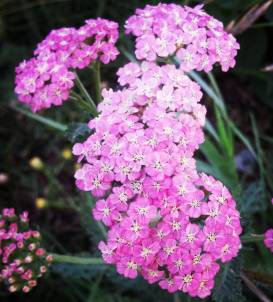
The yarrow. There was already some yarrow in this flowerbed when I began, and so I planted more, and sure enough, this hardy herb did just fine. They also inspired some nice photos!
15895556_10211951436207706_273252119754877794_o

pink yarrow

15895938_10211951434727669_5790255741930784845_o

yellow yarrow

Plants that are doing okay:
The dianthus. This is a hardy plant, and I think it will thrive next year, but this year it was completely average looking.

The pansies. These are cold hardy, and they’re going to thrive here, but they weren’t very inspiring this year. I’m sure I’ll be grateful for them in the spring when they’re the first thing to pop up.

The black-eyed susan. This is another plant that should thrive here. They didn’t do much last year. They plant wasn’t very full. They bloomed. Maybe next year they will do more.

Plants from container gardening:
Thanks to watering help from my Very Generous Neighbors, I also enjoyed several months of delicious zucchinis and tomatoes as seen below:


Right now, it’s the middle of winter. The temperature is -8, and there’s a windchill that’s making it even worse. Meanwhile I am dreaming about sun-warmed soil, and fresh chard, and garden vegetables, and raspberry bushes too, of course.
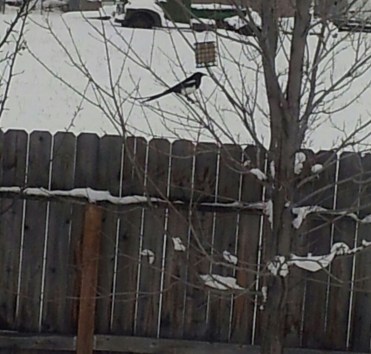
feeding the birds

Gardening and feeding the birds are two things that provide me with a greater sense of “home.” Home for me is a feeling of connection. In the past, this has meant feeling connected to people–my family and the small community where I grew up. Since I don’t always have access to that community anymore, I’ve had to find a sense of home in other ways. This winter, it means feeding the birds. I’ve kept a bird feeder at one of my “homes” that is really messy. I always fill it with black oil sunflower seeds because that’s what the birds seem to like the most. (I also like the volunteer sunflowers that grow under the feeder, although those never seem to last.)

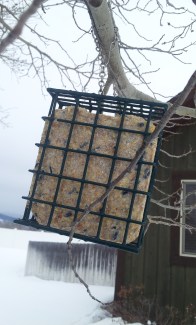
This year, on the solstice, I decided to mark the wintry occasion by putting out new bird feeders. I bought two small suet cages and a couple of suet blocks with seeds in them. It’s cold, and so a high-fat food seemed appropriate. The pictures on the packages showed finches and woodpeckers and orioles and all kinds of beautiful birds.

I immediately traipsed through the knee-deep snow and hung one feeder in the front yard (in front of the window where I work) and one in the backyard.

20161224_101336.jpg

new suet feeder

Within 48 hours, the magpies found the suet cages and have been working on the feeders alone and in teams ever since. I briefly saw a flicker and a small bird that came and went before I could get an ID. A crow also did a flyby, but mostly it has been magpies. I grew up believing these birds were mostly pests. They are plentiful, and they eat the eggs of smaller, less common birds–not ideal.

In the days that have followed, I’ve resigned myself to feeding the magpies. They’re not the rarer birds I had in mind, but they are birds, and they found the feeders right away, and they are enjoying the suet, and I’m glad they are here.

20161224_113734-1-1.jpg

magpie at suet feeder


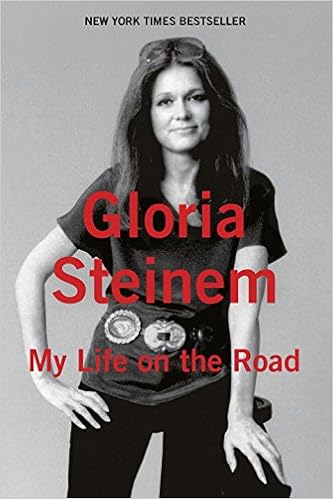
My Life on the Road by Gloria Steinem

Gloria Steinem has been in my peripheral for years now. She’s lovely. She’s a feminist journalist. We both have a penchant for large sunglasses. She did waitressed for Playboy to write an exposé. She’s an iconic feminist figure. Sometimes her politics and approach seemed too bland for me to really deeply identify with her. Other times she seemed too out there.

I read her latest book, My Life on the Road, and here’s what stood out to me. Because of her known beauty and brains, she could have chosen a conventional path: marrying for love and money, children, soccer games, and charities–all meaningful work, but too often requires the sacrificing of the self for the good of the others (family). That she chose not to pursue a more conventional path, one that so many women value and judge themselves against, is powerful. Steinem had a choice, and she chose feminism. (I’m fully aware the this observation might seem less than feminist, but I think her beauty is part of her particular feminism, and I’m treating it as such.)

image from amazon.com

The book itself if full of important feminist history. I tend to be exposed to more “high theory,” academic feminism. Steinem’s history is a political one, a public one. She’s a journalist after all, with a wide readership.

First–and this blew my mind–she began the book by dedicating it to her abortionist. Her abortionist. I found this to be completely provocative and outrageous and wonderful and true. And for that I loved it.

Here are some quotes from the book that I thought were of interest (with page number):

On violence against women and a healthy society: “We might have known sooner that the most reliable predictor of whether a country is violent within itself—or will use military violence against another country—is not poverty, natural resources, religion, or even degree of democracy; it’s violence against females. It normalizes all other violence” 43.

On the economy and the environment: “pressuring women to have too many children is the biggest cause of environmental distress, and economic courses should start with reproduction, not just production” 100.

On our Democratic nominee Hillary Clinton: “she was potentially, as one said, “a great girlfriend” who had their backs” 160.

Cultural problems: “Women are always better liked if we sacrifice ourselves for something bigger—and something bigger always means including men, even though something bigger for men doesn’t usually mean including women” 165.

This one’s just a good line: “Laughter is an orgasm of the mind” 181.

These song lyrics:

It’s a rainy night in Georgia
and it looks like
it’s rainin’
all over the world

Just another great line: “Surrealism is the triumph of form over content” 189.

This is going to take forever: “According to the wisdom of Indian Country on my own continent, it takes four generations to heal one act of violence” 202.

Here’s why it’s so important to me that Hillary Clinton received the presidential nomination: “…when God is depicted only as a white man, only white men seem godly” 205.

A great chapter title that has me thinking about my relationship to Truth: “What Was Once Can be Again” 211.

Truth: “YOU CANNOT THINK YOURSELF INTO RIGHT LIVING. YOU LIVE YOURSELF INTO RIGHT THINKING. –Native  Elders 234.

On women: “Women elders were keeping the rhythm of life” 241.

Something to remember in regards to politics: “Anybody who is experiencing something is more expert in it than the experts” 245.

Parting wisdom to remember: “My father did not have to trade dying alone for the jobs of the road. My mother did not have to give up a journey of her own to have a home.

Neither do I. Neither do you” 251.

Be well, my loves.

round 5: knitting a baby blanket (with pattern!)

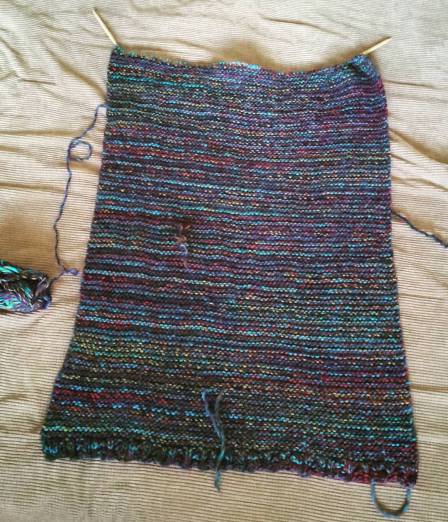
Through the winter months, on road trips from Utah to Louisiana and sitting on couches in Oregon with family, I knitted this baby blanket. It’s one of my favorite blankets to date (and I know I keep saying that), but I’m getting better at the knit stitch, and this time the yarn also made a huge difference. I used “Ocean” by Paton Colorwul, which is 100% wool, and I absolutely loved it. Wool yarn is expensive, and it can be scratchy, but when it’s done right, no other yarn compares. As I am wont to do, I ran out of skeins and had to frantically track down the last one from a Michaels across the valley. I’ve been trying to be more careful about buying skeins with matching lot numbers, but when you run out of yarn, you aren’t left with many choices.

13662233_10210349025268434_5866919687175656328_o.jpg

close up of knit stitch in “Ocean” by Paton Colorwul

The blanket was finished just in time to serve as a gift to a friend who gave birth to her son last month. I have identified somewhat with her journey to motherhood (i.e., she’s had love, life, travel, education, and a career before she very actively chose motherhood), and so I liked giving her an extra special gift.

The Materials:
-6 skeins of “Ocean” by Paton Colorwul
-Knitting needles, US 10.5

The Pattern:
-Cast on 76 stitches.
-Knit purl, knit purl, purl knit, purl knit until the row is finished.
-Then reverse it: purl knit, purl knit, knit purl, knit purl until the row is complete.
-Continue this pattern until you’ve got a few inches of a ribbed border.
-Then, knit the rest of the blanket until the last few inches or so.
-Finally, repeat the pattern from the beginning (knit purl, knit purl, purl knit, purl knit; then reverse it on the next row) to create a ribbed border again at the other end.

13701237_10210349013868149_2341488862930066767_o.jpg

nearly finished baby blanket

The finished product should be rectangular, with a ribbed border at each end. I’m getting better at making even stitches, and so the wobbly edges of my previous blankets are starting to disappear (though not entirely).

My idea for the ribbed border on the ends was actually difficult to keep track of. There is an easier way to do ribbing, but I wanted the ribs on this border to be a little thicker. Normally, I like very absent minded knitting (for which baby blankets are perfect). But, these borders were knitted and torn out a few times before it was all said and done. It still ended up a little uneven in places. The take away: if you’re looking for an easier border, there are easier patterns out there. If you’re looking for the perfect yarn for a baby blanket, look at the Paton Colorwul selection.

Wiener Dog by Todd Solondz

In late spring/early summer, I saw the preview for Wiener Dog and wanted to see it. (The trailer’s great.) I didn’t imagine I would be anywhere near an independent theater during the release date, but as luck would have it, I did happen to be at the right place at the right time and got to see the film last weekend.

image from ca.picclick.com

An woman, possibly a volunteer, taking movie tickets warned us that it was a weird movie, not for everyone, she didn’t really like it, and on and on. She also started explaining the plot—but nothing that wasn’t already implied in the movie trailer.

Then, before the movie began, I watched as she deterred several other movie-goers from seeing the film. In doing so, she also explained the plot of the film and this time she definitely gave away major spoilers! Fortunately, since plot doesn’t usually engage me all that much, spoilers don’t necessarily ruin a film for me.

Shock over a theater working handing out spoilers aside, the film was actually pretty great. My favorite scenes were with Greta Gerwig and Ellen Burstyn (not shown together), but the other sections are worth keeping as well. The film follows the wiener dog’s impact on various lives as it gets adopted, handed off, and so forth. Each section offers some unique, horrifying, and beautiful glimpse at human nature—not an easy task, but achieved here.

In terms of depth and complexity, the movie delivers. However, I did have some trouble with continuity. I don’t think I give away too much when I say that the movie starts off showing how the dog is transferred from one scenario to the next, but mid-way, that transfer is no longer documented. By the end, the viewer can’t tell if it’s supposed to be the same wiener dog. And I think it matters because my interpretation of some of the meaning in the film would have been altered by knowing if it was supposed to be the same dog throughout.

Next, one could argue that the final scenario moves outside of realism. Since the film seems solidly based in realism up to that point, the shift seemed more distracting and accidental, like the film was breaking its own rules. Sure, the filmmaker broke the rule for a purpose, which was effective, but I think the film would have been more consistent throughout if it could have found a way to make the same points without delving outside of the rules of our realm.

So yeah, it’s a good movie. Normally, I would probably call this dog a dachshund, but the movie will have you saying (and singing) “wiener dog.” Wiener dog.

Willfull Disregard by Lena Andersson

At last I’ve found a book that I really, really like. (!). It’s Willful Disregard by Lena Andersson, and I can’t remember how I found it, but I’m very glad that I did. I read it quickly because it’s a library book, and I’m at the end of summer semester, and so I’m busy grading, but also busy getting ready to hit the ground running, which is what I do every summer since adulthood and even now in order to escape my current city and state. (Gorgeous state. Currently insufferable.) So, I only had a week to read this thing.

image from amazon.com

When I first learn of the title, I knew Willful Disregard was going to be my kind of novel. It is funny and smart and good in exactly the way that title is funny and smart and good. It’s the kind of book that makes me glad to learn that the author (Lena Andersson) exists in the world. It gave me hope for humanity.

It’s funny, but it’s also devastating. It captures the analysis and the over analysis and the helplessness of unrequited love. It captures how long it takes. It captures the intense meaning read into every single event and adverb and sideways glance. You think you’re better and smarter than all of this, only to see (years later with the clarity of hindsight) that you were insane, that your precious friends and onlookers were gentle with your…willful disregard of all evidence and reality suggesting otherwise than your well laid plans, intentions, and interpretations.

And even if you have been strong enough or numb enough to have never fallen into this type of stupid, full-body kind of love, you’ll probably still enjoy the deep insights into humanity, the smart philosophizing, along with mocking pretension that Andersson offers up in this novel. It’s her fifth book and first translated into English. With any luck, we’ll get more from her.

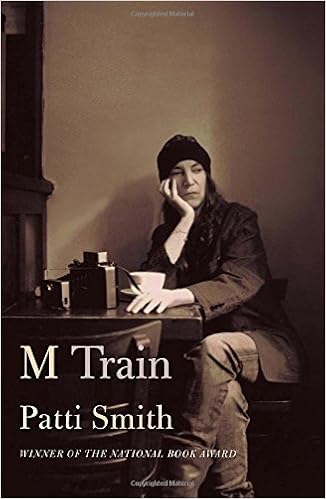
M Train by Patti Smith

It’s so hard to find a good new book these days. So when I find one, I tend to spend as much time in it as possible. That’s what happened with Patti Smith’s new book, M Train.

image from amazon.com

I read Just Kids a few years ago and loved it. In her rock and roll heyday (which is still now for many of us), Smith was known for brilliantly blending poetry with rock and roll. So it makes sense that she is a writer and also a fan of writing, which, in part, is what this book is about. It’s also about coffee. It’s about strange rituals and missions dreamed up by an amalgamation of literature, dreams, conversations and her own notions, which has her leaving stones at gravesites of people she knew or didn’t know, caring deeply about a small idea, about a small token, a small memory, a spirit.

I’ve always identified deeply with Smith. Her dreamy, creative way of moving through the world is similar to me at my best self. On some existential level, I know the deep love she knew with Fred, and the deep loss, and the new existing in this strange world, but hers is deeper, more, and a guidepost for us all.

I don’t know that I would like her. The day in/day out of her life seems sometimes boring, and dusty, and littered with cat hair, but there’s something about what she produces as an artist that opens me up, reminds me, shows me something new. So I stay in her books for as long as I can, and then hold on to them again afterward.

gardening

This year my garden is planted with
emerald blue rock cress
creeping phlox
mules hybrid doctor
early sunrise tickseed
coreopsis grandiflora
lemon yellow sun soft pink coleus
orange symphony potentilla
horned violet rose mum
black-eyed susan rudbeckia
purple dragon viola
portulaca sundial
moonshine x
butterfly daisies
snow on the mountain or bishop’s weed
lupine columbine yarrow
american halo
hosta
elegans
and hope.

13443208_10209982683110109_6364634086596821399_o

columbine

13433258_10209982724671148_8726775559814112129_o

lupine

20160612_160910-1.jpg

coreopsis


Girl in a Band by Kim Gordon

I read Girl in a Band by Kim Gordon on the heals of reading Carrie Brownstein’s Hunger Makes Me a Modern Girl and Patti Smith’s Just Kids a few years earlier. Gordon’s book pales in comparison to Brownstein, who is a genius–capable of exposing those real and unflattering (and flattering!) human emotions and experiences by showing instead of telling, and to Smith, who’s skill with language has always been a huge part of her success as a musician and artist. It makes sense that Smith and Brownstein would both write books that are both informative to fans, but that also hold up as literary works as well. Gordon’s book doesn’t do that.

Gordon portrays herself as a frustrated artist, and she accurately conveys that frustration in her lifelong relationship with visual art and music. At many times, she says she felt vulnerable, but the reader doesn’t see or feel the vulnerability. Sometimes Gordon seems to confuse vulnerability with victimhood, which also comes off as somewhat confused.

Here’s what I think: I think she is tough, and numb, and this is part of her personality, but it’s also exacerbated by her heartbreak and divorce from Thurston Moore. The pain is still too fresh for her to have any useful insight. One imagines that her heartache still weighs her every day, and without the clarity of some of that pain having lifted, she is not yet in a position to write about her experience in a useful way. She comes off as guarded–the opposite of vulnerable. She pulls back, and the reader pulls back too.

If you are a fan of Sonic Youth, it’s worth reading for the history. If you are a fan of that musical movement, it serves up a fine history. Otherwise, this is one you can skip. If she does this again in about a decade, I’d give the new one a read. Perhaps by then she’ll have deeper insight and also remind us what any of this had to do with being human in the first place.

Crazy Brave by Joy Harjo

I read this book almost entirely while lying in bed, while falling in love. Joy Harjo’s a fixture in poetry and literature. Before now, I’d only ever read a poem or two here and there, but I’d never really gotten into her work…that is until I read her memoir, Crazy Brave. It was one of those books that I started reading in a bookstore, and then read a chapter or two from the library, and then finally bought my own damn copy and finished it at home…while lying in bed. I love this book.

image from amazon.com

Harjo is mostly known for her poetry. I don’t enjoy reading a lot of poetry, and so that’s why I haven’t been very familiar with her work. After reading and loving Crazy Brave, I read She Had Some Horses, which is also beautiful, and I love it, and it’s poetry. It’s a collection I see myself returning to.

As for Crazy Brave, what I love about the book is how she captures a creative, feminine life experience that I (mostly) really relate to. It’s soulful. It captures pain, and specifically women’s pain, in a profound way. It shows us another way. It does so in poetic prose–she’s a poet after all.

This is from the back cover of She Had Some Horses, but I think it pertains to all Harjo’s work: “If you want to remember what you never listened to & what you didn’t know you knew, or wanted to know, open this sound & forget to fear. A woman is appearing in the horizon light.” ~ Meridel Le Sueur.

And then I saw her picture and remembered that maybe I met her. Or maybe I heard her read once. She is familiar to me. Her name. Her face. Her work. And yet I only really found her work now, when of course I needed it most.

I was captured throughout the entire book, but  by the end, I was a little lost: WHAT DOES IT ALL MEAN?! I wondered about the title: crazy brave. Now I think I can say that the larger message was, for me personally, a message to women to be brave, an admonition that it will be crazy, and you will be crazy, and you will be brave, and that is life.

Part of this is about surrendering to the flow of the river, instead of fighting against it, using the strength of the current to pursue yourself, but also acknowledge or accept that the river will be violent, and it will wound you deeply, and it might kill you, and it might lull you to sleep, and part of this we can control, and part of it we cannot control, and this is the wisdom we gain from being in the river. I am reminded of the time I went underwater in the Colorado River, the immense crushing noise turned warm and quiet and then I emerged. Part of this book is about acknowledging fear, working around it, using it, but not being controlled by it. I left the book thinking I should do what I must do before the river does it for me, even as the river does it for me.

Some of the words I loved:

“Yet everyone wanted the same thing: land, peace, a place to make a home, cook, fall in love, make children and music” (19).

“Because music is a language that live sin the spiritual realms, we can hear it, we can notate it and create it, but we cannot hold it in our hands” (19).

“In the end, we must each tend to our own gulfs of sadness, though others can assist us with kindness, food, good words, and music. Our human tendency is to fill these holes with distractions like shopping and fast romance, or with drugs and alcohol” (23).

“Water people can easily get lost. And they may not comprehend that they are lost. They succumb easily to the spirits of alcohol and drugs. They will always search for a vision that cannot be found on earth” (25).

“They continue to live as if the story never happened” (43).

“Our  heartbeats are numbered. We have only so many allotted. When we use them up, we die (52).

“All of these plant medicines, like whiskey, tequila, and tobacco, are potent healers. There’s a reason they’re called spirits. You must use them very carefully. They open you up. If you abuse them, they can tear holes in your protective, spiritual covering” (77).

“I noticed a marked change in the quality of light when we made it to New Mexico” (83).

“Each scar was evidence that we wanted to live” (90).

“I told Lupita I wanted to paint, to be an artist. She told me that what she wanted was someone to love her” (102).

“I was given the option of being sterilized” (121).

“I believe that if you do not answer the noise and urgency of your gifts, they will turn on you” (135).

“We were in that amazed state of awe at finding each other in all the millions and billions of people in the world” (143).

“Her intent made a fine unwavering line that connected my heart to hers” (146).